
 Worksheets
Unit 2 Test Review
Total questions: 51
Worksheet time: 29mins
Who was the founder of the Mughal Empire?
Nanak
Barbur
Akbar
Aurangzeb
When was the Mughal Empire established?
1400''s
1500's
1600's
1700's
What was the northern border of the Mughal empire?
Himalaya Mountains
Indus River
Ganges River
Sahara Desert
What led to the end of the Mughal Empire?
the army was not big enough
too much land to rule or manage.
Mongol invaders
different cultural beliefs and rebellions
Where did the Mughal's come from?
Safavid Shias
Turkish Muslims
Himalayas
Arab Traders
Who was Babur descended from that helped make him a leader?
Ghengis Khan
Aurangzeb
Alexander the Great
Taj Mahal
Which leader conquered the most new land for the Mughal Empire?
Babur
Akbar
Timurand
Aurangzeb
How did the Mughal Empire originally treat other religions?
everyone should be Sikh
everyone should be Muslim
everyone should be Hindu
tolerant of all because no single religion had all the answers
What is the Taj Mahal?
The palace built by Babur.
A tomb for the leader's wife.
A tomb for Babur.
The palace built by Aurangzeb.
Which leader started revolts because he insisted everyone should be Muslim and destroyed Hindu temples?
Babur
Akbar
Aurangzeb
Shah Jahan
What religion did the Ottoman Empire help spread throughout their empire?
Buddhism
Christianity
Shintoism
Islam
What city did the Ottoman Empire conquer in 1453 putting an end to the Byzantium Empire?
Rome
Constantinople
Athens
Vienna
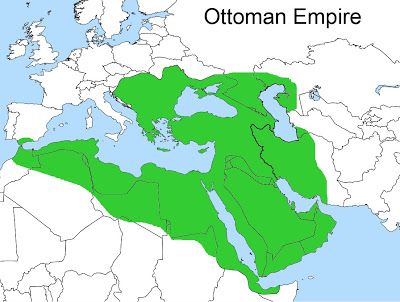
Which continents did the Ottoman Empire have some control over? Click all that apply.
Europe
Asia
Africa
North America
South America
What are these actions an example of: The Ottoman empire under Suleiman the Magnificent built strong fortresses to defend the places he conquered and adorned the cities with mosques, bridges, aqueducts, and other public works
Gaining power
Consolidating power
Maintaining power
What are these actions an example of: . The Ottoman Empire used Janissaries in all its military conquests such as the 1453 capture of Constantinople.
Gaining power
Consolidating power
Maintaining power
What is the former name of Istanbul?
Anatolia
Byzantium
Constantinople
The Ottomans captured the Byzantine capital of Constantinople. Why is Constantinople so important?
It was the capital of the Eastern Roman Empire
It was an important center of trade
It was rich in spices and precious stones
Which weapon proved to be the key to the Ottomans' military success in its siege at Constantinople?
Crossbow
Gunpowder
Steel
Tanks
The Ottoman Empire's greatest Sultan was...
Bob the average
Suleiman the Magnificent
Osman I
Pope Urban II
The early Ottomans were one of the first armies to use...
Gunpowder technology
Swords
Tanks
Plate Mail
After the fall of Constantinople and the Byzantine Empire, the rulers of Moscow began adopting the title
Tsar
Sultan
Shah
Kaiser
The land holding aristocracy of feudal Russia were known as
Patriarchs
Tsars
Boyars
Viziers
Prior to Peter the Great, Russia was all of the following except
Most people were poor agricultural serfs
Feudal and agrarian
A major European power
Backwards technologically
Peter the great was able to westernize Russia by
implementing policies that forced Russians to dress in Western European clothes
Forcing Russian males to shave their beards or pay a tax
Constructing St. Petersburg in Western European architecture
All of the above
Peter the Great was able to Modernize Russia in all of the following ways except
Hiring foreign experts to modernize Russia's military and economy
Building western style schools with focus on science, mathematics, and medicine.
Implementing a meritocracy system of government with the table of Ranks
Giving unprecedented power to the boyars for their support in his reforms
Peter wanted to control the Russian Orthodox Church for which of the following reasons?
He believed himself to be an absolute monarch and thus he should be accountable to no one in Russia
The church had large amounts of wealth, which Peter could use to pay for his modernization reforms
Since most of Russia was Russian Orthodox, Peter could use the clergy to spread support for his reforms to the masses
All of the above
St. Petersburg was significant to the Russian Empire under Peter the Great for all of the following reasons EXCEPT
It cemented Russia's isolationism policy from the rest of Europe
The warmer waters of the Baltic allowed Russian uninhibited international trade
Allowed closer ties between Russia and Western Europe
The city became Russia's new capital, replacing Moscow
Why did Peter the Great spend time in Western Europe?
to prepare for war
to find a wife
to avoid his duties in Russia
to study western technology

What was the great symbol of Peter's desire to forge a modern Russia?
St. Petersburg
Moscow
the Russian Orthodox Church
the partition of Poland

What country is this?
France
Germany
Russia
Ukraine
The French monarch who declared "I am the State"
Charles V
Henry IV
Louis XIV
Marie Theresa
What is absolutism?
The idea that there is more than one religion
The idea that one group of people
is superior to another group of people
The idea that power is limited to a monarch by a parliament
The idea that all and unlimited power is used by a king or queen
Why was the Palace of Versailles built?
To flaunt the wealth and power of France
To house all of France's money
To downsize the capital
To protect the French border

Which of the following was a reason why Abosolutism was on the rise in the 1700's? Check all that apply.
The Black Death had lowered the population and now peasants had more power
The Power of the Church had declined
People wanted stability after many years of violence brought on by religious differences
Resources and riches gained from colonization gave monarchs more power
How did the Ming Dynasty come to power?
The dynasty arose from the disorder and weakening of the Yuan Dynasty.
The dynasty arose because the Ming leaders were fierce Mongol fighters.
The dynasty arose because the Ming military leaders overthrew the Yuan scholar-officials.
The dynasty arose from the artisan revolt to gain more power than they had under the Yuan Dynasty.'eljaf

Why were the voyages of Zheng He important?
the Ming would allow their enemies like Zheng He to leave the country
the Ming were interested in trade and controlling more territory
showed that people could explore areas beyond the Great Wall
the Ming could prevent Mongol invasions by cutting off their sea route into China

How did the Ming Dynasty’s government differ from the Yuan Dynasty’s government?
The Ming put Mongols in charge of the military.
The Ming gave scholar-officials more power than military officials.
The Ming abandoned the hereditary status system.
The Ming discontinued civil service exams.

How did the design of this building project contribute to the Ming Dynasty’s power?
It gave scholar-officials an inner court they could use to study quietly for their exams.forbiddenforbidde
It separated the rulers from the ruled and gave the rulers a sense of importance and mystery.
It gave all citizens a shared space for making offerings to their gods.
It separated the military from the artisan class and gave the artisans a private place to work.

Why did the Ming rulers rebuild and improve the Great Wall?
to protect against the Mongol threat
to honor the sun
to use local materials such as limestone
to provide an inner and outer court
Which term describes the ability to rule given to each Chinese dynasty?
Neo-Confucianism
Bureaucracy
The Mandate of Heaven
The 5 Great Relationships
The Civil Service Exam tested aspiring bureaucrats on their knowledge of what?
Legalism
Confucianism
Daoism
Buddhism
What is the name of the palace city for the Ming Emperors that is located in present day Beijing, China?
The Lost City
The Forbidden CIty
The Emerald City
The City of Cities
The Qing Dynasty replaced
The Han Dynasty
The Tang Dynasty
The Ming Dynasty
The Qin Dynasty
This ethnic group established the Qing dynasty
Manchu
Uighur
Tibetans
Han
At what age did a mother start binding her daughters feet?
11 years old
15 years old
6 years old
3 years old
Chinese woman used to bind their feet because __________?
they thought if you have small feet you look beautiful
big feet make you look like a monster
their parents didn't want them to participate in running races

