wayground logo

Free Printable Worksheets

Font size

S
M
L
XL
Worksheets

S&P with brains

Total questions: 63

Worksheet time: 54mins

Name
Class
Date
1.
Controls heartbeat and breathing
a)
Pons
b)
Medulla
c)
Cerebellum
d)
Thalamus
2.
What lobe is highlighted in red?
a)
frontal
b)
temporal
c)
occipital
d)
parietal
3.
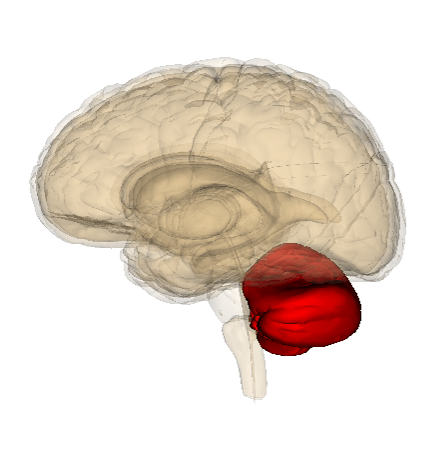
the red portion is the ________
a)
Cerebrum
b)
Cerebellum
c)
Brain Stem
d)
Diencephalon
4.
What lobe is highlighted in red?
a)
go Patriots
b)
go Falcons
c)
frontal
d)
parietal
5.
hearing ability
a)
parietal
b)
temporal
c)
occipital
d)
frontal
6.
Which letter on the illustration represents the temporal lobe
a)
A
b)
B
c)
C
d)
D
7.
Which letter on the illustration represents the frontal lobe
a)
A
b)
B
c)
C
d)
D
8.
The brain contains BILLIONS of these
a)
neurotransmitters
b)
axons
c)
myelin sheath
d)
neurons
9.
the lobes responsible for Seeing and hearing?
a)
FRONTAL , TEMPORAL
b)
OCCIPITAL, PARIETAL
c)
FRONTAL, PARIETAL
d)
OCCIPITAL, TEMPORAL
10.
THE BRAIN AND THE SPINAL CORD MAKE UP THE __________NERVOUS SYSTEM
a)
CENTRAL
b)
PERIPHERAL
c)
AUTONOMIC
d)
SOMATIC
11.
Which of the following is the upper part of the brain consisting of two cerebral hemispheres and the structures that connect them?
a)
occipital lobe
b)
cerebrum
c)
corpus callosum
d)
cortex
12.
Importance for the storage of new memories
a)
Cerebellum
b)
Thalamus
c)
Hippocampus
d)
Amygdala
13.
Regulates your hunger, thirst, body temperature
a)
hypothalamus
b)
Cerebrum
c)
Amygdala
d)
reticular formation
14.
connects the left and right hemispheres of the brain
a)
Cerebellum
b)
Hypothalamus
c)
Medulla  Oblongata
d)
Corpus Callosum
15.
coordinates balance and voluntary movements
a)
corpus callosum
b)
cerebellum
c)
cerebrum
d)
spinal cord
16.
brain's "sensory switchboard":  directs sensory messages to proper area of the brain
a)
thalamus
b)
hypothalamus
c)
hippocampus
d)
reticular formation
17.
involved in emotional responses like fear and anger
a)
cerebellum
b)
medulla oblongata
c)
hypothalamus
d)
amygdala
18.
thinking, problem solving, "executive functioning" 
a)
cerebellum
b)
cerebrum
c)
amygdala
d)
hypothalamus
19.
controls life functions like heartbeat, breathing, & blood pressure
a)
spinal cord
b)
medulla oblongata
c)
reticular formation
d)
thalamus
20.
processes visual information 
a)
occipital lobe
b)
temporal lobe
c)
hypothalamus
d)
cerebellum
21.

Which structure includes more than half of the brain's mass?

a)

Midbrain

b)

Cerebrum

c)

Cerebellum

d)

Diencephalon

22.
The thick band of neural fibers that literally means “hard body” which allows the left and right hemispheres to communicate is known as the ________.
a)
cortex
b)
motor cortex
c)
corpus callosum
d)
thalamus
23.
The area of the frontal lobe that is devoted to the production of fluent speech is ______ area. 
a)
Broca’s
b)
Gall’s
c)
Wernicke’s
d)
Korsakoff’s
24.

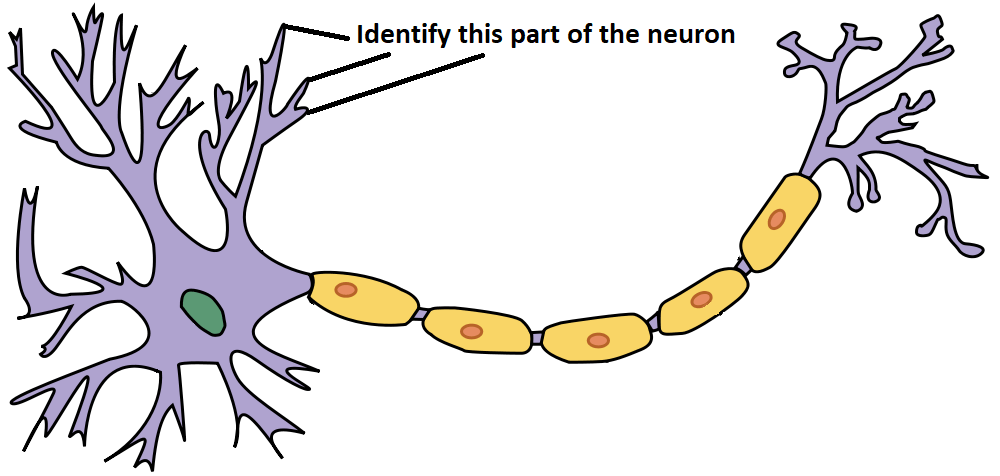
What do Axon Terminals do?

a)

Receives information from other neurons

b)

Produces fatty tissue for the Myelin Sheath

c)

Sends information to the next cell

d)

Controls the speed of electrical signal through the axon
25.

What do Dendrites do?

a)

Receives information from other neurons via neurotransmitters

b)

Produces fatty tissue for the Myelin Sheath

c)

Sends information to the next cell

d)

Controls the speed of electrical signal through the axon

26.
a)

Nucleus

b)

Cell Body

c)

Axon

d)

Node of Ranvier

27.
a)

Dendrites

b)

Axon Terminals

c)

Myelin Sheath

d)

Schwann Cells

28.
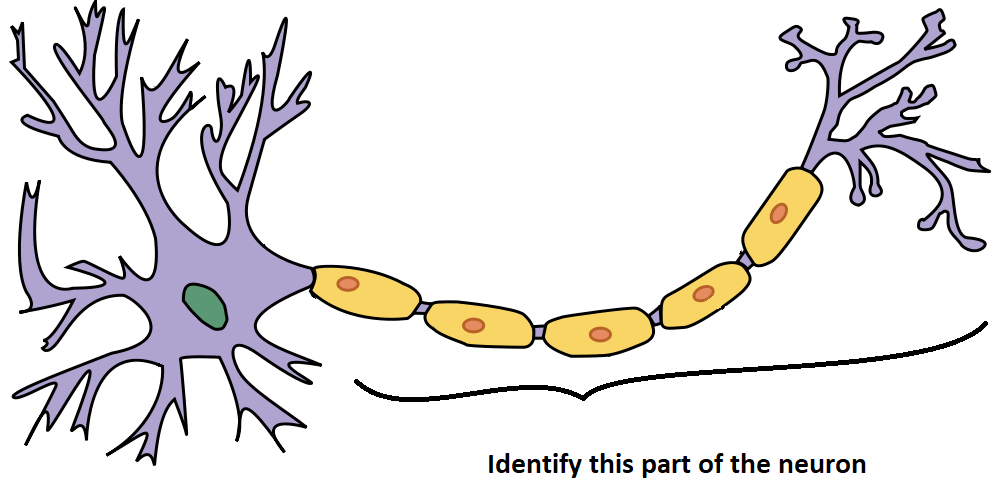
This insulating material forms a layer, around the axon of a neuron.  It enables electrical signals to travel down the axon at higher speeds.
a)
neuron
b)
myelin sheath
c)
dendrite
d)
neurotransmitter
29.

Bottom-up processing is

a)

Parts to whole

b)

Whole to parts

c)

Processing from the bottom and moving to the top

d)

Processing from the top and moving to the bottom

30.

Top-down processing is...

a)

Parts to whole

b)

Whole to parts

c)

Processing from the bottom and moving to the top

d)

Processing from the top and moving to the bottom

31.

Olfaction is...

a)

The sense of sight

b)

The sense of hearing

c)

The sense of touch

d)

The sense of smell

32.
Which cells for visual processing are located closest to the back of the retina?
a)
bipolar cells
b)
rods and cones
c)
subliminal cells
d)
feature detectors
33.
The cocktail party effect provides an example of:
a)
the phi phenomenon
b)
selective attention
c)
perceptual constancy
d)
perceptual set
34.
The tendency to organize stimuli into smooth, uninterrupted patterns is called    
a)
closure
b)
continuity
c)
similarity
d)
proximity
35.
A reversible figure, such as the vase/face figure, makes use of which principle of perception?
a)
closure
b)
proximity
c)
similarity
d)
figure-ground relationship
36.
Depth cues that only require one require one eye are
a)
Binocular Cue
b)
Trichronocular Cue
c)
Monocular Cue
d)
Single Vision Transparency
37.
The cones of the eye help us see
a)
color
b)
low light
c)
black and white
d)
ice cream
38.

Process by which our senses gather information and send/transmit it to the brain

a)

optical illusion

b)

perceptual constancy

c)

perception

d)

sensation

39.

Brain’s process of organizing and interpreting sensory information

a)

optical illusion

b)

perception

c)

perceptual constancy

d)

sensation

40.

Gustation is what sense of organ ?

a)

Skin

b)

Eye

c)

Taste

d)

Touch

41.

What are the five senses?

a)

Vision

b)

Audition

c)

Somesthesis

d)

Olfaction

e)

Gustation

42.
If you move your watchband up your wrist an inch or so, you will feel it for only a few moments. This best illustrates: 
a)
parallel processing
b)
sensory adaptation
c)
accomodation
d)
Weber's Law
43.
What part of the eye allows us to see color?
a)
cones
b)
rods
c)
iris
d)
eyeball
44.
Where does the optic nerve take the visual information?
a)
To the Thalamus and then to the Occipital Lobe
b)
to the Hippocampus and then to the Occipital Lobe
c)
to the Hypothalamus and then to the Occipital Lobe
d)
to the Cerebellum and then to the Occipital Lobe
45.
Receptors for Visual Processing, Detect Black, white and gray, important in dim light
a)
Rods
b)
Feature Detectors
c)
Bipolar Cells
d)
Occipital Cells
46.

What three primary colors of light are detected by your cones?

a)

Green, red, and blue

b)

Black, gray, and white

c)

Blue, red, and yellow

d)

Blue, green, and purple

e)

Cyan, magenta, and yellow

47.
Which of the following is the correct progression of visual processing in the human eye? 
a)
rods and cones;  bipolar cells; ganglion cells; optic nerve
b)
rods and cones; ganglion cells; bipolar cells; optic nerve
c)
Bipolar cells; ganglion cells; rods; cones
d)
Bipolar cells; rods and cones; ganglion cells; optic nerve 
48.

For vision, transduction is the process by which

a)

photoreceptors change electromagnetic energy into electrochemical energy.

b)

photoreceptors change electrochemical energy into electromagnetic energy.

c)

sensory information is sent to the brain via the optic nerve.

d)

incoming sensory information is given meaning.

49.

The range of wavelengths from 380 to 760 nanometres is known as the

a)

electrochemical light spectrum.

b)

invisible light spectrum.

c)

visible electrochemical spectrum.

d)

visible light spectrum.

50.

The photoreceptors in the retina are responsible for the changing of light into

a)

photopigments.

b)

visual energy.

c)

electrochemical energy.

d)

electromagnetic energy.

51.

Luisa woke at night in her darkened bedroom. At first she could not see anything, but after a few minutes, due to the __________ in her eyes, she could see the shape of her dressing gown hanging on the door. When she turned on the light she could see the colour of the dressing gown, due to the action of her ________.

a)

cones, rods

b)

rods, cones

c)

rods, rods

d)

cones, cones

52.

The fancy word for HEARING is ___________.

a)

AUDITION

b)

GUSTATION

c)

OLFACTORY

d)

NOCICEPTOR

53.

In sound, WAVELENGTH determines ________________.

a)

pitch

b)

loudness

54.

In sound, AMPLITUDE determines ________________.

a)

pitch

b)

loudness

55.

The hammer, anvil, and stirrup can be found in which part of the ear?

a)

outer

b)

middle

c)

inner

56.

The small HAIRS in the cochlea's basilar membrane are called

a)

cilia

b)

ossicles

c)

pinna

d)

anvils

57.

Hearing is mostly conducted in which lobes of the brain?

a)

temporal

b)

parietal

c)

frontal

d)

occipital

58.

The ______________ nerve delivers information about sound to the brain.

a)

auditory

b)

optic

c)

cochlea

d)

basilar

59.

The nerves associated with smell are referred to as the:

a)

olfactory receptor cells

b)

smell cells

c)

gustatory receptor cells

d)

umami cells

60.

Which of the following is NOT a primary taste sensation?

a)

bitter

b)

salty

c)

sweet

d)

peppery

61.

Only skin sensation that has identifiable receptor cells.

a)

Pressure

b)

Pain

c)

Warmth

d)

Cold

62.

According to the Gate Control Theory, you can reduce pain by activating...

a)

large bundle of neurons in the spinal cord.

b)

small bundle of neurons in the spinal cord.

c)

large bundle of neurons in the brain.

d)

small bundle of neurons in the brain.

63.

What is the only sense that is not sent to the thalamus?

a)

taste

b)

touch

c)

vision

d)

smell