
 Worksheets
Homeostasis and Feedback Loops
Total questions: 33
Worksheet time: 40mins

According to the feedback loop, what does high blood sugar promote?
Insulin Release
Glucagon Release
Insulin Uptake
Glycogen Uptake

The diffusion of water through a selectively permeable membrane
Diffusion
Aquaporin
Osmosis
Homeostasis
the brain only
the muscles
With low oxygen levels, your breathing rate will increase. When your oxygen levels rise, what is the appropriate response?
stop breathing
increase heart rate
keep breathing rate high
return breathing rate to baseline
Which of the following is not regulated by homeostasis?
body temperature
blood sugar
blood pH
body movements
Which two systems work together to maintain homeostasis while transporting oxygen throughout the body and removing carbon dioxide?
circulatory and respiratory
respiratory and excretory
circulatory and digestive
respiratory and digestive
____________________ helps warm the human body when we are cold.
sweating
shivering
inhaling oxygen
exhaling carbon dioxide
neutral feedback loop
Which of the following is an example of positive feedback?
Thermoregulation
Blood Pressure
Childbirth
Blood Sugar Levels
Positive Feedback Loop
Neutral Feedback Loop
Occurs when the product of a reaction leads to a DECREASE in that reaction. Counteracts what is happening.
Positive Feedback Loop
Negative Feedback Loop
When the product of a reaction leads to an INCREASE in that reaction
Positive Feedback Loop
Negative Feedback Loop
The heater kicks on and the house warms up, so it kicks off. Then the house cools a bit and the heater kicks back on. This continues all day. It's a _____________ loop.
positive feedback
negative feedback
parts of the body that change levels of activity in response to a message
sensor (receptor)
control center (integrator)
target (effector)
regulation

This graph shows an example of... (click picture to make bigger)
Blood sugar regulation
Homeostasis
Negative feedback
Positive feedback
Positive Feedback Loop

The following is an example of what type of feedback loop? (click picture to make bigger)
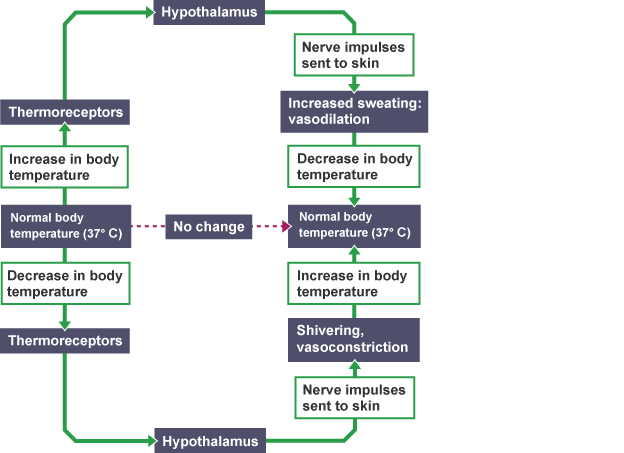
What type of feedback loop is shown? (click picture to make bigger)
Positive Feedback Loop
Neutral Feedback Loop
Negative Feedback Loop
2. The "normal" level in the body of a certain condition (i.e. body temperature is 98.6 degrees F)
Set-point
Stimulus
Effector
Range
5. A muscle, gland, or organ that responds to a stimulus after receiving a message from the control (i.e. sweat alands) is called the _ (this is what makes the response happen).
Receptor
Sensor
Control
Effector
What is the point of a feedback loop?
To provide the body with more energy
To provide the body with more food
To make sure the conditions in the body are always changing
To make sure the conditions in the body remain stable
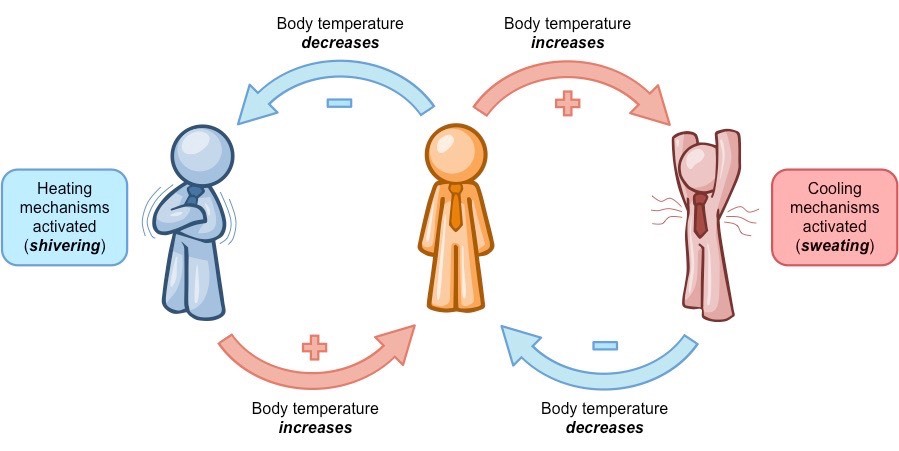
In this body temperature feedback loop, predict what would happen if cooling mechanisms were NOT activated? (click picture to make bigger)
The body would not warm up.
The body would not cool down.
Your body would get colder and colder.
Your body would release lots of heat.
According to the feedback loop, what does high blood sugar promote? (click picture to make bigger)
insulin release
glucagon release
insulin uptake
glycogen uptake
Positive Feedback Loop
Neutral Feedbak Loop
Which part of the following makes decisions if
the variable is at an appropriate level?
sensor (receptor)
control center (integrator)
target (effector)
regulation
Draw a graph of the following scenario: the calcium in your blood decreases below homeostasis levels, a gland in the brain will sense the decrease and send a chemical message to your bones. Your bones will release calcium into the blood, bringing blood calcium levels back up.

What can you do to improve your grade or keep your grade where it is?

