
NEW
Font size
 Worksheets
Sound
Total questions: 40
Worksheet time: 1hrs 20mins
1.Sound is a form of energy made by ____________
electricity
vibration
light
volume

Sound waves cannot travel in __________.
air
steel
water
a vacuum

What is the best explanation for why sound travels faster in air at 45 °C than at 0 °C?
Warm air particles have less energy and vibrate more slowly.
Warm air particles have more energy and can vibrate faster.
Cold air particles have more energy and can vibrate faster.
Cold air particles have more energy and vibrate more slowly

Why does sound travel slower through gases (air) than through liquids (water) or solids (gold and glass)?
Particles in gases are closer together than particles in liquids and solids.
Gas particles have less energy than particles in liquids and solids.
Particles in gases are further apart than particles in liquids and solids.
Gas particles transfer energy better than particles in liquids and solids
What is Pitch?
How loud or soft a sound is.
Muscle that holds vocal cords.
Movement back and forth.
How high or low a sound is.
__________ is the loudness or softness of a sound.
The volume of a sound is measured in units called ________
decibels
hertz
frequency
amplitude
Which of the following sound wave produces the highest pitch of sound?


Frequency is measured in the unit of
Ampere (A)
Hertz (Hz)
Mole (mol)
Meter (m)
Which of the following statement is true?
The higher the amplitude, the higher the pitch of sound
The lower the amplitude, the louder the sound
The higher the frequency, the higher the pitch
The lower the frequency, the louder the sound
What is a sound that is repeated because the sound waves are reflected back?
Pitch
Echo
Vibration
Volume


Sound does not travel in space because
Space is too far away.
There is no matter in space.
Space is the final frontier
Space has planets.
Frequency in sound waves is best defined as
the highest sound
number of vibrations per second
The lowest sound
how long the strings are on an instrument
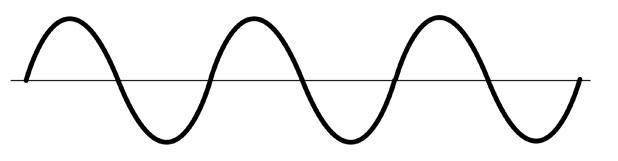
The distance between two troughs in a wave is:
frequency
wavelength
equilibrium
period
The highest point on a wave.
frequency
compression
trough
crest
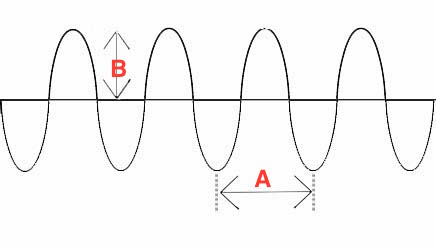

What wave feature is D indicating on the diagram?
crest
trough
amplitude
wavelength
Fill in the blank:
The distance a wave travels from crest to crest in know as the _________.
Frequency
Wave length
trough
refraction
The higher the pitch, the higher the:
wavelength
volume
amplitude
frequency
What is pitch?
How loud or soft a sound is.
How high or low sound is.
When you throw a baseball.
The sound that you hear.
What is volume?
How loud or soft a sound is.
How high or low sound is.
When you throw a baseball.
The sound that you hear.
What is the unit of sound?
decibel
sound level meter
meter
liter
What instrument is used to measure sound?
decibel
sound level meter
measuring tape
meter tape
amplifier
an electronic device to increase the volume of sound
equipment that makes sounds quieter
muffle
to make bigger
to decrease the volume and make sounds less clear
What is a sound that is repeated because the sound waves are reflected back?
Pitch
Echo
Vibration
Volume
What is sound?
A type of energy made by vibrations that moves through a medium such as a gas, liquid or solid
A wave of electrical and magnetic energy moving together through space
A type of electromagnetic wave that is visible to the eye
A very low frequency electromagnetic wave that is used for the transmission of radio and television signals
What vibrates on a String Instrument to create sound?
the strings
the body
the tuning pegs
the mouthpiece
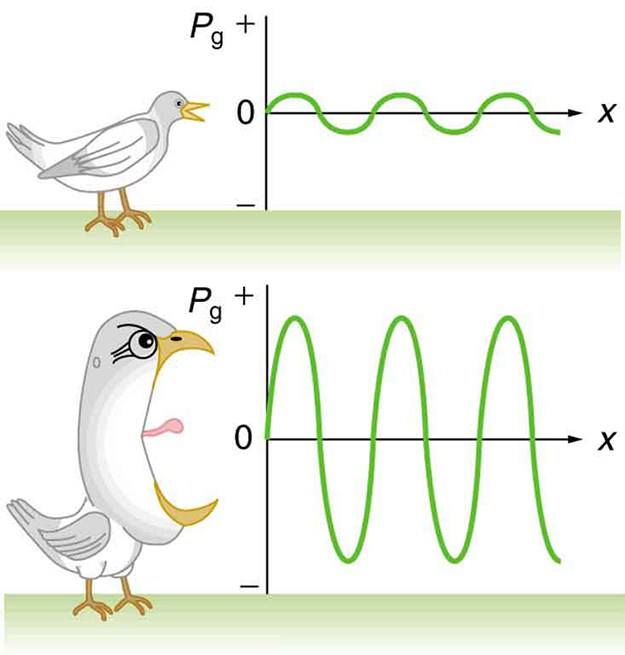
Hertz is a unit of frequency. A human ear can hear the sound between ___________ Hertz (Hz).
10-10,000
20-20,000
30-30,000
40-40,000

