
 Worksheets
Mutations
Total questions: 16
Worksheet time: 8mins
Original DNA sequence: TTACGCAAG
DNA sequence following mutation: TTCGCAAG.
What type of mutation is this?

The bottom DNA sequence in the image has been altered by this type of mutation
substitution
insertion
deletion
translocation
A segment of DNA has base sequence GAC GAC CGC AAA ACA AGC. Due to deletion, the first base G is deleted. The likely effect of this on the coding of DNA segment is that
the first amino acid will be different and all other will be like the original polypeptide.
there will be no change in the polypeptide chain.
the whole sequence of amino acids will be changed.
the polypeptide chain will be two amino acids shorter
Original DNA sequence: GAG CTC GAC AGA
DNA sequence following mutation: GAG CTC CAC AGA
What type of mutation is this?
frameshift
DNA mutations that do not cause any functional change in the protein product are known as:
nonsense mutations
non-synonymous/missense mutations
antisense mutations
synonymous/silent mutations
Mutations can be:
Harmful
Beneficial
Neutral
All of the Above
They change all of the codons following the mutation, which changes the amino acid sequence

Mutations that result in the generation of a stop codon are called:
Antisense mutations
Missense mutations
Nonsense mutations
Termination mutations
Mutations that occur during DNA replication are called:
Spontaneous mutations
Induced mutations
Natural mutations
Replicative mutations
Causes of induced mutations include:
radiation
chemicals
viruses
all of the above
Which types of mutations can be inherited?
Somatic mutations
Germline mutations
Spontaneous mutations
Induced mutations

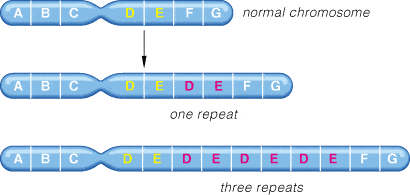

independent assortment
Non-disjunction involving the sex chromosomes occurs during spermatogenesis and produces two kinds of sperm, XY and O (no sex chromosomes). If the different sperm fertilise a normal egg, what are the possible genotypes produced?
XX AND XY
XYY AND XO
XXY AND XO
YY AND XO

