wayground logo

Free Printable Worksheets

Font size

S
M
L
XL
Worksheets

Biochemistry Unit Review

Total questions: 74

Worksheet time: 46mins

Name
Class
Date
1.

What macromolecule is shown?

a)

Protein

b)

Nucleic Acid

c)

Carbohydrate

d)

Lipid

2.

What is the monomer of a lipid?

a)

Amino Acid

b)

Fatty Acid and glycerol

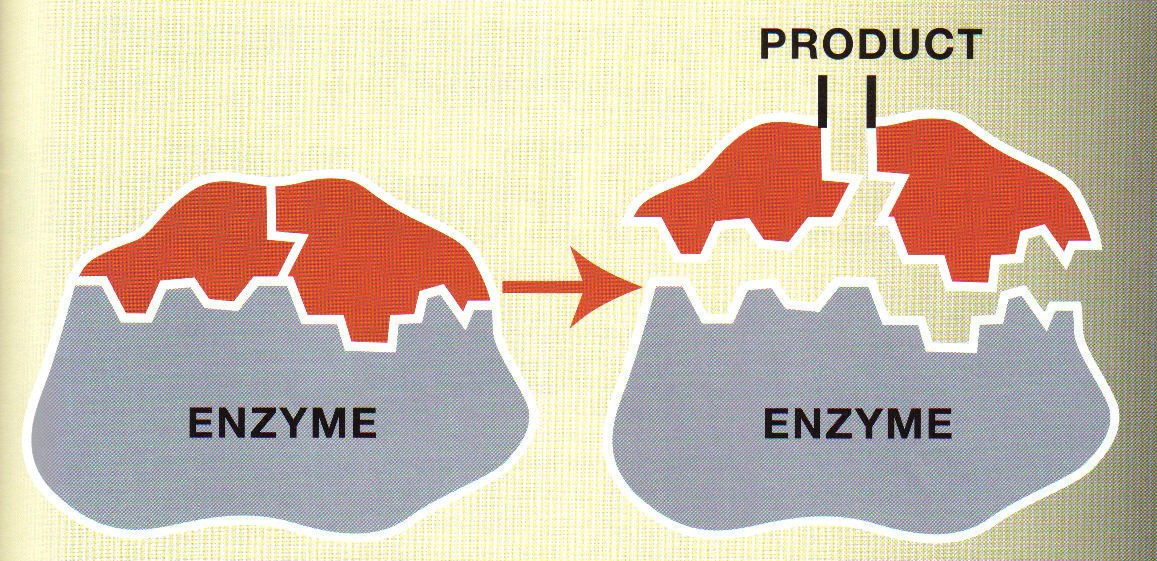
c)

Monosaccharides

d)

Glucose

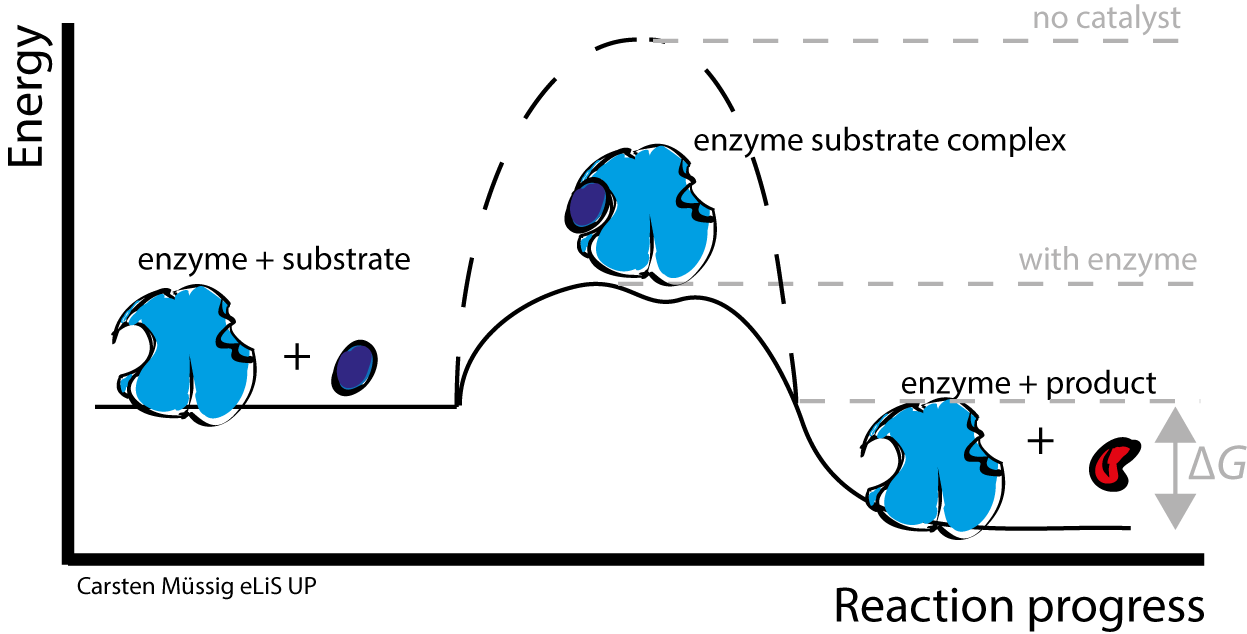
3.

What is the function of carbohydrates?

a)

Short term energy

b)

Long term energy

c)

Storing genetic information

d)

Speeding up chemical reactions

4.

What is one of the functions of lipids?

a)

Storing genetic information

b)

Long Term Energy

c)

Short Term Energy

d)

Acting as chemical signals

5.

What is the function of nucleic acids?

a)

Short Term Energy

b)

Storing Genetic Information

c)

Long Term Energy

d)

Speeding Up Chemical Reactions

6.

What macromolecule is shown?

a)

Nucleic Acids

b)

Lipids

c)

Proteins

d)

Carbohydrates

7.

What macromolecule is shown?

a)

Carbohydrate

b)

Nucleic Acid

c)

Protein

d)

Lipid

8.

What is one of the functions of proteins?

a)

Long Term Energy

b)

Short Term Energy

c)

Storing Genetic Information

d)

Speeding Up Reactions in Cells

9.

What macromolecule is shown?

a)

Proteins

b)

Nucleic Acids

c)

Lipids

d)

Carbohydrates

10.

Which of the following is a function of carbohydrates?

a)

Long Term Energy

b)

Storing Genetic Information

c)

Creating the structures that supports plants

d)

Speeding Up Chemical Reactions

11.

What element if the building block of life?

a)

Carbon

b)

Hydrogen

c)

Oxygen

d)

Nitrogen

12.

Which of the following is NOT a monomer?

a)

Fiber

b)

nucleotide

c)

Amino Acid

d)

Monosaccharides

13.

Which of the following are examples of carbohydrates? (Select all that apply).

a)

Bread

b)

Pasta

c)

Olive Oil

d)

Cheese

14.

Nucleic acids make up which of the two molecules listed below?

a)

FDA

b)

RNA

c)

DNA

d)

FDR

15.

This is one job proteins do not have in the body.

a)

structure for tissues and organs

b)

transport things through cell membranes

c)

speed up chemical reactions

d)

insulation

16.

An avocado is an example of a which macromolecule?

a)

Carbohydrate

b)

Lipid/Fat

c)

Protein

d)

Nucleic Acid

17.

This macromolecule breaks down into sugars such as glucose.

a)

Lipids/Fats

b)

Nucleic Acids

c)

Protein

d)

Carbohydrates

18.

Salmon is an example of what 2 macromolecules?

a)

Carbohydrates

b)

Lipids/Fats

c)

Protein

d)

Nucleic Acids

19.

What is cohesion?

a)

The ability of a molecule to "stick" to itself

b)

The ability of a molecule to "stick" to other molecules

c)

Large amounts of energy are required to change the temperature of a substance

d)

A well-organized and efficient team

20.

What do the green bonds represent?

a)

Covalent Bond

b)

Hydrogen Bond

c)

Ionic Bond

21.

What characteristic is shown in the image?

a)

Polarity

b)

Hydrogen Bonds

c)

Cohesion

d)

Adhesion

22.

This individual is ice fishing. They cut through the top layers of ice to reach the water and fish below. What property of water allows for this to happen?

a)

Expansion Upon Freezing

b)

Universal Solvent

c)

Ability to Moderate Temperature

d)

Cohesive Behavior

23.

What property of water allows for water to act as a temperature regulator for the world?

a)

Cohesive Behavior

b)

Expansion Upon Freezing

c)

High Specific Heat

d)

Universal Solvent

24.

What property of water causes these Alka-Seltzer tablets to dissolve?

a)

Universal Solvent

b)

Expansion Upon Freezing

c)

Cohesive Behavior

d)

High Specific Heat

25.

Sweating is an example of what property of water?

a)

Ability to Moderate Temperature

b)

Expansion Upon Freezing

c)

Cohesive Behavior

d)

Universal Solvent

26.

Blood functions as a transport mechanism to take nutrients and oxygen to all cells in the body. What property of water allows for this to occur?

a)

Expansion Upon Freezing

b)

Universal Solvent

c)

Cohesive Behavior

d)

Ability to Moderate Temperature

27.
What is a substance called if it speeds up a chemical reaction?
a)
reusable
b)
catalyst
c)
specific
d)
fragile
28.
With what 3 letters do enzymes typically end?
a)
-ose
b)
-ase
c)
-ese
d)
-tic
29.

Enzymes are an example of

a)

Lipids

b)

Carbohydrate

c)

Protein

d)

Nucleic Acid

30.
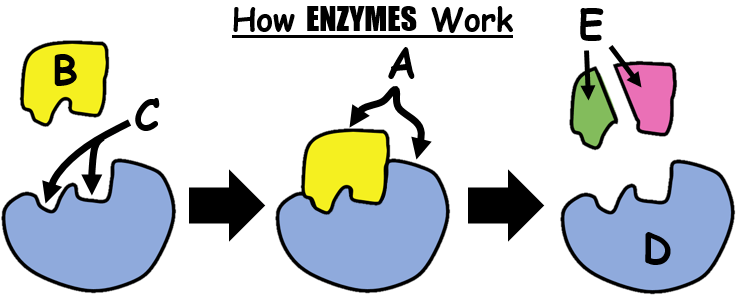
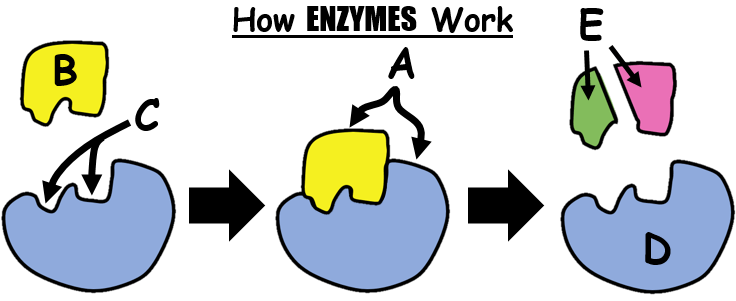
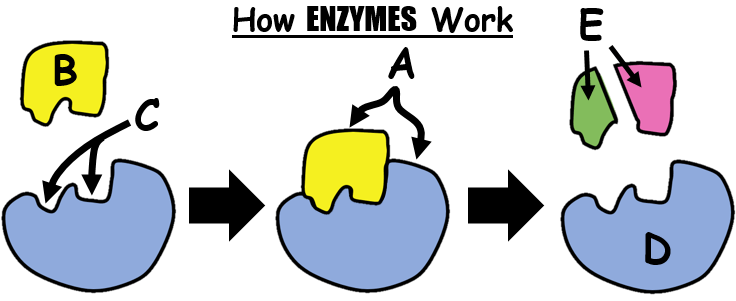
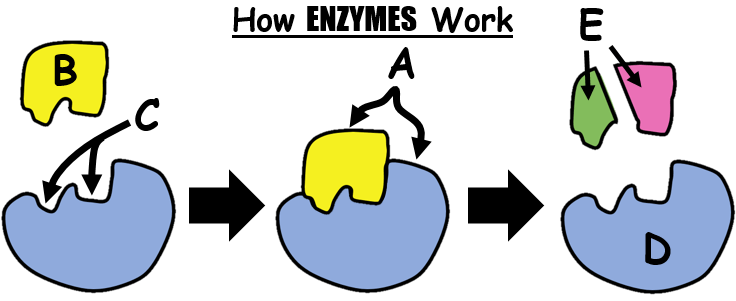
Letter D...
a)
active site
b)
enzyme
c)
substrate
d)
products
31.
Letter B...
a)
active site
b)
enzyme
c)
substrate
d)
products
32.
Letter C...
a)
active site
b)
enzymes
c)
substrate
d)
products
33.
Letter E...
a)
active site
b)
enzyme
c)
substrate
d)
products
34.
An enzyme speeds up a reaction by
a)
lowering the activation energy.
b)
raising the activation energy.
c)
releasing energy.
d)
absorbing energy.
35.

What happens when enzymes are heated to a high temperature?

a)

The enzymes die.

b)

The shape of the enzyme are changed and it denatures

c)

The enzymes' amino acid sequence changes.

d)

The enzymes remain the same

36.
The molecule an enzyme is working on is called the:
a)
Substrate
b)
Solvent
c)
Allosteric Inhibitor
d)
CoEnzyme
37.
Which of these is NOT true?
a)
Enzymes can denature (change shape) when the temperature gets too high.
b)
Enzymes can only be used once in a chemical reaction. 
c)
Extreme pH can denature enzymes.
d)
Enzymes speed up chemical reactions. 
38.
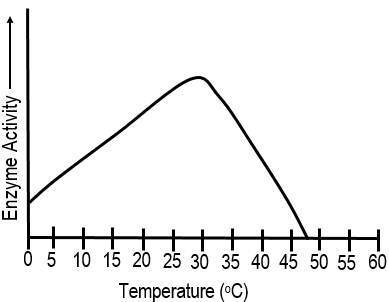
Based on the graph, what temperature does this enzyme work best? 
a)
15 C
b)
40 C
c)
30 C
d)
47 C
39.
Enzymes will make a reaction go _______ and use ______ energy.
a)
faster, less
b)
faster, more
c)
slower, less
d)
slower, more
40.
What happens to an enzyme when it is denatured?
a)
Activation energy is lowered.
b)
It becomes stronger.
c)
It loses its shape.
d)
Activation energy is raised.
41.
Every enzyme has a optimal temperature and pH. True or False?
a)
True 
b)
False
42.
Enzymes are composed of which of the following monomers? 
a)
amino acids
b)
carbohydrates
c)
nucleotides
d)
monosaccharides
43.

Which molecule is a polymer made of amino acids?

a)

Lipid

b)

Protein

c)

Nucleic acid

d)

Carbohydrate

44.

Which of these is an inorganic molecule?

a)

Water

b)

Glucose

c)

Protein

d)

DNA

45.

Which characteristic of enzymes allows them to catalyze specific reactions?

a)

Their size

b)

Their shape

c)

Their temperature

d)

Their solubility

46.

What is a polysaccharide?

a)

A simple sugar

b)

A chain of amino acids

c)

A complex carbohydrate

d)

A type of lipid

47.

Which molecule forms the structure of the cell membrane?

a)

Protein

b)

Phospholipid

c)

DNA

d)

Glucose

48.

Which property of water enables capillary action in plants?

a)

Polarity

b)

High heat capacity

c)

Cohesion and adhesion

d)

Solubility

49.

Which molecule is responsible for coding the traits of an organism?

a)

RNA

b)

ATP

c)

DNA

d)

Glucose

50.

DNA replication results in

a)

2 completely new DNA molecules

b)

2 DNA molecules that each contain a strand of the original

c)

1 new DNA molecule and 1 old

d)

1 new molecule of DNA

51.

Enzyme that breaks hydrogen bonds (unzips)

a)

Ligase

b)

Polymerase

c)

Primase

d)

Helicase

52.

DNA strand has the following bases AAGCCA what are the bases on the complementary strand

a)

GGCTTA

b)

TTGGGA

c)

CCAGGT

d)

TTCGGT

53.

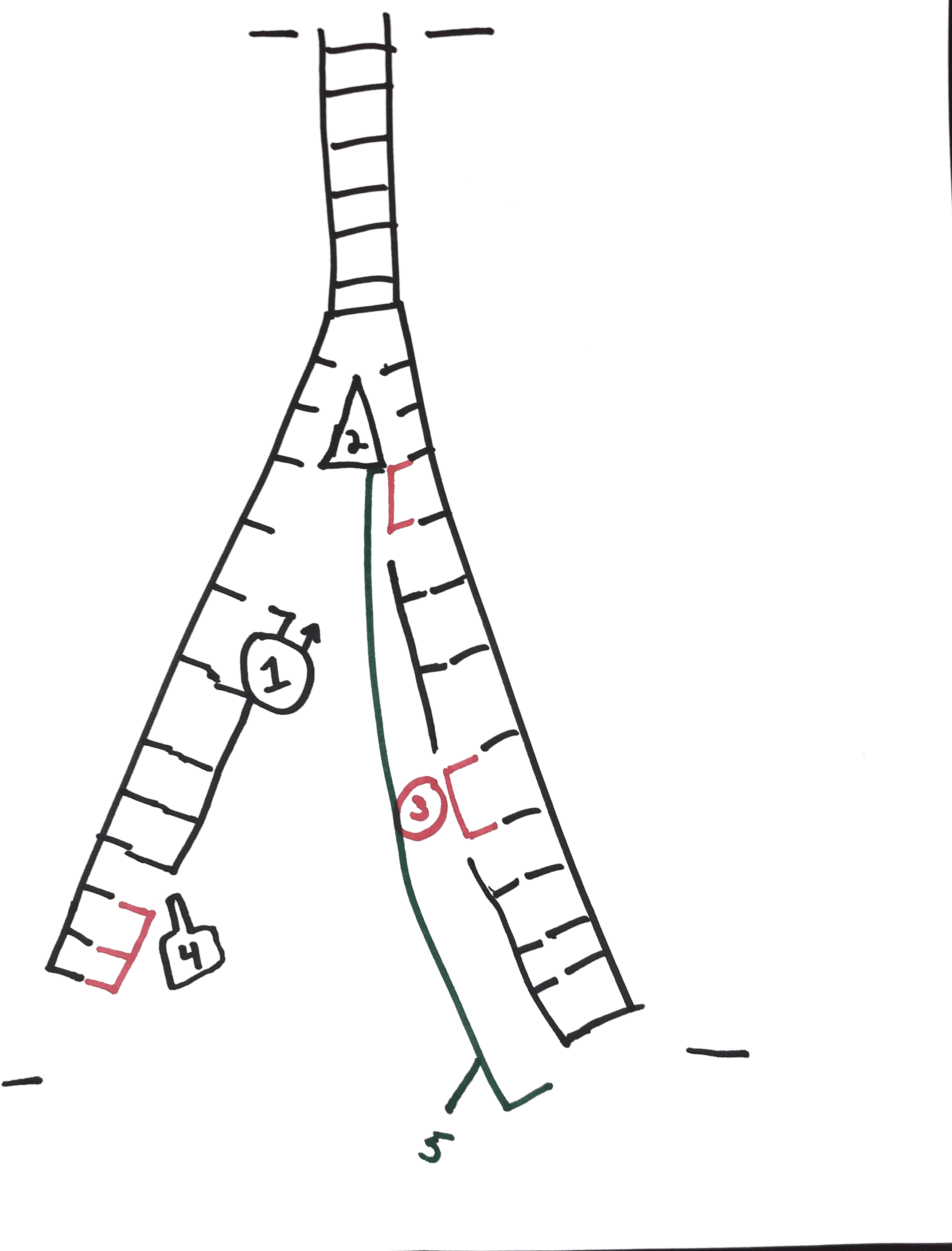
Number 1 in the picture above

a)

Replication

b)

DNA Polymerase

c)

Primase

d)

Ligase

54.
A process in which DNA has the unique ability to make an exact copy of itself.
a)
Replication
b)
Translation
c)
Transcription
55.
What are the 4 nitrogen bases?
a)
adenine, thymine, cytoplasm, and guanine
b)
adenine, thymine cytosine, and guanine
c)
adenine, thymine, cytosine, and gylcerol
d)
adenine, thymine, cytosine, and glucose
56.
What are the nucleotides made of?
a)
Sugar, Phosphate, nitrogen base
b)
Phosphate, Adenine, nitrogen base
c)
Thymine, Adenine, Cytomine
d)
Phosphate, Nitrogen, Adenine
57.
Which organelle is DNA usually found in?
a)
cell membrane
b)
vacuole
c)
chloroplast
d)
nucleus
58.
Which of the following best describes a DNA molecule?
a)
double helix
b)
contains ribose
c)
made of amino acids
d)
contains Uracil
59.
The drawing shows the structure of what molecule?
a)
A DNA molecule
b)
A lipid molecule
c)
A carbohydrate molecule
d)
A protein molecule
60.
Which of the following complementary base pairs are correct?
a)
A  - T
b)
A - G
c)
T - C
d)
G - U
61.
The bonds that hold the two strands of DNA together come from...
a)
the attraction of phosphate groups 
b)
strong bonds between  bases and sugars
c)
carbon to carbon bonds in the sugar
d)
weak hydrogen bonds between the bases
62.
Why is DNA important?
a)
it is very small and very complicated
b)
it's in everything
c)
it serves as the blueprint for traits of all living things
d)
because we eat it every day for energy
63.
After analyzing a sample of DNA, a scientist recorded the data shown in the table. What percentage of the DNA sample is cytosine?
a)
22%
b)
25%
c)
28%
d)
56%
64.
Who discovered the structure of DNA?
a)
Gregor and Mendel
b)
Thomas and Morgan
c)
Watson and Crick
d)
Darwin and Pasteur
65.
Four different segments of a DNA molecule are represented below. There is an error in the DNA molecule in 
a)
Segment 1 only
b)
segment 3 only
c)
Segment 2 and 3
d)
segment 2 and 4 
66.
Diagram represents a portion of DNA molecule. The letters represent different types of
a)
sugar molecules
b)
molecular bases
c)
enzymes
d)
proteins
67.
In the diagram strand I and II represent portions of DNA molecule. Strand II would normally include...
a)
AGC
b)
TCG
c)
TAC
d)
GAT
68.
order of replication
a)
3, 2, 1, 4
b)
2, 1, 4, 3
c)
2, 3, 1, 4
d)
3, 4, 1, 2
69.
The enzyme that unzips the DNA to prepare for replication
a)
helicase
b)
replicase
c)
polymerase
d)
synthase
70.
Nitrogenous bases are joined by which type of bond?
a)
polar bonds
b)
ionic bonds
c)
covalent bonds
d)
hydrogen bonds
71.
Which 2 molecules form the sides (backbone) of the DNA ladder?
a)
deoxyribose sugar and adenine
b)
deoxyribose sugar and a hydrogen bond
c)
deoxyribose sugar and the nucleus
d)
deoxyribose sugar and phosphate
72.
Guanine bonds with ______________.
a)
Adenine
b)
Guanine
c)
Cytosine
d)
Thymine
73.
Adenine bonds with ______________.
a)
Guanine
b)
Thymine
c)
Cytosine
d)
Adenine
74.
In a molecule of double-stranded DNA, the amount of Adenine present is always equal to the amount of
a)
cytosine
b)
guanine
c)
thymine
d)
uracil