wayground logo

Free Printable Worksheets

Font size

S
M
L
XL
Worksheets

Environmental Science Midterm

Total questions: 35

Worksheet time: 37mins

Name
Class
Date
1.
Why are plants called producers?
a)
They make carbon dioxide
b)
They decompose
c)

They make or produce their own food

d)
They are omnivores
2.
What is the process in which plants use sunlight to create energy?
a)
Photography
b)
Pennsylvania
c)
Cholorophyll
d)
Photosynthesis
3.
All animals are...
a)
producers
b)
consumers
c)
carnivores
d)
omnivores
4.
Living things that eat other living things are called...
a)
Consumers
b)
Carnivores
c)
Omnivores
d)
Animals
5.
What do decomposers eat?
a)
only plants
b)
plants and animals
c)
only other animals
d)
dead organisms
6.
What are fungi?
a)
really fun dudes
b)
mushrooms
c)
algae
d)
moss
7.
Bacteria is an example of a 
a)
producer
b)
consumer
c)
decomposer
8.

Scientists classify consumers into Carnivores, Herbivores, and Omnivores based on how they meet their need for ___.

a)

Food

b)

Water

c)

Shelter

d)

Air

9.

A carnivore is an ____.

a)

Organism that eats only meat

b)

Organism that eats only plants

c)

Organism that eats all things - meat and plants.

10.

A herbivore is an ____.

a)

Organism that eats only meat

b)

Organism that eats only plants

c)

Organism that eats all things - meat and plants.

11.

An omnivore is an ____.

a)

Organism that eats only meat

b)

Organism that eats only plants

c)

Organism that eats all things - meat and plants.

12.

shows one possible flow of energy

a)

food web

b)

food chain

c)

energy pyramid

13.

shows all possible flows of energy

a)

food web

b)

food chain

c)

energy pyramid

14.
A third-level consumer has to be which type?
a)
Carnivore.
b)
Decomposer.
c)
Producer.
d)
Herbivore.
15.
In a food web, arrows point at:
a)
who gets energy.
b)
who gets eaten.
16.
Which of the following is a herbivore?
a)
cricket
b)
frog
c)
hawk
d)
shrew
17.
If the grasshopper were to be removed completely from the food web, what organism would be most effected?
a)
The squirrel
b)
The shrew
c)
The deer
d)
The rabbit
18.
Which organism recieves the least amount of energy from the producer?
a)
Owl
b)
Grasshopper
c)
Lilypad
d)
Mouse
19.
Which organism in this food chain is a secondary consumer?
a)
Fish
b)
Grass
c)
Grasshopper
d)
Hawk
20.
Which organism in this food chain is a tertiary consumer?
a)
Fish
b)
Grass
c)
Grasshopper
d)
Hawk
21.
In this food pyramid, which level has the greatest amount of energy?
a)
Producers
b)
Primary Consumers
c)
Secondary Consumers
d)
Tertiary Consumers
22.
How much energy is passed from one trophic level to the next?
a)
1%
b)
10%
c)
50%
d)
100%
23.
Organisms which carry out the process of decomposition by breaking down dead or decaying organisms.
a)
Consumer
b)
Producer
c)
Decomposer
d)
Herbivore
24.
Precipitation occurs because 
a)
the droplets evaporate in the air
b)
the droplets are too light for the air to hold
c)
the droplets are too heavy for the air to hold
25.
When water turns into a gas
a)
condensation 
b)
evaporation
c)
precipitation
26.
What is condensation?
a)
The part of the water cycle when the sun heats up water, turning it from a liquid into water vapor or steam. It rises from the ground into the air.
b)
The part of the water cycle when the water vapor in the air gets cold. The water turns back into a liquid and forms clouds.
c)
The part of the water cycle when clouds get heavy and can no longer hold the liquid water. This causes the water to fall from the sky to the earth as rain, snow, sleet, or hail.
27.
What is evaporation?
a)
The part of the water cycle when the sun heats up water, turning it from a liquid into water vapor or steam. It rises from the ground into the air.
b)
The part of the water cycle when the water vapor in the air gets cold. The water turns back into a liquid and forms clouds.
c)
The part of the water cycle when clouds get heavy and can no longer hold the liquid water. This causes the water to fall from the sky to the earth as rain, snow, sleet, or hail.
28.

Where do plants get the energy for photosynthesis to take place?

a)

nutrients in the soil

b)

the sun

c)

chlorophyll

d)

bee pollination

29.
What gas  do plants give off after conducting photosynthesis that humans/animals need in order to live?
a)
Oxygen
b)
Carbon
c)
Nitrogen
d)
Hydrogen
30.
What are the 3 key ingredients needed for photosynthesis
a)
glucose, oxygen, carbon dioxide
b)
carbon dioxide, water, glucose
c)
water, soil, sunlight
d)
sunlight, water, carbon dioxide
31.
Cattle egrets forage (feed) in fields among cattle. The egret gets easy access to flying insects stirred up by the cattle, and the cattle don't care if they are there or not.
a)
mutualism
b)
commensalism
c)
competition
d)
parasitism
32.
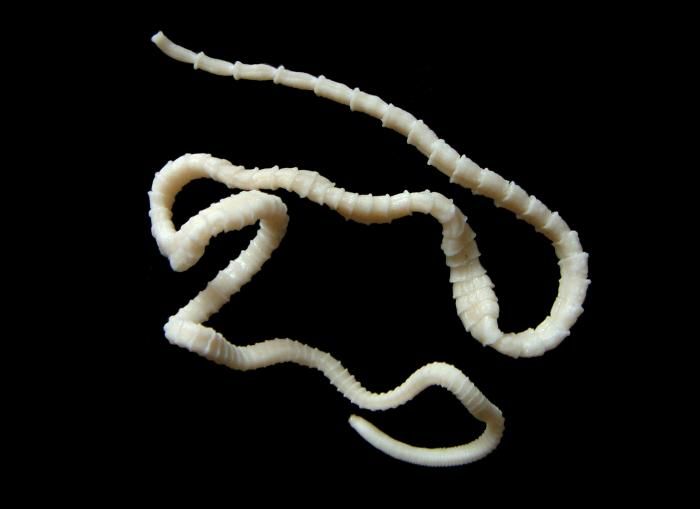
A tapeworm and a cat have this type of relationship.
a)
mutualism
b)
parasitism
c)
commensalism
d)
competition
33.
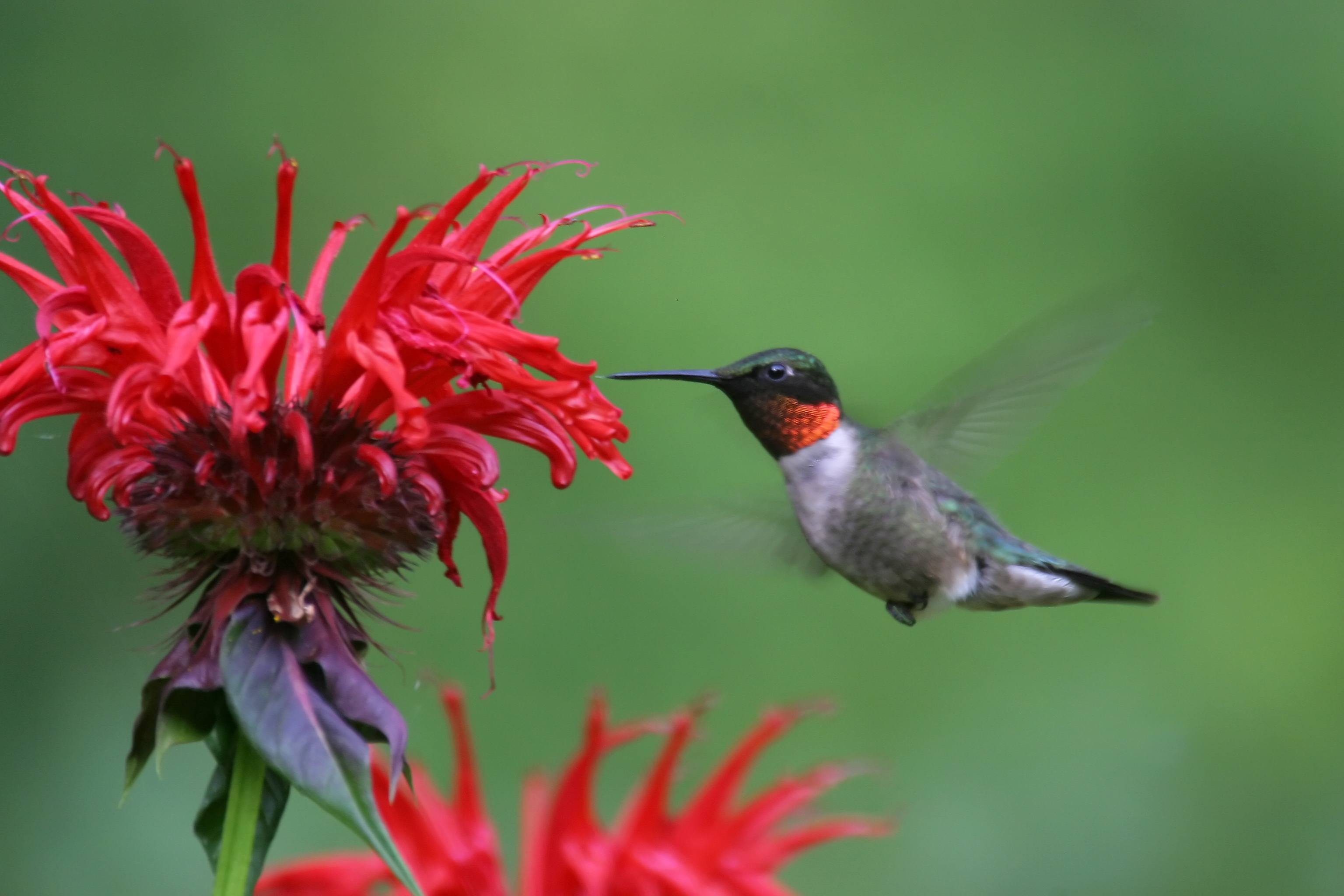
What type of symbiosis?  Hummingbirds feed on nectar from flowers.  The flowers are pollinated by hummingbirds as they move from flower to flower.
a)
commensalism
b)
mutualism
c)
parasitism
d)
predation
34.
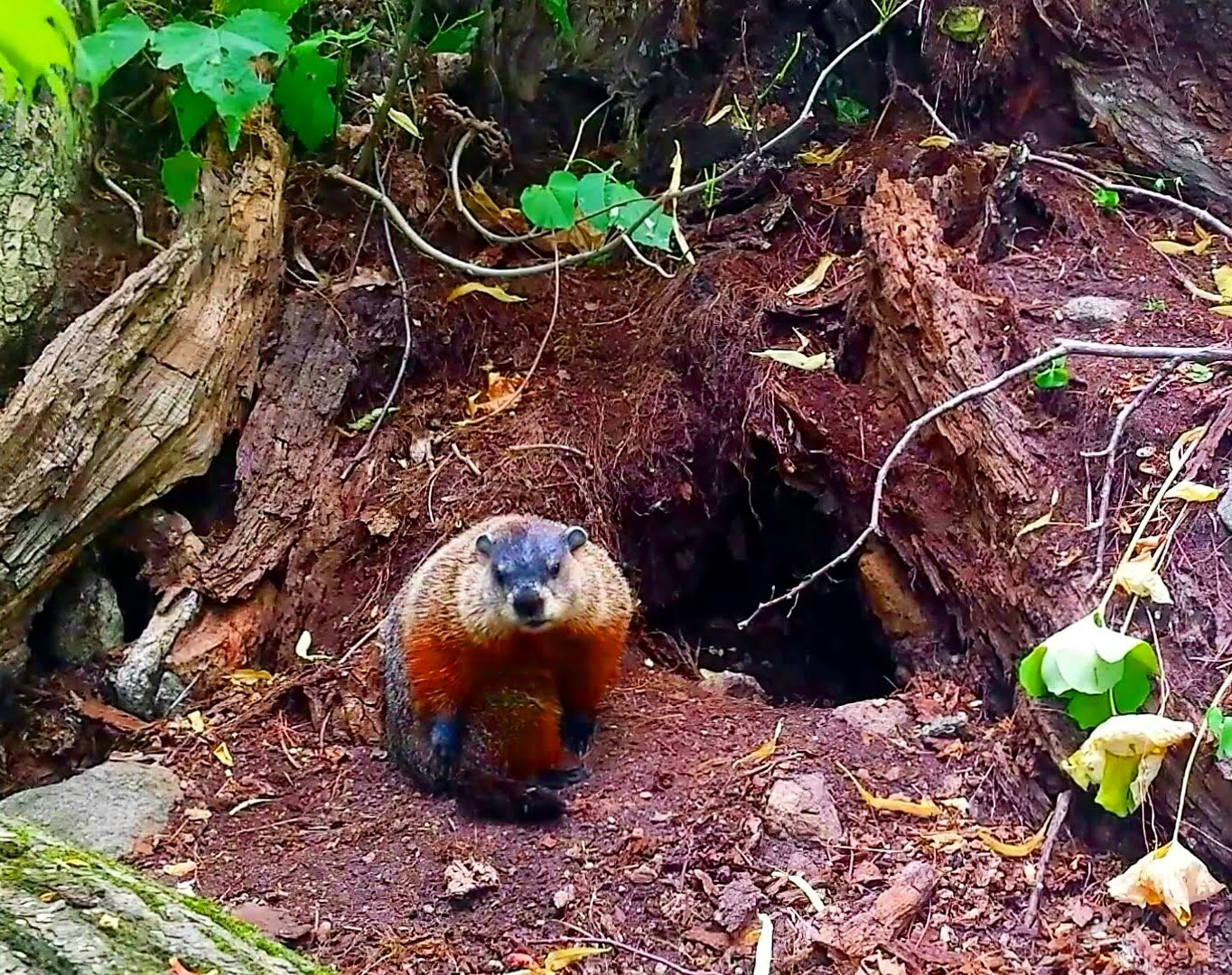
What type of symbiosis?  Skunks often live in burrows that have been dug and abandoned by woodchucks.  
a)
commensalism
b)
mutualism
c)
parasitism
d)
predation
35.
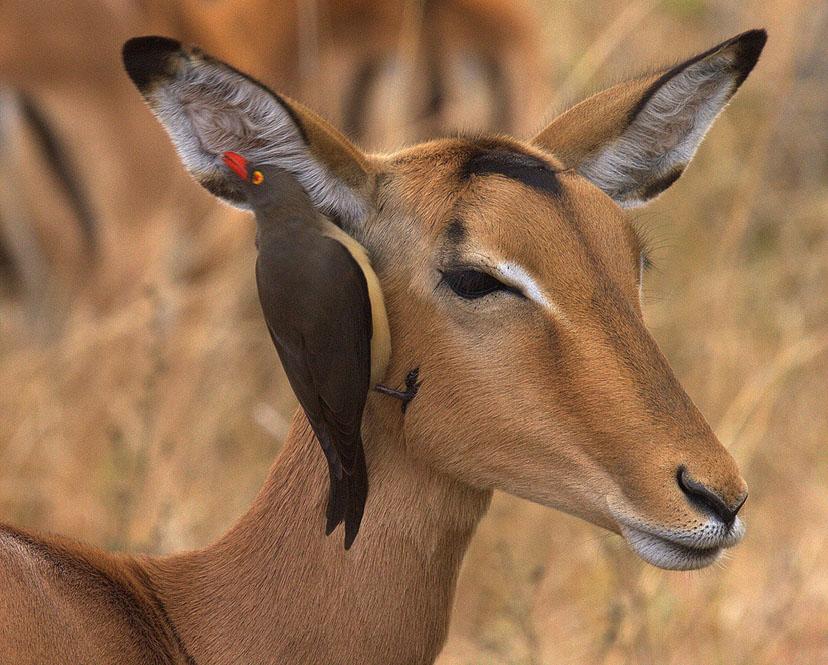
Red-billed oxpeckers are birds that often feed on parasites that infest impala.  This is an example of _______.
a)
commensalism
b)
mutualism
c)
neutralism
d)
competition