
 Worksheets
Living Environment Review
Total questions: 56
Worksheet time: 40mins

Sac within the cytoplasm that STORES fluid, plants have a larger one that stores food and water.
vacuole
lysosome
cell wall
ribosome
Is the jelly-like substance in the cell that contains the organelles
ribosome
cytoplasm
cell wall
chloroplast

This structure is only found in plants and prokaryotes (Gives it a rigid shape)
cell wall
cytoplasm
centriole
nucleus
This organelle make PROTEINS for the cell
chloroplast
ribosome
lysosome
cell wall

Only found in plant cells, site of Photosynthesis
cell wall
cell membrane
chloroplast
cytoplasm
this organelle makes ATP.
chloroplast
mitochondria
ribosome
nucleolus

Large storage for plant cells. Typically stores water and nutrients.
Chloroplast
Vacuole
Lysosome
Cytoplasm
The cell membrane is located...
underneath the cell wall of a plant cell.
outside of the cell wall of a plant cell.

DNA

In what organelle is the genetic material found inside?
Endoplasmic Reticulum
Golgi Complex
Nucleolus
Nucleus
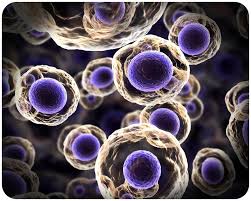
Prokaryotes are __________ than eukaryotes because they have fewer
organelles and no nucleus.
smaller
bigger
same size
undefined
Choose the similarity between prokaryotes and eukaryotes.
both have cell walls
both contains cytoplasm, ribosomes, and DNA
both are able to reproduce by mitosis
both are found in the same organism

Which organelle is correctly paired with its function?
lysosome - synthesize carbohydrates
mitochondria - synthesize proteins
chloroplast - site for photosynthesis
nucleus - site for cellular respiration

What is number 1 and what does it do?
ribosome; protein synthesis
ribosome; cellular respiration
mitochondrion; cellular respiration
nucleus; controls cell activities
Which molecule can not more through a cells membrane?
Water
Glucose
Starch
Iodine
It may be harmful when people compete to see who can hold their breath the longest underwater. Without oxygen, brain cells
cannot make enough ATP
have too few mitochondria
make too many enzymes
have too much water
Any organism that can synthesize its own food.
autotroph
/autotrophic
fungi
monera
eukaryotic
What does a 'region with high concentration' mean?
SMALL number of particles
LARGE number of particles
UNEVEN number of particles
no particles
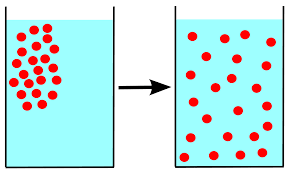
The picture below is an example of _________________.
osmosis
isotonic
diffusion
active transport
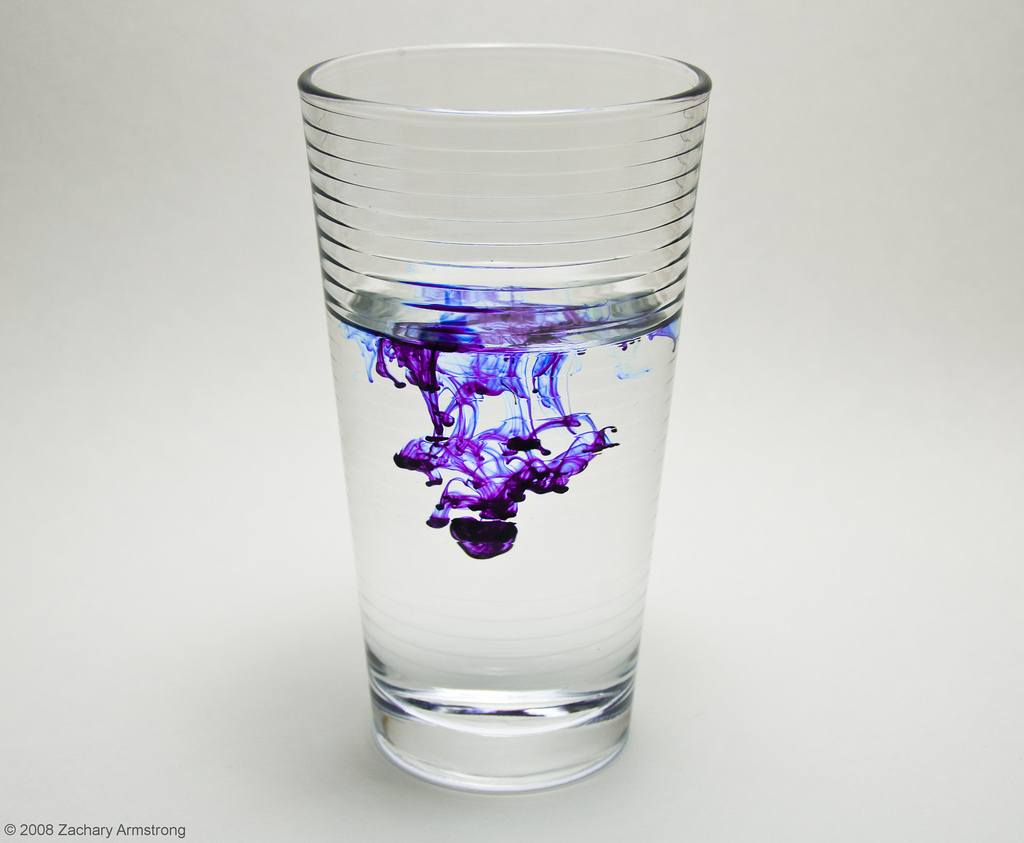
Where is there a low concentration of dye?
at the bottom of cup
in the color
at the top of cup
no concenteraion gradient

How do the particles move in diffusion?
From a region of low concentration to a region of high concentration
From a region of high concentration to a region of low concentration
From a region of low concentration to a region of low concentration
From a region of high concentration to a region of high concentration
What is DIFFUSION?


Which of the following is a product of cellular respiration?
Radiant Energy
Oxygen
Glucose
Water

What are the reactants (taken into) of cellular respiration? (Mark all of them!)
oxygen
glucose
carbon dioxide
water
energy
Does cellular respiration store or release energy?
Store
Release
Photosynthesis is a biological process that occurs in autotrophs. Which of the following is produced as a result of photosynthesis?
Water and light
Glucose and chlorophyll
Glucose and oxygen
Carbon dioxide and water
Where do the reactions of photosynthesis take place in autotrophs?
Chloroplast
Mitochondria
Cell Walls
Cytoplasm
Where does the energy for plants to perform photosynthesis come from?
Breaking down ATP
sunlight
glucose metabolism
None of the Above
What is the chemical equation for photosynthesis? Choose the BEST answer
C6H12O6 + O2 -> CO2 + H2O
CO2 + H2O --> C6H12O6 + O2
6 CO2 + 6 H2O --> C6H12O6 + 6 O2
C6H12O6 + 6 O2 -> 6 CO2 + 6 H2O
What is the pigment responsible for absorbing light energy in chloroplasts during photosynthesis?
None of the Above
Carotenoids
Xenophylls
Chlorophyll
Cellular Respiration involves the chemical breakdown of _____ to form ATP Energy
Fats
Fructose
Glucose
Proteins
True of False, Plants can perform Cellular Respiration and Photosynthesis
False
True
Photosynthesis is ...
The process in which organisms convert/transfer energy from glucose to ATP.
The process in which organisms exchange carbon dioxide and oxygen in their lungs.
The process of taking a picture.
The process of plants converting/transferring solar energy to chemical energy to make their food.
oxygen and carbon dioxide
light and water
Which process does heterotrophs and autotrophs undergo in order to convert glucose into ATP?
cellular respiration
osmosis
photosynthesis
transcription
Cellular respiration is a chemical reaction that converts chemical energy stored in glucose into which large molecule?
carbohydrate
citric acid
pyruvate
ATP
What is the main purpose of photosynthesis?
To make food
To create energy
To release oxygen
To absorb sunlight
Macromolecules are made of repeating subunits called
monomers
monosaccharides
polymers
polysaccharides
A __________ consists of many monomers bonded together.
monomer
hydrocarbon
peptide
polymer

