
Font size
 Worksheets
Periodic Table and Trends
Total questions: 61
Worksheet time: 53mins

Ions are formed when atoms gain or lose ___.
electrons
protons
neutrons
atomic mass

What property is being measured in this diagram?
Density
Ionization Energy
Atomic Radius
Atomic Mass
If a potassium atom lost one electron, what would be the symbol for that ion?


Which element in period 4 has the highest electronegativity?
potassium
calcium
copper
bromine
The common charge on an atom in group 17 would be....
+1
+7
-7
-1
17

What type of elements are poor conductors of heat and electricity?
transition metals
inner transition metals
metals
nonmetals

What type of elements are malleable and ductile?
noble gases
nonmetals
metals
halogens
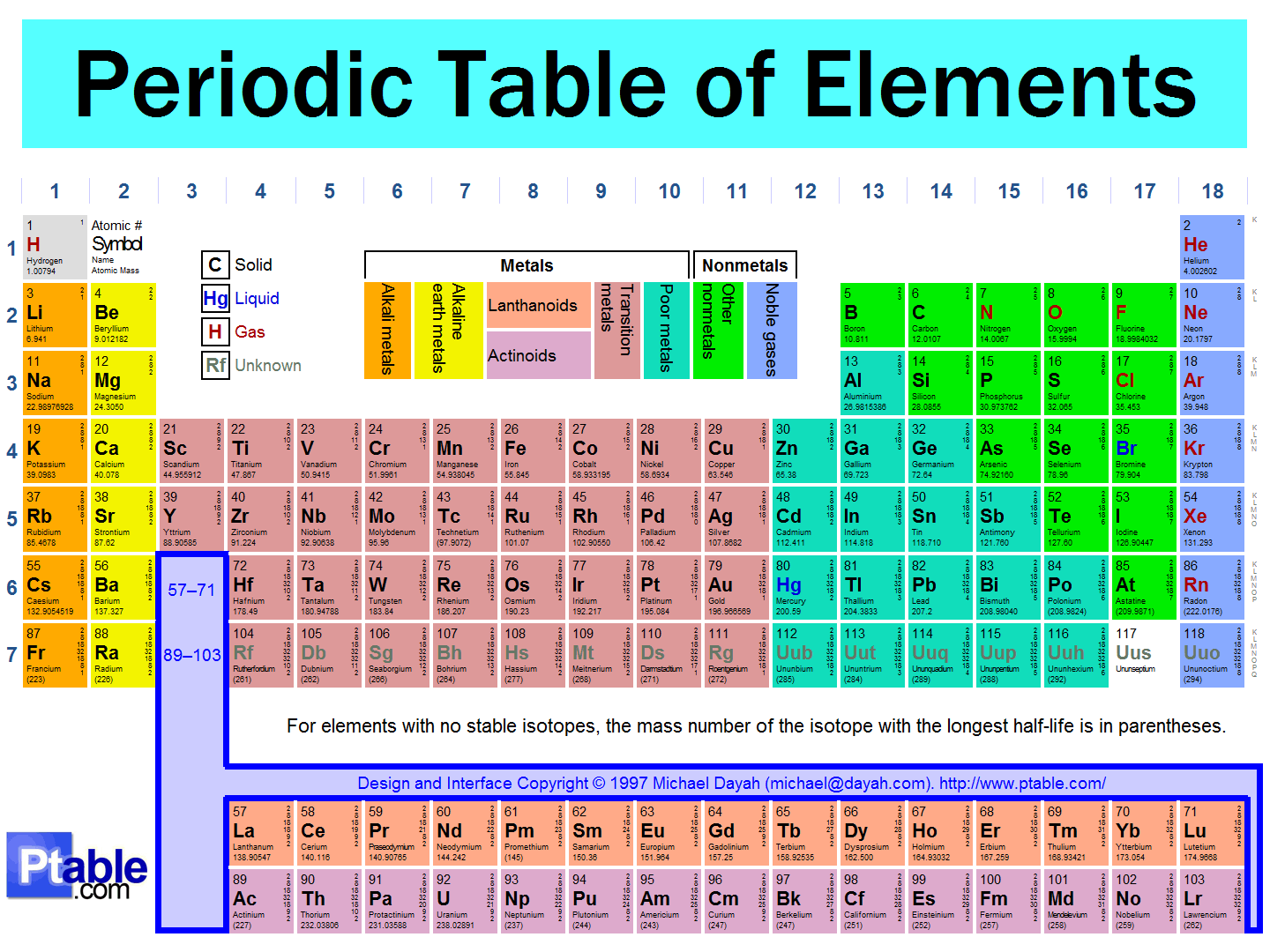
The vertical (up and down) columns in the Periodic Table are called
groups
towers
periods
atomic numbers
Find an element with similar chemical properties to Barium (Ba)
Ca and Ra, because they are in the same group and have similar chemical properties
Ca and Y, because they are at a 90 degree angle and have similar chemical properties
Cs and La, because they are within the same period
Which of the following could be properties of NONmetals?
Poor electrical conductivity
Dullness
poor thermal conductivity
Brittleness
All the above
True or False: The reactivity of metals tends to decrease as you move RIGHT on the periodic table
False
True
How do you determine the valence electron count of an element?
Protons + Neutrons
Mass# - Electrons
Group #
Proton #
Select the element with the highest ionization energy
Sodium
Aluminum
Phosphorous
Chlorine
Select the element that is a metalloid
Gallium
Boron
Oxygen
Magnesium
Select the element with the highest electronegativity
Chlorine
Silicon
Argon
Magnesium
What element is found in Group 5 period 4?
Zirconium
Magnesium
Strontium
Vanadium
Select the element with the lowest ionization energy.
Barium
Beryllium
Magnesium
Strontium
What electron configuration matches an oxygen atom?
1s22s22p63s2, 3p64s23d104p5
1s22s22p4
1s22s22p6
1s22s22p63s23p64s23d1
Identify the Electron Configuration for Aluminum (Al)
1s2 2s2 2p6 3s2 3p1
1s2 2s2 2p6 3s2 3p3
1s2 2s2 2p6 3s2 4p1
Energy levels are denoted by:
letters
numbers
a combination of letters and numbers
subscripts
Each row on the periodic table represents:
an energy level
a sublevel
an electron
an orbital
What is the position of an element in the periodic table if its electron configuration is 1s2 2s2 2p6 3s2 3p5?
Group 1A
Group 2A
Group 5A
Group 7A
Why do electrons enter the 4s orbital before entering the 3d orbital?
because the 3d orbital is at a lower energy level
because both the 4s and 3d orbitals are at the same energy level
because the 4s orbital is at a lower energy level
because the 4s orbital is at a higher energy level
A particular atom has 8 protons, 8 electrons and 9 neutrons. State its atomic number.
(a)
What is the overall charge of an atom?
postive
negative
neutral
not sure
How many electrons can the d sublevel hold?
What is the maximum number of electrons that an s orbital can have?
1 electron
2 electrons
3 electrons
4 electrons
How many electrons can the p sublevel hold?
6
What is the maximum number of electrons that an f orbital can have?
11 electrons
14 electrons
13 electrons
12 electrons
How many electrons can the third energy level hold?
2
18
What atom matches this electron configuration?
1s22s22p63s23p64s23d10
Zinc
Copper
Nickel
Germanium
What element has the electron configuration
Nitrogen
Oxygen
Magnessium
Carbon
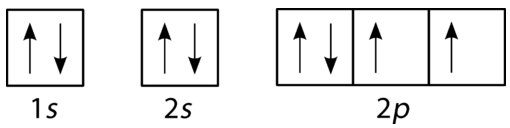

Which orbital is displayed correctly?
A
B
C
D
If a neutral Chlorine has an atomic number of 17 and an atomic mass of 35amu, how many protons, neutrons and electrons must it have?
Protons - 17
Neutrons - 17
Electrons - 17
Protons - 35
Neutrons - 35
Electrons - 17
Protons - 17
Neutrons - 18
Electrons - 35
Protons - 17
Neutrons - 18
Electrons - 17
Protons - 18
Neutrons - 35
Electrons - 17

1s22s22p63s23p64s23d10
What was the identity of the unknown substance?
LiCl
CaCl2
NaCl
BaCl2
SrCl2
A fellow student of yours thought that flame color was based on the element written at the beginning of the compound. Which statement would give evidence to support their claim?
The flames of LiCl and and NaCl are the same color
The flames of LiCl and NaCl are different colors
The flames of Na2SO4 and NaCl are different colors
The flames of Na2SO4 and CuCl2 are different colors
Which scientific principle would be most useful to connect your claim to your evidence in this lab?
Chemical properties can only be observed by changing the identity of the substance
A chemical change results in a new substance
A physical change does not produce a new substance
Physical properties can be observed without changing the identity of the substance
Why do we wet the cotton swap before dipping it into the salt?
to clean the cotton swab
to make the salt stick to it
to prevent the cotton swab from burning
all of these are true
An atomic emission spectrum is...
unique to the element
a complete rainbow
both of these are correct
neither of these are correct
Light of a specific frequency is emitted when...
an electron absorbs energy
an electron moves down an energy level
when an electron gets excited
all of these are true
A practical application of atomic emission spectra is ....
neon lights
fireworks
identifying unknown substances
all of these

