
Font size
 Worksheets
BIO122 Chemical Bond and Water
Total questions: 29
Worksheet time: 18mins
The chemical bond formed when two atoms share electrons is call a(n)
covalent bond
ionic bond
metallic bond
electron bond


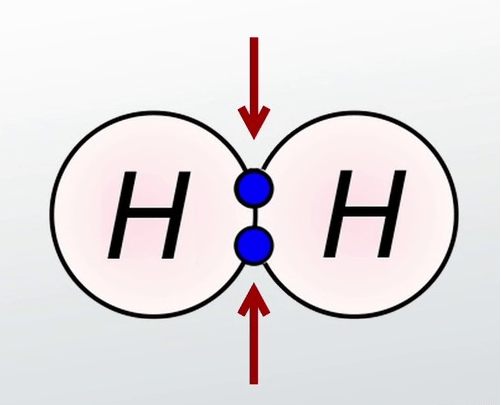
Metallic
Water covers about three quarters of Earth's surface.
True
False
Oxygen has .............................. electronegativity than hydrogen,
less
a greater
O - H bond in a water molecule is ..........................
highly polar
highly nonpolar
Hydrogen bonds are attractive forces that arise when a ..................... atom is covalently bonded to a very electronegative atom.
oxygen
hydrogen
helium
Hydrogen bonds .................................... covalent bonds.
are as strong as
are not as strong as
are as weak as
The inward force, or pull, that tends to minimize the surface area of a liquid is called ..........................................
surface area
gravity
surface tension.
Adding a detergent to beads of water on a greasy surface....................... surface tension.
reduces
improves
stabilizes
An extensive network of .......................................... holds the molecules in liquid water to one another.
metallic bonds
hydrogen bonds
ionic bonds
Ice, which forms at 0°C, has about a 10 percent lower density than liquid water at 25°C.
True
False
Water is.. Select all that apply
Universal Solvent
Has High Specific Heat to regulate temperature
Comes in three states
Is polar
What is the chemical formula for water?
O2
H020
H2O
PH
Water has..
2 hydrogen and 1 oxygen
1 hydrogen and 1 oxygen
3 hydrogen and no oxygen
neither hydrogen or oxygen
Water has a __ side and a __ side.
positive, positive
positive, negative
negative, positive
negative,negative
What charge does hydrogen have in water?
negative
neutral
positive
no charge
What charge does oxygen have in water?
neutral
positive
negative
both positive and negative
The positive (hydrogen) and negative (oxygen) charges allow water to..
repel each other
stick to everything
stick to other things that also have a charge
When water sticks to other things (such as a car window), what is taking place?
Cohesion
Adhesion
Capillary Action
hydrogen bonds
When water sticks to itself, what is taking place?
Cohesion
Adhesion
Capillary Action
Surface tension
How many states does water come in?
Only 1
2
3
5
What are the states of water?
solid, liquid, gas
oil, ice, water
there's only two: acid and oil
Water has __ specific heat. It can absorb a lot of energy without increasing its own temperature. This is why water takes so long to boil.
high
low
medium
no
When our body gets too hot, we __.
perspire/sweat
die
shiver
freeze
We do not want our body temperature to fluctuate very much because it would alter chemical reactions (metabolism). When metabolism is thrown off, homeostasis (balance) is also thrown off. This can lead to death.
Is this statement true or false?
True
False

