wayground logo

Free Printable Worksheets

Font size

S
M
L
XL
Worksheets

Nutrition Pre-Test

Total questions: 51

Worksheet time: 28mins

Name
Class
Date
1.
A pattern of eating that includes how much, what, and how often a person eats.
a)
Metabolism
b)
Diet
c)
Calories
d)
Vitamins 
2.
Nutrients that build and repair tissues and cells e.g. meat, milk, eggs.
a)
Fat
b)
Minerals
c)
Vitamins
d)
Protein
3.
A chemical compound made up of one or more simple sugar e.g. bread, rice, pasta
a)
Protein
b)
Water
c)
Fat
d)
Carbohydrates
4.
The body uses this to carry nutrients and waste. It also helps joints move smoothly.
a)
Fat
b)
Water
c)
Minerals
d)
Vitamin 
5.

Our body uses _____________ to carry out daily activities.

a)

energy

b)

hands

c)

nutrients

d)

protein

6.

__________________ are energy giving foods.

a)

minerals

b)

fats

c)

carbohydrates

d)

protein

7.
The three classes of nutrients that supply our body with energy are
a)
Glucose, Sucrose, Lactose
b)
Fat, proteins, carbohydrates
c)
Vitamins, minerals, fiber
d)
Protein, water, carbohydrates
8.
Water is extremely important to your health because it
a)
makes us sweat
b)
gives us energy
c)
is vital in all of the bodies major functions
d)
is helps make our blood thicker so it can carry more oxygen
9.
Proteins are found in...
a)
dried beans, peas, and nuts
b)
milk and eggs
c)
meat, fish, and poultry
d)
All choices are correct
10.
Bread is a great source of which energy nutrient?
a)
Carbohydrates
b)
Fats
c)
Proteins
d)
All of the above
11.
Which of the following foods is NOT a carbohydrate?
a)
rice
b)
bread
c)
fruit 
d)
fish
12.

Which food group does an avacado belong to?

a)

protein

b)

fruit

c)

vegetable

d)

grain

13.

Peanut butter would belong in which food group?

a)

grain

b)

dairy

c)

fats

d)

protein

14.

Yogurt would be classified in which food group?

a)

protein

b)

dairy

c)

vegetable

d)

grain

15.

Which do you want the least amount of in your diet?

a)

Protein

b)

Sugar

c)

Potassium

d)

Calcium

16.
WHAT ARE THE 6 NUTRIENTS?
a)
Carbs, Meats, Fibers, Water, Protein, and Dairy
b)
Fruits, Milk, Fibers, Water, Pork, and Vitamins
c)
Carbs, Fats, Minerals, Water, Proteins, and Vitamins
d)
Carbs, Fats, Fibers, Cheese, Protein, and Vegtables
17.
How does calcium help our body?
a)
Builds muscle
b)
Helps eyesight
c)
Develops red blood cells
d)
Strong bones
18.
To be healthy, you have to cut all the fat from your diet.
a)
True
b)
False
19.
Practicing good nutrition means that you can eat one type of food every day as long as the food is healthy.
a)
True
b)
False
20.
You need to drink only two glasses of water every day.
a)
True
b)
False
21.

True or False. When reading a nutrition label it is important to know the serving size?

a)

True

b)

False

22.

True or False:

The more active you are, the more calories you need.

a)

True

b)

False

23.

True or False:

Calories from fat and sugar are just as healthy as calories from protein and carbs

a)

True

b)

False

24.

True or False:

Water is a nutrient

a)

True

b)

False

25.

Calories are a unit of...

a)

Sugar

b)

Energy

c)

Gluten

d)

Time

26.

Eating habits can affect your appearance.

a)

True

b)

False

27.

Vitamin C

a)

the sunshine vitamin

b)

found in citrus fruits

c)

helps clot blood

28.
Half of your plate should be:
a)
Fruits and Vegetables
b)
Protein
c)
Grains
d)
Dairy
29.
Half of your grains should be
a)
White bread
b)
whole grains
c)
donuts
d)
bagels
30.
Which of the following are proteins?
a)
arugula
b)
Strawberries
c)
tortilla
d)
Beans, eggs, chicken
31.
What color is the Vegetable category on your plate?
a)
Purple
b)
Green
c)
Yellow
d)
Blue
32.

What Color is the Grain section?

a)

Blue

b)

Green

c)

Brown

d)

Red

e)

Purple

33.

What color is the Dairy section?

a)

Blue

b)

Green

c)

Brown

d)

Red

e)

Purple

34.

What Color is the Protein section?

a)

Blue

b)

Green

c)

Brown

d)

Red

e)

Purple

35.

What Color is the Fruit Section?

a)

Blue

b)

Green

c)

Brown

d)

Red

e)

Purple

36.

What Color is the Vegetable Section?

a)

Blue

b)

Green

c)

Brown

d)

Red

e)

Purple

37.
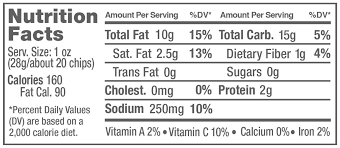
Based on the label, how many chips are in 1 serving of this bag of potato chips?
a)
20 chips
b)
28 chips
c)
160 chips
d)
90 chips
38.
Reading the food label can help you compare products, make healthier choices and provide valuable information to people with food allergies. 
a)
True
b)
False
39.
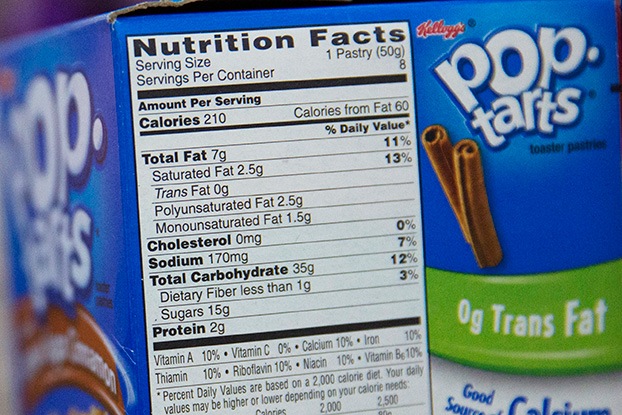
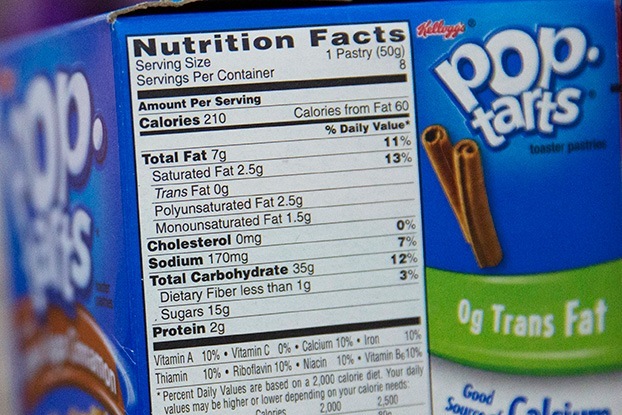
How many servings are in this container of poptarts?  
a)
1
b)
4
c)
8
d)
Unable to tell based on the information 
40.
How many grams of sugar in 1 poptart? 
a)
170
b)
34
c)
15
d)
less than 2%
41.
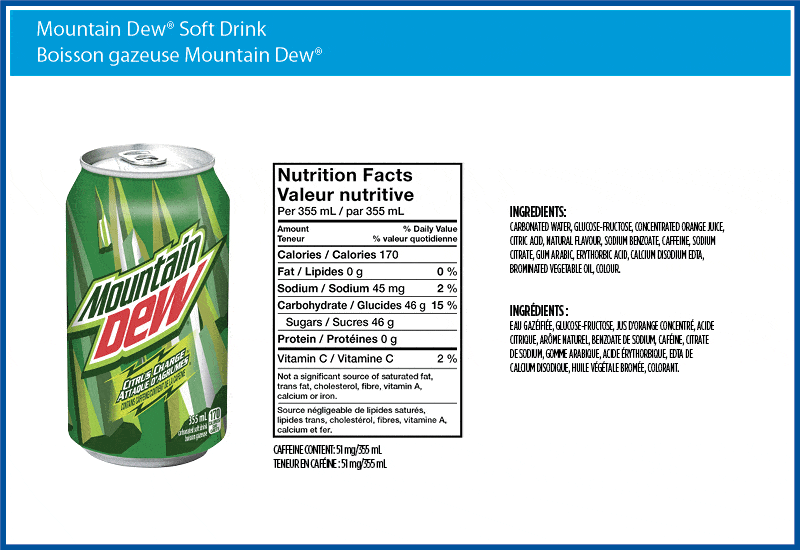
How many calories in a can of Mountain Dew?
a)
170
b)
45
c)
12 oz
d)
355
42.

Who should be reading a food label?

a)

Everyone

b)

People with allergies, diseases and those on a diet

43.
Does the label give you the Serving Size?
a)
Yes
b)
No
c)
I don't know
44.
How Much Sodium is in one serving of chips?
a)
0 Miligrams
b)
250 Miligrams 
c)
2.5 Grams 
d)
10 Grams
45.

Food lables give you ingredient lists.

a)

True

b)

False

46.

The more sugar in the food better the food.

a)

False

b)

True

47.
how much is 1 serving?
a)
1 tablespoon
b)
30 grams
c)
2tbsp (35g)
48.
how much fat is in 1 serving (2tbsp)?
a)
100g
b)
12grams
c)
14grams
d)
7g
49.

How much sugar does the product contain?

a)

Exactly 1 gram

b)

Less than 1 gram

c)

More than 1 gram

d)

0 gram

50.

What is the name of the product?

a)

Oats 'n Honey

b)

Crunchy Granola Bars

c)

Nature Valley

d)

Whole Grain

51.

The product is for.....servings

a)

7

b)

8

c)

110

d)

240