
Font size
 Worksheets
Cell Transport and Theory
Total questions: 48
Worksheet time: 32mins
What is NOT part of the cell theory?
all cells come from existing cells
all living things are made of cells
all cells have a nucleus
Cells are the basic unit and structure of all living things
An amoeba is a unicellular, animal-like protist that lives in ponds and streams. According to the cell theory, where did this cell come from?
another pre-existing amoeba cell
energy from the sun allowed the protist to reproduce
a multicellular organism
the nonliving environment
How are unicellular organisms different from multicellular organisms?
There are no differences
Unicellular organisms are made of many cells
Unicellular organisms are only classified as prokaryotes
Unicellular organisms are made of only 1 cell
What is the basic structural and functional unit of all living things?
atom
cell
molecule
human
ATP is required for which of the following?
Facilitated Diffusion
Exocytosis
Osmosis
Simple Diffusion
Which answer best describes what the cell membrane is made of?
Phospholipids
Proteins
Nitrogen
Glycogen
Osmosis is....
the diffusion of water.
the movement of water from low water concentration to high water concentration.
a process that requires ATP.
a form of active diffusion.

Which type of diffusion is represented?
Facilitated diffusion
Osmosis
Diffusion
Which type of solution has the same solute concentration inside of and outside of the cell?
Hypertonic
Hypotonic
Isotonic

The cell shrunk in size, which means it was placed in a ____ solution.
Isotonic
Hypertonic
Hypotonic

The cell expanded in size to the point of lysing (bursting), which means it was placed in a ____ solution.
Isotonic
Hypertonic
Hypotonic

The cell shows water moving in and out equally, which means it was placed in a ___ solution.
Isotonic
Hypertonic
Hypotonic
where does water move
lower to lower water potential
higher to higher water potential
low to high water potential
high to low water potential
Where is the DNA found in a prokaryotic cell?
in the ribosomes
floating around in the cytoplasm
attached to the cell membrane
in the nucleus
Which of the following provide evidence for the hypothesis that prokaryotes evolved before eukaryotes.
prokaryotes are more complex
eukaryotes are multicellular which makes them simpler
prokaryotes have no nucleus and fewer genes
prokaryotes grow into eukaryotes
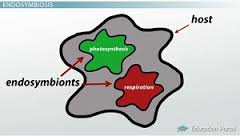
The Theory of Endosymbiosis explains:
how bacteria live
the origin of Eukaryotes
Why cells rely on one another
how species develop
Which of the following is evidence to support the endosymbiotic theory?
Mitochondria and chloroplasts have their own DNA, which is similar to prokaryotic DNA.
Fossil evidence shows that the first forms of life were prokaryotic cells.
All eukaryotic cells have a double-layered membrane composed of phosplipids and proteins.
Prokaryotes have the same number and types of enzymes as eukaryotes.
Are eukaryotes multicellular or unicellular?
multicellular
unicellular
both unicellular and multicellular
Both eukaryotic and prokaryotic cells have:
ribosomes
cell membranes
false
true
Eukaryotes are thought to have evolved by a prokaryote engulfing one heterotrophic bacteria and one photosynthetic bacterium.
false
true
Mitochondria , chloroplast , and bacteria are similar in size.
true
false
What are evidence to support endosymbiotic theory?
Mitochondria is found outside the cells
Mitochondria and chloroplast have 70S ribosomes.
Mitochondria and chloroplast have a double membrane, similar to the cell membrane
Mitochondria and chloroplast have their own genetic material (DNA)
Which statement below correctly explains and gives the importance of the endosymbiotic theory? (Select ALL that apply.)
The endosymbiotic theory states that the inner and outer membrane of the endoplasmic reticulum indicates these were once free living organisms which were taken into an early cell via endocytosis. The theory was further supported by the presence of prokaryotic ribosomes and replication of the endoplasmic reticulum via binary fission.
The endosymbiotic theory states that the inner and outer membrane of the mitochondria indicates these were once free living organisms which were taken into an early cell via endocytosis. The theory was further supported by the presence of prokaryotic ribosomes and replication of mitochondria via binary fission.
The endosymbiotic theory states that through endocytosis, early prokaryotic cells were able to bring in additional nutrients. These additional nutrients provided important energy that drove evolution of these prokaryotic cells into the eukaryotic cells seen today in more advanced organisms.
The endosymbiotic theory states that through endocytosis, early prokaryotic cells were able to bring in early energy rich eukaryotic cells. The energy provided drove evolution of these prokaryotic cells into the eukaryotic cells seen today in more advanced organisms.

The image depicts a shuffled order of the events that led to a eukaryotic cells according to the Endosymbiotic Theory. Put them in order.
B
A
C
E
D
Passive transport
Does not require input of energy and moves against gradient
Does not require input of energy and moves with gradient
Requires input of energy and moves against gradient
Requires input of energy and moves with gradient
Facilitated diffusion
Does not use transport proteins and is a type of active transport
Does not use transport proteins and is a type of passive transport
Uses transport proteins and is a type of active transport
Uses transport proteins and is a type of passive transport
Endocytosis
Does not require ATP and allows large particles to enter the cell
Does not require ATP and allows large particles to leave the cell
Requires ATP and allows large particles to enter the cell
Requires ATP and allows large particles to leave the cell
How does oxygen enter blood cells in the lungs?
Active transport
Bulk transport
Facilitated transport
Simple diffusion
Phagocytosis or cellular eating, occurs when the dissolved materials enter the cell. The plasma membrane engulfs the solid material, forming a phagocytic vesicle.
true
false
Pinocytosis, or cellular drinking, occurs when the plasma membrane folds inward to form a channel allowing dissolved substances to enter the cell.
true
false
________________ is the process of capturing a substance or particle from outside the cell by engulfing it with the cell membrane. It uses energy in the form of ATP.
Endocytosis
Exocytosis
Isocytosis
Kinicytosis
What is DIFFUSION?


Diffusion & Facilitated Diffusion are both __________ transport.
Passive
Active
Easy
Free
What is circular DNA called?
plasmid
chromosome
chromatin
chromatid
Facilitated diffusion needs what to get particles from one side of the membrane to the other?
a membrane-spanning protein
a surface protein
a phospholipid
a carbohydrate
The condition in which all acting influences are balanced.
equilibrium
dynamic equilibrium
net movement
What is the movement of particles with the concentration gradient using protein "helpers"?
diffusion
facilitated diffusion
active transport
enzymatic reactions
occurs when the concentration of particles is higher in one area than another.
concentration gradient
concentration
[high] --> [low]
The relative amount of a given substance contained within a solution or in a particular volume of space; the amount of solute per unit volume of solution. The higher the concentration, the more solute is present.
concentration gradient
concentration
[high] --> [low]


Particle of movement from an area of lower concentration to an area of higher concentration.
Active transport
Passive transport



