
 Worksheets
Study Guide States of Matter and LOCOM
Total questions: 96
Worksheet time: 1hrs 7mins
Which chemical reaction below best represents the Law of Conservation of Mass?


How does a balanced chemical equation satisfy the Law of Conservation of Mass?
During a chemical reaction , matter is destroyed.
During a chemical reaction, matter is created and destroyed.
During a chemical reaction matter is neither created or destroyed.
During a chemical reaction nothing happens.

When the particles of a substance are high energy, and have no definite size or shape, they are:
solid
liquid
gas

A beaker containing a certain substance has heat applied to it. The particles that make up the substance begin to move farther apart from each other. What change of state could be occurring to the substance in the beaker?
the substance in the beaker is a liquid changing to a solid
the substance in the beaker is a gas changing to a liquid .
the substance in the beaker is a liquid changing to a gas

When the particles of a substance are fluid or slide past one another. They have no definite shape but a definite volume
solid
liquid
gas
How does the movement of the particles change as the substance is under more pressure?
Movement of particles increase.
Movement of particles decrease.
There would be no change in the movement of particles.
5CHO
How many elements are shown?
4
1
2
3
5CHO
How many atoms of Carbon are represented?
4
3
2
5
5CHO
What are the total number of atoms represented?
5
10
15
20

Does this equation follow the Law of Conservation of Mass?
no
yes

What molecules are being produced?
Carbon dioxide and Oxygen
Carbon dioxide and water
Carbon dioxide and Hydrogen gas
Oxygen gas and CH

The number of oxygen atoms on the reactant and product sides are equal.
true
false
Which of the following are states of matter?
Gas
Solid
Liquid
Plasma
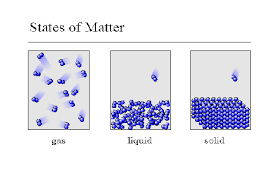
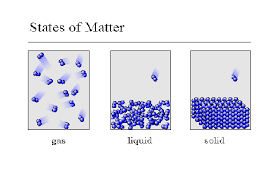
___________ is anything that has mass and takes up space.
Molecules
Matter
Volume
Which state of matter does not have a definite shape but does have a definite volume?
Solid
Liquid
Gas

Matter is made of tiny particles called atoms and molecules.
True
False

State of matter that takes the shape of it's container and has a definite volume.
Solid state
Liquid state
Gas state
Plasma state

State of matter that can fill containers with no fixed shape or volume.
Solid state
Liquid state
Gas state
Plasma state

State of matter in which materials have a definite shape and volume.
Solid state
Liquid state
Gas state
Plasma state

What change of state is taking place in this photograph?
Condensation
Freezing
Vaporization
Melting

When a beaker of water is heated its volume increases a little. What is happening to the particles in the liquid?
They are getting bigger.
They are moving slower.
They are moving faster.
They are getting smaller.

When you place a bottle of water in the freezer its volume increases. What is happening to the particles in the liquid?
They are getting bigger.
They are moving slower.
They are moving faster.
They are getting smaller.

Which is NOT a property of a solid?
They do not flow.
Definite volume.
No definite shape.
They are incompressible.

Which state of matter is represented in the following diagram?
Liquid
Liquid and gas
Gas
Solid

Which of the following states is correct?
Gases cannot be compressed.
Solids are easily compressed.
Gases are easier to compress than solids.
Liquids cannot be compressed or expanded.
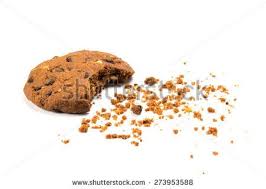
The Law of Conservation of matter states that the total amount of matter ______________ after it undergoes change.
disappears
stays the same
weighs less
explodes
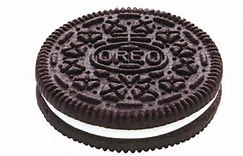
An oreo cookie weighs 20 grams. It gets crushed into crumbs for a recipe. How much do its crumbs weigh?
15 grams
25 grams
20 grams
Matter can not be created nor destroyed: it can only be
Destroyed a little bit
Invisible
Transformed, changed
None of the above

When ice melts, the water has the same _________ as the
temperature
state of matter
shape
mass
The Law of Conservation of Matter states that the total amount of matter _____ after it undergoes change.
disappears
stays the same
weighs less
explodes
The Law of Conservation of Matter states that...
matter can simply appear.
matter can neither be created nor destroyed.
matter can simply disappear.
matter can change form between a solid, liquid, and gas.
Matter cannot be created nor destroyed.
Law of Conservation of Energy
Law of Conservation of Matter
Law of Conservation of Environment
Law of Conservation of Volume

Which of the models of a chemical reaction best represents the Law of Conservation of Mass?
A
B
C
D

Which of the models of a chemical reaction best represents the Law of Conservation of Mass?
A
B
C
D

Which of the models of a chemical reaction best represents the Law of Conservation of Mass?
A
B
C
D
A student heated a 10 gram sample of a chemical in an open container. A chemical reaction occurred, and the mass of the sample was measured again. The mass of the sample was found to be less than before the reaction. Which of the following best explains the decrease in mass of the sample?
The heat caused the chemical to become less dense.
The reaction gave off more heat than was added.
Some of the lighter particles were destroyed.
Some of the particles escaped as a gas formed.
two or more atoms joined together (can be from the same element or different elements)
molecule
compound
mixture
solution
a substance that forms in a chemical reaction
coefficient
subscript
reactant
product
a substance that takes part in and undergoes change during a reaction.
coefficient
subscript
reactant
product
How many atoms of aluminum are on each side of the following equation?
4Al + 3O2 --> 2Al2 O3
2
6
4
1
How many oxygen atoms are in the products for the chemical reaction below?
4Fe + 3O2 → 2Fe2O3
2
3
5
6
H2 + O2 --> H2O
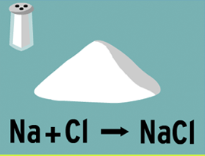
When sodium and chlorine combine to form sodium chloride, sodium chloride is the:
Originator
Reactant
Product
Produce
Which of the models of a chemical reaction best represents the Law of Conservation of Mass?
A
B
C
D
Based on the Law of Conservation of Matter, describe the relationship between the mass of the reactants and the mass of the products.
The mass of the products is always greater than the mass of the reactants.
The mass of the reactants is less than the mass of the products.
The mass of the reactants equals the mass of the products.
The mass of the reactants is greater than the mass of the products.

Which section represents the yield sign?
A
B
C
What happens to atoms in a chemical reaction?
they are destroyed
they are created
they are rearranged
Which section represents the products?
A
B
C
Which section represents the reactants?
A
B
C
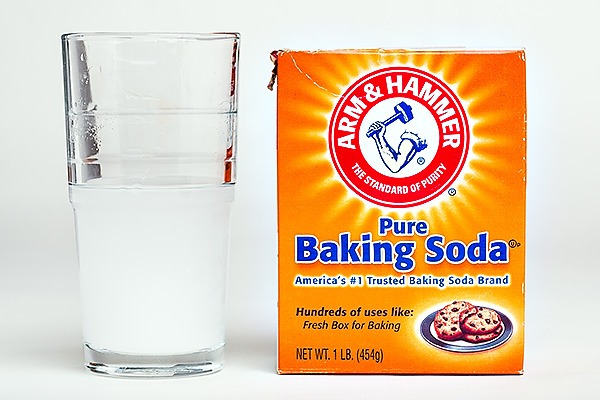
True or False
The mass of the reactants in a chemical equation must equal the mass of the products.
True
False
How many nitrogen atoms are present in the compound
KNO3
0
1
3
How many sulfer atoms are there in the compound
H2SO4
4
2
1
7
How many H2O molecules are present?
How many Hydrogen atoms are present?
Physical or chemical change: Folding paper
Physical
Chemical
Identify the Product (s) 2H2O2 -> 2 H2O + O2
2H2O2
2H2O and O2
How many oxygen atoms are in the products for the chemical reaction below?
4Fe + 3O2 → 2Fe2O3
2
3
5
6
The Law of Conservation of Mass says that matter can neither be __________ or __________.
created; destroyed
recycled; renewed
subtracted; added
joined; separated
How many atoms are in the products below?
4Fe +3O2 → 2Fe2O3
7
10
17
20
According to the Law of Conservation of Mass, what happens to the wood and oxygen when it is burned?
The wood disappears.
It stays the same chemically.
The atoms in the wood and oxygen rearrange and form smoke and ash.
Nothing.
Balanced or Unbalanced: 2Na + H2O → NaOH + H2
Balanced
Unbalanced
Not enough information
Balanced or Unbalanced: 2Na + H2O → 2NaOH + 2H2
Balanced
Unbalanced
Not enough information
Balanced or Unbalanced: 2Na + 2H2O → 2NaOH + H2
Balanced
Unbalanced
Not enough information

Which equation matches the picture?
2H2 + O2 → 2H2O
H2 + O2 → 2H2O
2H2 + 2O2 → 2H2O
H2 + O2 → H2O
What happens to the mass of matter during a chemical reaction?
mass is lost
mass is gained
mass is not lost or gained
mass is both gained and lost

Does the image correctly represent the Law of Conservation of Mass?
yes
no
Select the two equations that follow the Law of Conservation of Mass (meaning the equation is balanced).
H2 + O2 --> H2O2
CO2 --> Fe2O3
Na Cl2 --> 2NaCl
Na2 + 3H2 --> 2NH3
An ice cube weighs 20 grams. How much will it weigh after it melts?
10 grams
15 grams
20 grams
25 grams
Ms. Cookson makes a snack mixture. She adds 15 grams of M&M's, 10 grams of cashews, and 5 grams of Golden Grams cereal. How much does the mixture weigh?
15 grams
25 grams
30 grams
35 grams
What does the arrow in a chemical equation represent?
Products
Reactants
"Yields"
Coefficients

What is CH4 in this reaction?
Reactant
Product
Coefficient
Subscript
What is CO2 in this reaction?
Reactant
Product
Coefficient
Subscript
Does this equation follow the Law of Conservation of Mass?
Yes
No
The chemical formula of glucose is C6H12O6. Is glucose an element, compound, or mixture?
element
compound
mixture
The chemical formula of glucose is C6H12O6. Is it a pure substance?
yes
no

Why does this picture demonstrate the Law of Conservation of Mass?
the number of atoms of each element are the same on both sides
they start out separate and end up combined
the same elements are used
it doesn't demonstrate the Law of Conservation of Mass

Which picture below would correctly demonstrate the Law of Conservation of Matter if this picture is the reactants?


In a balanced chemical equation, if there are 4 Hydrogen in the reactants, how many Hydrogen should be in the product?
1
2
3
4
Which of the following chemical equations are balanced? (check all that apply)
2Mg + O2 --> 2MgO
2Al2O3 --> 4Al + 3O2
HgO --> 2Hg + O2
Na + Br2 --> 2NaBr
C + 2H2 --> CH4
Which of the following would represent a compound?


Which of the following would represent a mixture?
Is the following chemical equation balanced?
3H2 + N2 --> 2NH3
No, because there are too many N in the product
Yes, because each element has the same number on each side of the equation

