
 Worksheets
UNIT 1 RETAKE
Total questions: 40
Worksheet time: 10hrs 0mins
Where do plants get the energy for photosynthesis to take place?
nutrients in the soil
the sun
chlorophyll
bee pollination
What part of the plant soaks up water for photosynthesis?
roots
petals
leaf
stem
Where do the leaves and stems of plants get their green color from?
glucose
oxygen
carbon dioxide
chlorophyll

The openings that are found in the leaves of plants are called:
Stomata
Chlorophyll
Xylem
Chloroplast
The process of photosynthesis takes place in the:
Leaves of the Plant.
Stem of the plant.
Roots of the plant.
All of the above.
Complete the equation for photosynthesis
carbon dioxide +___________ ------> Glucose + oxygen
helium
nitrogen
water
hydrogen
The products of photosynthesis are...
glucose and oxygen
carbon dioxide and water
What is a watershed?
watershed is when runoff and groundwater drain into a body of water.
Watershed is when water runs down a hill
watershed is when water falls from the sky

What is the cause of this?
pollution in watershed
groundwater
runoff
Why do we protect watersheds and conserve water?
Water remains clean even if the land area around it is polluted.
Water is hard to pollute.
Freshwater is abundant everywhere.
All living things depend on clean water.
Smaller rivers that flow into a larger river are considered
tributaries
divides
drainage basins
branches
All water below the surface of land is called__________.
water table
watershed
groundwater
runoff

What definition BEST describes a watershed?
An area where water infiltrates the soil
An area where aquatic plants and animals thrive
An area where snow melts and changes into liquid water
An area that collects precipitation and drains it to the lowest point
These chemicals are expensive to produce.
Process in which sediment is deposited in a new location
Erosion
Deposition
Withdraw
Sedimentary
Breaking down of rock
Mechanical
Deposition
Weathering
Erosion

Weathering is the process of -
Moving sediment from one place to another
Dropping or leaving sediment in a location
Breaking down rocks into sediment
How is a food web different from a food chain?
Food webs contain only producers, not consumers.
Food webs contain many different, linked food chains.
Food webs do not include decomposers.
Food web exists in aquatic environment while food chain exist in terrestrial environment only.
Recently, a family of bobcats moved into an area with a large rabbit population. What changes may occur in this ecosystem?
The rabbit population may increase.
The rabbit population may increase first, then decrease after.
The rabbit population may decrease.
The rabbit population will remain the same.

Name the producer/s in the given image.
seagull and fish
seaweed and zooplankton
phytoplankton only
seaweed and phytoplankton
How are primary consumers different from secondary consumers?
Primary consumers eat producers; secondary consumers eat other consumers.
Primary consumers eat other consumers while secondary consumers eat plants only.
Primary consumers eat plants and other consumers while secondary consumers decompose matter.
Primary consumers decompose matter while secondary consumers eat plants and other consumers.

plant
rabbit
mouse
hawk
What does a Food Chain always begin with?
Producers
Primary Consumers
Heterotrophs
Grass

Which member of the food web gets all of its energy from producers?
Foxes
Owls
Birds
Rabbits
___ are the first organisms to colonize an area and begin the process of ecological succession.
foundational organisms
introductory organisms
primary organisms
pioneer species
What is the term that describes a steady and stable community?
peak community
turf community
climax community
disturbed community
Which of the following is NOT a pioneer species?
Shrubs
Lichen
Mosses
Fungi
Which is faster: Primary or Secondary Succession?
Primary Succession
Secondary Succession
Both Take The Same Amount of Time
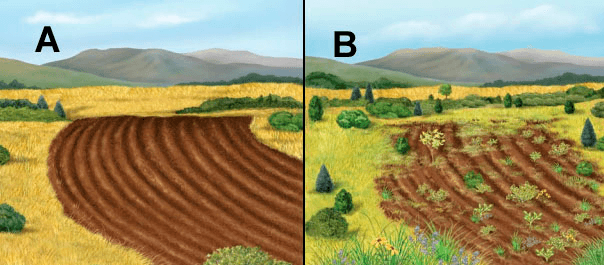
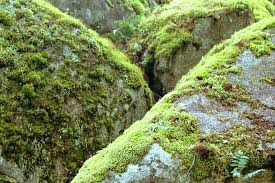
Which biome is warm year-round, receives LOTS of rain, and is rich in. biodiversity?
Temperate forest
Temperate grassland
Boreal Forest
Tropical rainforest
Within biomes are smaller areas called ______.
Land
Ecosystems
Habitats
Communities


