Wayground logo

Free Printable Worksheets

Font size

S
M
L
XL
Worksheets

CSHS Yr 8 Heat & energy

Total questions: 50

Worksheet time: 25mins

Name
Class
Date
1.
Stored energy based on position is known as...
a)
Lazy
b)
Potential
c)
Kinetic
2.
Which skier will have a greater potential energy? 
a)
Skier 1
b)
Skier 2
3.

At which point is potential energy the greatest?

a)

W

b)

X

c)

Y

d)

Z

4.

What kind of energy is this?

a)

Gravitational potential energy

b)

Elastic potential energy

c)

Potential energy

d)

None of the above

5.

Which type of energy has to do with height above the ground?

a)

Kinetic

b)

Gravitational

c)

Elastic

d)

Chemical

e)

Dissipated

6.

Fill in the blank.

The higher up an object is, the _________ gravitational energy it has

a)

More

b)

Less

7.

As an object falls towards the ground, its _______ energy INCREASES

a)

Gravitational

b)

Kinetic

8.

Which two points have the same potential energy?

a)

U & V

b)

S & T

c)

T & X

d)

S & X

9.

Which position has the highest potential energy?

a)

1

b)

2

c)

4

d)

6

10.

What is the correct unit for energy?

a)

meters (m)

b)

kilogram meters per second (kg m/s)

c)

Newtons (N)

d)

Joules (J)

11.

What is the equation for calculating gravitational potential energy

a)

mv

b)

1/2 mv^2

c)

mgh

d)

Ft

12.

If the marble had a mass of 0.3kg and the hill was 2.3 m tall, how much potential energy did it have at the top of the ramp?

a)

2.3 J

b)

0.23 J

c)

6.9 J

d)

5.2 J

13.

If the 0.3 kg marble was moving at 6 m/s at the bottom of the ramp, how much kinetic energy did the marble have?

a)

5.4 J

b)

1.8 J

c)

3 J

d)

6 J

14.

What is the equation for calculating kinetic energy?

a)

mv

b)

1/2 mv^2

c)

mgh

d)

Ft

15.

If the 1.2 kg basketball rolls at 3 m/s, what is it's kinetic energy? (KE = 1/2mv2)

a)

2.7

b)

5.4

c)

3.6

d)

9

16.
The Theory of the Conservation of Energy states -
a)
Energy can be created, just not destroyed. It changes its form from one type to another.
b)
Energy can never be created nor destroyed. It can only change its form from one type to another.
c)
The total energy in our Universe changes, as different forms of energies can be transformed from each other under certain circumstances.
d)
Energy transformations do not passively occur in our lives, rather we actively make use of energies and transform energies.
17.
Which type of energy transformation occurs when a flashlight shines?
a)
chemical → thermal → electrical
b)
chemical → electrical → light
c)
thermal → chemical → light
d)
chemical → electrical → chemical
18.
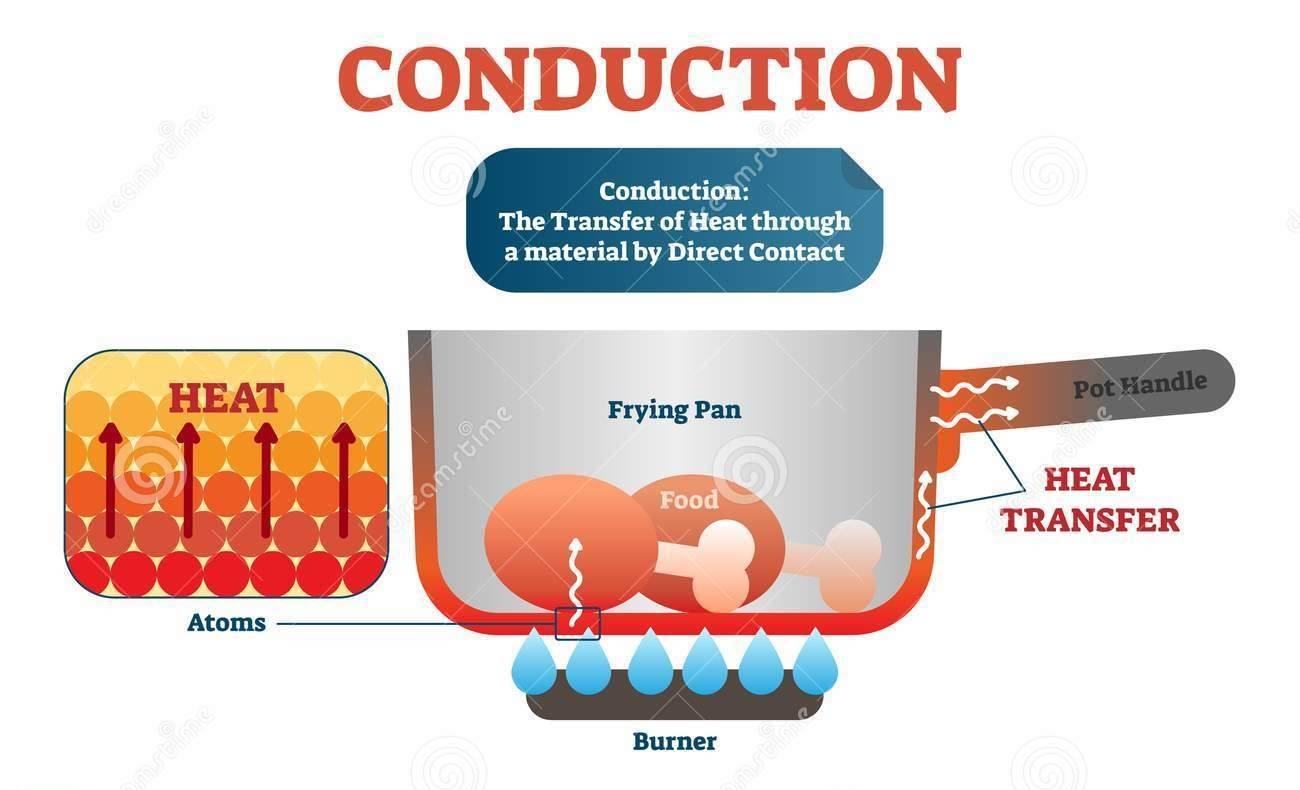
What is the transfer of heat by direct contact?
a)
Convection
b)
Electromagnetic waves
c)
Radiation
d)
Conduction
19.
Heat transfers from an area of ________temperature to an area of ______ temperature.
a)
high to low
b)
low to high
c)
high to high
20.

a machine that is 20% efficient has 50 J of energy put into it. What is the output of energy?

a)

15J

b)

10J

c)

10.0J

d)

10

21.

what is the conversion happening in a solar panel?

a)

light energy > electrical energy

b)

solar energy > electrical energy

c)

kinetic energy > electrical energy

d)

nuclear energy > electrical energy

22.

What kind of energy is in the food we eat?

a)

nuclear energy

b)

kinetic energy

c)

potential energy

d)

chemical energy

23.
On a roller coaster, where is maximum potential energy?
a)
At the bottom of a big hill
b)
When going around a corner
c)
When going upside down
d)
At the top of a big hill
24.
On a roller coaster, where is maximum kinetic energy?
a)
At the bottom of a big hill
b)
When going around a corner
c)
When going upside down
d)
At the top of a big hill
25.
Energy due to motion is ____________ energy. 
a)
Potential 
b)
Energy
c)
Kinetic
d)
Friction
26.
Gravitational potential energy depends on the ________ and ________ of the object. 
a)
Height and mass
b)
Friction and movement
c)
Mass and Movement
d)
Height and Friction 
27.

If these are all moving at the same speed, the vehicle with the greatest KE would be

(Think about their sizes)

a)
b)
c)
d)
28.

A coiled spring that is stretched out has....

a)

Chemical potential energy

b)

kinetic energy

c)

Elastic potential energy

d)

no energy

29.

The candle will slowly heat the metal and transfer the heat directly to the mans hand. This is an example of _?_.

a)

conduction

b)

convection

c)

radiation

30.

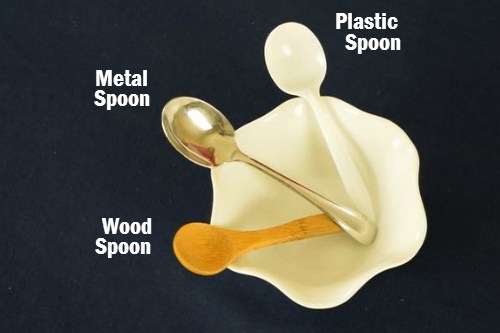
Which material will heat travel through the fastest?

a)

Plastic

b)

Wood

c)

Metal

31.

Which of the following is an example of heat transfer by Conduction?

a)

Burning your fingers on a hot iron.

b)

Heat from a heater warming up your whole house

c)

Standing by a campfire and feeling the heat.

d)

All of the above.

32.
What is a substance that does NOT conduct heat well?
a)
Conductor
b)
Insulator
c)
Convector
d)
Radiator
33.

If two objects have different temperatures, heat will flow from the warmer object to the cooler one UNTIL ____________

a)

one reaches a temperature of zero

b)

they both have an equal temperature

c)

one runs out of energy

34.
Which kind of energy change occurs when a candle is burning?
a)
Chemical to light.
b)
Light to electrical.
c)
Solar to heat.
d)
Chemical to electrical.
35.
The movement of thermal energy from a warmer object to a cooler object is called:
a)
heat
b)
temperature
c)
motion
d)
momentum
36.
A measure of the average kinetic energy of the individual particles in an object is called:
a)
thermal energy
b)
conduction
c)
convection
d)
temperature
37.
When you touch something that feels cold, 
a)
heat from your hand moves into the cold substance.
b)
coldness moves from the cold substance into your hand.
c)
it melts.
d)
it freezes.
38.
Energy that moves particles of matter is 
a)
temperature
b)
thermal energy
c)
heat
d)
friction
39.
Why does a diver wear a wet suit?
a)
To keep in thermal energy.
b)
To keep from getting cuts.
c)
To keep from sinking.
d)
To keep out cold.
40.
The temperature of a substance increases as___.
a)
the substance expands
b)
the average kinetic energy of its particles increases
c)
the substance's volume increases
d)
the substance's mass increases
41.

When a popsicle melts, the particles in the popsicle _____.

a)

gain thermal energy and speed up

b)

there are no particles in popsicles

c)

lose thermal energy and slow down

d)

stay the same

42.
Object A is much larger than Object B, but both are made of the same material.  If both objects are at the same temperature, the thermal energy of Object A is THE SAME AS the thermal energy of Object B.
a)
True
b)
False
43.
The transfer of thermal energy from a warmer object to a cooler object is called ___________.
a)
Heat
b)
Temperature
44.
Most of the world uses the ___________ temperature scale.
a)
Celisus
b)
Fahrenheit
45.
The liquid in a thermometer ______________ as the temperature increases.
a)
expands
b)
disappears
c)
freezes
d)
explodes
46.
The most common temperature scale used in the world where water freezes at 0 degrees and boils at 100 degrees is called the __________________ scale.
a)
Celsius
b)
Fahrenheit
c)
Pound
d)
Kelvin
47.
The more particles an object has at a given temperature,
a)
the higher its temperature.
b)
the more thermal energy it has.
c)
the more degrees it has.
d)
the more kelvins it has.
48.
Joints in train tracks are designed with extra space to allow for __________________ in hot weather.
a)
Conduction
b)
Insulation
c)
Thermal Energy
d)
Thermal Expansion
49.
The SI unit of heat is the ____________________.
a)
Newton
b)
Kelvin
c)
Celcius
d)
Joule
50.
The handle of a spoon in a bowl of hot soup becomes warm due to heat transfer by the process of ____________________.
a)
Convection
b)
Conduction
c)
Radiation
d)
All of the above