
 Worksheets
Chemical bonding review
Total questions: 46
Worksheet time: 31mins

Is the following molecule polar or nonpolar?
polar
nonpolar

Is the following molecule polar or nonpolar?
polar
nonpolar
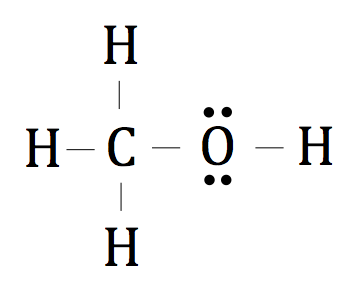
Is the following molecule polar or nonpolar?
polar
nonpolar

Is the following molecule polar or nonpolar?
polar
nonpolar

Is the following molecule polar or nonpolar?
polar
nonpolar

Why is the molecule polar?
There are nonbonding pairs on the central atom.
There are different types of elements bonded to the central atom.
There are no nonbonding pairs on the central atom and all of the atoms bonded to the central atom are the same.

Why is the molecule nonpolar?
There are nonbonding pairs on the central atom.
There are different types of elements bonded to the central atom.
There are no nonbonding pairs on the central atom and all of the atoms bonded to the central atom are the same.
The cohesive forces between liquid molecules are responsible for this phenomenon.
Example: insects walking in water.
Surface Tension
Viscosity
Capillarity
Fluidity
It is the ability of liquids to resist flowing. These kinds of liquids are thick.
Example: glue, condensed milk.
Fluidity
Viscosity
Surface Tension
Capillarity
Identify the IMF exist in CH4
dipole-dipole forces
london forces
ion-dipole forces
hydrogen bonding
Identify the IMF exist in NH3
london dispersion forces
ion-dipole forces
dipole-dipole forces
hydrogen bonding
Identify the IMF exist in HBr
london dispersion forces
hydrogen bonding
dipole-dipole forces
ion-dipole forces
Which of the following has the lowest boiling point?
PH3
H2O
SiH4
NH3
To form a hydrogen bonding, Hydrogen needs to attract to the highly electronegative elements such us _____, _____, and ____
chlorine, fluorine, and oxygen
fluorine, oxygen, and sulfur
fluorine, bromine, and oxygen
fluorine, oxygen, and nitrogen

Which substance has the weakest intermolecular forces?
Substance A, boiling point of 75 °C
Substance B, boiling point of 105 °C
Substance C, boiling point of 25 °C
Substance d, boiling point of 45 °C
Which statement explains why Br2 is a liquid at STP and I2 is a solid at STP?
Molecules of Br2 are polar, and molecules of I2 are nonpolar
Molecules of Br2 are nonpolar, and molecules of I2 are polar
Molecules of Br2 have stronger intermolecular forces than molecules of I2.
Molecules of I2 have stronger intermolecular forces than molecules of Br2.

Table salt (NaCl) can be dissolved in water due to what inter-molecular force of attraction?
Ion-dipole
dipole-dipole
hydrogen bonding
metallic bonding
Higher IMF means (a) Viscosity.
It is the measure of the tendency of material to change into the gaseous state.
Boiling point
vapor pressure
specific heat
viscosity
It is the attractive forces that exist between molecules.
Intramolecular force
Metallic bond
Intermolecular force
Covalent bond
A weak IMF will result in a
high melting point
high viscosity
high surface tension
low surface tension

What is the electron geometry and molecular geometry of SO2?
trigonal planar, bent
tetrahedral, trigonal pyramidal

Which container has the greatest Intermolecular Force between Molecules?
red
yellow
blue
In which situation does DISPERSION FORCES are strongest?
If two molecules are of comparable size and shape, dispersion forces will likely determine its physical properties.
If one molecule is much larger than another, dispersion forces will likely determine its physical properties.
If negative ends of polar molecules are oriented to positively charged cations, dispersion forces will likely determine its physical properties.
If positive ends of polar molecules are oriented to negatively charged anions, dispersion forces will likely determine its physical properties.
What does "like dissolves like" mean?
polar solvents dissolve in polar solutes
polar solutes dissolve in polar solvents
non-polar solvents dissolve in polar solutes
non-polar solutes dissolve in polar solvents
When salt is dissolved in water, the water molecules pull apart the salt. The chlorine ions of salt are surrounded by water molecules. Why do the hydrogen sides of water molecules point at the chlorine ions?
Water is polar and so are chlorine ions
The hydrogen and chlorine have positive charges, so they attract.
The hydrogen has a partial positive charge and the chlorine has a negative charge.
Water is polar and chlorine ions are nonpolar
The hydrogen has a partial negative charge and the chlorine has a positive charge.

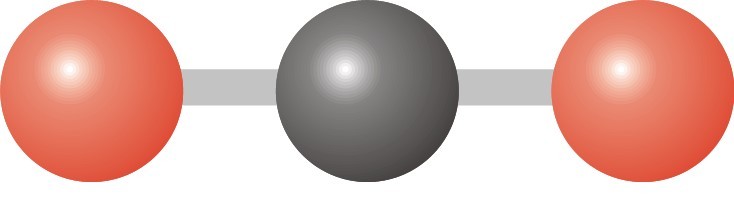
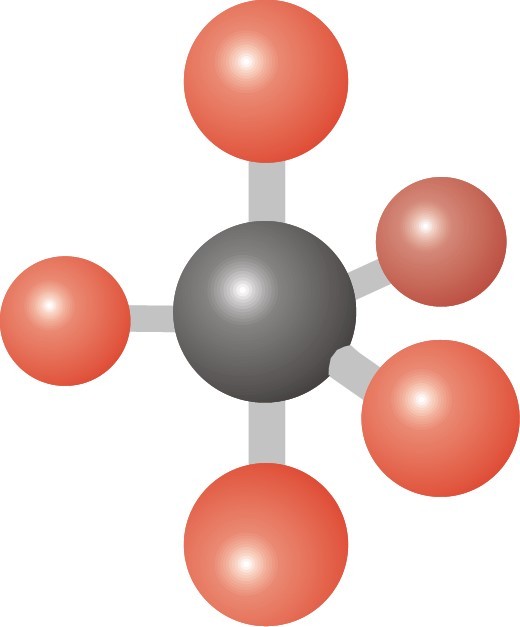
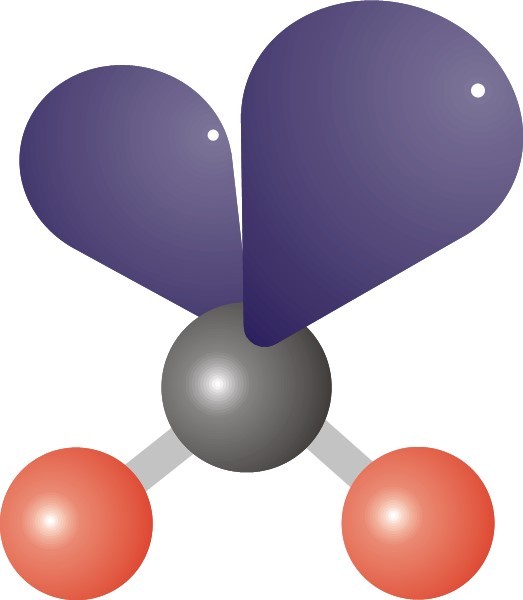
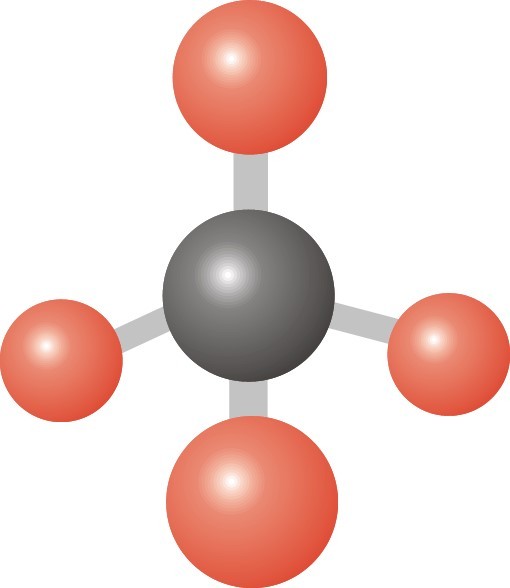
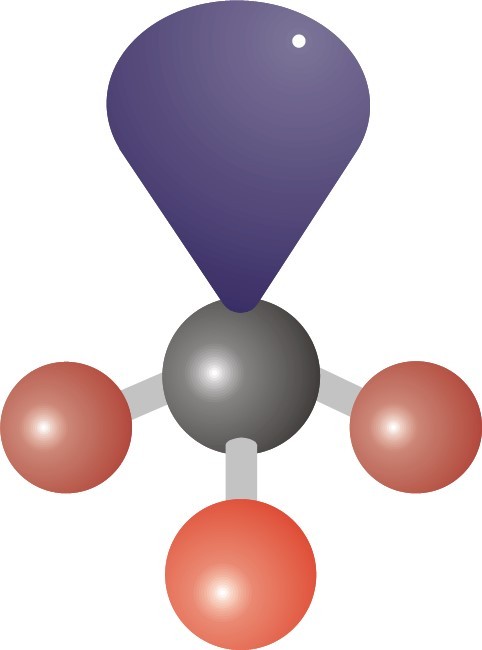
What molecular geometry would PH3 have?
Trigonal Pyramidal
Trigonal Bipyramidal
Bent
Linear
What is the molecular geometry and bond angel for H2O?
tetrahedral, 109.5o
trigonal planar, 120o
bent, < 109.5o
trigonal pyramidal, < 109.5o
What is the molecular geometry for PCl5
tetrahedral
octahedral
trigonal bipyramidal
T-Shape

How is electron geometry different from molecular geometry?
Electron geometry only takes electron domains into account while molecular places large emphasis on lone pairs
Molecular geometry only takes electron domains into account while electron geometry places large emphasis on lone pairs

