
NEW
Font size
 Worksheets
AP Biology - Unit 3 Quiz 1
Total questions: 35
Worksheet time: 21mins
Where does a substrate bind to an enzyme?
Active site
Allosteric site
What happens to the reaction rate if an enzyme is denatured or nonfunctional?
No change in the reaction rate
Increase in reaction rate
Decrease in reaction rate
Decrease then increase in reaction rate
What is the function of an enzyme?
To speed up a chemical reaction
To provide additional energy
To inhibit a cellular process
To increase absorption of a molecule
How does a noncompetitive inhibitor decrease reaction rates?
Binds to the active site
Binds to the allosteric site
Increases the free energy
Increases the substrate concentration
This type of inhibition blocks the active site of an enzyme:
competitive inhibition
allosteric inhibition
noncompetitive inhibition
_____ is defined as the ability to do work.
Enzyme
Energy
Work
Inhibition
Zinc and Iron (metals)
Which type of allosteric regulation involves the substrate binding to one active site, which keeps the remaining active sites open?
Feedback inhibition
Allosteric activation
Allosteric inhibition
Cooperativity
The process by which a metabolic pathway is shut off by the product it produces
Allosteric Inhibition
Feedback Inhibition
Competitive Inhibition
Noncompetitive Inhibition
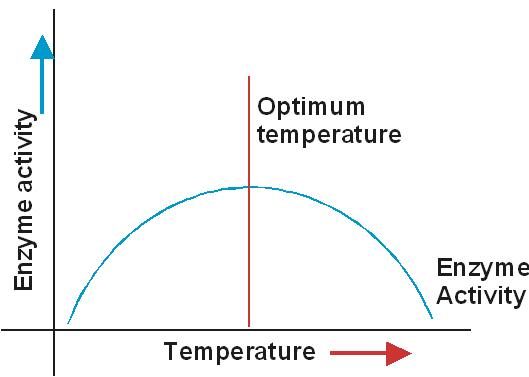
______ can be used to determine the likelihood of a reaction occurring.
Potential energy
Free energy (delta G)
Kinetic energy
Enzymes
Net release of energy
endergonic
exergonic
only the anabolic reactions that occur in an organism
all the chemical reactions (anabolic & catabolic) in an organism
only the catabolic reactions that occur in an organism
the third phosphate group is removed
What type of work involves movement?
Mechanical
Transport
Chemical
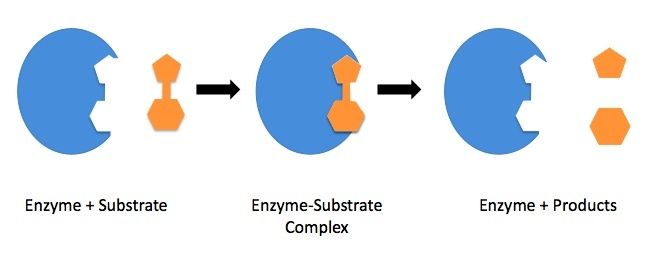
The alteration of the active site allowing the enzyme and it’s substrate to fit together better
denature
induced fit
activation energy
peptide bond
Which type of reaction is spontaneous (no energy input required)
Endergonic
Exergonic
Cofactors are ______ that assist in enzyme function.
Lipids
Proteins
Non-protein molecules; often metals

Which statement is true according to the image?
A: endergonic; B: exergonic
A: exothermic; B: endothermic
A: exergonic; B: endergonic
A: endothermic; B: exothermic

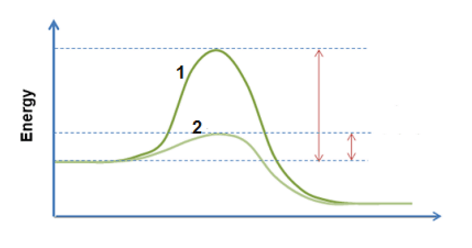
The reaction shown is:
endergonic because energy is released
exergonic because energy is released
endergonic because energy is captured
exergonic because energy is captured
Reactions that break down molecules
anabolic
burning
catabolic
thermal

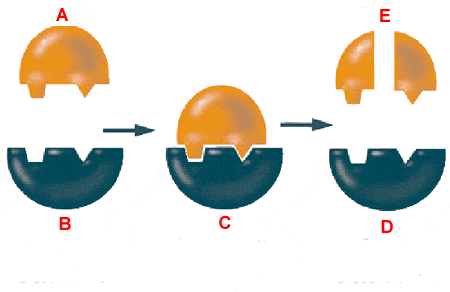
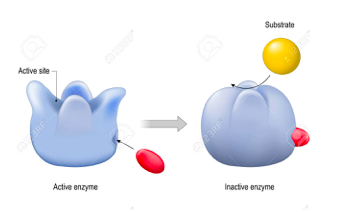
This image shows...
Competitive Inhibition because the inhibitor is bound to the active site
Uncompetitive Inhibition because the inhibitor is bound to the allosteric site
Noncompetitive Inhibition because the inhibitor is bound to the allosteric site
Normal enzyme function
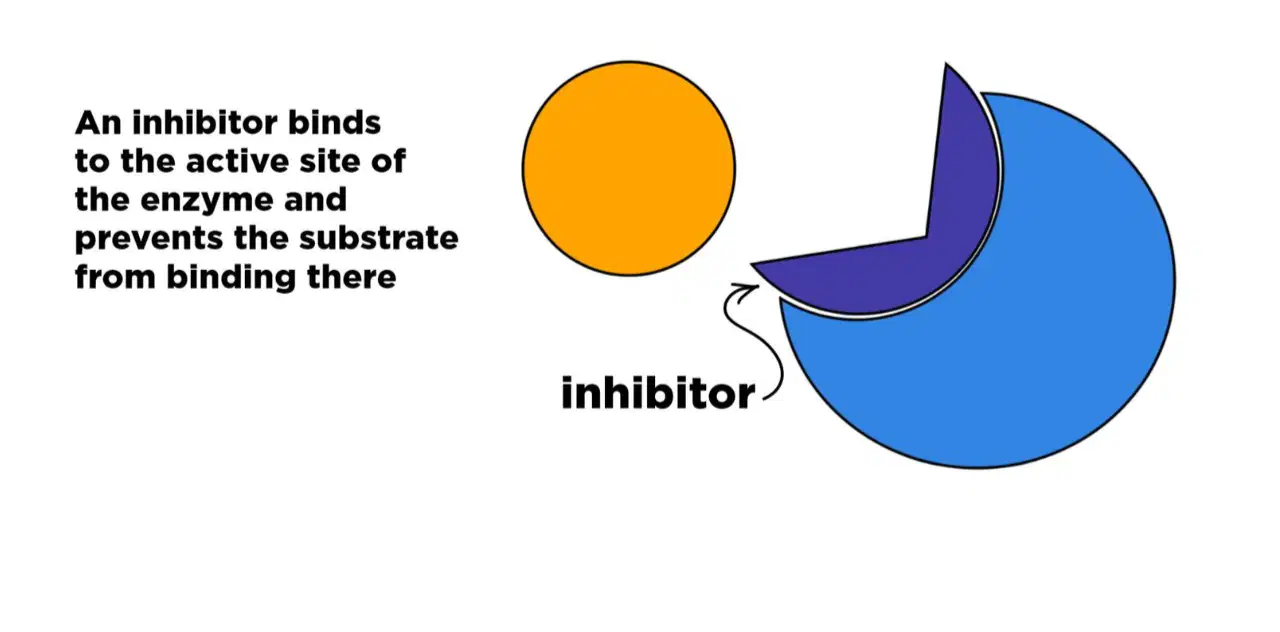
This image shows...
Competitive Inhibition
Uncompetitive Inhibition
Noncompetitive Inhibition
Normal enzyme function
Non-competitive inhibition involves a molecule binding to a ______ site.
Active
Allosteric
Accompanying
Applied

