
 Worksheets
Chem Unit 10 Review: Reaction Rates and Equilibrium
Total questions: 20
Worksheet time: 17mins
The minimum amount of energy needed for colliding particles to react is called
Chemical Energy
Kinetic Energy
Activation Energy
Potential Energy

Which factors increase the rate of a reaction?
increasing temperature
increasing concentration
increasing total surface area
All of these


Which of the reaction pathway shows the catalysed reaction?
1
2
How does a catalyst work in speeding up a reaction?
By lowering the activation energy or reaction
by making them more available
by giving them more energy
What is the name given to a catalyst in the human body?
Biology
Catalyst
Chemical
Enzyme
Why does a higher temperature increase the rate of a reaction?
It increases both the frequency collision and energy of reactant particles
It only increases the frequency of collision
It only increases the energy of reactant particles
It reduces the activation energy of the reaction
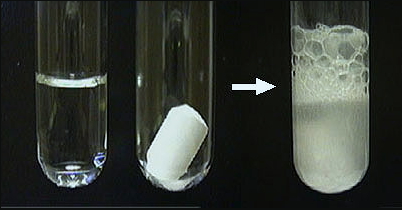
How could we make this reaction happen more quickly?
Decrease the concentration of the acid
crush the chalk to increase the surface area
Put the test tube in an ice bath

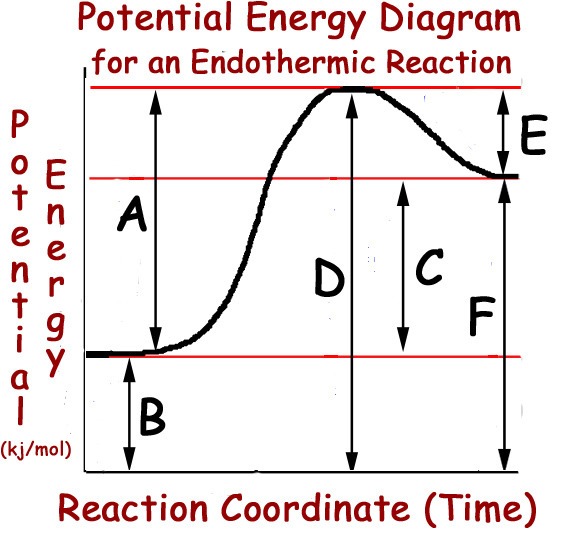

Is the following reaction endothermic or exothermic
endothermic
exothermic
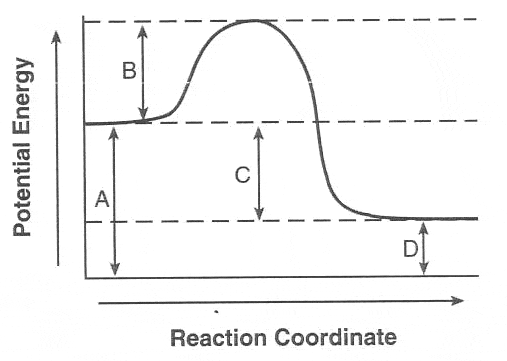
The rate of a chemical reaction normally
increases as temperature decreases.
decreases when a catalyst is added.
increases as reactant concentration increases.
decreases as reactant concentration increases.
Which of the following statements is CORRECT for a reaction at an equilibrium?
The rate of forward and reverse reactions are equal.
The concentrations of product and reactant are equal.
The forward and reverse reactions will stop.
Always occur in an open system.
If a (dynamic) equilibrium is disturbed by changing the conditions, the position of equilibrium................
2SO2(g)+O2(g) ⇌ 2SO3(g) + Heat
Adding SO2(g) will
shift equilibrium right
shift equilibrium left
increase rate of reaction
have no change
2SO2(g) + O2(g) ⇌ 2SO3(g) + Heat
Removing O2(g) will
shift equilibrium right
shift equilibrium left
increase pressure
have no change
2SO2(g) + O2(g) ⇌ 2SO3(g) + Heat
Using a catalyst
shift equilibrium right
shift equilibrium left
increase the rate of reaction
have no change

