
Font size
 Worksheets
Some natural phenomenon
Total questions: 116
Worksheet time: 58mins
An electroscope is a device which is used to find if an object is
charged
magnetised
hot
free of cracks
The outermost layer of earth is called
mantle
outer core
inner core
crust
Which of the following cannot be charged easily by friction?
A plastic scale
A copper rod
An inflated balloon
A woolen cloth
When two bodies are rubbed against each other, they acquire
Equal and similar charges
Equal and opposite charges
Unequal and similar charges
Unequal and opposite charges
Which of the following produces charge ?
gum
amber
lac
fructose
Like charges
can repel or attract each other depending on the quantity of charge
can repel or attract each other depending on conditions
always repel each other
always attract each other
When an uncharged body B is brought into contact with a positively charged body A:
A loses its charge
B acquires positive charge
B acquire no charge
B acquires negative charge
The place of origin of an earthquake is called
Focus
epicenter
Disc
None of these
Which of the following is negatively charged particle?
proton
electron
neutron
all of these
An earthquake of magnitude 8-9 is
not felt
mild
strong
very strong
During the development of thunderstorm, the charges accumulate near the upper edges of the cloud is –
positive
negative
neutral
none of these
Name the scientist who showed that lightening and spark from our clothes are essentially the same phenomenon ?
Thomas Alva Edison
Franklin D. Roosevelt
Issac Newton
Benjamin Franklin
Which device is used to protect building from lightning ?
Seismograph
Barometer
Lightning conductor
Thermal conductor
The movement of the earth’s plates causes
cyclones
lightning
earthquakes
thunderstorms
Interaction of charges is called _______.
lightning
electrical discharge
earthing
electricity
An electroscope is a device which is used to find if an object is
charged
magnetised
hot
free of cracks
Like charges
can repel or attract each other depending on the quantity of charge
can repel or attract each other depending on conditions
always repel each other
always attract each other
During the development of thunderstorm, the charges accumulate near the upper edges of the cloud is –
positive
negative
neutral
none of these
Name the scientist who showed that lightening and spark from our clothes are essentially the same phenomenon ?
Thomas Alva Edison
Franklin D. Roosevelt
Issac Newton
Benjamin Franklin
Interaction of charges is called _______.
lightning
electrical discharge
earthing
electricity
Static electricity is the electricity in which
charges are in motion
charges are at rest
Both the options
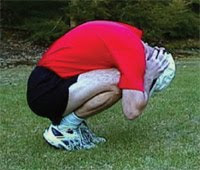
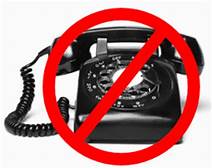
Identify the figure which is not suitable during thunder storms

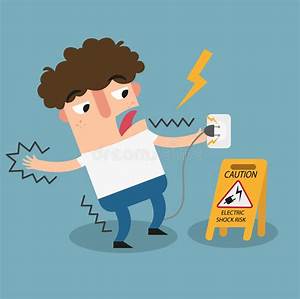
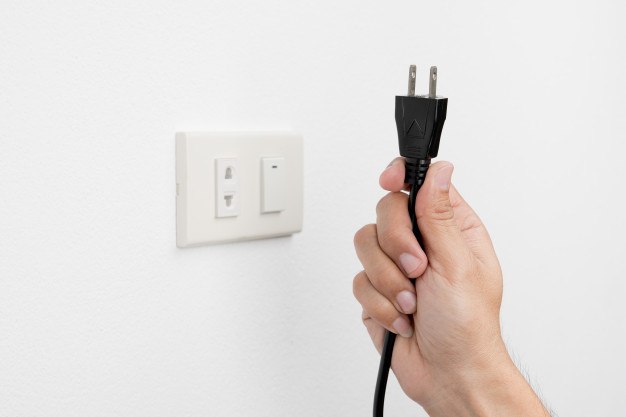
Identify the figure which you are supposed do during lightning.

The aluminium strips in an electroscope are replaced by plastic strips and a charged body is brought in contact with the metal clip. will the electroscope work?
Yes
No
I don't know
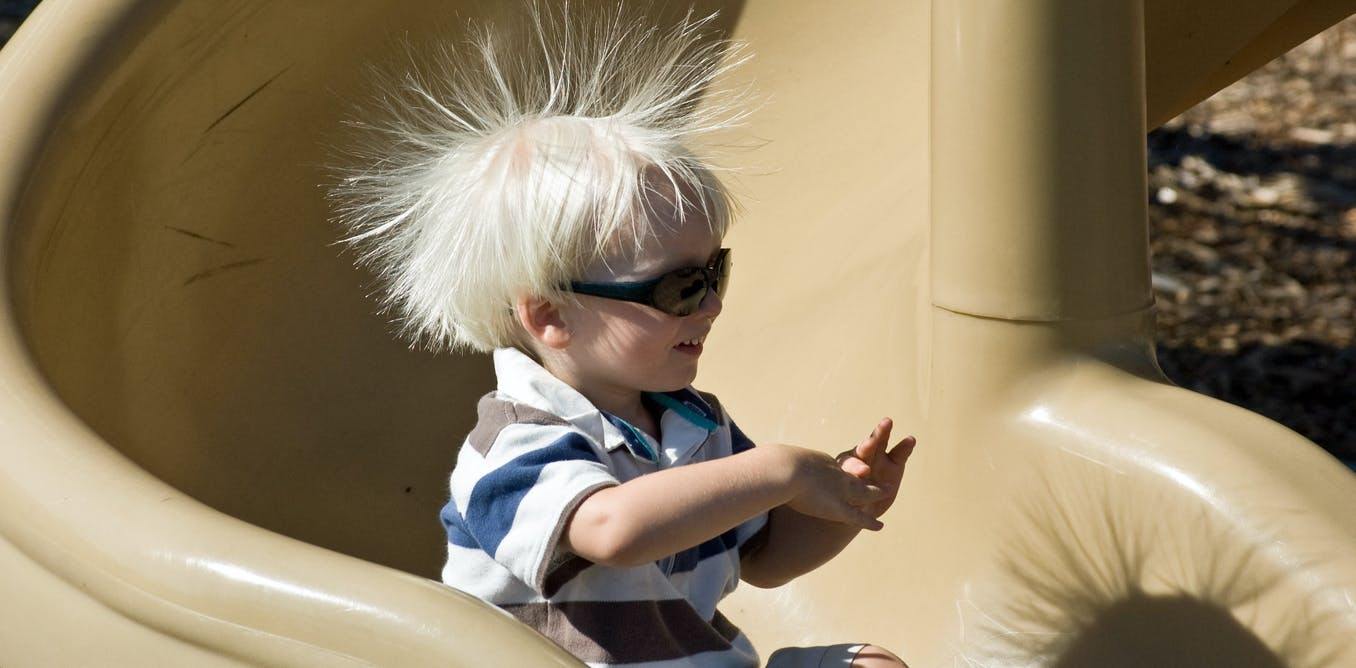
What is the reason?
it is only a play
Static electricity
Electricity
Which of the following cannot be charged easily by friction?
A plastic scale
A copper rod
An inflated balloon
A woolen cloth
When a plastic refill is rubbed with polythene ,it acquires a —————- charge
Magnetic
Plastic
Small electric
None of these
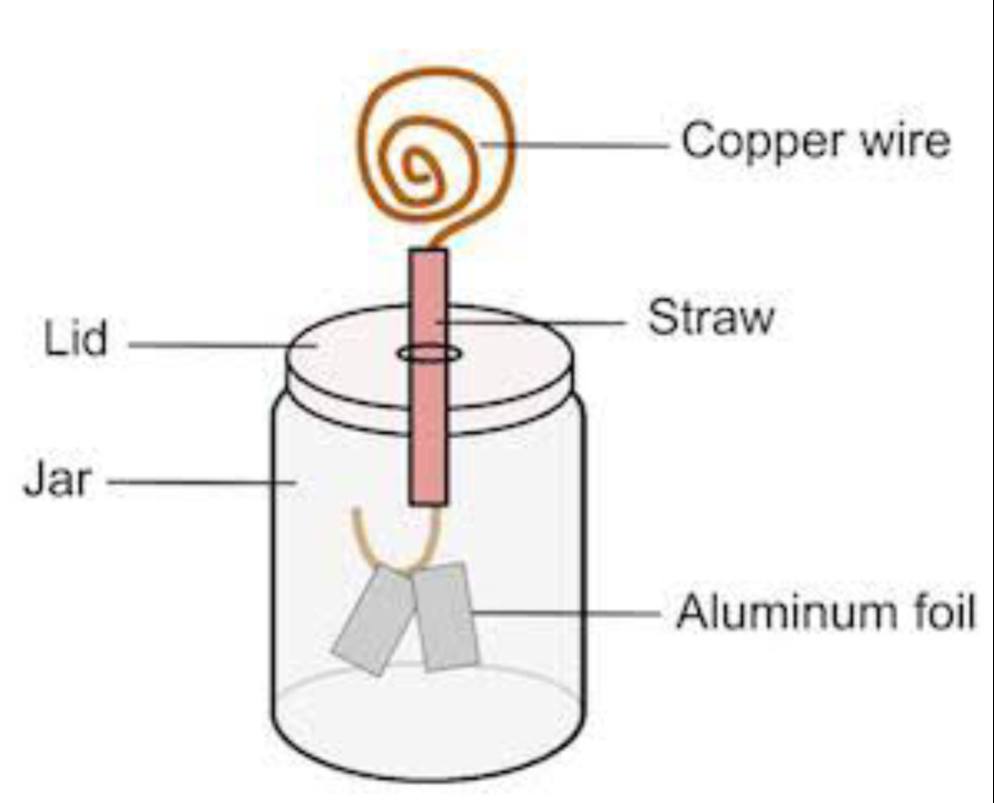
Identify the image
Microscope
Endoscope
Electroscope
All of these
The process of transferring of charge from a charged object to the earth is called —————-
Charging
Uncharging
Earthing
All
Always lie down in an open place in case of lightening.
True
False
During lightening contact with electrical appliances should be avoided
True
False
How many types of charges are gained by rubbing objects?
2
1
3
4
During lightening actually ——- takes place
Electric discharge
Electric charging
Electric charge accumulation
All of the above
A lightning conductor usually has a rod made of
copper
glass
pastic
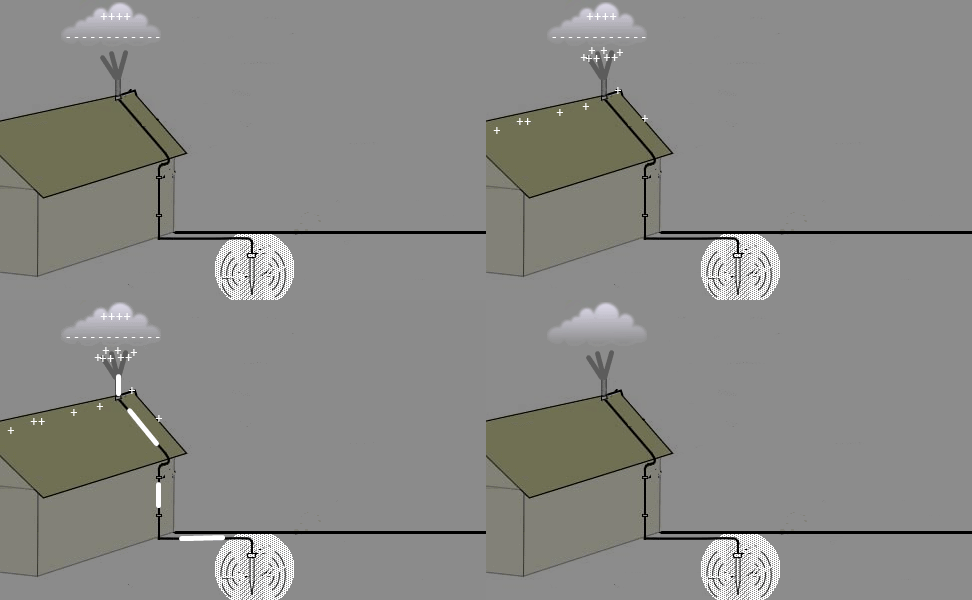
Identify the Y shaped structure in the given figure
Lightning rod
Plastic rod
Water pipe
The process of transfer of charges from a charged object to the earth is called
earthing
lightning
oscillation motion
electron movement
Where is the lightning rod attached to protect the building from lightning?
In the middle of the building
On the bottom of the building
On the top of the building
All of these
Lightning always follows
a thunder
rain pour
the easiest path
a straight path
Amber is a
metal
rubber
resin
sugar
The charge acquired by a glass rod when it is rubbed with silk is
Negative
Positive
Both
None
Which is the surest test of charge on a body?
Repulsion
Lightning
Combustion
Insulation
An electroscope is a device which is used to find if an object is
charged
magnetic
free of cracks
hot
Which of the following is not likely to cause tsunami?
Earthquake
Lightning
A major nuclear explosion under sea
Volcanic eruption
The process of electric discharge cannot occur between clouds and the earth.
True
False
PLEASE RATE OUR PRESENTATION AND QUIZ
5/5
4/5
3/5
2/5
1/5
Richter scale is used to express the (a) of an earthquake.
When two bodies are rubbed against each other, they acquire
Equal and similar charges
Equal and opposite charges
Unequal and similar charges
Unequal and opposite charges
An electroscope is a device which is used to find if an object is
charged
magnetised
hot
free of cracks
The outermost layer of earth is called
mantle
outer core
inner core
crust
Which of the following cannot be charged easily by friction?
A plastic scale
A copper rod
An inflated balloon
A woolen cloth
When two bodies are rubbed against each other, they acquire
Equal and similar charges
Equal and opposite charges
Unequal and similar charges
Unequal and opposite charges
Which of the following produces charge ?
gum
amber
lac
fructose
Like charges
can repel or attract each other depending on the quantity of charge
can repel or attract each other depending on conditions
always repel each other
always attract each other
When an uncharged body B is brought into contact with a positively charged body A:
A loses its charge
B acquires positive charge
B acquire no charge
B acquires negative charge
Which of the following is negatively charged particle?
proton
electron
neutron
all of these
An earthquake of magnitude 8-9 is
not felt
mild
strong
very strong
During the development of thunderstorm, the charges accumulate near the upper edges of the cloud is –
positive
negative
neutral
none of these
Name the scientist who showed that lightening and spark from our clothes are essentially the same phenomenon ?
Thomas Alva Edison
Franklin D. Roosevelt
Issac Newton
Benjamin Franklin
Which device is used to protect building from lightning ?
Seismograph
Barometer
Lightning conductor
Thermal conductor
The movement of the earth’s plates causes
cyclones
lightning
earthquakes
thunderstorms
Interaction of charges is called _______.
lightning
electrical discharge
earthing
electricity
Static electricity is the electricity in which
charges are in motion
charges are at rest
Both the options
When two clouds having a huge amount of positive and negative charges approach each other, then
the air becomes good conductor of electricity
the air becomes bad conndcutor of electricity
None of the above
Identify the figure which is not suitable during thunder storms
Identify the figure which you are supposed do during lightning.
Plastic straws A and B are rubbed with dry cotton cloth. What will happen if they are brought near each other?
Attract each other
Repel each other
Nothing will happen
The like charges:
(a) repel each other
(b) attract each other
(c) no interaction takes place
(d) all of the above
The shaking of earth is called:
(a) tsunami
(b) volcano
(c) earthquake
(d) all of the above
Lightning occurs due to:
(a) electric discharge
(b) rain
(c) wind
(d) Lord Varun’s anger
When we remove polyester or woollen clothes in dark, we can see a spark and hear a crackling sound. Which of the following is responsible for it?
(a) Static electricity
(b) Current electricity
(c) Positive charge
(d) Negative charge
Two charged objects are brought close to each other. Choose the most appropriate statement from the following options:
(a) They may attract
(b) They may repel
(c) There will be no effect
(d) They may attract or repel depending on the type of charges they carry
Building can be protected from lightning by using
Lightning rod on the top of building
(b) Wooden logs at the top of building
(c) Lightning rod at the levels of building
(d) All of the above
Lightning occurred when two charges meet they are
(a) both positive
(b) both negative
(c) one positive and other negative
(d) none of the above
Electroscope is used to
(a) Check presence of charge
(b) Presence of magnetism
(c) Measure the temperature
(d) Measure the conductivity
The magnitude of an earthquake is measured in
(a) Kelvin scale
(b) Celsius scale
(c) Decibel scale
(d) Richter scale
Major earthquakes are less likely to occur in
(a) North-East India
(b) Rajasthan
(c) Rann of Kutch
(d) Odisha
Which of the following is NOT a method to charge an electrically neutral object ?
Charging by Friction
Charging by conduction
Charging by Earthing
Charging by induction
The slow movement inside the earth is known as ____________.
Plate Tectonics
Convection Currents
Tectonic Currents
Tectonic Convections
Which of the following cannot be charged easily by friction?
A plastic scale
A woollen cloth
An inflated balloon
A copper rod
Which of the following produces charge ?
Amber
Lac
Gum
Fructose
Name the scientist who showed that lightning and spark from our clothes are essentially the same phenomenon ?
Thomas Alva Edison
Franklin D Roosevelt
Benjamin franklin
Isaac Newton
The aluminium strips in an electroscope are replaced by plastic strips and a charged body is brought in contact with the metal clip. Will the electroscope work ? Write YES or NO ( In caps to prevent spelling error )
(a)
Where is the lightning rod attached to protect the building from lightning?
In the middle of the building
On the bottom of the building
On the top of the building
All of these
Richter scale is used to express the (a) of an earthquake.
Electroscope is used to
(a) Check presence of charge
(b) Presence of magnetism
(c) Measure the temperature
(d) Measure the conductivity
Which of the following is negatively charged particle?
proton
electron
neutron
all of these
Identify the figure which is not suitable during thunder storms
The process of transferring of charge from a charged object to the earth is called —————-
Charging
Uncharging
Earthing
All
Like charges
can repel or attract each other depending on the quantity of charge
can repel or attract each other depending on conditions
always repel each other
always attract each other
When an uncharged body B is brought into contact with a positively charged body A:
A loses its charge
B acquires positive charge
B acquire no charge
B acquires negative charge
The place of origin of an earthquake is called
Focus
epicenter
Disc
None of these
An electroscope is a device which is used to find if an object is
charged
magnetised
hot
free of cracks
Like charges
can repel or attract each other depending on the quantity of charge
can repel or attract each other depending on conditions
always repel each other
always attract each other
Interaction of charges is called _______.
lightning
electrical discharge
earthing
electricity
Static electricity is the electricity in which
charges are in motion
charges are at rest
Both the options
Identify the figure which is not suitable during thunder storms
The aluminium strips in an electroscope are replaced by plastic strips and a charged body is brought in contact with the metal clip. will the electroscope work?
Yes
No
I don't know
What is the reason?
it is only a play
Static electricity
Electricity
Which of the following cannot be charged easily by friction?
A plastic scale
A copper rod
An inflated balloon
A woolen cloth
Identify the image
Microscope
Endoscope
Electroscope
All of these
During lightening actually ——- takes place
Electric discharge
Electric charging
Electric charge accumulation
All of the above
Identify the Y shaped structure in the given figure
Lightning rod
Plastic rod
Water pipe
The process of transfer of charges from a charged object to the earth is called
earthing
lightning
electron movement
oscillation motion
Electric current is to be passed from one body to another. For this purpose, the two bodies must be joined by
cotton thread
plastic string
copper wire
rubber band
Earthquakes can cause
Tsunami
Landslide
Lightning
Which of the following is a negatively charged partice?
Electrons
Protons
Neutrons
All of the above
The place inside the earth's crust where the earthquake is generated is known as:
Epicenter
Focus
Fault
None of the above

What is the name of this natural disaster?
DROUGHT
FIRE
FLOOD
STORM

What is a Tsunami?
Is an enormous wave produced by ripples caused by undersea earthquakes or volcanic eruptions.
Is a storm distinguished by strong winds.
a swirling column of wind.
is a big of water
Name the scientist who showed that lightening and spark from our clothes are essentially the same phenomenon ?
Thomas Alva Edison
Franklin D. Roosevelt
Issac Newton
Benjamin Franklin
The movement of the earth’s plates causes
cyclones
lightning
earthquakes
thunderstorms
An electroscope is a device which is used to find if an object is
charged
magnetised
hot
free of cracks
The outermost layer of earth is called
mantle
outer core
inner core
crust
When two bodies are rubbed against each other, they acquire
Equal and similar charges
Equal and opposite charges
Unequal and similar charges
Unequal and opposite charges
An earthquake of magnitude 8-9 is
not felt
mild
strong
very strong
Interaction of charges is called _______.
lightning
electrical discharge
earthing
electricity

