
 Worksheets
Y7 Grosstest Fall Review
Total questions: 82
Worksheet time: 2hrs 31mins
What is a positively charged particle?
neutron
electron
proton
atom
What is a negatively charged particle?
neutron
electron
proton
atom
What is a particle with no charge?
neutron
electron
proton
atom
Who discover the electron?
Dalton
Rutherford
Thomson
Bohr
What did Rutherford discover in his experiment?
nucleus
electrons
neutrons
protons
Who proposed a model with electrons moving in specific layers?
Dalton
Rutherford
Bohr
Thomson
Where are electrons located in an atom?
Which scientist is known for his, "Plum Pudding" model of an atom?
JJ Thomson
John Dalton
Ernest Rutherford
Erwin Schrodinger


Carbon has how many protons?
12
6
7
4

What is Oxygen's atomic number?
8
16
15
6

Iodine has ______ electrons
127
53
74
7

How many protons are in Gold
79
197
118
276
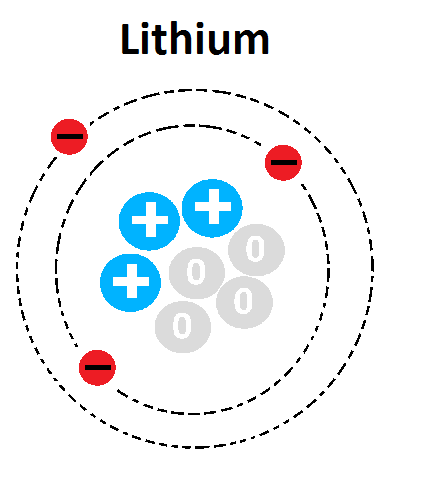
What is the atomic number of this atom?
1
3
4
7
An atom has 10 protons, 15 neutrons and 10 electrons what is its mass number.
20
10
35
25
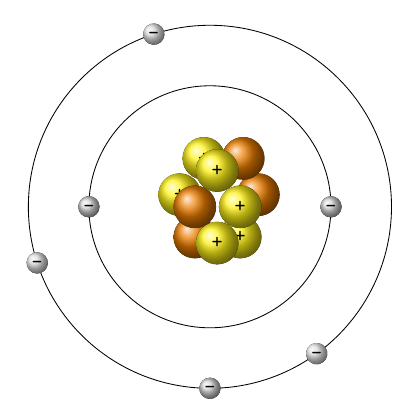
How many electrons does this atom have?
2
4
6
10
Who created the periodic table?
John Dalton
Marie Curie
Dmitri Mendeleev
The periodic table is arranged in order of...
increasing atomic number
increasing atomic mass
decreasing atomic mass
decreasing atomic number
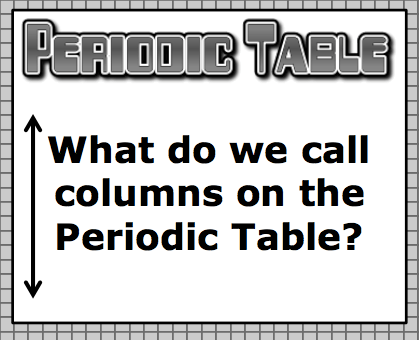
Groups on the periodic table are arranged...
vertically
horizontally
diagonally
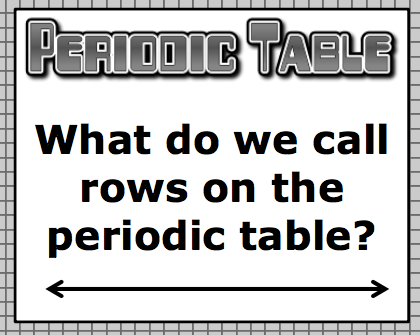
Periods on the periodic table are arranged...
vertically
horizontally
diagonally
At room temperature, most elements are classified as...
non-metal
metal
mettalloids
halogens
Which of the following is a property of non-metals?
malleable (easily reshaped w/o breaking)
brittle (easily broken)
ductile (capable of being drown out into a wire or thread)
What family is on the far right of the periodic table?
alkali metals
transition metals
actinoids
noble gases
What family is on the far left of the periodic table?
noble gases
alkali metals
transition metals
actinoids
Which pair of properties describes the elements in Group 1?
They are chemically stable
They have 8 valence electrons
They are the most reactive metals
They are the most reactive non metals
Which pair of properties describes the elements in Group 1?
They are chemically stable
They have 8 valence electrons
They are the most reactive metals
They are the most reactive non metals

What property does element X have based on its location in the periodic table?
Highly reactive gas
Manmade radioactive substance
Nonreactive nonmetal
Metallic solid
Which pair of properties describes the elements in Group 1?
They are chemically stable
They have 8 valence electrons
They are the most reactive metals
They are the most reactive non metals
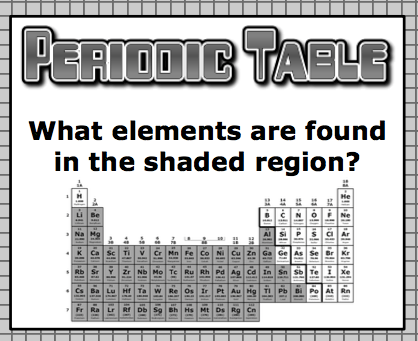
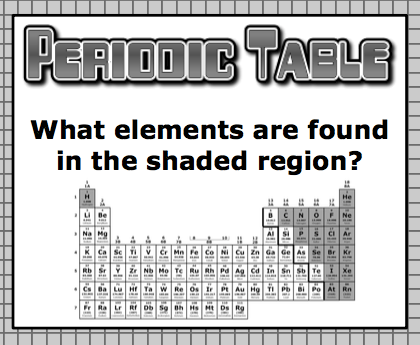
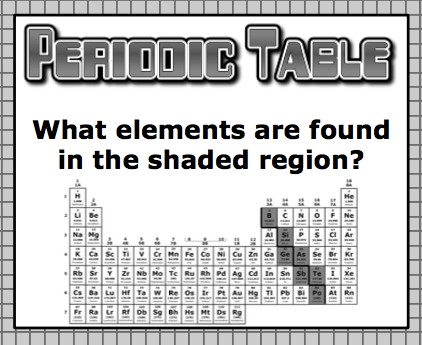

Metals are found on the ______________ side of the periodic table.
nonmetals
left
right
metals
The number of electrons in an atom is equal to the...
Atomic number
Protons
Atomic Mass
Neutrons
The formula used to calculate the number of neutrons is:
Mass Number - Atomic Number
Protons + Electrons
Atomic Number - Mass Number
Protons x2
Elements in the same group have : (2 correct answers)
Similar chemical properties
Similar names
Same number of outer (valence) electrons)
The same number of protons
PbCl2 + AgNO3 → Pb(NO3)2 + AgCl
Combination/Synthesis
Single Displacement
Double Displacement
NH3 + HCl → NH4Cl
Combination/Synthesis
Single Displacement
Double Displacement
Al(OH)3 → Al2O3 + H2O
Combination/Synthesis
Single Displacement
Combination/Synthesis
What reaction has the following general formula:
A + CD --> C + AD
Combination/Synthesis
Decomposition
Single Displacement
Double Displacement
Combustion
What reaction has the following general formula:
AB + CD --> CB + AD
Combination/Synthesis
Decomposition
Single Displacement
Double Displacement
Combustion
What reaction has the following general formula:
A + B --> AB
Combination/Synthesis
Decomposition
Single Displacement
Double Displacement
Combustion


What is the right part of a chemical equation called...
H2 + O2 --> H2O
Reactants
Products
Yields
Chemical Equation
_Zn+_HCl-->_ZnCl2 +_H2
_Mg + _Cl2 --> _MgCl2
__P4 + __O2 --> __P2O3
_Mg + _Cl2 --> _MgCl2
_CH4 + _O2 --> _CO2 + _H2O
In an endothermic reaction, heat is ...
taken in
given out
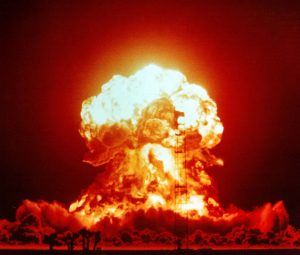
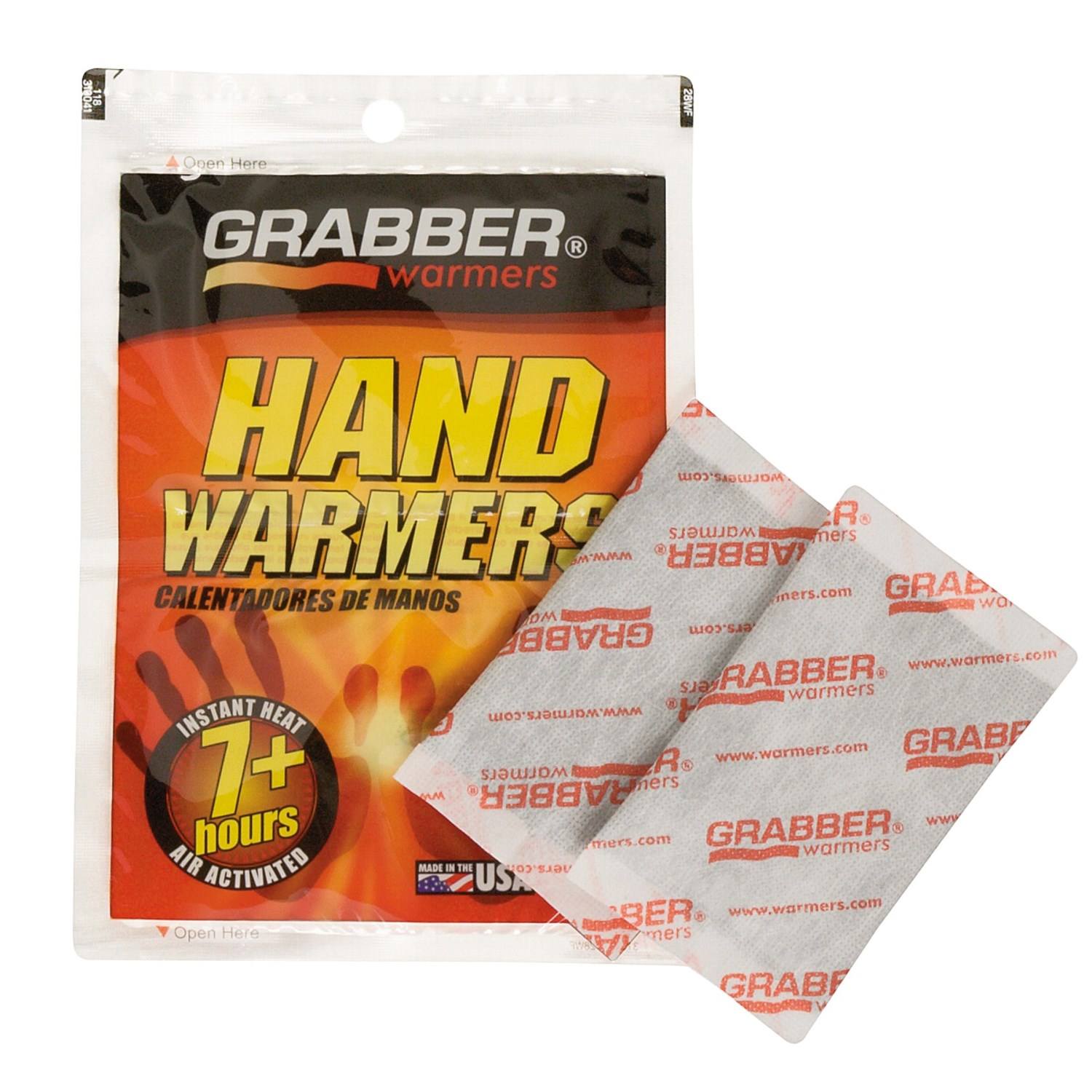
What type of reaction occurs in a hand warmer?
exothermic
endothermic
O2(g) + 2 H2 (g) → 2 H2O (g) + Energy
endothermic
exothermic
6 CO2+ 6 H2O + Energy → C6H12O6 + 6 O2
endothermic reaction
exothermic reaction
Which example provides evidence of a chemical change?
Wood releases ash and smoke when burned.
Rock particles separate when soil is being sifted.
Boiling water bubbles when being heated.
Sugar is not visible when dissolved in water.
When vinegar and baking soda are combined, bubbles and foam are produced.
What evidence demonstrates that a chemical change has occurred?
A color change occurs.
A gas is formed.
A solid is dissolved.
A precipitate is formed.

Which processes from the table can be used as evidence to identify the formation of a new substance?
Processes A, B, C, and D
Processes B, C, E, and F
Processes B, C, D, and F
Processes C, D, E, and F
Two liquids are mixed together. Which of the following does NOT identify the formation of a new substance?
A gas is produced.
One liquid dissolves into the other.
The temperature changes.
A solid is formed.

