
 Worksheets
Characteristics of Matter
Total questions: 39
Worksheet time: 22mins
Density is _____________.
Mass/Volume
Weight/Volume
Mass/Weight
Volume/Mass
Volume/Weight

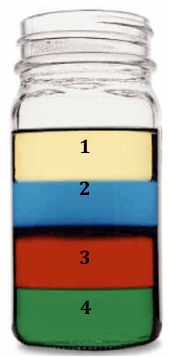

a different way to say Law of Conservation of Matter
Law of Conservation of Volume
Law of Conservation of Energy
Law of Conservation of Mass
Law of Conservation of Environment
Suppose you have 15g of baking soda and mix it with 15g of vinegar. When they are combined they bubble and fizz a lot. The final solution has a mass of 25g. What happened to the "lost" 5g?
it dissappears
it is still there just not weighted
it is in the gas that is formed
nothing happened

State of matter that takes the shape of it's container and has a definite volume.
Solid state
Liquid state
Gas state
Plasma state

State of matter that can fill containers with no fixed shape or volume.
Solid state
Liquid state
Gas state
Plasma state

The diagram shows the changes in state of water (H2O). What is the process Z called?
Condensation
Freezing
Vaporization
Melting

Which state of matter is represented in the following diagram?
Liquid
Liquid and gas
Gas
Solid
The state of matter in which particles are arranged in either a crystallyne or amorphous form is:
Bose-Einstein Condensate
Solid
Liquid
Gas
The change from liquid to solid, the reverse of melting, is called
condensation
boiling
sublimation
freezing
During the process of sublimation,
A solid turns directly into a gas.
A solid turns into a liquid.
A gas turns directly into a solid.
A liquid turns into a gas.

Freezing
F
C
A
D
Melting
endothermic
exothermic

Sublimation
A
B
C
F

Deposition
A
C
B
F
The temperature at which a liquid freezes to a solid is called
Freezing Point
Melting Point
Boiling Point
Condensation Point
True or False: elements AND compounds are pure substances.
True
False
In which mixture can you see all of the parts?
homogeneous
heterogeneous
Identify which images are HETEROGENEOUS MIXTURES! (Check all that apply)


This diagram represents...
An element
A molecule
A compound
A mixture of elements and compounds
Substances that are made up of ONLY one type of atom (element) or compound.
Heterogeneous mixture
Pure substance
Suspension
Homogeneous mixture
In an endothermic reaction, heat is ...
taken in
given out
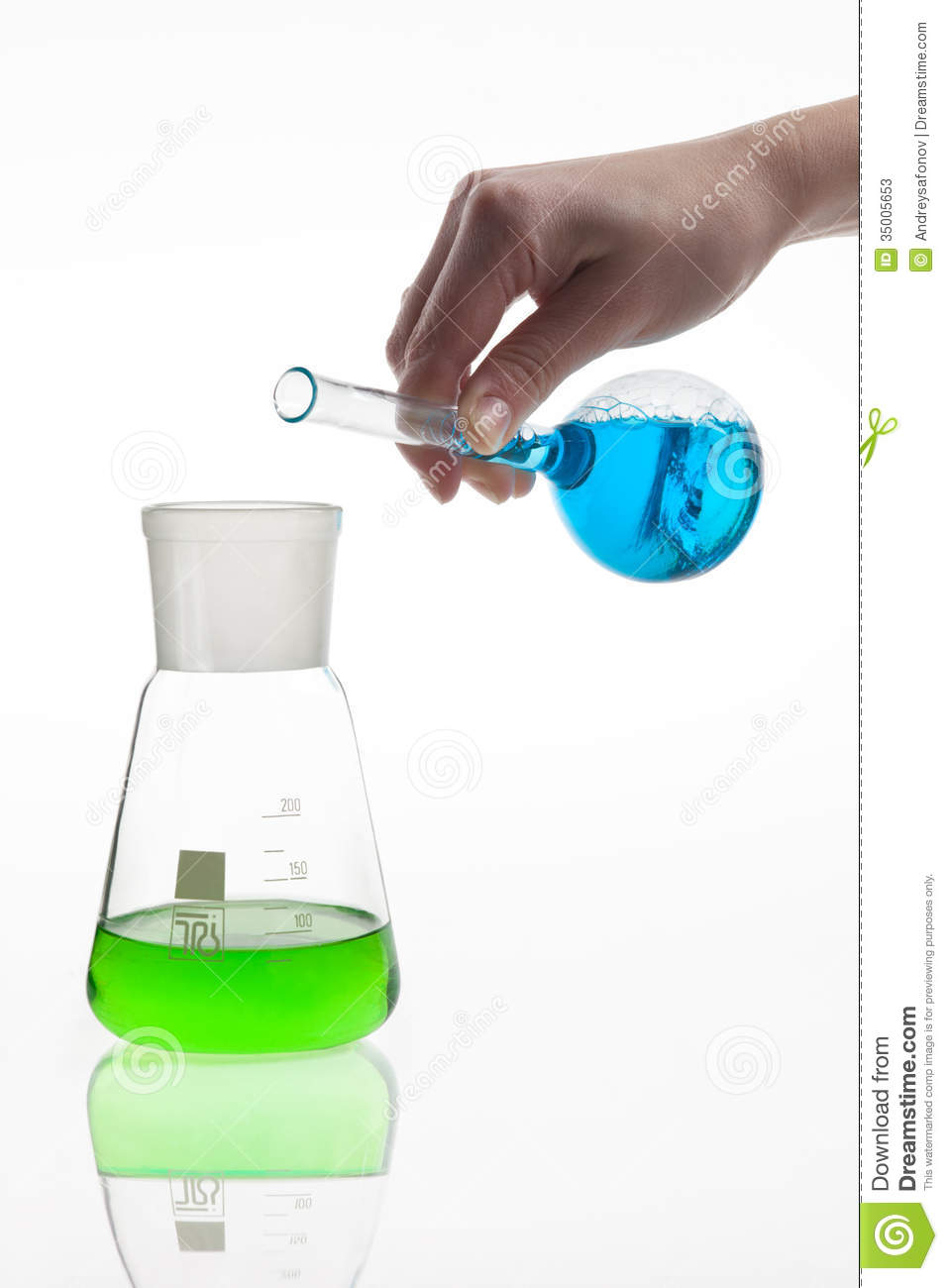
A student mixed two chemicals to allow them to react. The temperature before the reaction was 25 ° C. The temperature after the reaction was 18° C. Which of the following is true?
It is an exothermic reaction
It is an endothermic reaction

What pH does a neutral substance have?
5
6
7
8

Which of the following is the weakest acid?
bananas (pH 5)
tomatoes (pH 4)
cheese (pH 6)
orange juice (pH 3)
What is pH a measure of?
Density
Mass
Hydrogen Ion Concentraion
Polarity
Which of the following pH values represents the greatest concentration of -OH ions?
3
6
9
1
Which of the following pH values represents the greatest concentration of H+ ions?
3
6
9
1
The purpose of a buffer is to ___________.
Neutralize an acid or base and maintain pH.
Make your car's new wax look shiny.
Add volume to your hair.
All of the above.

