
 Worksheets
Terrestrial Planets
Total questions: 70
Worksheet time: 38mins

A collection of all the celestial objects (big & small) gravitationally bound in an orbit around a central star(s).
solar system
Universe
galaxy
Choose ALL objects which are members of our solar system.
Mars & Uranus
comets
our sun
the Andromeda galaxy

The four inner planets are also known as ......
giant planets
outer planets
terrestrial planets
gas planets

The four outer planets are also known as ......
terrestrial planets
gas giants
liquid planets
rocky planets

What type of material is normally found in the core of a terrestrial planet?
coal
frozen water
light silicates
dense iron & nickel

What type of material is normally found in the crust of terrestrial planets?
low density silicates
dense iron & nickel
frozen water
nitrogen
Generally, a planet farther away from the sun will have a ______ surface.
hotter
solid
cooler
rocky

Rocky bodies that orbit the Sun, mostly in the space between Mars and Jupiter. Left over from the origins of the solar system
asteroids
comets
moons
black holes

Small bodies composed mostly of dust & ice, made of frozen water & carbon dioxide that have highly elliptical orbits around the sun
asteroids
comets
meteor

Scientists have calculated that our solar system is ________ years old
254 million
66 million
13.7 billion
4.6 billion

Surface areas with a high density of meteor impact craters are _________ than areas with fewer craters.
older
younger
the same age as

A cloud of gas and debris attracted together due to the influence of gravity.
solar system
solar nebula
comet
galaxy
Mars is 1/10th the mass of Earth. Therefore Mars has ______ surface gravity.
less
more
the same
not related

The time it takes for a celestial body to complete one turn around its own axis is known as...... (choose two)
its Day
its Year
rotational period
orbital period

The time it take for a celestial body to complete one revolution around its central star is known as...... (choose two)
its Year
orbital period
rotational period
its Day

Dark areas of our moon. Impact basins that were filled with lava (basalt)
lunar mare
lunar highlands
craters
regolith

Light areas of our moon; low-density silicates. Older and heavily cratered.
craters
lunar mare
lunar highlands
rays

Meteor bombardment in our solar system ..........
was GREATEST during its 1st billion years
was LESS during its 1st billion years
has gotten worse over time
has been consistent over its history

Apollo 11 landed on our moon in .....
1969
1959
1977
1981

Which have Very Little or No magnetic field? Choose ALL that apply.
Earth
our moon
Mars
Mercury

What generates a magnetic field around a celestial body?
interaction between a hot, moving mantle and a metallic core
Crust plate moving over a hot mantle
differences in air pressure
large variation in surface temperature

What can occur if a planet loses its magnetic field?
With solar wind, life is able to survive
water will be able to appear in liquid form
Tectonic activity will stop
solar wind can strip the planet's atmosphere

Which are characteristics of Lunar Mare? Choose ALL that apply.
younger crust
more craters
basaltic lava flows
lighter colored

Which are characteristic of Lunar highlands? Choose ALL that apply.
lighter colored
thicker crust
older crust
more craters
Mercury is .4 Astronomical Units from the Sun. Therefore its orbital period is _____ than Earth's.
not relevant
longer
shorter
Venus is .7 AU from the sun. Therefore, its orbital velocity around the sun is _______ than Earth's.
faster
slower
no relevance
An Astronomical Unit (AU) is .....
the time it takes light to travel from the Earth to the sun
the distance light travels in a year
the distance from the Earth to the sun
the distance from the Earth to our moon

What is unique about Mercury's orbit?
it is a perfect circle. Its perihelion = to its aphelion
Its is highly elliptical. Its perihelion is much shorter than its aphelion
it revolves around the sun in a clockwise direction
Which planet has the lowest mass?
Mercury
Venus
Earth
Mars

The planets are named after ....
US Presidents
Roman gods/godesses
Mesopotamian gods
Hindu gods

Earth's acceleration from gravity is 9.8 meters sec2 . Mars' is 3.7 meters sec2 . Therefore, you would weigh _______ on Mars.
less
more
the same
no relevance
Which Planet's atmosphere is mostly carbon dioxide? Choose ALL that apply
Mars
Venus
Earth
Mercury
Which Planet has a large amount of atmospheric oxygen (O2)
Mercury
Earth
Mars
Venus

Which terrestrial plant has an extremely high atmospheric pressure?
Venus
Earth
Mars
Mercury

Mars has an extremely thin atmosphere. What type of temperature pattern does this produce?
Fairly warm days, extremely cold nights
extremely hot days and night
extremely cold days and nights
we have no way of knowing

Which terrestrial planet has an extreme Greenhouse Effect?
Mercury
Earth
Mars
Venus

Venus has a very thick atmosphere. Describe its temperature patterns.
Extremely cold all the time
Extremely hot all the time
extremely hot during day and extremely cold at night

Viking I and II landed on ____________ in 1977.
our moon
Mercury
Venus
Mars

Earth has an axial tilt of 23 degrees. Mars has an axial tilt of 25 degrees. This tilt gives the planet ...............
liquid water
a magnetic field
gravity
seasons
Which planets have a natural satellite? Choose ALL that apply.
Earth
Mercury
Venus
Mars
Venus has a density of 5.5 cm3grams . Mars has a density of 3.9 cm3grams . Which planet probably has more iron and nickel in its core?
Venus
Mars

Which area is older?
blue
red/orange

Why is the blue area smooth with no craters?
young volcanic flows have covered the old craters.
the blue is an ocean with liquid water
there probably never were any craters
the craters were eroded by liquid water

Olympus Mons is located on _________.
Our moon
Venus
Mars
Mercury

How do we know Olympus Mons is relatively new?
The ancient Greeks were able to view eruptions with their telescopes
we radiometric dated the rock
lack of craters on the surface
It is currently active

The presence of alluvial fans, sedimentary rocks, and weathered rock indicated the past presence of _______ on Mars.
wind
volcanic activity
liquid water
a magnetic field
As far as we know, Where on Mars can most of its Frozen water be found?
its poles
Mars has no present water
in the atmosphere
in the crust

What would cause a planet to lose its magnetic field?
excessive volcanic eruptions
it loses its atmosphere
the planet cools to the point where there is reduced movement in the mantle and core.
Which planet would cool down the quickest? A small or large one?
small planet would cool the fastest
large planet would cool the fastest
size is not relevant to cooling
Which Planet has sulfuric acid in its atmosphere?
Mercury
Venus
Earth
Mars
Where did the sulfuric acid in Venus' atmosphere most likely come from?
evaporated from large pools on the surface
arrived from meteor impacts
sulfur dioxide outgassed from volcanic activity

The USSR Venera Program was the first land probes on ________ in the late 1960s.
Mercury
Venus
Mars
our moon
Early probes sent to Venus' surface only lasted about an hour. What could have caused them to died so quickly? Choose all that apply.
extremely high atmospheric pressure
extremely high temperature
sulfuric acid in the atmosphere
Aliens
What is unique about Venus' rotation and revolution? Choose ALL that apply.
It rotates on its axis in a clockwise direction.
Venus has the shortest rotational period "day"
Venus has the fastest orbital period "year"
its day is longer than its year

Similar to our moon's Lunar Mare, Venus' lowlands are made of ......
light colored silicates
frozen water
basaltic lava flows
tall mountains
Venus' surface does not have a lot of craters. What does this tell us?
Venus used to have liquid water that eroded the craters
it has a very strong magnetic field
it has been volcanically active throughout its history
Venus has a very thin atmosphere

Which Planet is D
Earth
Mercury
Mars
Venus

Which planet is B?
Earth
Venus
Mars
Mercury

Which planet is A?
Mercury
Venus
Earth
Mars
Why are the four inner planets known as "Terrestrial" planets?
They all have a hydrosphere
They all have an atmosphere
They all have a solid rocky crust
They are the smallest of the planets

Why was there so much meteor bombardment and impact craters being formed very early in our solar system's history? 4.5 - 3.5 bya
aliens were still attacking us
The solar system was expanding rapidly
The solar system had just exploded.
gravity had not yet found everything a "home" yet
The speed that an object needs to be traveling to break free of an object's gravity.
speed of light
escape velocity
astronomical unit
inertia
A planet has a high orbital eccentricity. What does this mean?
large difference between it perihelion and aphelion
its perihelion and aphelion is very similar
It travels very quickly around its central star
It takes a long time to revolve around its central star
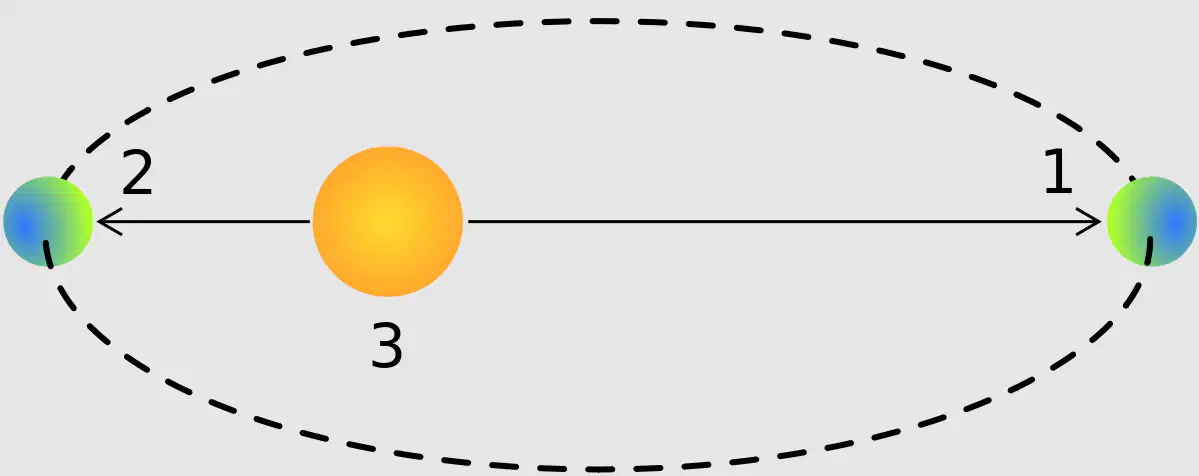
The point on its orbit where the planet is CLOSEST to its central star.
Location #2
lower Earth orbit
focus
perihelion
aphelion
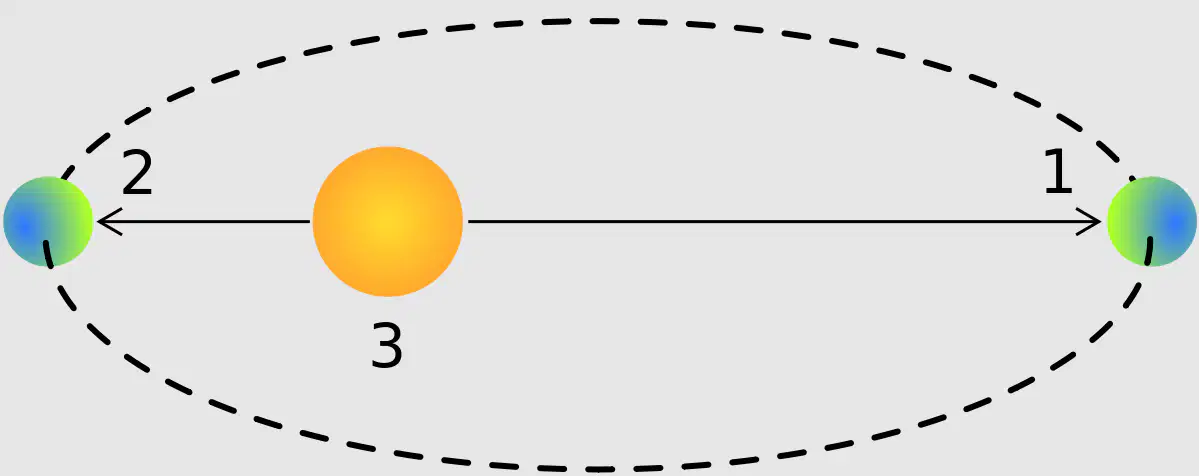
Identify location #1
asteroid belt
aphelion
perihelion
focus
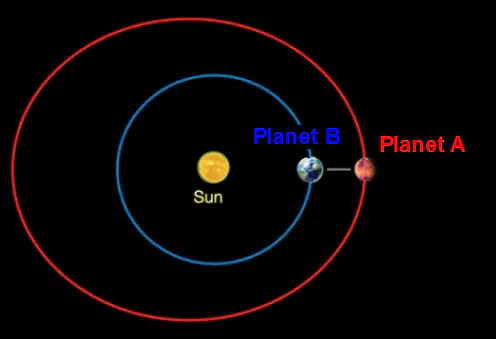
Which planet has the lowest orbital eccentricity?
A
B
not enough info
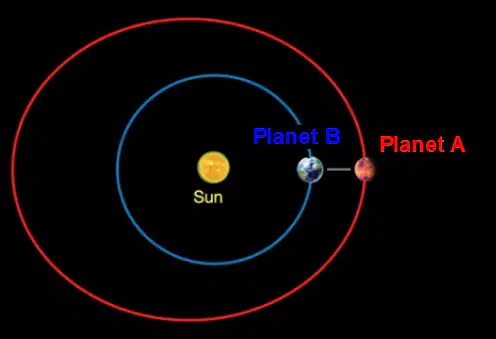
Which planet has the shortest orbital period?
A
B
Not enough info
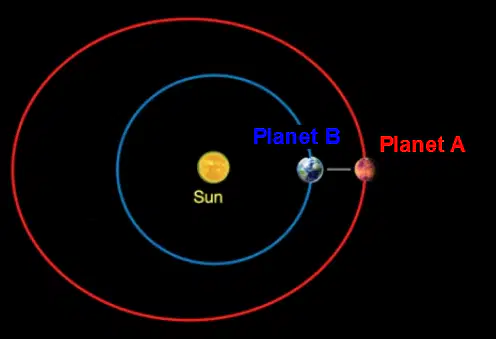
Which planet is the most dense?
A
B
not enough info
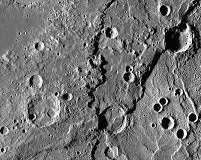
Crust that has a lot of crater is ....
old
young
thick
thin
"Lowlands" such as the lunar maria and Mars' Northern lowlands are made ....
of basaltic lava flows
from plate movements
from water erosion
faulting and folding of the crust

