
 Worksheets
Ancient Egypt Geography and Three Kingdoms
Total questions: 37
Worksheet time: 13mins
Fan-shaped region created when soil is deposited at the end of a river.
Delta
Isolated
Ka
Mummy
Ruler of Egypt.
Pyramid
Pharaoh
Theocracy
Unify
Series of rulers from the same family
pharaoh
dynasty
noble
delta
A system of government ruled by religious leaders.
Unify
Theocracy
Pharaoh
Embalm
A stone tomb with triangle-shaped sides.
Pyramid
Obelisk
Embalm
Ka
Upper Egypt is located in the ___________ area.
Northern
Eastern
Western
Southern
Who was the king that first united the two lands of Egypt?
King Ramsey
Cleopatra
King Menes
King Tut
Lower Egypt is in the __________ area.
Western
Northern
Eastern
Southern
The Nile River flows North.
True
False

In ancient Egypt, the pyramids were built _____ .
as tombs for the kings and queens
to punish slaves
as a payment to the gods
What is a cataract?
triangle shaped area of land made of soil deposited by a river
river rapids, almost impossible to sail by boat
ruler of unified Egypt, literally means "great house"
a series of rulers from the same family
Each of the following was a natural barrier for Egypt EXCEPT:
Mediterranean Sea
Cataracts along the Nile
Deserts
The Pacific Ocean

Which statement best describes the artifact in this image?
The artifact was a gift from Kush to Egypt to celebrate friendship between the two civilizations.
The artifact was a crown that symbolized the unity between Upper Egypt and Lower Egypt.
The artifact was a trophy awarded in a bowling tournament, which was invented in ancient Egypt.
Who was the most famous pharaoh of the Old Kingdom?
Kush
Khufu
Tut
Ramses the Great
During the (a) Kingdom, large pyramids were built, including the Great Pyramid of Giza.
How did Egypt's Middle Kingdom end?
The Nubians conquered them.
The Hyksos conquered them.
Financial crisis led to a change in leadership.
The Persians conquered them.
Egypt borders what 2 seas?
Mediterranean Sea & Red Sea
Dead Sea & Red Sea
Dead Sea & Mediterranean Sea
Mediterranean Sea and Mesopotamian Sea
Name the two branches of the Nile River.
The East & The West
The Blue & The White
The Blue & The Green
The North & The South
In Egyptian history, the time in between the Old, Middle, and New Kingdoms marked by political chaos & invasion.
Old Kingdom
Middle Knigdom
New Kingdom
Intermediate Periods
Like the Egyptians, the Kushites built stone temples, monuments, and pyramid tombs.
True
False
The region of (a) was the homeland of the Kingdom of (b) throughout its history?
A government where the political leader is also a religious leader.
theocracy
democracy
monarchy
bureaucracy

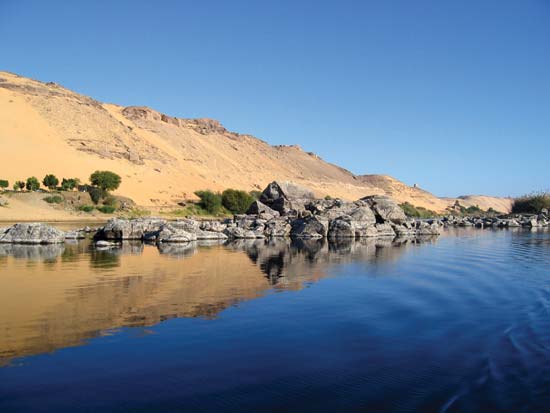
When did the Nile River flood?
It flooded unpredictably - no one knew when
between December and March
between June and September
Between October and January
A society along the Nile River, south of Egypt, from about 2000 B.C.E. to 350 C.E.
Babylon
Sumer
Kush
Which of the following were reasons why the Old Kingdom ended? Mark all that apply!
High Cost of the Pyramids
Internal conflict from Nomarchs (Local leaders)
Attacked by Wooly Mammoth
Food Shortages, less flooding of the Nile River
The Golden Age
Peaceful, stable times
Chaos and instability
Restored order and stability
After the Hyksos were driven out, the greatest period of Egyptian history began. This was called the _____________.
Great Period
New Kingdom
Middle Kingdom
Golden Age
Why did the pharaohs of Egypt have so much power?
They were considered both gods and kings.
They were considered to be the wealthiest Egyptians.
They were considered to be dynasties.
They were the most important citizens in the democracy.
Match the following Pharaoh with their accomplishments
Mrs. Gerber
Not a Pharaoh
King Tut
Famous Tomb
Hatshepsut
Female Pharaoh, Encouraged trade
Amonhotep
Ended Polytheism in Egypt
Ramses II
Powerful ruler, ruled for 66 years
True or False: The ancient Egyptians constructed the pyramids out of limestone that weighed several tons and thousands of workers built them without wheels, cranes, and other technology.
True
False
True or False: Kush was a wealthy civilization with a strong economy, as it traded valuable goods such as gold, ivory and iron to Egypt and other civilizations.
True
False

