
 Worksheets
Coulombs law
Total questions: 60
Worksheet time: 2hrs 33mins
A balloon is rubbed on a student's head. What occurs because of this?
Charged particles on the balloon are destroyed
Positively charged particles move from head to balloon
Charged particles from the balloon are released into the air
Negatively charged particles move from head to balloon
Which is the value of the constant in Coulomb's equation?
k = 9·10-9
k = 9.8
k = 6.67·10-11
k = 9 ·109
The unit to measure charge is
Volts
Newtons per coulomb
Coulomb
Joules
What happens to the force between two charged objects when you triple the distance between them?
2X
1/9X
4X
1/4X
What does the "k" represent in Coulomb's Law?
charge
Coulomb's Constant
kilometers
distance between charges
Which setup of charged particles shown below has the two exert the most force on one another?


Sticky tape lab: The bottom tape was in place on the table. You smoothed the top tape on top of the bottom tape. The tapes are both still on the table. What happened?
Nothing much
Electrons moved from one tape to another
The sticky part of the top tape got stickier
What is the definition of the term "charge?"
ability to pull something toward itself
ability to push something away from itself
ability to either push something away or pull something toward itself
What charge do electrons have?
positive
negative
no charge
If a strip X attracted F, P, and B, but repelled T, the charge of X is--
The same as T
The same as B
Can't tell; I need more information
In the Sticky Tape Lab, what caused the attraction and repulsion between tapes?
the movement of protons
the movement of electrons
the static position of the electrons
nothing. it just happened by chance
Which two particles are attracted to each other?
Two neutrons
A proton and an electron
Two protons
An electron and a neutron
A repulsive force exists between which two particles?
Two neutrons
An electron and a neutron
An electron and a proton
Two protons
What would a negative value for Fe mean?
The particles are moving away from each other
The particles have the same charge
The particles have opposite charges
The particles are moving towards each other
What does "r" measure?
the distance between the two charged objects
the amount of charge carried by the objects
the amount of force between two charged objects
the constant value for forces between the objects
What does Fe stand for?
the electrostatic force
the symbol for iron
the constant for the charges
the charges of the particles
Electric charges exert which kind of force?
a field force
a contact force
a gravitational force
a frictional force
When charge increases, electrostatic force ____________; we call this relationship ____________ proportional
decreases;directly
decreases;inversely
increases;inversely
increases;directly
If each of the charges doubles, what happens to the force?
Quadruples
Doubles
Stays the same
Reduced by half
What happens to the force between two charged objects when you double the distance between them?
it doubles
it is cut in half
it quadruples
it is cut by 1/4

What would a negative value for Fe mean?
The particles are moving away from each other
The particles have the same charge
The particles have opposite charges
The particles are moving towards each other
Coulomb’s law states that the force between two charged objects will __________ when the magnitude (value) of the object’s charge increases.
increase
decrease
stay the same
first increase, then decrease
A repulsive force exists between which two particles?
Two neutrons
An electron and a neutron
An electron and a proton
Two electrons
Two objects attract with a force of 18 N, if the distance triples, the force will be
2 N
18 N
9 N
54 N
Two objects attract with a force of 18 N, if the distance is halved, the force will be
9 N
72 N
36 N
54 N
Two objects attract with a force of 18 N. If the distance is decreased to 1/3, the new force is
36 N
54 N
9 N
162 N
Two objects attract with a force of 18 N. If the distance decreased to 1/4, the force will be
72 N
288 N
4.5 N
36 N
In the Coulomb's Law Equation F=d2KqAqB , what does the variable "q" represent?
Distance between charges
Charge size and sign
Constant
Mass
Which of the following materials is mostly likely to NOT BE MAGNETIC?
A metal nail
A metal paperclip
Iron filings
a cloth towel
Magnets can interact without touching.
True
False
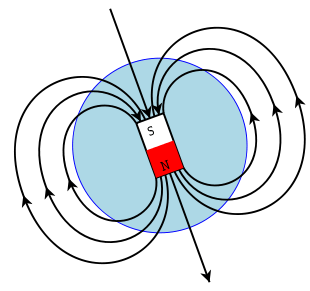
The area of magnetic force around a magnet is known as its _____________.
magnetic field
magnetic declination
magnetic fan lines
magnetic tan lines
Coulomb’s law states that the force between two charged objects will __________ when the magnitude of the object’s charge increases.
Coulomb’s law also states that the force between two charged objects will __________ when the distance between objects increases.
increase; increase
increase; decrease
decrease; increase
decrease; decrease

The image shows two charged particles with a force of 2.4 N. What would you predict the force of interaction would be when the magnitude of charge on q2 doubles?
9.6 N
4.8 N
1.2 N
.6 N
What is the formula for Coulomb's Law?
F=kr2q1×q2
F=krq1+q2
F=kr2q1−q2
F=krq1×q2
Coulomb’s Law states that the electrostatic force is ____________ proportional to the square of the distance between the charged objects.
Discreetly
Indiscriminately
Inversely
Directly
Label the parts of the formula for Coulomb's Law.
Coulomb's constant 9×10⁹
distance
electrostatic force
charge of object 1
charge of object 2
According to Coulomb's Law, when the distance increases, the electrostatic force ____________.
increases
decreases
remains unchanged
has no relationship to distance
A repulsive force exists between which two particles?
Two neutrons
An electron and a neutron
An electron and a proton
Two protons
Which two particles are attracted to each other?
Two neutrons
A proton and an electron
Two protons
An electron and a neutron
Which setup of charged particles shown below has the two exert the most force on one another?
If the distance between two charges is reduced by half, what happens to the force?
Quadruples (4x)
Doubles (2x)
Is quartered (1/4)
Is halved (1/2)
A repulsive force exists between which two particles?
Two neutrons
An electron and a neutron
An electron and a proton
Two electrons
Coulomb's law says that the force between any two charges depends
directly on the size of the charges
inversely on the square of the distance between the charges
both are correct
Which is the subatomic particle with a negative charge?
atom
According to Newton's Law of Universal Gravitation, as the distance between 2 objects increases, the gravitational attraction between the 2 objects...
(a)
What does the symbol "G" represent in Newton's Law of Universal Gravitation?
Gravity
Gravitational constant
Gravitational variable
Gravitational force

What does the symbol "k" represent in Coulomb's Law?
Net charge
Average Coulombs
Constant charge
Coulomb's constant
What happens to the force between two charged objects when you triple the distance between them?
2X
1/9X
4X
1/4X
If each of the charges doubles, what happens to the force?
Quadruples
Doubles
Stays the same
Reduced by half

