
 Worksheets
JayPee
Total questions: 35
Worksheet time: 54mins

When the volume or space inside the cylinder is reduced by moving the finger down, what will happen to the pressure (or forces exerted by the particles on the walls of the cylinder)?
The pressure will increase
The pressure will decrease
The pressure will remain the same
It cannot be determined

ROCK CYCLE begins
with igneous rock
with metamorphic rock
with sedimentary rock
anywhere

Sedimentary rock
formed from melted rock that has cooled and solidified.
the never-ending process by which one type of rock can become another type of rock.
formed from intense heat and pressure which completely changes the rock deep within the earth's crust..
formed in layers on water or land. They are cemented layers of sediments, rock fragments, minerals, or animal and plant material and may contain fossils.

COMPACTING and CEMENTING create what kind of rock?
igneous
metamorphic
sedimentary

What source of energy causes formation of magma?


Both

WEATHERING creates
igneous rocks
metamorphic rocks
sedimentary rocks
sediments

Are Rocks A and B the same or different types of rock?
Same because they formed at the same time.
Different because they formed in different ways.
Different because they formed in different places.
Same because they formed from the same material.

MOST fossils are found in _______________ rocks.
igneous
metamorphic
sedimentary

Can metamorphic rocks can become sedimentary rocks?
yes
no

What source of energy causes weathering?


Both

What type of convergent plate boundary is shown below?
Continental- Continental
Oceanic- Oceanic
Oceanic- Continental
Transform

What type of convergent plate boundary is shown below?
Continental- Continental
Oceanic- Oceanic
Oceanic- Continental
Transform

What type of convergent plate boundary is shown below?
Continental- Continental
Oceanic- Oceanic
Oceanic- Continental
Transform

Which statement accurately describe the image below?
Earthquakes cause plate motion.
Most earthquakes occur along the plate boundaries.
Volcanoes are evenly distributed on the plates of the Earth.

Earth's outer layer is cracked and split into pieces called
Continents
Plates
Mantle
Sediment

Which is INCORRECT about divergent plate boundary?
It happens when two plates move away from one another.
Volcanoes are being formed.
No earthquakes occur.

At this boundary, what will happen to locations A and B over time?
A and B will move towards each other over time.
A and B move away from each other over time.
A and B will stay in the same area over time.
A will move towards while B moves away.

What is a plate boundary?
The single point where Earth's plates have motion.
Long lines on the ground that cause the plates to move.
The place along which two plates meet.
The only location on Earth where earthquakes are possible.

A scientist was using a stream table model to demonstrate how lava creates landforms. Which statement would best describe the type of landform lava creates?
a straight channel that fans out
a deep and wide channel that is curved
multiple channels, some wider than others
a winding, curved channel that has branching

Which terms best describe channels formed by flowing water?
Curvy, winding, branching
Straight, single channel
Up, Down, All-Around
All of the above

What phase change is happening at A?
Condensation
Evaporation
Freezing
Sublimation
What phase change is happening at F?
Condensation
Evaporation
Freezing
Sublimation
What phase change is happening at E?
Condensation
Evaporation
Freezing
Sublimation
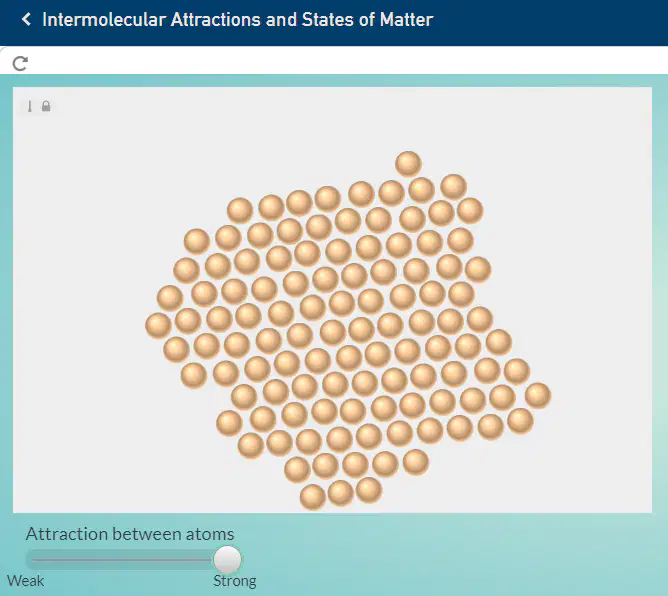
As the speed of the particles decreases (or as molecules move slower), ______________.
Energy increases
Intermolecular forces do not change
Intermolecular forces become weaker
Intermolecular forces become stronger

How do molecules of liquids move?
A
B
C
D
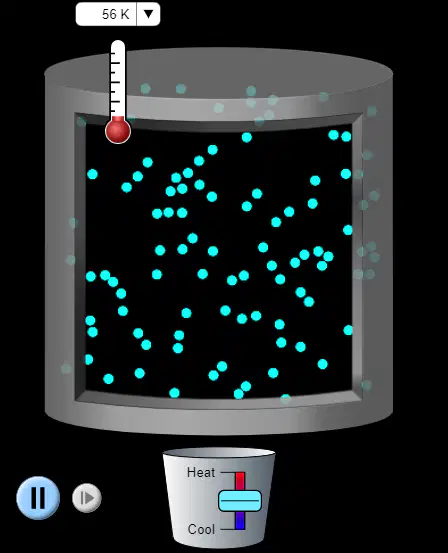
The object inside the cylinder is a...
GAS
LIQUID
SOLID
ANY

Mario is making chocolate. In part of the chocolate-making process, he changed the phase from a liquid to a solid. What happened to the molecules of chocolate when it changed phase?
Before changing phase, the molecules were moving around each other. After changing phase, they were moving in place.
Before changing phase, the molecules were moving around each other. After changing phase, they were moving away from each other.
Before changing phase, the molecules were moving away from each other. After changing phase, they were moving around each other.
Before changing phase, the molecules were moving in place. After changing phase, they were moving around each other.
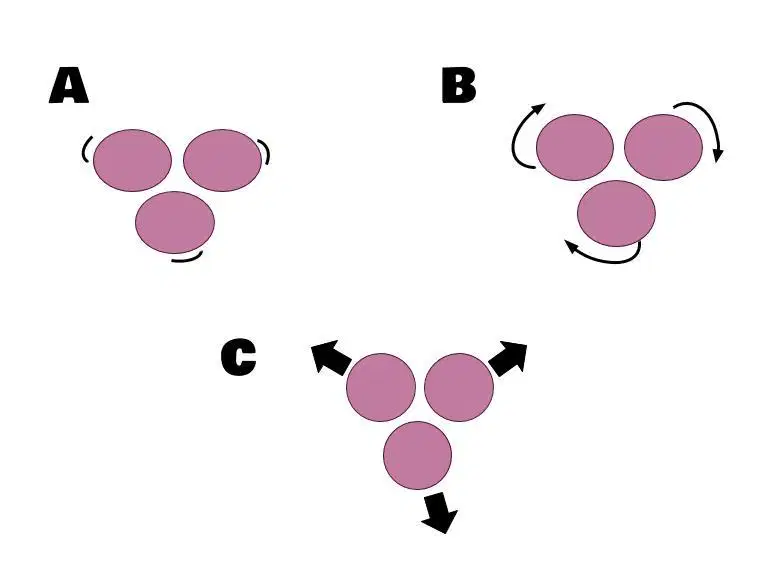
Which of the following images represents the kind of motion (or movement) exhibited by substances in solid phase?
A
B
C
ANY

When the volume or space inside the cylinder is reduced by moving the finger down, what will happen to the pressure (or forces exerted by the particles on the walls of the cylinder)?
The pressure will increase
The pressure will decrease
The pressure will remain the same
It cannot be determined

Which has the "weakest" intermolecular force of attraction?
A
B
C
ANY

Define kinetic energy.
a noticeably different form or state of the same substance
a group of atoms joined together in a particular way
the energy that an object has because it is moving
a pull between two molecules that is always the same for a substance

Based on the Kinetic Molecular theory of Matter, which is impossible?
A
B
C
D
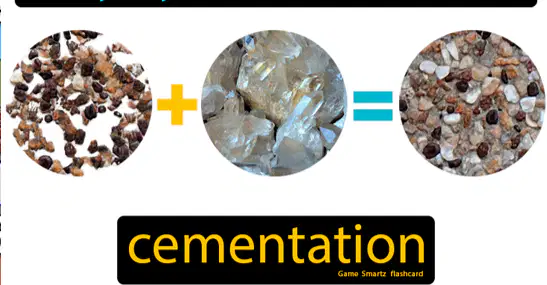
Cementation is
is the placement of sediment to a new location.
is when materials are moved by water and wind.
is the breaking down of rock into smaller pieces (sediments).
happens when new sedimentary rocks are stuck together (like glue).

Reasoning
A proposed answer to a question
To notice how two things are alike or different
The process of making clear how your evidence supports your claim
Information about the natural world that is used to support or go against(refute) a claim
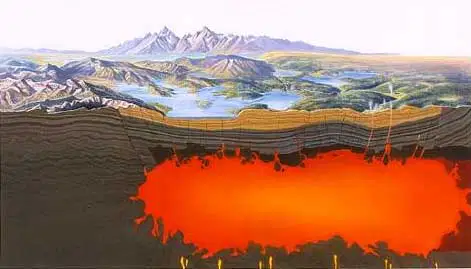
Melted rock below the earth (underground) is called ______________.
magma.
lava.
sediment.
rock.

