
 Worksheets
Rock Cycle, PT, and CD
Total questions: 46
Worksheet time: 25mins

When molten (melted) rock cools and becomes a solid, a _____ rock forms.
Igneous
Sedimentary
Metamorphic
Mineral
Sedimentary rocks are made up of
large rocks.
hard rocks.
mostly igneous rocks
small particles of sediment.
Identify the rock type: A volcano erupts and sends lava shooting into the air. This lava cools to form a(n) _____.
Igneous
Sedimentary
Metamorphic
Mineral

According to the diagram, how does a sedimentary rock become a metamorphic rock?
Weathering and Erosion
Heat and Pressure
Compaction and Cementation
Melting
Identify the rock type: Shells of different animals fall to the bottom of the ocean. Over time, these shells are broken down into smaller pieces and combine with sand and bone to become a rock. This is an example of a(n) _____.
Igneous
Sedimentary
Metamorphic
Mineral

When pieces of older rocks, plants, and other loose material gets pressed or cemented together, a _____ rock forms.
Igneous
Sedimentary
Metamorphic
Mineral
The breaking down of rock is caused by
weathering
erosion
deposition
sediment
Fossils are more likely to form in which type of rock?
Sedimentary rocks form in layers which help keep fossils from being destroyed.
Metamorphic rocks form by being exposed to a lot of heat and pressure and this keeps the fossils from being destroyed.
Igneous rocks form when lava or magma cools and this keeps the fossils from being destroyed
Fossils only form in igneous rocks.
This type of igneous rock remains inside the Earth.
Intrusive
Extrusive
Topside
Lower
This type of igneous rock can be found on the crust.
Intrusive
Extrusive
Topside
Lower

When heat or pressure causes one rock to change into a new type of rock, we call these rocks _____.
Igneous
Sedimentary
Metamorphic
Mineral
Thinking about sedimentary rock, the oldest layers are found
on the top most layer
in the middle of other layers
all layers are the same age
towards the bottom

According to the diagram, how does magma become an igneous rock?
Melting
Cooling
Heat and Pressure
Compaction and Cementation
Metamorphic rocks form through
added pressure
added temperature
added pressure and temperature
none of the above
Weathering breaks it….Erosion takes it…..Deposition
Crushes it
Moves it
Drops it
Rocks it
The idea that explained how continents moved over time
Continental Drift
Pangea
Plate Tectonics Theory
Plate Boundaries
A German scientist who first had the idea of continental drift.
Albert Einstein
Galileo
Alfred Wegener
Gladys West
The name of the supercontinent before they moved to where the continents are today.
Continental Drift
Pangea
Super Country
United States of America
The year Wegener first had the idea for continental drift
1975
1950
1888
1912
The decade when other scientists started believing Wegener
1940's
1950's
1960's
1970's
The scientific theory that describes how the Earth’s crust (and upper mantle) is divided into plates that can move (very slowly).
Continental Drift
Pangea
Plate Tectonics Theory
Plate Boundaries
The places where tectonic plates (big pieces of crust) meet together
Continental Drift
Pangea
Plate Tectonics Theory
Plate Boundaries
The tectonic plates move apart
Convergent Boundary
Divergent Boundary
Transform Boundary
Personal Boundary
The tectonic plates move together
Convergent Boundary
Divergent Boundary
Transform Boundary
Personal Boundary
The tectonic plates slide past.
Convergent Boundary
Divergent Boundary
Transform Boundary
Personal Boundary
What are created when Continental plates clashed together.
Moto Moto
Mountains
Canyons
earthquakes
What was Wegener’s continental drift idea?
The continents have moved slowly apart to their current locations.
The continents have always been located at their current locations.
The continents are moving slowly together from their current locations.
None of these

What is the force that moves the continents?
Conduction
Convection
Radiation
Conveyor belts
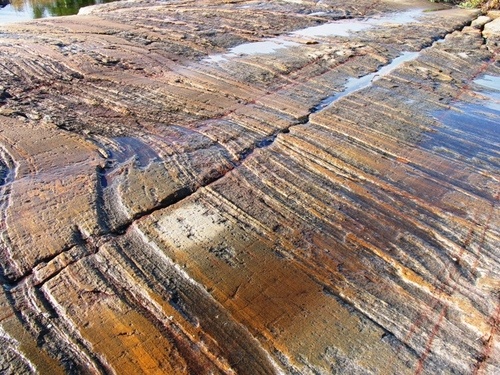

What evidence did Wegener use to support his theory?
Continents and fossils fitting together/matching-up like puzzle pieces
glacier scars and other climate evidence from temperature
mountain ranges and rocks line up across continents
all of the above
Tectonic plates consist of____.
Continental crust
Oceanic Crust
Both continental and oceanic
Asthenosphere

Earthquakes are most common around plate boundaries.
True
False

What type of evidence was NOT used by Alfred Wegener to support his continental drift hypothesis?
evidence from landforms
evidence from fossils
evidence from human remains
evidence from climate
Which model represents volcanoes forming by subduction?


The picture listed here is a _______ boundary.
transform
divergent
convergent

The picture listed here is a _______ boundary.
transform
divergent
convergent
What is sonar?
A device that detects life.
A device to measure sound.
A device using UV rays.
A device using sound waves to measure distance.
The youngest rocks on the ocean floor are located ____.
Near continents
At mid-ocean ridges
Near Indiana
Far from mid-ocean ridges
Process by which new ocean crust forms.
Seafloor spreading
Rift
Continental drift
Deep ocean ridge
the preserved remains of an organism, or traces of an organism such as a mark or print left by an animal
fossil
rock layers
imprint
bones

What two specific continents fit together most noticeably?
Africa and North America
South America and Europe
South America and Africa
Antarctica and Africa

What type of plate is thicker?
continental
oceanic
Which process occurs when sediment is pressed together?
Weathering
Deposition
Compaction
Cementation
Erosion
Which of the following occurs when minerals glue the sediment together?
Deposition
Weathering
Compaction
Cementation
Erosion
_ is molten rock that is below Earth's surface.
Lava
Magma
Sediment
Rock
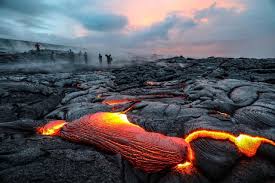
Molten material that leaves a volcano's vent is called ___________.
gas
magma
lava
liquid fire

