
 Worksheets
Topic 3 Review: Weather & Climate
Total questions: 65
Worksheet time: 22mins
Weather is...
the condition of the outside air or atmosphere at a certain time and place.
the weather over a long period of time.
a device that measure air pressure.
rain, snow, sleet, or hail.
The six elements of weather include...
air temperature, air pressure, humidity, precipitation (rain, snow, and hail), wind speed, and wind direction.
weather, air pressure, humidity, precipitation (rain, snow, and hail), clouds and fog, and
air temperature, air pressure, humidity, precipitation (rain, snow, and hail), clouds and climate
air temperature, air pressure, water vapor, precipitation (rain, snow, and hail), clouds and fog.
Temperature is lower at night than during the day because the temperature depends on energy from the ....
moon
water cycle
sun
weather
On a sunny day, a student observed the air pressure falls. Which prediction is most likely on the way?
rising temperatures
stormy weather
fair weather
more sunshine
If it is hot outside, the _________ can hold a lot of moisture.
clouds
air pressure
humidity
air
Which of the following best describes weather?
day to day conditions of the atmosphere at a place in regards to heat, dryness, sunshine, wind, rain, etc.
long-term conditions (months/years) of the atmosphere at a place in regards to heat, dryness, sunshine, wind, rain, etc.
Rain, sleet, snow, and hail are all types of
evaporation
condensation
precipitation
transpiration
The amount of water vapor in the air is called
high pressure
low pressure
air mass
humidity
Which tool is used to measure wind speed?


Condensation occurs when
there is no water vapor.
water vapor heats up.
water vapor cools.
Usually or average describes-
weather
climate
never occurring
Land closer to the equator is
colder.
warmer.
dry.
Which statement represents weather data?
Less than 30mm of rainfall annually
50% humidity at 4pm
Monsoon rains during summers
Low pressure brings
cool, wet air.
hot, dry air.
sunny with no clouds.
Which best describes climate?
Summers are usually hot and dry.
It rained last week.
Yesterday it was cold and windy.
High pressure means
cool, wet air.
hot, dry air.
lots of dark clouds.
Nevada usually receives very little rainfall is an example of
climate
weather


Air pressure differences cause _____________ to form.
tides
salinity
wind
none of the others
Air pressure ______ as you go up through the atmosphere because there are less molecules.
increases
decreases
stays the same
triples in pressure

What is the Coriolis effect?
wind curves across Earth's surface because of Earth's magnetism
global wind patterns occur because of sinking air
global wind patterns occur because of weather
wind curves across Earth's surface because of Earth's rotation
Precipitation is water that falls to Earth. Hail, rain, sleet, and snow are four types of precipitation. Which type of precipitation is most likely to occur when the cloud and air temperatures are below freezing?
rain
hail
sleet
snow
Which of these best shows the correct sequence that forms sleet?
rain falls --> freezes --> melts
snow falls --> melts --> freezes again
snow falls --> melts --> stays melted
rain falls --> freezes --> gets blow backup --> melts --> falls again --> refreezes --> repeats multiple times
Which claim BEST explains why some balls of hail have layers?
Water that freezes high in the atmosphere always forms layers.
Cracks form layers in the ball of hail when the hail hits the ground.
Raindrops freeze from the inside out, forming one layer of ice at a time.
Each time a ball of hail goes up and down within a thundercloud, a layer of ice is added.

What is the point at which water freezes (both in F and C)?
212 F & 100 C
-459 F & -273 C
32 F & 0 C
-108 F & -78 C
Who is able to predict weather patterns before they occur?
reporters
scientists
meteorologists
geologists
Why do hurricanes die out soon after hitting landfall?
Cloud types change.
Warm water no longer feeds them.
The jet stream changes direction.
Rotation of the storm changes direction.
Which of the following global winds and currents move west to east?
Prevailing westerlies and polar easterlies
Polar easterlies and the gulf stream
Prevailing westerlies and the jet stream
Prevailing westerlies and tradewinds
Land heats up faster during the day than water does, causing winds to blow from the ocean to the land in the daytime. What MOST likely happens to the air at the beach at night?
The air is still.
The air flows from the land to the ocean.
The air moves along the coast.
The air flows from the ocean to the land.
Which of these actions causes wind?
rotation of Earth on its axis
air passing Earth as it revolves around the Sun
movement of air from water to land
uneven heating of Earth’s surface
Which is true about sea breezes?
They form because the ocean warms up more quickly than the cooler land masses.
They form because the land warms up more quickly than the cooler ocean waters.
They form when both the land and the ocean have warmer temperatures.
They form when both the land and the ocean have cooler temperatures.
On a cold, cloudy day, the local weather forecaster predicts that a high-pressure system will be moving into the area in the next 24 hours.
Which weather conditions will this system most likely bring to the area?
hot
snowy
sunny
stormy
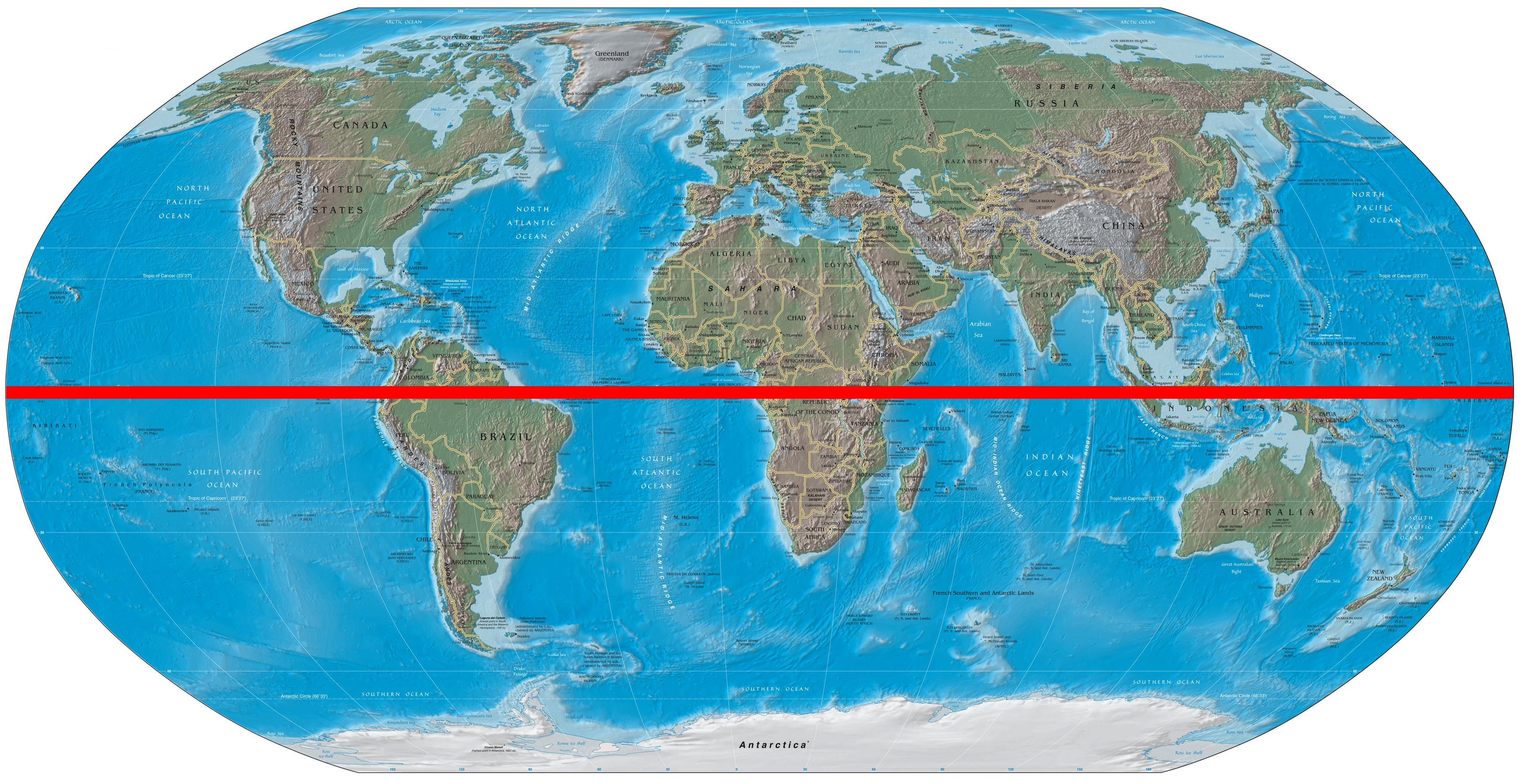
Which statement best describes temperature patterns in areas along the Equator?
Temperatures along the equator are consistently cool all year long.
Temperatures along the equator vary from cold in the summer to warm in the winter.
Temperatures along the equator vary from hot in the summer to cold in the winter.
Temperatures along the equator are consistently warm all year long.
The weather forecast indicates that a warm front will be moving into the area in the next 24 hours. Which type of weather will most likely result?
clear skies and very little humidity
cloudy skies and rainy weather
clear skies and cold temperatures
clear skies and hot temperatures
Which zone has the the coldest place on earth?
Tropical
Temperate
Polar
In the temperate zone, there are ------ distinct seasons
four
five
three
six
Which of the following is a characteristic of a low-pressure system?
High temperatures and dry air.
Clear skies and calm weather.
Cloudy skies and precipitation.
Cold temperatures and snow.

Climate is...
the condition of the outside air or atmosphere at a certain time and place.
the state of the atmosphere at any particular time.
is the weather over a long period of time.
is a device that measures air pressure.
Climate is affected by many factors including:
latitude, elevation, and closeness to bodies of water
tides, elevation, and currents
winds, temperature, and latitude
snow and sleet, and elevation
At which latitude would you expect to find the warmest air temperatures?
23.5° S
0°
66.5°N
66.5°S
What is elevation?
the depth of the ocean
the height of the atmosphere
the depth of a lake
the height above sea level
Which best explains why wind occurs?
Wind is produced by tropical storms.
Wind is produced by precipitation.
Wind is produced by differences in humidity.
Wind is produced by differences in air pressures.
Hurricanes and tornadoes are examples of
High pressure storms
Low pressure storms
Which of these is NOT a factor that determines the climate of a place?
latitude
wind patterns
longitude
elevation
Which sentence best describes the relationship between elevation and air temperatures?
LOWER elevation = COLDER temperatures
HIGHER elevation = COLDER temperatures
HIGHER elevations = WARMER temperatures
There is no relationship
These areas are located between 23.5°N and 23.5°S of the equator. These zones receive direct sun rays, have higher temperatures, and lots of rain.
Polar Climate Zones
Temperate Climate Zones
Tropical Climate Zones
Oceanic Climate Zones
What is the temperature and humidity of a mountain region?
very warm in summer and cooler in other seasons with high humidity
Low temperatures due to altitude, humidity is lower the higher you go
very hot temperatures during the day and cold at night, little to no humidity
very cold year round, high humidity
What is a sea breeze?
cooler air moving inland from the ocean
warmer air moving inland from the ocean
cooler air moving to sea
warmer air moving to sea

The rising and sinking of matter in a circular pattern due to differences in temperature:
convection current
ocean current
convection oven
climate zone
The temperature and humidity of a swamp is:
very warm during the summer and the higher humidity during the warmer seasons
very cool during the summer and the humidity is low during the warmer seasons
very warm all year long with very little humidity
very cold all year long with little humidity
Which city would you expect to have the overall colder climate?
Atlanta, Georgia (elevation of 1,050 feet)
Baton Rouge, Louisiana (elevation of 56 feet)
Chicago, Illinois (elevation of 579 feet)
Steamboat Springs, Colorado (6, 732 feet)
Which factor does NOT affect the kind of climate an area has?
distance from the equator (latitude)
ocean currents
proximity to bodies of water
humidity
Which tool is used to measure wind speed?
Wind Vane
Thermometer
Anemometer
Barometer
Which of the following is a characteristic of a tropical climate?
Cold winters and hot summers.
High temperatures and high humidity year-round.
Low precipitation and high winds.
Frequent snowfall and ice storms.
Which of the following best describes a cold front?
A region of low pressure
A boundary where cold air replaces warm air
A boundary where warm air replaces cold air
A region of high pressure
What instrument is used to measure atmospheric pressure?
Barometer
Thermometer
Anemometer
Hygrometer
What happens to air pressure as temperature increases?
Air pressure increases.
Air pressure remains constant.
Air pressure fluctuates randomly.
Air pressure decreases.
What is the primary cause of ocean currents?
Differences in water temperature.
Differences in water salinity.
Differences in air pressure.
Differences in wind speed.

These symbols represent a/an ________
cold front
warm front
stationary front
occluded front

