wayground logo

Free Printable Worksheets

NEW

Font size

S
M
L
XL
Worksheets

Weather

Total questions: 58

Worksheet time: 35mins

Name
Class
Date
1.
Which statement best describes temperature patterns in areas along the equator?
a)
Temperatures along the equator vary from hot in the summer to cold in the winter.
b)
Temperatures along the equator are consistently warm all year long.
c)
Temperatures along the equator are consistently cool all year long.
2.
A student observes and records cloud cover throughout the day. Which event could the student most likely predict if they observe increasing cumulonimbus clouds?
a)

The area will have sunny skies.

b)

The area will have thunderstorms.

c)

The area will have cooler temperatures.

d)

The area will have warmer temperatures.

3.
The forecast said a high pressure system will arrive this weekend. Benito and his friends want to go camping. Should they plan to go?
a)
Yes, the high pressure system will create clear, sunny skies.
b)
No, the high pressure system will create storm clouds and tornadoes.
c)
Yes, the high pressure system will create skies filled with cumulus clouds.
d)
No, the high pressure system will increase humidity and cause rain clouds to form.
4.
If the temperature is 30°F, in which form will precipitation most likely be?
a)
fog
b)
hail
c)
rain
d)
snow
5.
Which instrument is used to record average precipitation?
a)
rain gauge
b)
barometer
c)
anemometer
6.
What type of weather is usually found in low pressure areas?
a)
hot and dry
b)
wet and stormy
c)
cold and snowy
d)
sunny and humid
7.
Which type of weather most likely occurs in a high pressure area?
a)
clear
b)
foggy
c)
rainy
d)
snowy
8.

What type of cloud is associated with thunderstorms, lightning, heavy rain, hail and tornadoes?

a)

Cumulonimbus

b)

Cumulus

c)

Cirrus

d)

Stratus

9.

Which of the following does NOT affect the weather?

a)

The temperature of the air

b)

The speed of the wind

c)

The types of clouds in the sky

d)

The phase of the moon

10.

Which weather instrument measures wind speed?

a)

Anemometer

b)

Thermometer

c)

Rain gauge

d)

Barometer

11.

Which weather instrument measures air pressure?

a)

Anemometer

b)

Thermometer

c)

Rain gauge

d)

Barometer

12.

Which weather instrument measures temperature?

a)

Anemometer

b)

Thermometer

c)

Rain gauge

d)

Barometer

13.

A barometer measures air pressure and tells whether the pressure is rising or falling. What weather can be expected when the air pressure is falling?

a)

Sunny and dry conditions

b)

Calm and clear conditions

c)

Stormy and wet conditions

d)

Possible hurricane conditions

14.

As the temperature in an area increases, the air pressure ___________.

a)

increases

b)

decreases

c)

stays the same

15.

As the humidity increases, air pressure _________.

a)

increases

b)

decreases

c)

stays the same

16.

Which of the following is a liquid form of precipitation?

a)

snow

b)

rain

c)

sleet

d)

hail

17.

Snow forms when the temperature is below freezing.

a)

True

b)

False

18.

____ is how hot or cold something is.

a)

temperature

b)

humidity

c)

altitude

d)

wind speed

19.
Water as a gas is called _________.
a)
water vapor
b)
tornado
c)
hibernate
20.

These clouds are puffy and white and sometimes appear to have a flat bottom. They do not produce precipitation.

a)

cumulus

b)

cumulonimbus

c)

cirrus

d)

stratus

21.
These clouds appear in blanket-like layers.
a)
cumulus
b)
cumulonimbus
c)
cirrus
d)
stratus
22.
These clouds can bring thunderstorms, heavy rain, lightening, and sometimes hail.
a)
cumulus
b)
cumulonimbus
c)
cirrus
d)
stratus
23.
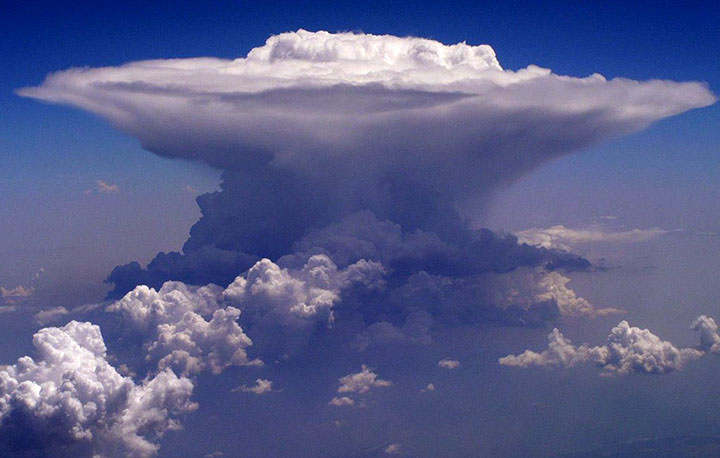
Which cloud is this?
a)
cumulus
b)
cumulonimbus
c)
cirrus
d)
stratus
24.
Which cloud is this?
a)
cumulus
b)
cumulonimbus
c)
cirrus
d)
stratus
25.
Which cloud is this?
a)
cumulus
b)
cumulonimbus
c)
cirrus
d)
stratus
26.
Which cloud is this?
a)
cumulus
b)
cumulonimbus
c)
cirrus
d)
stratus
27.
What is the name of this weather tool?
a)
Thermometer
b)
barometer
c)
anemometer
d)
wind vane
28.
These weather tool is a ___________.
a)
barometer
b)
wind vane
c)
thermometer
d)
anemometer
29.
This weather tool is used to measure ___________.
a)
homework
b)
air
c)
snow
d)
rain
30.
This weather tool is used to meaure ________.
a)
your temperature when you are sick.
b)
the wind direction.
The temperature outside.
c)
the temperature outside.
d)
time to go to recess.
31.
This tool is used by meterologist to  ___________.
a)
find north, south, west, and east.
b)
show where the rain is coming from.
c)
the direction of the wind.
d)
help them with driving directions.
32.
The weather forecast tomorrow says there will be a 15 mph northeast wind and a high temperature of 52 degrees. What three instruments will a meteorologist use to make this prediction?
a)
hammer, screwdriver, and a drill
b)
anemometer, rain gauge, and anemometer
c)
thermometer, snow gauge, and wind vane
d)
wind vane, thermometer, and barometer
33.
Which weather tool measure the wind direction?
a)
anemometer
b)
wind vane
c)
therometer
d)
barometer
34.
Which of the following is not a weather tool?
a)
anemometer
b)
asonometer
c)
barometer
d)
rain gauge
35.
Which tool measures wind speed?
a)
Anemometer
b)
Hygrometer
c)
Barometer
d)
Wind Vane
36.
What does a barometer measure? 
a)
measures high and low pressure in the air
b)
measures humidity in the air
c)
measures speed of the wind 
d)
measures the amount of rain that has fallen
37.

This weather instrument measures humidity, it is called a

a)

wind vane

b)

hygrometer

c)

rain gauge

d)

anemometer

38.

When clouds fill with water and can't hold anymore, the water falls from the clouds as -

a)

precipitation

b)

evaporation

c)

condensation

d)

atmospehere

39.

The amount of precipitation over a period of time is measured with what instrument?

a)
b)
c)
d)
40.

My temperature never gets below freezing as I fall to the ground and I remain a liquid all the way to Earth.

a)

sleet

b)

rain

c)

hail

d)

snow

e)

freezing rain

41.
For snow to fall, the air temperature must be what?
a)

Above 0 degrees celsius

b)

Below 32 degrees celsius

c)

32 degree F or colder

d)

Warmer at the ground than high in the air

42.
True or False: Hail is formed in the cloud and then falls to the ground.
a)
True
b)
False
43.
What type of precipitation forms when raindrops fall through cold layer of air and freeze before they hit the ground? 
a)
Sleet
b)
Snow
c)
Rain
d)
Hail
44.

There is a lot of fog outside. To measure the water vapor in the air, i will use a

a)

wind vane

b)

anemometer

c)

hygrometer

d)

thermometer

45.

A _____ measured wind speed, a _______ measures wind direction.

a)

anemometer, wind vane

b)

anemometer, thermometer

c)

thermometer, rain gauge

d)

rain gauge, wind vane

46.

What does drought mean?

a)

Too little water.

b)

Too much water

c)

Just the right amount of water

47.

this environment has a layer of ice on the ground

a)

wetland

b)

rainforest

c)

dessert

d)

tundra

48.

this environment is also known as swamps and marshes

a)

rainforest

b)

desert

c)

wetland

d)

tundra

49.

this environment does not support tree growth but has miles of grass

a)

forrest

b)

grassland

c)

wetland

d)

treeland

50.

this environment has little vegetation and has little to no bodies of water resulting in no precipitation

a)

grassland

b)

desert

c)

rainforest

d)

dryland

51.

this environment resides on the equator, which means it climate is warm/hot all year around and they have no seasons

a)

rainforest

b)

tundra

c)

desert

d)

grassland

52.

What is climate?

a)

the condition of the atmosphere at any given time and place

b)

cloud cover and temperature

c)

precipitation and humidity at a given time and place

d)

weather conditions in an area over a long period of time

53.

Climate is affected by many factors including:

a)

latitude, elevation, and proximity to bodies of water

b)

tides and currents

c)

wind

d)

snow and sleet

54.

What is elevation?

a)

the depth of the ocean

b)

the height of the atmosphere

c)

the depth of a lake

d)

the height above sea level

55.

What is the temperature and humidity of a mountain region?

a)

very warm in summer and cooler in other seasons with high humidity

b)

Low temperatures due to altitude, humidity is lower the higher you go

c)

very hot temperatures during the day and cold at night, little to no humidity

d)

very cold year round, high humidity

56.

What is a sea breeze?

a)

cooler air moving inland from the ocean

b)

warmer air moving inland from the ocean

c)

cooler air moving to sea

d)

warmer air moving to sea

57.

What are the three main climate zones?

a)

tropical, thermal, polar

b)

tropical, temperate, polar

c)

cold, super hot, blah

d)

polar, tropical, humid

58.

What climate zone is located near the equator where the sun is directly overhead all year?

a)

polar

b)

tropical

c)

desert

d)

temperate