
 Worksheets
Chemical Reactions and Balancing Review 1
Total questions: 50
Worksheet time: 50mins
Synthesis
Decomposition
Single replacement
Double replacement
How quickly a reaction will take place.
Reaction Rate
Temperature Rate
Equation Rate
Bubbly Rate

To balance an equation you should:
ONLY change subscripts.
ONLY change coefficients.
Change BOTH subscripts and coefficients.
Synthesis
Decomposition
Single replacement
Double replacement
Synthesis
Decomposition
Single replacement
Double replacement

Is this equation balanced?
Yes
No

How many Hydrogen (H) and how many Chlorine (Cl) are there?
H = 4, Cl = 1
H = 4, Cl = 0
H = 4, Cl = 3
H = 4, Cl = 4
Synthesis
Decomposition
Single replacement
Double replacement
Synthesis
Decomposition
Single replacement
Double replacement

Is the compound in the pink box a Reactant or a Product?
Reactant
Product
Synthesis
Decomposition
Single replacement
Double replacement
How many Nitrogen (N) atoms are in 4NH3?
4
1
3
12
What is the correct "inventory" for 3Al2O4
Al = 6 O = 4
Al = 6 O = 12
Al = 2 O = 4
Al = 3 O = 4
Which type of chemical reaction has two or more reactants to make one product?
combustion
single replacement
double replacement
synthesis
decomposition
What reaction has the following general formula:
AB --> A + B
Synthesis
Decomposition
Single Replacement
Double Replacement
Combustion
process by which the atoms of one or more substances are rearranged to form different substances
Chemical Reaction
Chemical Property
Physical Reaction
Physical Property
What reaction has the following general formula:
A + CD --> C + AD
Synthesis
Decomposition
Single Replacement
Double Replacement
Combustion
What reaction has the following general formula:
A + B --> AB
Synthesis
Decomposition
Single Replacement
Double Replacement
Combustion
Which chemical reaction always starts with a hydrocarbon that reacts with oxygen and produces carbon dioxide and water?
Decomposition
Synthesis
Combustion
Single Replacement
Which phrase describes what happens to atoms in a chemical reaction?
never lost or gained, just rearranged
sometimes lost, never rearranged
sometimes lost, gained, or rearranged
lost or gained, never rearranged
Synthesis
Decomposition
Single replacement
Double replacement
Which of the following is a compound?
zinc (Zn)
magnesium (Mg)
sodium chloride (NaCl)
potassium (K)
Which of the following is an element?
potassium chloride (KCl)
water (H2O)
carbon (C)
calcium carbonate (CaCO3)
Chemical reactions that release energy in the form of heat
Exothermic
Endothermic
Exogonic
Endergonic
What reaction has the following general formula:
CxHy + O2 −>CO2 + H2O
Combination
Decomposition
Single Replacement
Double Replacement
Combustion
What is the general reaction scheme for a combustion reaction?
A + B --> AB
AB --> A + B
A + CD --> C + AD
AB + CD --> CB + AD
CxHy+O2 −> CO2+H2O
What type of reaction is the following:
2KI −> 2K + I2
Combination
Decomposition
Single Replacement
Double Replacement
Combustion
What type of reaction is the following:
C11H24+17O2−> 11CO2 + 12H2O
Combination
Decomposition
Single Replacement
Double Replacement
Combustion
What type of reaction is the following:
2NaHCO3−> Na2CO3+CO2+H2O
Combination
Decomposition
Single Replacement
Double Replacement
Combustion

In the equation shown, what are the product(s)?
N2 + H2
NH3

If a chemical reaction produces light or sound, it is likely a _____ reaction.
EXERgonic
ENDERgonic
What type of reaction is the following:
Zn + 2HCl −> ZnCl2+H2
Combination
Decomposition
Single Replacement
Double Replacement
Combustion
The energy required to start a chemical reaction is ___.
endothermic
exothermic
activation
released
Energy is _____ when new bonds form.
absorbed
released
lost
gained
Energy is ______ when bonds break.
gained
lost
released
absorbed
An _______ reaction is when more energy is released than is absorbed. This energy can be in the form of light, heat, electricity, etc.
endothermic
endergonic
exothermic
exergonic

How many Potassium (K) atom are there?
1
2
3
4
An _______ reaction is when more thermal energy is absorbed than is released.
endothermic
endergonic
exothermic
exergonic
An _______ reaction is when more thermal energy is released than is absorbed.
endothermic
endergonic
exothermic
exergonic
(OH)2
The ending substances; what is made
Products
Reactants
Equations
sentences

A chemist is doing an ENDOthermic reaction. The starting temperature was 25 degrees Celsius. Which of the following would be a reasonable ending temperature
44 degrees
30 degrees
15 degrees
25 degrees
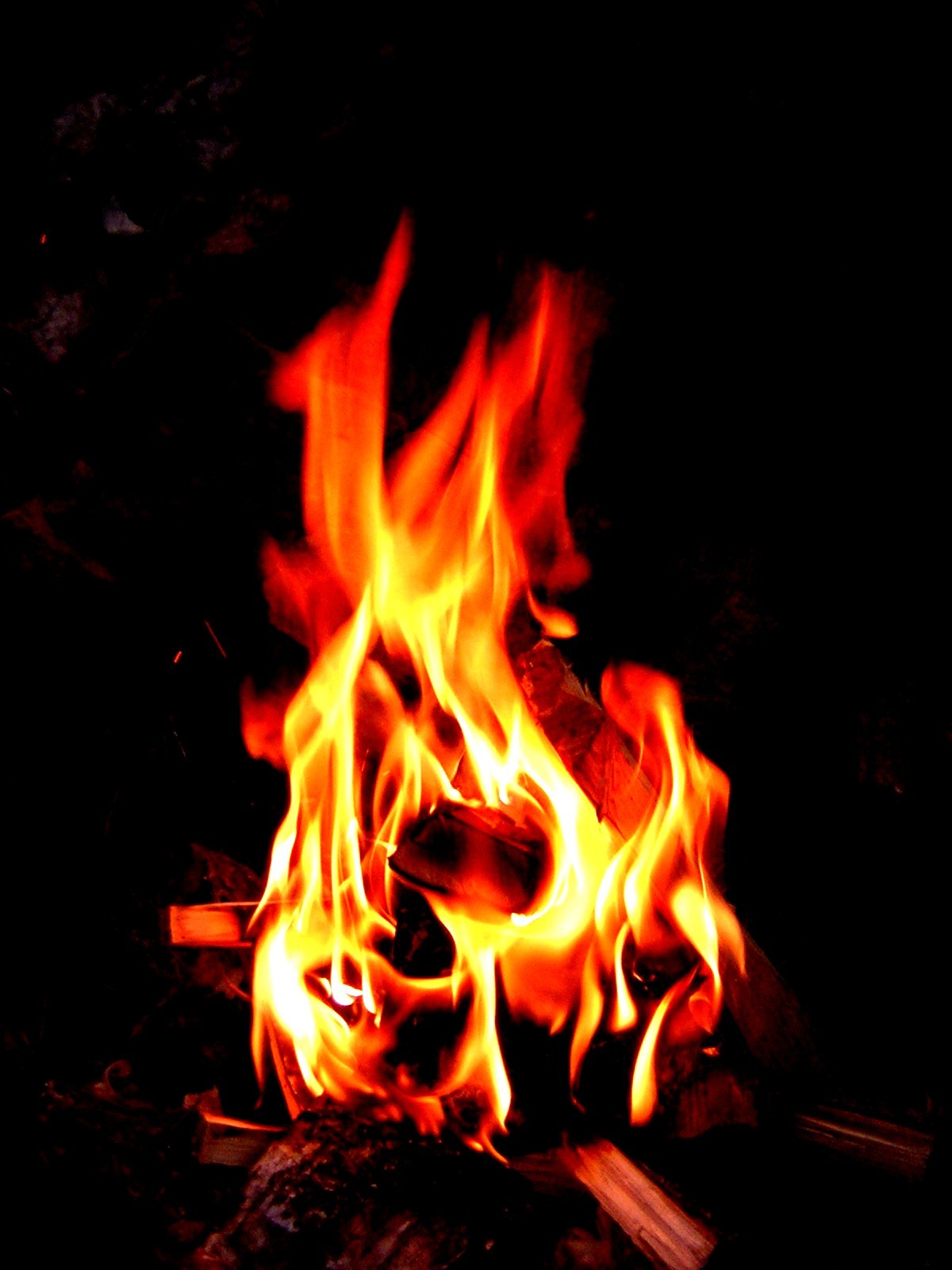
_____ reactions usually feel hot!
endothermic
exothermic
In an endothermic reaction, energy is _________.
absorbed
released
When barium hydroxide and ammonium chloride react, the temperature of the mixture decreases. What kind of reaction is this?
Endothermic
Decomposition
Exothermic
Indothermic
Synthesis
Decomposition
Single replacement
Double replacement

