Wayground logo

Free Printable Worksheets

Font size

S
M
L
XL
Worksheets

Chemistry 1st semester reviw

Total questions: 100

Worksheet time: 2hrs 1mins

Name
Class
Date
1.
In a chemical reaction, the type of products obtained is largely determined by which part of the reacting chemicals?
a)
Protons
b)
Electrons
c)
Neutrons
d)
Nuclei
2.
A horizontal row of the periodic table is usually referred to as a
a)
family
b)
period
c)
group
d)
property
3.
An example of an property of matter is
a)
temperature
b)
pressure
c)
mass
d)
hardness
4.
Which of the following is a physical property?
a)
explosive
b)
combustible
c)
melting point
d)
ability to rust
5.
Which state of matter takes both the shape and volume of its container?
a)
Solid
b)
Liquid
c)
Gas
d)
none of the above
6.
Which state of matter expands when heated and is easy to compress?
a)
Solid
b)
Liquid
c)
Gas
d)
none of the above
7.
Which of the following is a physical property of a substance in the liquid state?
a)
definite volume
b)
indefinite mass
c)
not easily compressed
d)
definite shape
8.
Which of the following is a physical change?
a)
corrosion
b)
explosion
c)
evaporation
d)
rotting of food
9.
Which of the following is a mixture?
a)
vinegar in water
b)
milk
c)
oil and vinegar
d)
air
10.
Which of the following is a homogeneous mixture?
a)
salt water
b)
beef stew
c)
sand and water
d)
soil
11.
What distinguishes a substance from a mixture?
a)
Substances are compounds, and mixtures are not.
b)
Mixtures are groupings of elements, and compounds are not.
c)
Samples of the same substance can have different intensive properties.
d)
The composition of substances cannot vary, while the composition of mixtures can.
12.
The first letter in a properly written chemical symbol is always
a)
bold faced.
b)
capitalized.
c)
italicized.
d)
underlined.
13.
Which of the following is used for chemical symbols today?
a)
drawings
b)
icons
c)
letters
d)
numbers
14.
What do chemical symbols and formulas represent, respectively?
a)
elements and compounds
b)
atoms and mixtures
c)
compounds and mixtures
d)
elements and ions
15.
Which of the following is a chemical property?
a)
color
b)
hardness
c)
freezing point
d)
ability to react with oxygen
16.
What must occur for a change to be a chemical reaction?
a)
There must be a change in chemical properties.
b)
There must be a change in physical properties.
c)
The change must involve a change in mass.
d)
The change must involve a change in volume.
17.
Which of the following is a chemical change?
a)
grating cheese
b)
melting cheese
c)
fermenting of cheese
d)
mixing two cheeses in a bowl
18.
What must be done to be certain that a chemical change has taken place?
a)
Check for the production of bubbles before and after the change.
b)
Demonstrate that a release of energy occurred after the change.
c)
Check the composition of the sample before and after the change.
d)
Demonstrate that energy was absorbed by the reactants after the change.
19.
Which of the following indicates that a chemical change has happened during cooking?
a)
The food darkens.
b)
Bubbles form in boiling water.
c)
Butter melts.
d)
Energy is transferred from the stove to a pan.
20.
Which of the following indicates that a physical change has taken place?
a)
fracture formation
b)
gas production
c)
precipitate formation
d)
energy transfer
21.
What happens to matter during a chemical reaction?
a)
Matter is neither destroyed or created.
b)
Some matter is destroyed.
c)
Some matter is created.
d)
Some matter is destroyed and some is created.
22.
Which of the following is true for all chemical reactions?
a)
The total mass of the reactants increases.
b)
The total mass of the products is greater than the total mass of the reactants.
c)
The total mass of the products is less than the total mass of the reactants.
d)
The total mass of the reactants equals the total mass of the products.
23.
Density is found by dividing ____.
a)
mass by volume
b)
volume by mass
c)
mass by area
d)
area by mass
24.
What is the density of an object having a mass of 8.0 g and a volume of 25 cm?
a)
0.32 g/cm
b)
2.0 g/cm
c)
3.1 g/cm
d)
200 g/cm
25.
Dalton's atomic theory included which idea?
a)
All atoms of all elements are the same size.
b)
Atoms of different elements always combine in one-to-one ratios.
c)
Atoms of the same element are always identical.
d)
Individual atoms can be seen with a microscope.
26.
Which of the following was originally a tenet of Dalton's atomic theory, but had to be revised about a century ago?
a)
Atoms are tiny indivisible particles.
b)
The atoms of any one element are different from those of any other element.
c)
Compounds are made by combining atoms.
d)
Atoms of different elements can combine with one another in simple whole number ratios.
27.
Why did J. J. Thomson reason that electrons must be a part of the atoms of all elements?
a)
Cathode rays are negatively-charged particles.
b)
Cathode rays can be deflected by magnets.
c)
An electron is 2000 times lighter than a hydrogen atom.
d)
Charge-to-mass ratio of electrons was the same, regardless of the gas used.
28.
Which of the following is true about subatomic particles?
a)
Electrons are negatively charged and are the heaviest subatomic particle.
b)
Protons are positively charged and the lightest subatomic particle.
c)
Neutrons have no charge and are the lightest subatomic particle.
d)
The mass of a neutron nearly equals the mass of a proton.
29.
All atoms are
a)
positively charged, with the number of protons exceeding the number of electrons.
b)
negatively charged, with the number of electrons exceeding the number of protons.
c)
neutral, with the number of protons equaling the number of electrons.
d)
neutral, with the number of protons equaling the number of electrons, which is equal to the number of neutrons.
30.
The nucleus of an atom is
a)
the central core and is composed of protons and neutrons.
b)
positively charged and has more protons than neutrons.
c)
negatively charged and has a high density.
d)
negatively charged and has a low density.
31.
The atomic number of an element is the total number of which particles in the nucleus?
a)
neutrons
b)
protons
c)
electrons
d)
protons and electrons
32.
What does the number 84 in the name krypton-84 represent?
a)
the atomic number
b)
the mass number
c)
the sum of the protons and electrons
d)
twice the number of protons
33.
Isotopes of the same element have different
a)
numbers of neutrons.
b)
numbers of protons.
c)
numbers of electrons.
d)
atomic numbers.
34.
How many protons, electrons, and neutrons does an atom with atomic number 50 and mass number 125 contain?
a)
50 protons, 50 electrons, 75 neutrons
b)
75 electrons, 50 protons, 50 neutrons
c)
120 neutrons, 50 protons, 75 electrons
d)
70 neutrons, 75 protons, 50 electrons
35.
Which of the following statements is true?
a)
Atoms of the same element all have the same mass.
b)
Atoms of isotopes of an element have different numbers of protons.
c)
Atoms of isotopes of an element have different numbers of electrons.
d)
Atoms of isotopes of an element have different numbers of neutrons.
36.
How is the number of neutrons in the nucleus of an atom calculated?
a)
Add the number of electrons and protons together.
b)
Subtract the number of electrons from the number of protons.
c)
Subtract the number of protons from the mass number.
d)
Add the mass number to the number of electrons.
37.
The atomic mass of an element depends upon the
a)
mass of each electron in that element.
b)
mass of each isotope of that element.
c)
relative abundance of protons in that element.
d)
mass and relative abundance of each isotope of that element.
38.
In Bohr's model of the atom, where are the electrons and protons located?
a)
The electrons move around the protons, which are at the center of the atom.
b)
The electrons and protons move throughout the atom.
c)
The electrons occupy fixed positions around the protons, which are at the center of the atom.
d)
The electrons and protons are located throughout the atom, but they are not free to move.
39.
How does the energy of an electron change when the electron moves closer to the nucleus?
a)
decreases
b)
increases
c)
stays the same
d)
doubles
40.
The principal quantum number indicates what property of an electron?
a)
position
b)
speed
c)
energy level
d)
electron cloud shape
41.
How many energy sublevels are in the second principal energy level?
a)
1.0
b)
2.0
c)
3.0
d)
4.0
42.
What is the maximum number of d orbitals in a principal energy level?
a)
1.0
b)
2.0
c)
3.0
d)
5.0
43.
What is the maximum number of orbitals in the p sublevel?
a)
2.0
b)
3.0
c)
4.0
d)
5.0
44.
If the spin of one electron in an orbital is clockwise, what is the spin of the other electron in that orbital?
a)
zero
b)
clockwise
c)
counterclockwise
d)
both counterclockwise and clockwise
45.
What types of atomic orbitals are in the third principal energy level?
a)
s and p only
b)
p and d only
c)
s, p, and d only
d)
s, p, d, and f
46.
What is the next atomic orbital in the series 1s, 2s, 2p, 3s, 3p?
a)
2d
b)
3d
c)
3f
d)
4s
47.
According to the aufbau principle,
a)
an orbital may be occupied by only two electrons.
b)
electrons in the same orbital must have opposite spins.
c)
electrons enter orbitals of highest energy first.
d)
electrons enter orbitals of lowest energy first.
48.
What is the number of electrons in the outermost energy level of an oxygen atom?
a)
2.0
b)
4.0
c)
6.0
d)
8.0
49.
If three electrons are available to fill three empty 2p atomic orbitals, how will the electrons be distributed in the three orbitals?
a)
one electron in each orbital
b)
two electrons in one orbital, one in another, none in the third
c)
three in one orbital, none in the other two
d)
Three electrons cannot fill three empty 2p atomic orbitals.
50.
How many unpaired electrons are in a sulfur atom, which has the atomic number 16?
a)
0
b)
1.0
c)
2.0
d)
3.0
51.
Stable electron configurations are likely to contain
a)
filled energy sublevels.
b)
fewer electrons than unstable configurations.
c)
unfilled s orbitals.
d)
electrons with a clockwise spin.
52.
What is the basis for exceptions to the aufbau diagram?
a)
Filled and half-filled energy sublevels are more stable than partially-filled energy sublevels.
b)
Electron configurations are only probable.
c)
Electron spins are more important than energy levels in determining electron configuration.
d)
Some elements have unusual atomic orbitals.
53.
In an s orbital, the probability of finding an electron a particular distance from the nucleus can best be determined by the
a)
quantum mechanical model.
b)
direction of the electron with respect to the nucleus.
c)
boundary of the electron cloud.
d)
deBroglie equation.
54.
Which of the following elements is in the same period as phosphorus?
a)
carbon
b)
magnesium
c)
nitrogen
d)
oxygen
55.
Which of the following categories includes the majority of the elements?
a)
metalloids
b)
liquids
c)
metals
d)
nonmetals
56.
Of the elements Pt, V, Li, and Kr, which is a nonmetal?
a)
Pt
b)
V
c)
Li
d)
Kr
57.
In which of the following sets is the symbol of the element, the number of protons, and the number of electrons given correctly?
a)
In, 49 protons, 49 electrons
b)
Zn, 30 protons, 60 electrons
c)
Cs, 55 protons, 132.9 electrons
d)
F, 19 protons, 19 electrons
58.
The atomic number of an element is the total number of which particles in the nucleus?
a)
neutrons
b)
protons
c)
electrons
d)
protons and electrons
59.
Which of the following is true about the electron configurations of the noble gases?
a)
The highest occupied s and p sublevels are completely filled.
b)
The highest occupied s and p sublevels are partially filled.
c)
The electrons with the highest energy are in a d sublevel.
d)
The electrons with the highest energy are in an f sublevel.
60.
Which of the following electron configurations is most likely to result in an element that is relatively inactive?
a)
a half-filled energy sublevel
b)
a filled energy sublevel
c)
one empty and one filled energy sublevel
d)
a filled highest occupied principal energy level
61.
Which of the following elements is a transition metal?
a)
cesium
b)
copper
c)
tellurium
d)
tin
62.
Atomic size generally
a)
increases as you move from left to right across a period.
b)
decreases as you move from top to bottom within a group.
c)
remains constant within a period.
d)
decreases as you move from left to right across a period.
63.
Which of the following elements has the atomic radius?
a)
sulfur
b)
chlorine
c)
seleium
d)
bromine
64.
Which of the following statements is true about ions?
a)
Cations form when an atom gains electrons.
b)
Cations form when an atom loses electrons.
c)
Anions form when an atom gains protons.
d)
Anions form when an atom loses protons.
65.
The metals in Groups 1A, 2A, and 3A
a)
gain electrons when they form ions.
b)
all form ions with a negative charge.
c)
all have ions with a 1+ charge.
d)
lose electrons when they form ions.
66.
Which of the following factors contributes to the decrease in ionization energy within a group in the periodic table as the atomic number increases?
a)
increase in atomic size
b)
increase in size of the nucleus
c)
increase in number of protons
d)
fewer electrons in the highest occupied energy level
67.
Which of the following decreases with increasing atomic number in Group 2A?
a)
shielding effect
b)
ionic size
c)
ionization energy
d)
number of electrons
68.
Which of the following factors contributes to the increase in ionization energy from left to right across a period?
a)
an increase in the shielding effect
b)
an increase in the size of the nucleus
c)
an increase in the number of protons
d)
fewer electrons in the highest occupied energy level
69.
As you move from left to right across the second period of the periodic table
a)
ionization energy increases.
b)
atomic radii increase.
c)
electronegativity decreases.
d)
atomic mass decreases.
70.
Of the following elements, which one has the smallest first ionization energy?
a)
boron
b)
carbon
c)
aluminum
d)
silicon
71.
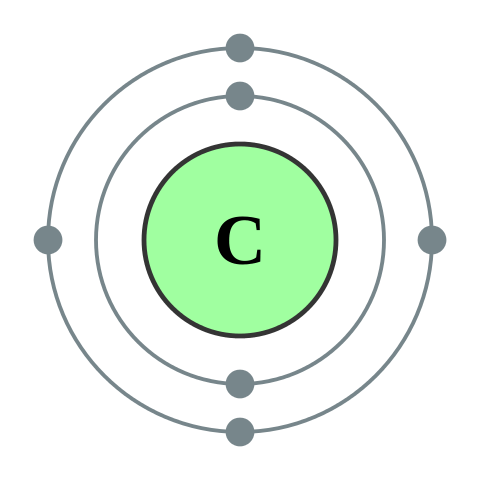
What is the atomic number of this atom?
a)
2
b)
4
c)
6
d)
none of the above
72.

What is the atomic mass of this atom?

a)

2

b)

4

c)

6

d)

none of the above

73.
How many electrons does Si contain? (click to see image)
a)
14
b)
28
c)
2
d)
4
74.

What element is this?

a)

Sodium (Na)

b)

Phosphorous (P)

c)

Nitrogen (N)

d)

Sulfer (S)

75.

What element is this?

a)

Carbon (C)

b)

Hydrogen (H)

c)

Aluminum (Al)

d)

Lithium (Li)

76.

Which of the following figures of the Bohr's model are incorrect?

a)

A and B

b)

B and C

c)

B and D

d)

A and D

e)

None

77.

Which orbital notation represents oxygen?

a)
b)
c)
d)
78.

How many electrons can an orbital hold?

a)

1 electron

b)

2 electrons

c)

3 electrons

d)

4 electrons

79.

What element matches this electron configuration?

1s22s22p63s2

a)

Neon

b)

Magnesium

c)

Aluminum

d)

Potassium

80.
What is this element? 
[Ar]4s2
a)
Calcium
b)
Sodium
c)
Scandium
d)
Titanium
81.
How many electrons can the first energy level hold?
a)
1
b)
2
c)
8
d)
0
82.

What is the electron configuration for the first two electrons?

a)

1d2

b)

1s2

c)

1f2

d)

1p2

e)

2s2

83.
How many electrons can the d sublevel hold?
a)
8
b)
10
c)
2
d)
4
84.

Which electron orbital is associated with more energy?

a)

2p

b)

3s

c)

3p

d)

3d

e)

4s

85.
What's a valence electron?
a)
electrons in the second energy level
b)
electrons in the outermost energy level
c)
the atomic number
d)
electrons in the first level
86.

How many valence does phosphorous have?

a)

2

b)

3

c)

5

d)

10

87.

How many valence electrons does carbon have?

a)

4

b)

5

c)

6

d)

7

88.

How many valence electrons does sodium have?

a)

1

b)

2

c)

3

d)

4

89.

If aluminum loses an electron, it will have a ________ charge and become a(n) ___________.

a)

positive, anion

b)

negatie, anion

c)

positive, cation

d)

negative, anion

90.

If fluorine gains an electron, it will have a _______ charge and become a(n) ____________.

a)

positive, anion

b)

negative, anion

c)

positive, cation

d)

negative cation

91.

The vertical (up and down) columns in the Periodic Table are called

a)

groups

b)

towers

c)

periods

d)

atomic numbers

92.
The Modern Periodic Table of Elements is arranged by
a)
atomic mass
b)
atomic number
c)
valence electrons
d)
number of isotopes
93.
Which group of the periodic table is composed of inert (not reactive)  gases?
a)
alkali metals
b)
alkaline earth metals
c)
halogens
d)
noble gases
94.
The atoms along the staircase are called 
a)
metals
b)
nonmetals
c)
metalloids
d)
noble gases
95.
Which is an alkali metal?
a)
Magnesium
b)
Iron
c)
Sodium
d)
Europium
96.
Elements in a ..................have similar chemical properties.  
a)
period
b)
group
c)
row
97.
Which of the following will have a larger radius than Zinc?
a)
Gallium
b)
Aluminum
c)
Magnesium
d)
Strontium
98.
As you move down a group, atomic radius increases because - 
a)
you add more and more neutrons
b)
you add more and more protons
c)
you add more and more shells (energy levels)
d)
you add more atomic mass
99.
Francium (Fr) has the lowest ionization energy in Group 1 because - 
a)
it has the smallest number of valence electrons
b)
it has the greatest atomic mass
c)
it has the greatest number of protons, so it attracts its electrons the strongest
d)
its 1 valence electron is very far from the nucleus, so little energy is needed to remove it
100.
Which of the following will have a lower ionization energy than Scandium (Sc)?
a)
Helium (He)
b)
Titanium (Ti)
c)
Calcium (Ca)
d)
Magnesium (Mg)