wayground logo

Free Printable Worksheets

Font size

S
M
L
XL
Worksheets

Quantization of Energy and the Periodic table

Total questions: 99

Worksheet time: 4hrs 27mins

Name
Class
Date
1.

How is a photon different from matter?

a)

A photon has no mass and travels at the speed of light.

b)

A photon has mass and travels at the speed of light.

c)

A proton has no mass and travels at the speed of light.

d)

A proton has mass and travels at the speed of light.

2.
The photoelectric effect is when:
a)
Electrons collide inside a metal to release photons.
b)
One incident metal electron releases one photon.
c)
One incident photon releases one electron from a metal.
d)
Photons are absorbed in to metal ions releasing electrons.
3.

What is the energy of a photon of wavelength 400 nm?

a)

2.95 eV

b)

3.00 eV

c)

3.09 eV

d)

3.12 eV

4.
There is an emission spectrum and absoption spectrum shown here. What is the bottom spectrum?
a)
an emission spectrum
b)
an absoption spectrum
c)
neither
d)
both 
5.
The arrows pointing down represents...
a)
photon absorption
b)
proton emission
c)
electron absorption
d)
electron transition
6.
The parallel lines represents...
a)
energy levels of the atom
b)
energy levels of the electrons
c)
energy levels of the photons
d)
energy levels of the nucleus
7.
Light is emitted when electrons ...
a)
jump from high to low 
b)
jump from low to high 
c)
either of these
d)
none of these
8.
As the energy level increases the difference in the energy level ...
a)
increases
b)
decreases
c)
stays the same
d)
none of these
9.

Each element produces its own pattern of emission spectra lines because each element has its own distinct

a)

Speed of light

b)

Electron configuration

c)

Number of neutrons

d)

None of these

10.

The color of emitted light with the LONGEST wavelength is

a)

violet

b)

green

c)

red

d)

indigo

11.

The color of emitted light with the SHORTEST wavelength is

a)

violet

b)

green

c)

red

d)

indigo

12.

This device is a

a)

telescope

b)

spectrascope

c)

microscope

d)

prism

13.

The color of emitted light with the HIGHEST frequency is

a)

violet

b)

green

c)

red

d)

indigo

14.

The color of emitted light with the LOWEST frequency is

a)

violet

b)

green

c)

red

d)

indigo

15.
Every element has its own unique atomic spectra.
a)
True
b)
False
16.
The wavelength of light is related to which of the following properties?
a)
Color
b)
Frequency
c)
Color AND frequency
d)
Neither color NOR frequency
17.
Emission lines create _____ spectral lines on a visible light spectra due to the electrons moving into their _____ state.
a)
dark; excited
b)
dark; ground
c)
bright; excited
d)
bright; ground
18.
A wave with a large wavelength will have a ______ frequency and _____ energy
a)
high, low
b)
high, high
c)
low, high
d)
low, low
19.
All electromagnetic waves have the same...
a)
frequency
b)
speed
c)
wavelength
d)
energy
20.
Emission of light from an atom occurs when an electron
a)
drops from a higher to a lower energy level.
b)
   jumps from a lower to a higher energy level.   
c)
   moves within its atomic orbital.
d)
falls into the nucleus.
21.
What is the number of wave cycles that pass a given point per unit of time
a)
crest
b)
wavelength
c)
frequency
d)
amplitude
22.
What are lines of colored light obtained by passing the light emitted by an element through a prism called?
a)
spectrum
b)
atomic emission spectrum
c)
energy level
d)
quantum of energy
23.
The blue section of the wave is measuring the _________________.
a)
wavelength
b)
crest
c)
trough
d)
frequency
24.
Which of the following quantum leaps would be associated with the greatest energy of emitted light?
a)
   n = 4 to n = 5
b)
n = 2 to n = 5
c)
n = 5 to n = 1 
d)
n = 5 to n = 4
25.

What is the speed of light?

a)

3.0x10⁸ ms

b)

3.0x10⁸ m/s

c)

6.626x10⁻³⁴ Js

d)

6.626x10⁻³⁴ J/s

26.

The frequency of violet light is 7.5x10¹⁴ Hz. What is its wavelength?

a)

4.0x10⁻⁷ m

b)

4.0x10⁷ m

c)

2.25x10²³m

d)

2.25x10²³ Hz

27.

If short wavelength has more ENERGY than long wavelength, which color Lightsaber is the most dangerous, or powerful?

a)

Red

b)

Orange

c)

Blue

d)

Green

28.
The distance from one point to the next corresponding point on a wave is called the ________________.
a)
waveform
b)
peak
c)
amplitude
d)
wavelength
29.
High frequency waves have _________ wavelength.
a)
varying
b)
high
c)
the same
d)
low
30.

The number of waves that pass a fixed point in a given amount of time is...

a)

frequency

b)

wave speed

c)

amplitude

d)

wavelength

31.
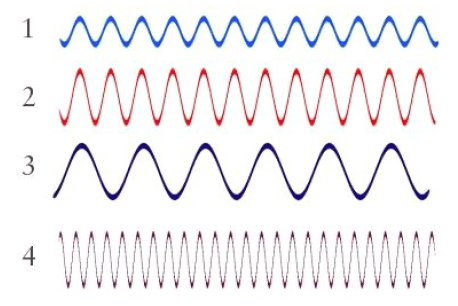
Which wave in the diagram has the greatest wavelength?
a)
1
b)
2
c)
3
d)
4
32.
Violet light has a wavelength of
4.10 x 10⁻¹²  m. What is the frequency?
a)
1.23 x 10^ -3 Hz
b)
7.31 x 10^ 19 Hz
c)
1.37 x 10^12 Hz
d)
3.0 x 10^ 8 Hz
33.

Red light has a wavelength of 675 x 10-9 m. What is its frequency?

a)

2.03x10¹¹ m

b)

4.44x10¹⁴ Hz

c)

4.44x10¹⁴ nm

d)

2.03x10¹¹ Hz

34.

What is Planck's Constant?

a)

6.63x10⁻³⁴ Js

b)

6.63x10⁻³⁴ J/s

c)

3.0x10⁸ ms

d)

3.0x10⁸ m/s

35.

Ground state means that an electron is...

a)

at its lowest possible potential energy

b)

in the first shell of an atom

c)

laying low for the weekend

d)

removed from an atom

36.

In order to go from ground state to an excited state, an electron must

a)

emit energy

b)

absorb energy

c)

rotate

d)

wiggle

37.

When an electron returns to ground state from an excited state, the atom will

a)

emit energy

b)

absorb energy

c)

rotate

d)

wiggle

38.

Violet light has a wavelength of 4.10 x 10⁻¹² m. What is the frequency?

a)

1.23 x 10 -3 Hz

b)

7.31 x 10¹⁹ Hz

c)

1.37 x 10¹² Hz

d)

3.0 x 10⁸ Hz

39.

Solve this problems using the equation: C = λ x ν

A microwave oven emits radiation at a wavelength of 5.00 x 10⁻¹cm. What is the frequency of this radiation?

(Convert to m first).

a)

6.67 x 10⁻⁷ Hz

b)

2.00 Hz

c)

1.50 x 10⁶ Hz

d)

6.00 x 10¹⁰ Hz

40.

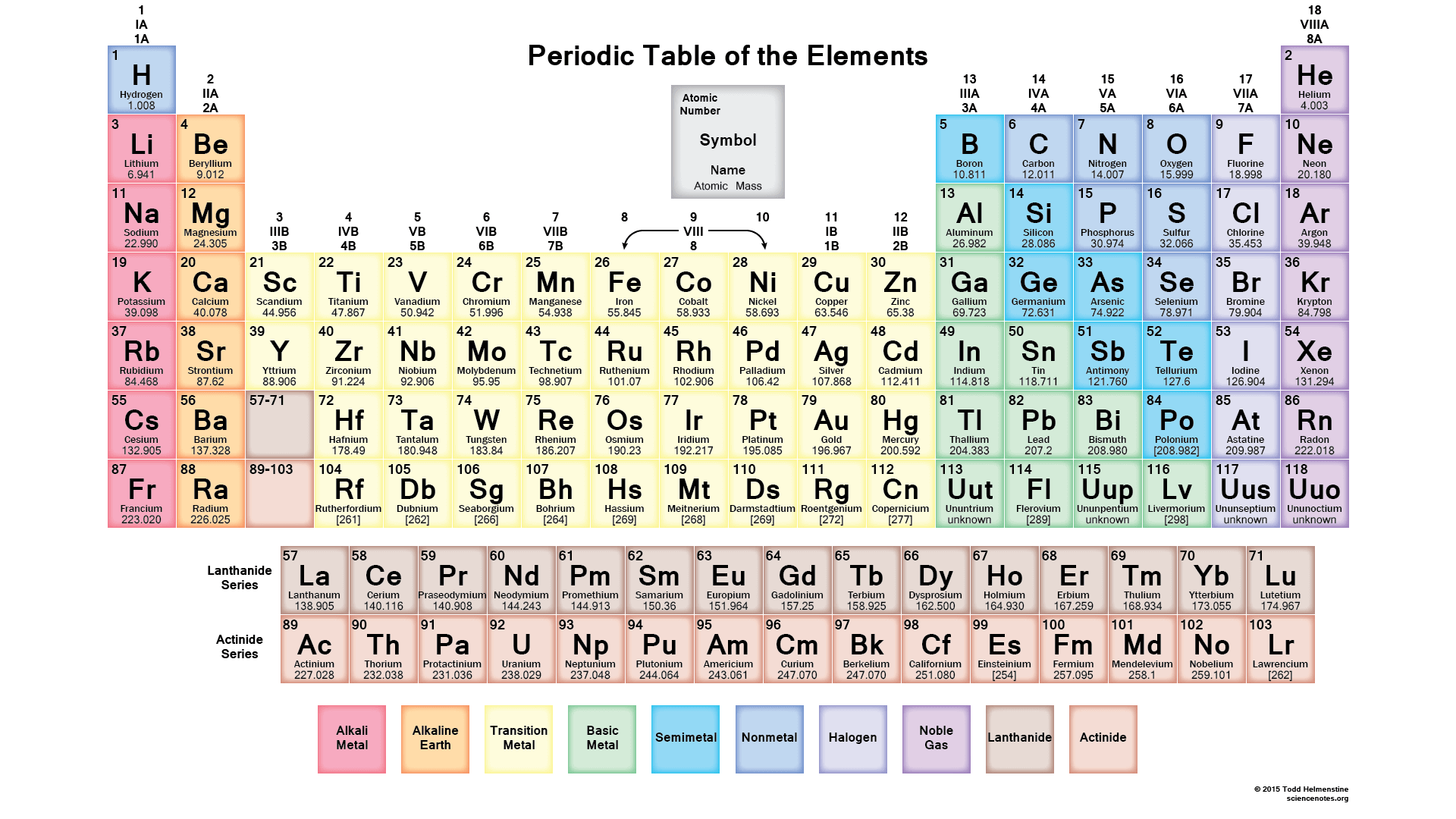
The vertical (up and down) columns in the Periodic Table are called

a)

groups

b)

towers

c)

periods

d)

atomic numbers

41.
The Modern Periodic Table of Elements is arranged by
a)
atomic mass
b)
atomic number
c)
valence electrons
d)
number of isotopes
42.
Sodium (Na) is found in period 
a)
3
b)
2
c)
4
d)
1
43.
Sodium (Na) is found in group 
a)
1
b)
2
c)
3
d)
4
44.
What does the atomic mass tell you? 
a)
Basically,the number of electrons and protons
b)
The number of neutrons
c)
Basically, the number of protons and neutrons
d)
The number of protons.
45.
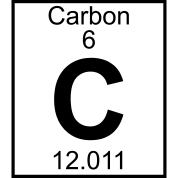
What does the 6 represent?
a)
atomic mass
b)
atomic number
c)
element name
d)
chemical symbol 
46.
What does 12.011 represent?
a)
atomic mass
b)
atomic number
c)
element name
d)
chemical symbol 
47.
These are found on the Periodic Table.
a)
Compounds
b)
Elements
c)
Mixtures
48.

The horizontal (side to side) rows in the Periodic Table are called

a)

groups

b)

families

c)

periods

d)

atomic numbers

49.
___________ is the only metal that is a liquid at room temperature.
a)
Platinum
b)
Water
c)
Tin
d)
Mercury
50.

What are valence electrons?

a)

Any of an atom's electrons

b)

Electrons located on the first energy level

c)

Electrons not attached to any atom

d)

electrons located on the outer energy level

51.

What group or family is lead in?

a)

6

b)

4

c)

Metal

d)

4A

52.

What category is silicon (Si) a part of?

a)

Metal

b)

Nonmetal

c)

Metalloid

d)

Halogens

53.

What Element is in period 4, group 5A?

a)

Antimony

b)

Arsenic

c)

Tin

d)

Germanium

54.

What is the ionic charge of Phosphorus (P)?

a)

+5

b)

-3

c)

+3

d)

-5

55.

What group or family is Mercury (Hg) in?

a)

2B

b)

2A

c)

Metals

d)

Alkali metals

56.

What is group name of the most reactive metals?

a)

Noble gases

b)

Halogens

c)

Alkali metals

d)

Alkaline earth metals

57.

Why are halogens so reactive?

a)

They want to get rid of their only valance electron

b)

They only need one more electron

c)

They are non reactive, they have a full shell

58.

How many valence electrons does a carbon atom have?

a)

8

b)

4

c)

2

d)

6

59.
Which group of the periodic table is composed of inert (not reactive)  gases?
a)
alkali metals
b)
alkaline earth metals
c)
halogens
d)
noble gases
60.
Elements which are shiny, conduct electricity and heat are called
a)
metal
b)
nonmetal
c)
metalloid
d)
nonexistent
61.
The atoms along the staircase are called 
a)
metals
b)
nonmetals
c)
metalloids
d)
noble gases
62.
Which is a halogen?
a)
Helium
b)
Chlorine
c)
Oxygen
d)
Neptune
63.
Which is an alkali metal?
a)
Magnesium
b)
Iron
c)
Sodium
d)
Europium
64.

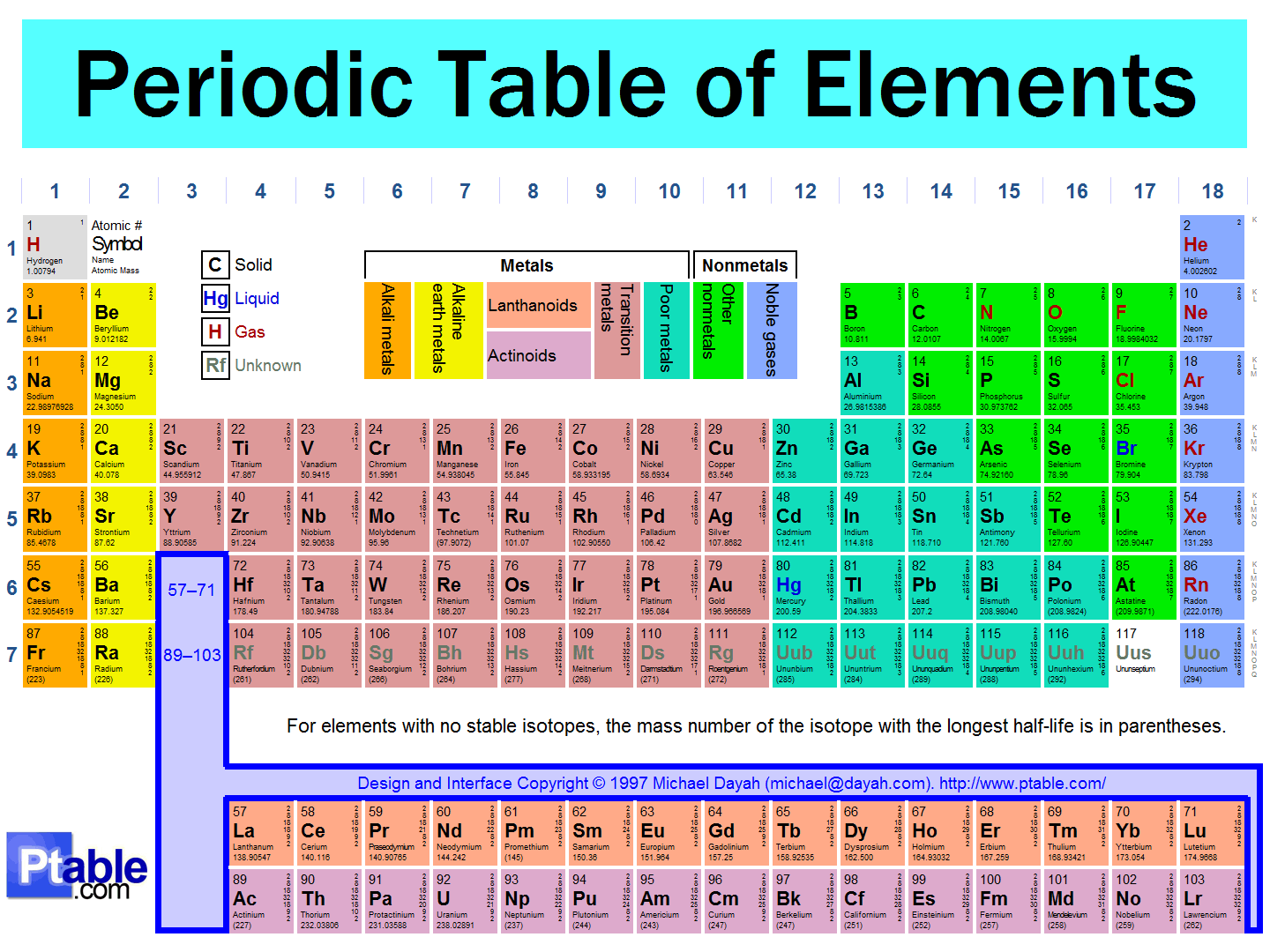
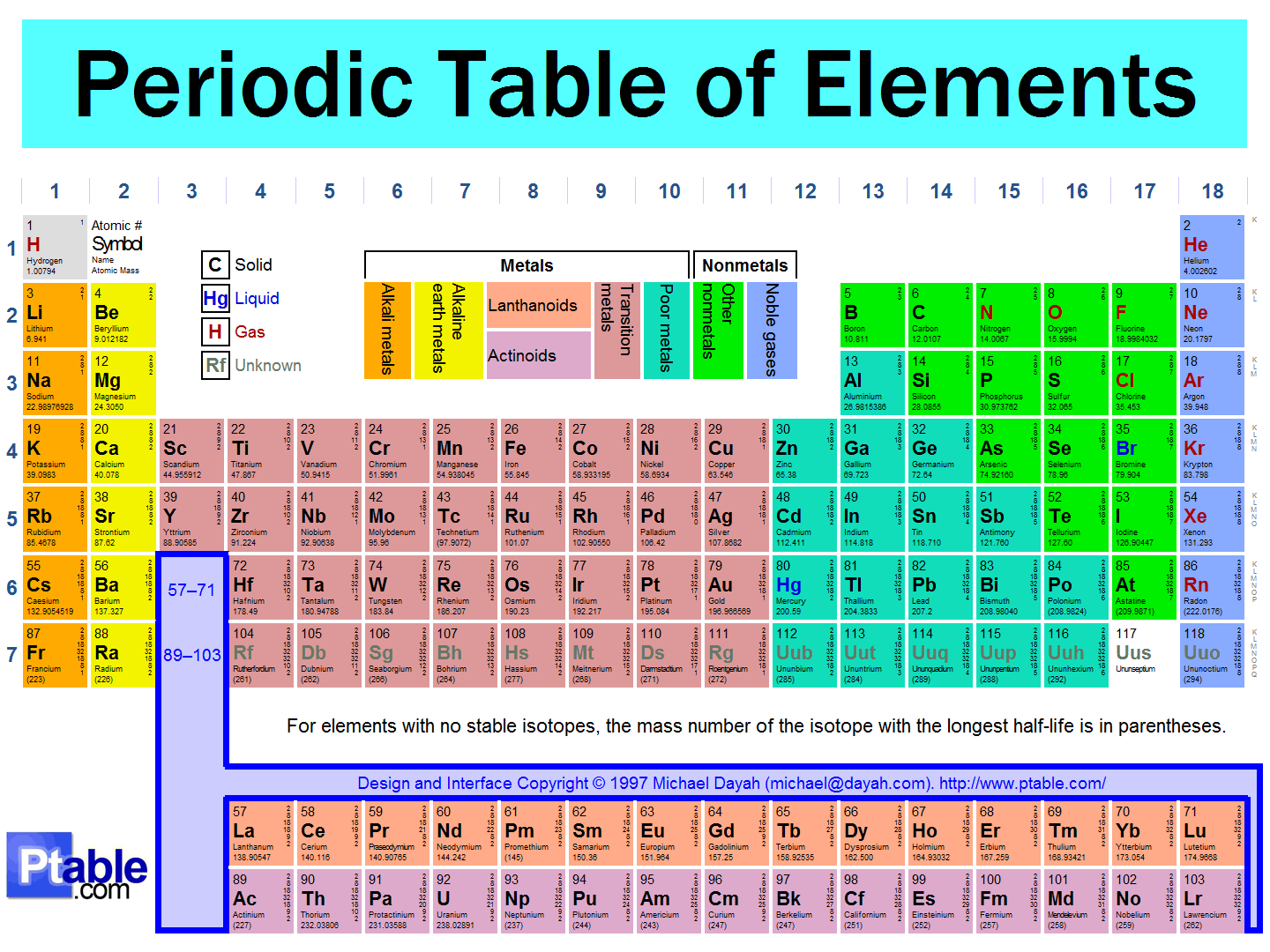
Which color on the image of the periodic table corresponds with the halogens.

a)

red

b)

black

c)

blue

d)

orange

65.

Which color on the image of the periodic table corresponds with the lanthanides.

a)

red

b)

black

c)

blue

d)

orange

66.

Which color on the image of the periodic table corresponds with the noble gases.

a)

red

b)

black

c)

blue

d)

orange

67.

Which color on the image of the periodic table corresponds with the transition metals.

a)

red

b)

black

c)

blue

d)

orange

68.

Which color on the image of the periodic table corresponds with the alkaline earth metals.

a)

yellow

b)

dark yellow

c)

blue/green

d)

teal

69.

Mendeleev first ordered the periodic table of elements by increasing

a)

atomic number

b)

atomic mass

c)

atomic symbol

d)

atomic weight

70.

Which family of elements reacts violently with water and exposure to oxygen?

a)

alkali metals

b)

alkaline earth metals

c)

lanthanides

d)

actanides

e)

transition metals

71.
Which of the following will have a larger radius than Zinc?
a)
Gallium
b)
Aluminum
c)
Magnesium
d)
Strontium
72.
Which of the following will have a higher electronegativity than arsenic (As)?
a)
Carbon (C)
b)
Neon (Ne)
c)
Antimony (Sb)
d)
Germanium (Ge)
73.
Which of the following will have a lower ionization energy than Scandium (Sc)?
a)
Helium (He)
b)
Titanium (Ti)
c)
Calcium (Ca)
d)
Magnesium (Mg)
74.
As atoms of elements in group 16 are considered in order from top to bottom, the electronegativity of each successive element....
a)
decreases
b)
increases
c)
remains the same
d)
none of the above
75.
As you move down the periodic table atoms get bigger.  This is because ____________.
a)
The atoms have more mass.
b)
The atoms have more protons.
c)
The atoms have more energy levels
d)
The atoms have more neutrons
76.
As you move across the periodic table atoms tend to get smaller because, ______________.
a)
the atoms have more mass.
b)
the atoms have less mass
c)
the atoms have more protons.
d)
the atoms have less electrons.
77.
Electronegativity is...
a)
the ability of an atom to attract/ accept electrons
b)
the ability of an atom to lose electrons
c)
the energy required to remove an electron from a specific atom
d)
how easy it is to make friends. 
78.
Ionization energy is...
a)
the energy required to add an electron to a specific atom
b)
how much energy it takes to remove an electron from an atom
c)
the energy required to shield the outer electrons from the nucleus
d)
a measure of the ability of an atom to attract electrons
79.
The atom with the largest atomic radius in Group 18 is - 
a)
Ar
b)
He
c)
Kr
d)
Rn
80.
Metals have the largest - 
a)
atomic radius and electronegativity
b)
electronegativity and ionization energy
c)
atomic radius only
d)
ionization energy and atomic radius
81.
Electronegativity __________ from left to right within a period and __________ from top to bottom within a group.
a)
decreases, increases 
b)
increases, increases
c)
increases, decreases 
d)
stays the same, increases
82.
Which statement correctly and completely identifies a trend?
a)
Atomic radius decreases across a period and increases down a group.
b)
Electronegativity decreases across a period and decreases down a group.
c)
Ionization energy increases across a period and increases down a group.
d)
Ionic radius increases across a period and increases down a group.
83.
Atomic radius generally increases as we move __________.  
a)
down a group and from right to left across a period 
b)
up a group and from left to right across a period 
c)
down a group and from left to right across a period 
d)
up a group and from right to left across a period 
84.
The chart scientists use to organize and classify all the known elements
a)
elements chart
b)
the chart
c)
Periodic Table of the Elements
d)
Period table
85.
The tendency of an atom to attract electrons and acquire a negative charge
a)
electronegativity
b)
charge
c)
bonding ability
d)
electron configuration
86.
Which of these elements has the greatest atomic radius? 
a)
H
b)
N
c)
Cl
d)
Cs
87.
The Periodic Table of the Elements is useful for revealing patterns and trends in the elements. Which statement accurately describes a pattern in the size of atomic radii in the Periodic Table of the Elements?
a)
Atomic radii decrease from left to right across a period and decrease from top to bottom in a group.
b)
Atomic radii increase from left to right across a period and increase from top to bottom in a group.
c)
Atomic radii decrease from left to right across a period and increase from top to bottom in a group.
d)
Atomic radii increase from left to right across a period and decrease from top to bottom in a group.
88.
The symbols W, X, Y, and Z represent four elements shown on the outline of a periodic table.
Which element has the highest electronegativity?

a)
W
b)
X
c)
Y
d)
Z
89.
Fluorine, chlorine, bromine, and iodine all have the same number of valence electrons and have a tendency to gain electrons. Which element has the greatest ionization energy and electronegativity?
a)
fluorine
b)
chlorine 
c)
bromine 
d)
iodine 
90.
The ionization potential of an element is the amount of energy required to remove an electron from an isolated atom or molecule. According to the periodic table, which of the following indicates the correct decreasing order of ionization energy?
a)
Li > Na > K > Cs
b)
Na > K > Li > Cs
c)
Li > K > Na > Cs 
d)
Cs > K > Na > Li 
91.
All elements found on the left side of the Periodic Table of the Elements have what properties in common?
a)
They conduct heat and electricity 
b)
They are all gases 
c)
They are brittle and dull
d)
They are radioactive
92.
Which of these elements has an electron structure most similar to that of element X?
a)
1
b)
2
c)
3
d)
4
93.
Based on their locations in the periodic table, which element has chemical properties most similar to those of calcium, Ca?
a)
beryllium, Be
b)
potassium, K
c)
titanium, Ti
d)
yttrium, Y
94.
The number of valence electrons in an element affects the reactivity of that element. Which element listed has the fewest valence electrons?
a)
beryllium (Be)
b)
sodium (Na) 
c)
oxygen (O) 
d)
neon (Ne)
95.
Which element has 2 valence electrons? 
a)
cesium (Cs) 
b)
magnesium (Mg)
c)
boron (B)
d)
argon (Ar) 
96.
Which of the following will have a lower ionization energy than Scandium (Sc)?
a)
Helium (He)
b)
Titanium (Ti)
c)
Calcium (Ca)
d)
Magnesium (Mg)
97.
Which atom has the largest atomic radius?
a)
potassium
b)
rubidium 
c)
francium
d)
cesium
98.
Which of the following will have a larger radius than Zinc?
a)
Gallium
b)
Aluminum
c)
Magnesium
d)
Strontium
99.
As you move down the periodic table atoms get bigger.  This is because ____________.
a)
The atoms have more mass.
b)
The atoms have more protons.
c)
The atoms have more energy levels
d)
The atoms have more neutrons