wayground logo

Free Printable Worksheets

Font size

S
M
L
XL
Worksheets

Bayley Midterm Exam Review 2022

Total questions: 180

Worksheet time: 3hrs 50mins

Name
Class
Date
1.

The dependent variable is the part

a)

the letter in the equation

b)

the part being changed

c)

the part being measured

2.

The independent variable is

a)

the part the scientist measures

b)

the part the scientist changes or is testing

c)

a letter

3.

Which hypothesis is correctly written?

a)

I think I will do well on my test today, because I ate a good breakfast.

b)

If I eat a good breakfast, then I will do well on my test today.

c)

If I eat a good breakfast, then I will earn a passing grade on my test today.

d)

If I do well on my test today, I get to out to eat for breakfast.

4.

Which step in the scientific method comes after writing the hypothesis?

a)

Test hypothesis

b)

Ask Questions

c)

Draw Conclusions

d)

Share Results

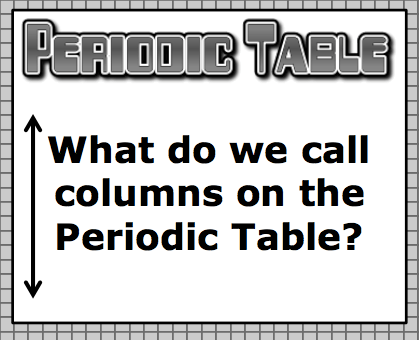
5.

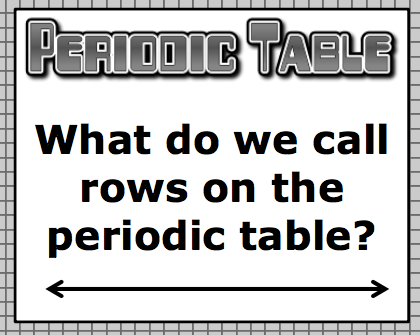
What is a hypothesis?

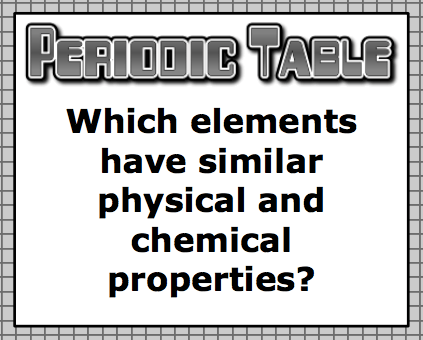
a)

the thing changed on purpose in the experiment

b)

an explanation about what you observed

c)

using your 5 senses to gather data

d)

an educated guess about the outcome of an experiment

6.
When experimenting with the growth of a plant, a scientist uses three (of the same type of) plants, two different fertilizers, equal light, and equal water. What type of variable is the fertilizer?
a)
Dependent
b)
Independent
c)
Control
d)
Compound
7.
Carey and Justin are raising money to purchase books for their school's library. The more money they raise, the more books they will be able to purchase for the library.
m = the amount of money Carey and Justin raise
b = the number of books Carey and Justin will be able to purchase

Which of the variables is dependent?
a)
m
b)
b
8.
In the United States House of Representatives, the number of Representatives from a state is calculated based on its population.
r = the number of Representatives
p = the population of a state

Which of the variables is independent?
a)
r
b)
p
9.
In order to earn extra spending money, Dalton babysits children after school. The greater the number of hours he babysits, the more money he earns.
h = the number of hours Dalton babysits
m = the amount of money Dalton earns

Which of the variables is dependent?
a)
h
b)
m
10.

The chart below lists some substances and their symbols. How many of these substances are examples of elements?

a)

1

b)

2

c)

3

d)

4

11.

What makes elements and compounds different from mixtures? Elements & compounds-

a)

have a constant composition (pure substances)

b)

are made of gases

c)

Will not change when heated

d)

conduct electric current

12.

What is the relationship between molecules and atoms?

a)

Molecules are combinations of two or more atoms.

b)

Molecules are the parts that make up atoms

c)

Molecules are the gaseous parts of atoms

d)

Molecules are atoms that have a positive charge
13.

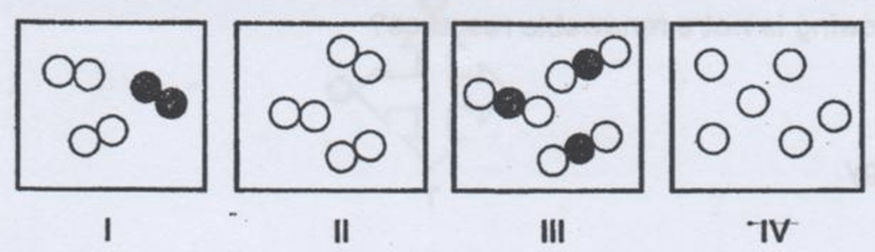
In the diagrams provided, the circles of different colors represent the atoms of different elements. Which diagram represents a mixture?

a)

I

b)

II

c)

III

d)

IV

14.

Mixtures are different than pure substances because mixtures-

a)

have lower boiling points

b)

can be separated physically

c)

are less dense than pure substances

d)

contain only one type of atom

15.

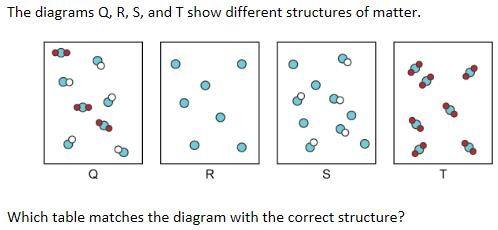
Which answer correctly matches the diagram with the correct description?

a)

Q- Multiple compounds R-A single element S-An element and a compound T- A single compound

b)

Q- A single element, R- An element and a compound S-A single compound T-Multiple compounds

c)

Q- A single compound, R- A single element, S- Multiple compounds, T- An element and a compound

d)

Q- An element and a compound, R- a single compound, S- a single element, T- multiple compounds

16.

Which of the following is true of oxygen?

a)

Oxygen is an element because its most basic unit is a single type of atom

b)

Oxygen is a compound because its most basic unit is a single type of atom.

c)

Oxygen is a mixture because its most basic unit contains more than one particle.

d)

Oxygen is a compound because its most basic unit contains more than one type of particle.

17.

Beatriz wants to make a mixture out of her bowl of blueberries. Which of the following would turn her bowl of blueberries into a mixture?

a)

adding more blueberries to the bowl

b)

adding raspberries to the bowl

c)

cutting up the blueberries

d)

mashing the blueberries

18.

Humans absorb oxygen from the air they breathe in and exhale carbon dioxide gas, CO2. Carbon dioxide gas is

a)

an element made of carbon and oxygen atoms.

b)

a solution made of carbon and oxygen atoms.

c)

a compound of carbon and oxygen atoms.

d)

a mixture of carbon and oxygen atoms.

19.

Sam's mother is cooking breakfast in a cast-iron frying pan. If the pan is made only of iron, what can Sam conclude?

a)

The pan is a pure substance with the chemical symbol Ir.

b)

The pan is a pure substance with the chemical symbol I.

c)

The pan is a pure substance with the chemical symbol F.

d)

The pan is a pure substance with the chemical symbol Fe.

20.
Density: Chemical or Physical Property
a)
Chemical Property
b)
Physical Property
21.
Blue Color: Chemical or Physical Property
a)
Chemical Property
b)
Physical Property
22.
Flammability (burns): Chemical or Physical Property
a)
Chemical Property
b)
Physical Property
23.
Solubility (dissolves): Chemical or Physical Property
a)
Chemical Property
b)
Physical Property
24.
Reacts with Acid: Chemical or Physical Property
a)
Chemical Property
b)
Physical Property
25.
Melting Point: Chemical or Physical Property
a)
Chemical Property
b)
Physical Property
26.

Which is the best technique to separate a homogeneous mixture of two liquids?

a)

Filtration.

b)

Decantation

c)

Evaporation.

d)

Distilation.

27.

How many protons are in Gold

a)

79

b)

197

c)

118

d)

276

28.

How many electrons are in Gold

a)

79

b)

118

c)

197

d)

276

29.

How many neutrons are in Gold

a)

118

b)

79

c)

197

d)

276

30.

How many Neutrons are in Neon

a)

10

b)

21

c)

20

d)

30

31.

How many protons are in Neon

a)

10

b)

20

c)

21

d)

30

32.

How many electrons are in Potassium

a)

19

b)

39

c)

20

d)

58

33.

How many neutrons are in Potassium

a)

19

b)

20

c)

39

d)

58

34.

How many neutrons are in Tungsten

a)

110

b)

74

c)

183

d)

258

35.

Oxygen has a mass of...

a)

8

b)

16

c)

15

d)

6

36.

Arsenic has a mass of _______

a)

33

b)

79

c)

75

d)

47

37.

How many neutrons are in Tungsten

a)

110

b)

74

c)

183

d)

258

38.

What is the atomic mass of Neon?

a)

10

b)

20.18

c)

10.18

d)

20

39.
How many protons are in Beryllium?
a)
4
b)
9
c)
5
d)
2
40.

How many neutrons does a Hydrogen atom have?

a)

1

b)

2

c)

3

d)

0

41.

How many electrons does a Hydrogen atom have?

a)

1

b)

2

c)

3

d)

0

42.

What is the atomic mass of Sodium?

a)

11

b)

22.990

c)

33.990

d)

11.990

43.

What does top most number (47) represent?

a)

Number of protons

b)

Number of neutrons

c)

Number of electrons

d)

Number of protons and neutrons

44.

Isotopes of an element have a different number of...

a)

Protons

b)

Neutrons

c)

Electrons

d)

Mass

45.
An element is defined by its number of 
a)
protons
b)
electrons
c)
neutrons
d)
protons + electrons
46.
Found in the nucleus of the atom
a)
electrons only
b)
protons only
c)
neutrons and protons
d)
neutrons and electrons
47.

An atom's atomic number is equal to

a)

The number of protons in the atom's nucleus

b)

The number of neutrons in the atom's nucleus

c)

The number of electrons in the atom

d)

The total of protons + neutrons

48.

What is the mass number of the element shown?

a)

15

b)

7

c)

8

d)

0

49.

12 protons, 10 electrons, 12 neutrons

a)

24Mg2^{24}Mg^{-2}

b)

24Cr+2^{24}Cr^{+2}

c)

24Cr2^{24}Cr^{-2}

d)

24Mg+2^{24}Mg^{+2}

50.
a)
Periods
b)
Groups
51.
a)
Periods
b)
Groups
52.
a)
Same group
b)
Same period
53.
How did Mendeleev arrange the elements?
a)
alphabetical 
b)
density
c)
melting point
d)
atomic mass
54.
The horizontal row on the periodic table is called a
a)
group
b)
family
c)
period
d)
atomic number
55.
A vertical column is called...
a)
group
b)
tower
c)
period
d)
crew
56.
The blue atoms are called 
a)
metals
b)
nonmetals
c)
metalloids
d)
noble gases
57.
The atomic number tells you what?
a)
number of electrons
b)
number of protons
c)
number of neutrons
d)
both electrons and protons in an atom.
58.
Which is a halogen?
a)
Helium
b)
Chlorine
c)
Oxygen
d)
Neptune
59.
Which is an alkali metal?
a)
Magnesium
b)
Iron
c)
Sodium
d)
Europium
60.

What is a cation's charge?

a)

positive

b)

negative

c)

neutral

d)

depends on the element

61.

What is an anion's charge?

a)

positive

b)

negative

c)

neutral

d)

depends on the element's charge

62.

Is potassium a cation or an anion?

a)

cation

b)

anion

63.

Is the ion ammonium a cation or an anion?

a)

cation

b)

anion

64.

What is the charge of phosphate?

a)

-3

b)

-2

c)

-1

d)

-4

65.

Is the ion permanganate a cation or an anion?

a)

cation

b)

anion

66.

Which of the following will form an anion?

a)

Titanium

b)

Iron

c)

Calcium

d)

Sulfur

67.

Which of the following will form a cation?

a)

Aluminum

b)

Sulfur

c)

Iodine

d)

Nitrogen

68.

Which of the following will form an anion?

a)

Tin

b)

Lead

c)

Chlorine

d)

Zinc

69.

Which of the following will form a cation?

a)

Barium

b)

Phosphorous

c)

Tellurium

d)

Selenium

70.

Which of the following elements will form an anion?

a)

Calcium

b)

Cobalt

c)

Nickel

d)

Iodine

71.

Which of the following will form an anion?

a)

Oxygen

b)

Cobalt

c)

Strontium

d)

Cesium

72.

Cations

a)

Gain electrons, has an overall positive charge

b)

Lose electrons, has an overall positive charge

c)

Lose electrons, has an overall negative charge

d)

Gain electrons, has an overall negative charge

73.

Anions

a)

Gain electrons, has an overall positive charge

b)

Lose electrons, has an overall positive charge

c)

Lose electrons, has an overall negative charge

d)

Gain electrons, has an overall negative charge

74.

Write a formula for the compound that forms between Sr and Br.

a)

SrBrSrBr  

b)

Sr2BrSr_2Br  

c)

SrBr2SrBr_2  

d)

Sr2Br2Sr_2Br_2  

75.

Name the following compound: KI

a)

potassium iodide

b)

phosphorus iodide

c)

potassium (I) iodide

d)

phosphorus monoiodide

76.

Name the following compound:


Li2S

a)

dilithium sulfide

b)

lithium (II) sulfide

c)

lithium sulfide

d)

lithium sulfate

77.

Which of the following is incorrect?

a)

magnesium bromide = MgBr2

b)

OF2 = oxygen difluoride

c)

FeS = iron sulfide

d)

NiO = nickel (II) oxide

78.

Name the following: N2O

a)

nitrogen monoxide

b)

dinitrogen monoxide

c)

nitrogen (II) oxide

d)

nitrogen oxide

79.

What is the formula for the following: barium iodide

a)

BaI

b)

Ba2I2

c)

BaI2

d)

BaI4

80.

Which of the following is incorrect?

a)

sodium oxide = NaO

b)

potassium sulfide = K2S

c)

copper (I) oxide = Cu2O

d)

sodium fluoride = NaF

81.

What is the name of VO?

a)

vanadium oxide

b)

vanadium (I) oxide

c)

vanadium (II) oxide

d)

vanadium (IV) oxide

82.

Name the following: CuI

a)

copper (I) iodide

b)

copper (II) iodide

c)

copper iodide

d)

copper iodine

83.

Give the name of the following: AgF

a)

silver fluoride

b)

silver (I) fluoride

c)

silver fluorine

d)

silver (II) fluoride

84.

When sodium and nitrogen combine, this is the formula...

a)

NaN

b)

SN

c)

Na3N

d)

S3N

85.

The correct name for Cr2O3 is

a)

chromium oxide

b)

chromium (III) oxide

c)

dichromium trioxide

d)

chromium (I) oxide

86.

Name the following: BrCl3

a)

bromine chloride

b)

bromine trichloride

c)

bromine (III) chloride

d)

monobromine trichloride

87.

What is the correct formula for titanium (IV) carbide?

a)

Ti4C4

b)

TiC4

c)

TiC

d)

Ti4C

88.

Name the following compound: AlF3

a)

aluminum fluoride

b)

monoaluminum trifluoride

c)

aluminum trifluoride

d)

aluminum fluorine

89.

What is the correct formula for potassium sulfide?

a)

KS

b)

KS2

c)

K2S

d)

K2S2

90.

Name the following: SO2

a)

sulfur oxide

b)

monosulfur dioxide

c)

sulfur (II) oxide

d)

sulfur dioxide

91.

What is the correct formula for iron (II) sulfide?

a)

FeS2

b)

FeS

c)

Fe2S

d)

Fe2S2

92.

Which of the following is incorrect?

a)

NaBr = sodium bromide

b)

IF3 = iron (III) fluoride

c)

MgO = magnesium oxide

d)

CdBr = cadmium (I) bromide

93.

When calcium and chlorine combine, the following is produced...

a)

CaCl2

b)

CaCl

c)

Ca2Cl

d)

Ca(II)Cl

94.
Cyanide
a)
CrO4-2
b)
Cr2O4-2
c)
CO3-2
d)
CN-
95.
NH4+
a)
nitrogen hydride
b)
ammonium
96.
CN-
a)
cyanide
b)
carbon nitride
97.
OH-
a)
hydronium
b)
hydroxide
98.
NO3-
a)
nitrate
b)
nitrite
99.
SO42-
a)
sulfate
b)
sulfite
100.
PO43-
a)
phosphate
b)
phosphorus oxide
101.
CO32-
a)
carbon oxide
b)
carbonate
102.
ClO3-
a)
chlorite
b)
chlorate
103.
C2H3O2-
a)
acetate
b)
carbon hydroxide
104.
CrO42-
a)
chromium oxide
b)
chromate
105.
What is the name of Al(NO3)3?
a)
Aluminum trinitrate
b)
Monoaluminum nitrate
c)
Aluminum (III) nitrate
d)
Aluminum Nitrate
106.
What is the name of Mg(OH)2?
a)
Magnesium Hydride
b)
Magnesium Dihydride
c)
Magnesium Dihydroxide
d)
Magnesium Hydroxide
107.
Ammonium
a)
NH4+
b)
NO3-
c)
NO2-
d)
MnO4-
108.
Cyanide
a)
CrO4-2
b)
Cr2O4-2
c)
CO3-2
d)
CN-
109.
Hydroxide
a)
Cr2O4-2
b)
Cr2O4-2
c)
O3-2
d)
OH-
110.
What is the name of this polyatomic ion?  CO3-2
a)
Carbonate
b)
Chromate
c)
Carbonite
d)
Chlorate
111.
acetate
a)
C2H3O21-
b)
C3H2O31-
c)
C2H2O31-
d)
C3H3O21-
112.

The electrons in a nonpolar covalent molecule are shared...

a)

Evenly

b)

Unevenly

c)

Electrons are not shared

d)

None of the Above

113.

The electrons in an ionic molecule are shared...

a)

Evenly

b)

Unevenly

c)

Electrons are not shared

d)

None of the Above

114.

In a polar covalent bond, the electrons gather around...

a)

The atom with the Greatest Electronegativity

b)

The atom with the Lowest Electronegativity

c)

Each atom Equally

d)

None of the Above

115.

In a nonpolar covalent bond, the electrons gather around...

a)

The atom with the Greatest Electronegativity

b)

The atom with the Lowest Electronegativity

c)

Each atom Equally

d)

None of the Above

116.

In an ionic bond, the electrons gather around...

a)

The atom with the Greatest Electronegativity Only

b)

The atom with the Lowest Electronegativity Only

c)

The atom with the Greatest Electronegativity Mostly

d)

The atom with the Lowest Electronegativity Mostly

117.

Molecules that contain whole number charges on atoms (+1,-3, etc.) must be...

a)

Polar Covalent

b)

Nonpolar Covalent

c)

Ionic

d)

Polar Covalent or Ionic

118.

Partial charges are present in which type of bond?

a)

Ionic

b)

Nonpolar Covalent

c)

Polar Covalent

d)

Both Polar Covalent and Ionic

119.

In a polar covalent bond, which atom will have a partial positive charge? (choose 2 correct answers)

a)

The atom that attracts fewer electrons

b)

The atom with the greater electronegitivity

c)

The atom that attracts more electrons

d)

The atom with the lower electronegativity

120.
As you move down a group, atomic radius increases because - 
a)
you add more and more neutrons
b)
you add more and more protons
c)
you add more and more shells (energy levels)
d)
you add more atomic mass
121.
The atom with the largest atomic radius in Group 18 is - 
a)
Ar
b)
He
c)
Kr
d)
Rn
122.
As you move across the periodic table from left to right, the atomic radius decreases.  This is because - 
a)
the number of protons increases, so attraction to electrons increases
b)
the number of energy levels increases
c)
the number of electrons increases
d)
the atomic mass increases
123.
The atom with the largest atomic radius in Period 4 (row 4) is - 
a)
K
b)
Kr
c)
Fe
d)
Fe
124.
Francium (Fr) has the lowest ionization energy in Group 1 because - 
a)
it has the smallest number of valence electrons
b)
it has the greatest atomic mass
c)
it has the greatest number of protons, so it attracts its electrons the strongest
d)
its 1 valence electron is very far from the nucleus, so little energy is needed to remove it
125.
The element with the smallest ionization energy in Period 6 is - 
a)
Rn
b)
Cs
c)
Os
d)
Tm
126.
As you move across the periodic table atoms tend to get smaller because, ______________.
a)
the atoms have more mass.
b)
the atoms have less mass
c)
the atoms have more protons.
d)
the atoms have less electrons.
127.
The energy required to remove electrons is the definition of: 
a)
Electronegativity
b)
Atomic Number
c)
Atomic Radius
d)
Ionization
128.
What is the name of family I
a)
Alkaline Earth Metals
b)
Boron Family
c)
Alkali Metals
d)
Halogen Family
129.
Group B is known as the:
a)
Inner Metals
b)
Transition Metals
c)
Weirdos
d)
Changelings 
130.
Families all have similar 
a)
Names
b)
atomic numbers
c)
atomic masses
d)
properties
131.
Electronegativity is...
a)
the ability of an atom to attract/ accept electrons
b)
the ability of an atom to lose electrons
c)
the energy required to remove an electron from a specific atom
d)
how easy it is to make friends. 
132.
Which has the greater Electronegativity: 
N or C?
a)
C
b)
N
133.
Electronegativity __________ from left to right within a period and __________ from top to bottom within a group.
a)
decreases, increases 
b)
increases, increases
c)
increases, decreases 
d)
stays the same, increases
134.

How many sig figs are in the following measurements?

010 L

a)

1

b)

2

c)

3

d)

0

135.

How many sig figs are in the following measurements?

907.0 km

a)

1

b)

2

c)

3

d)

4

136.

How many sig figs are in the following measurements?

2.4050 X 10⁻³

a)

1

b)

2

c)

3

d)

4

e)

5

137.

How many sig figs are in the following measurements?

300 100 000 g

a)

0

b)

2

c)

4

d)

9

138.

Round each number to five significant figures.

907.0759

a)

907.08

b)

907.07

c)

907.076

d)

908

139.

Round each number to 3 significant figures.

24 501 759

a)

245

b)

245000

c)

24600000

d)

2.45 x 10⁷

140.

Complete the following calculations. Round off your answers as needed.

52.6 g + 309.1 g +77.214 g

a)

438.9

b)

438.914

c)

438.91

d)

4.38914 x 10²

141.

Determine the number with the fewest significant figures.

a)

5.78 910 x 103 g

b)

5000 panthers

c)

12.90 s

d)

0.121 012 L

142.

Complete the following calculations. Round off your answers as needed.

245.01 km x 2.1 km

a)

5.14521 x 10²

b)

510

c)

514

d)

514.521

143.

The standard temperature of boiling water is 100oC. Which thermometer is the most accurate and precise?

a)

1

b)

2

c)

3

d)

4

e)

None of the thermometers are accurate and precise.

144.
Which of the following is NOT true of scientific notation?
a)
The number in front must be between 1 and 9.9
b)
The exponent tells you how many times the decimal was moved
c)
It shortens big numbers
d)
It doesn't always contain x10
145.
What is 9.2 x 10in standard notation?
a)
9,200
b)
92,000
c)
920,000
d)
920
146.
What is 416,000,000 in scientific notation?
a)
4.16 x 10⁸
b)
4.16 x 10⁹
c)
4.16 x 10⁻⁸
d)
4.16 x 10⁻⁹
147.
What is 2.8 x 10⁻⁴ in standard notation?
a)
28,000
b)
280,000
c)
.00028
d)
.000028
148.
What does a negative exponent mean in scientific notation? (example:  1.19 x 10⁻³)
a)
It means the number is very large
b)
It means the number is very small
149.
What is 7.0 x 10⁸ in standard notation?
a)
7,000,000,000
b)
70,000,000
c)
700,000,000
d)
.000000007
150.
What is 2.0x 10⁻⁶ in standard notation?
a)
200,000
b)
2,000,000
c)
.000002
d)
.0000002
151.
What is 1 in scientific notation?
a)
1
b)
1 x 10⁻¹
c)
1 x 10⁻¹
d)
1 x 100
152.
What is 2.8 x 10³ in standard notation?
a)
28,000
b)
2,800
c)
.0028
d)
.00028
153.
Scientific notation is NOT used extensively in which of the following?
a)
Math
b)
Science
c)
English
154.
You know 1000 mg = 1 g.  Convert 2.5 grams into milligrams.
a)
25 mg
b)
25,000 mg
c)
250 mg
d)
2500 mg
155.
5000 millimeters = ____ meters
a)
5
b)
50
c)
500
d)
25
156.
1000 g= ______ kilogram(s)
a)
1
b)
10
c)
100
d)
1000
157.
1 L = _______ mL
a)
1
b)
10
c)
100
d)
1000
158.

What is the SI standard unit for mass?

a)

ounce

b)

pounds

c)

grams

d)

kilograms

159.
What is the electron configuration of sodium?
a)
2.8
b)
2.8.2
c)
2.8.1
d)
11
160.
What is the electron configuration of calcium?
a)
2.8.8.2
b)
2.8.10
c)
20
d)
2.18.2
161.
Which element has an electron configuration of 2.5?
a)
Oxygen
b)
Nitrogen
c)
Phosphorus
d)
Carbon
162.
Which element has an electron configuration of 2.8.8?
a)
Lead
b)
Flourine
c)
Neon
d)
Argon
163.
What is the electron configuration of Aluminium?
a)
2.8.3
b)
2.11
c)
13
d)
2.8.2
164.
What is the electron configuration of chlorine?
a)
17
b)
2.7
c)
2.8.7
d)
2.8.4
165.
Which element has the electron configuration of 2.8.2?
a)
Magnesium
b)
Sodium
c)
Sulfur
d)
Arsenic
166.
Which element has the electron configuration of 2.8.4?
a)
Neon
b)
Boron
c)
Gallium
d)
Silicon
167.
What is the electron configuration of beryllium?
a)
2.2
b)
2.4
c)
4
d)
6
168.
Which element has the electron configuration of 2.7?
a)
Krypton
b)
Iodine
c)
Flourine
d)
Barium
169.
What atom matches this electron configuration?
1s22s22p63s23p64s23d10
a)
Zinc
b)
Copper
c)
Nickel
d)
Germanium
170.
What atom matches this electron configuration?
1s22s22p63s2
a)
Neon
b)
Magnesium
c)
Aluminum
d)
Potassium
171.
What electron configuration matches an oxygen atom?
a)
1s22s22p63s2, 3p64s23d104p5
b)
1s22s22p4
c)
1s22s22p6
d)
1s22s22p63s23p64s23d1
172.
How many electrons does Si contain? (click to see image)
a)
14
b)
28
c)
2
d)
4
173.
How many electrons can the first energy level hold?
a)
1
b)
2
c)
8
d)
0
174.
The electron configuration of an atom is 1s22s22p6.  The number of electrons in the atom is 
a)
3
b)
6
c)
8
d)
10
175.
What do you start electron configuration with?
a)
1s2
b)
1d10
c)
1f14
d)
1p6
176.
What is this element?
1s22s22p63s2
a)
Neon
b)
Magnesium
c)
Aluminum
d)
Potassium
177.
Which electron configuration belongs to Chlorine (Cl)?
a)
1s2s2p3s3p5
b)
1s2s2p3s3p6
c)
1s2s2p3s3p7
178.
There are 4 different types of subshells s,p,d,f
a)
true
b)
false
179.
Which electron configuration belongs to Copper (Cu)?
a)
1s2 2s2 2p6 3s2 3p6 4s2 3d8
b)
1s2 2s2 2p6 3s2 3p6 4s2 3d9
c)
1s2 2s2 2p6 3s2 3p6 4s2 3d10
180.
Identify the Electron Configuration for Aluminum (Al)
a)
1s2s2p3s3p1
b)
1s2s2p3s3p3
c)
1s2s2p3s4p1