wayground logo

Free Printable Worksheets

NEW

Font size

S
M
L
XL
Worksheets

Fall Final Review Challenge Biology

Total questions: 55

Worksheet time: 1hrs 18mins

Name
Class
Date
1.
A claim is ______________________________.
a)
a kind of shellfish often used in chowder. 
b)
a fact.
c)
a statement or conclusion that answers the original question or problem
d)
a bad thing to make about something.
2.
Evidence is ___________________
a)
A statement or conclusion that answers a question
b)
Scientific data that supports the claim
c)
A justification that connects the claim to the evidence
d)
Not vital when using an argument
3.
Reasoning is __________________.
a)
A statement of conclusion that answers the original question/problem
b)
Scientific data that supports the claim
c)
A justification that connects the evidence to the claim
d)
Empirical Evidence
4.
Air is matter. We found that the weight of the ball increases by .5lbs each time we pumped more air into it. This shows that air has weight, one of the characteristics of matter.
Which sentence is the claim?
a)
Air is matter.
b)
We found that the weight of the ball increases by .5lbs each time we pumped more air into it.
c)
This shows that air has weight, one of the characteristics of matter.
5.
Air is matter. We found that the weight of the ball increases by .5lbs each time we pumped more air into it. This shows that air has weight, one of the characteristics of matter.
Which sentence is the evidence?
a)
Air is matter.
b)
We found that the weight of the ball increases by .5lbs each time we pumped more air into it.
c)
This shows that air has weight, one of the characteristics of matter.
6.
Air is matter. We found that the weight of the ball increases by .5lbs each time we pumped more air into it. This shows that air has weight, one of the characteristics of matter.
Which sentence is the reasoning?
a)
Air is matter.
b)
We found that the weight of the ball increases by .5lbs each time we pumped more air into it
c)
This shows that air has weight, one of the characteristics of matter.
7.
A gas
a)
has a definite shape but no definite volume
b)
has a definite volume but no definite shape
c)
has fast-moving particles
8.
A substance that has a definite shape and volume.
a)
evaporation
b)
gas
c)
liquid
d)
solid
9.
It is hot outside. You start sweating. In this case, the hot weather is the...
a)
stimulus
b)
response
c)
cause and effect
d)
responder
10.

In CHNOPS, what does the O stand for?

a)

Oxygen

b)

Orphium

c)

Oganesson

d)

Optium

11.

Maintaining a stable internal

environment is called

a)

homeostasis

b)

equilibrium

c)

balance

d)

evenness

12.

Which of the following is an example of homeostasis?

a)

adapting to your environment

b)

maintaining an appropriate respiration rate

c)

the sum of all of your chemical reactions

d)

being composed of more than one cell

13.
At higher temperatures
a)
particles in an object have less energy
b)
particles in an object move faster
c)
a gas contracts
14.
Melting
a)
liquid to solid
b)
solid to liquid
c)
solid to gas
d)
gas to liquid
15.
Liquids are described as having a 
a)
definite shape and indefinite volume
b)
indefinite shape and indefinite volume
c)
definite shape and definite volume
d)
indefinite shape and definite volume
16.

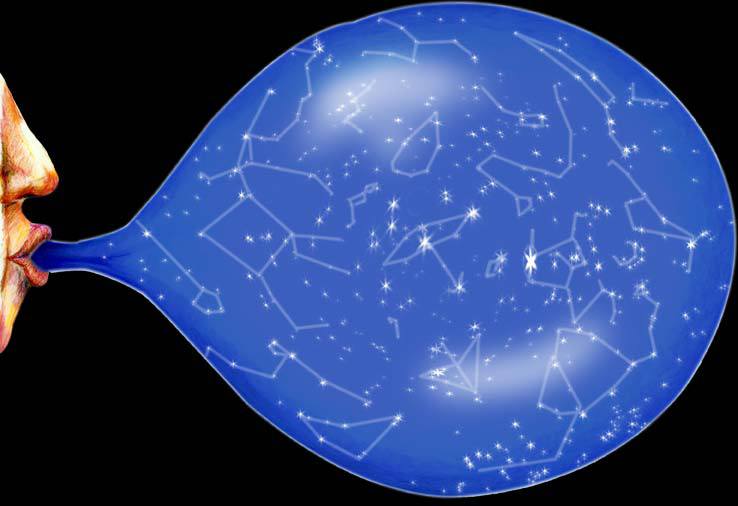
Most scientists believe the Big Bang Theory explains which of the following questions?

a)

How our planets and moons formed

b)

How our universe began

c)

How the sun turns hydrogen into helium

d)

How fast light travels through space

17.

Which statement is true?

a)

The galaxies are moving toward us.

b)

The galaxies are moving away from us.

c)

The universe remains static or unchanged in motion.

d)

None of the above

18.
How old do scientists think the Universe is?
a)
13.8 billion years old
b)
4.5 billion years old
c)
24,000 years old
d)
5 years old
19.
What does the Big Bang theory suggest?
a)
The universe was just there
b)
The Milky Way is the only solar system
c)
The universe is continually expanding
d)
The universe is collapsing in toward a single point
20.

The "afterglow" of the energy from the origin of the universe that we see today.

a)

Cosmic microwave radiation

b)

sunlight

c)

Doppler effect

d)

Cosmic explosions

21.

As galaxies move away from our galaxy

a shift on the electromagnetic spectrum is noticed. This phenomena is

called _____________.

a)

redshift

b)

blueshift

22.
Which of the following is the best description of the Big Bang Theory?
a)
The Big Bang Theory is the prevailing model about the universe’s origin and is supported by observations of the universe’s expansion.
b)
The Big Bang Theory is just one of the ideas about the universe’s origin, many of which are equally respected by the scientific community.
c)
The Big Bang Theory states that pre-existing matter was compacted into a hot and dense form and suddenly exploded into infinite, empty space.
d)
The Big Bang Theory is the scientific explanation of how the Sun, Earth, and the rest of the Solar System were formed at the beginning of time.
23.
Anything that has mass & takes up space
a)
gravity
b)
force
c)
matter
d)
volume
24.

The Law of Conservation of Mass says that matter can neither be __________ or __________.

a)

created; destroyed

b)

recycled; renewed

c)

subtracted; added

d)

joined; separated

25.

According to the Law of Conservation of Mass, what happens to the wood and oxygen when it is burned?

a)

The wood disappears.

b)

It stays the same chemically.

c)

The atoms in the wood and oxygen rearrange and form smoke and ash.

d)

Nothing.

26.
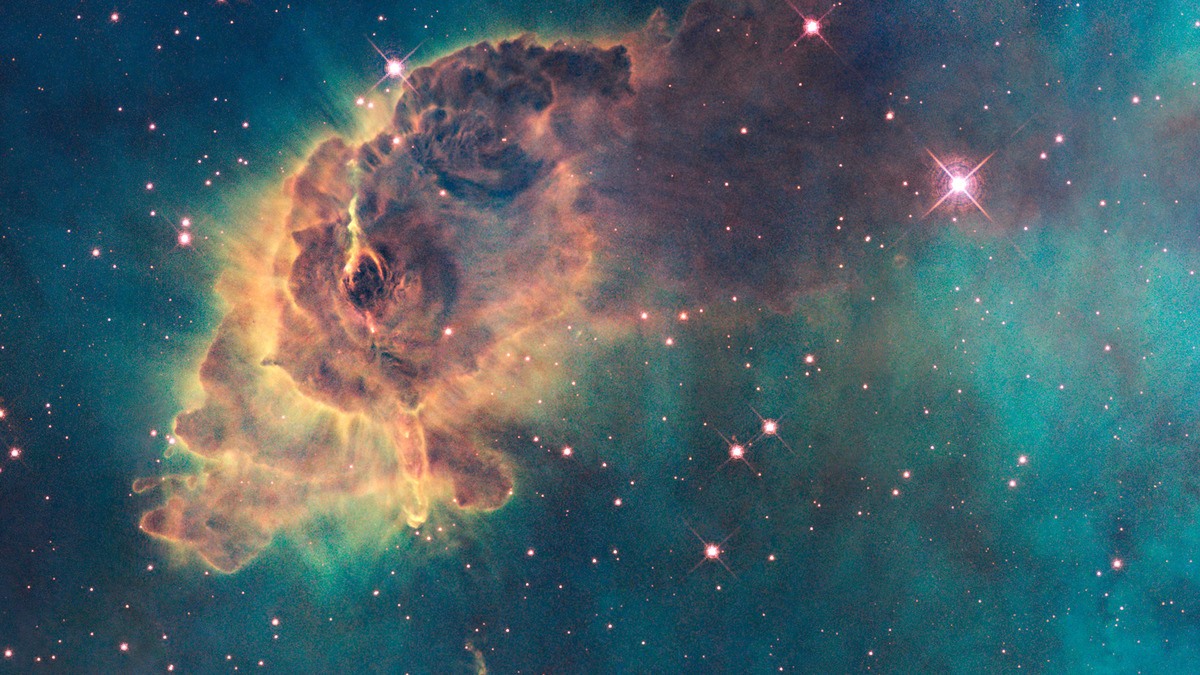
What is the name of the gas/dust clouds where all stars form?
a)
Nebulas
b)
Protostars 
c)
Supernova
d)
Neutron Star
27.
The color of a star tells us its
a)
magnitude
b)
temperature
c)
size
d)
age
28.
The life cycles of stars are determined by their:
a)
mass (size)
b)
color
c)
distance from Earth
d)
luminosity
29.
Our sun is currently in what star stage?
a)
Protostar
b)
Nebula
c)
Main Sequence
d)
Red Giant
30.
Scientists use spectra from stars to determine...
a)
the temperature of a star.
b)
the composition of a star.
c)
the star's distance from Earth.
d)
the star's movement.
31.
Homeostasis in the human body is often maintained by a: 
a)
neutral feedback loop 
b)
solar feedback loop
c)
positive feedback loop
d)
negative feedback loop
32.
If the environment gets cold, we will often shiver in order to:
a)
keep body temperature the same as the external temperature
b)
decrease body temperature
c)
increase body temperature
d)
regulate blood pressure
33.
Homeostasis
a)
allows for a wildly fluctuating internal environment
b)
is impossible in vertebrates
c)
is the maintenance of a relatively stable internal environment and often incorporates a form of feedback regulation
d)
is the maintenance of a relatively stable external environment and often incorporates a form of feedback regulation
34.
The "cause" for something to happen is the
a)
response
b)
effect
c)
stimulus
d)
homeostasis
35.
The "effect" of a given stimulus is the...
a)
response
b)
stimulus
c)
cause
d)
result
36.
The process of childbirth is an example of:
a)
negative feedback loop
b)
positive feedback loop
37.
What is the body system that sends and recieves electrical signals from the brain?
a)
Skeletal System
b)
Nervous System
c)
Muscular System
d)
Digestive System
38.
What system allows motion in the body?
a)
Digestive System
b)
Stomach
c)
Musuclar System
d)
Veins 
39.
Which body system transports oxygen and nutrients through out the body?
a)
Muscular System
b)
Nervous System
c)
Digestive System
d)
Circulatory System
40.
Which of the following is in the correct order from smallest to largest?
a)
tissue-organ-system-cell
b)
cell-organ-tissue-system
c)
System-tissue-cell-organ
d)
cell-tissue-organ-system
41.
How does the muscular system and the skeletal system work together?
a)
The muscular system allows the body to stand up while the skeletal system allows the body to move
b)
The muscular system allows the body to move and the skeletal system gives the body a structure 
c)
The muscular system gives the body nutrients while the skeletal system gives the body blood
d)
The skeletal system makes cells whilte the muscular system eats them.
42.
When particles move from areas of high concentration to areas less concentrated, this has taken place.
a)
diffusion
b)
mitosis
c)
endocytosis
d)
photosynthesis
43.

Why are diffusion and osmosis important to cells?

a)

It allows them to take in materials/substances without using energy.

b)

It allows them to reproduce.

c)

It allows them to absorb sunlight.

d)

It allows cells to use all energy.

44.
The picture  is an example of _________________.
a)
isotonic
b)
diffusion
c)
osmosis
d)
active transport
45.

What does selectively-permeable mean?

a)

Allow certain things to enter and leave the cell

b)

Nothing gets through

c)

The cell lets only large substances through

46.

If a gummy bear is placed in salt water, the mass of the gummy bear will decrease because water will move out of the gummy bear. What process does this represent?

a)

osmosis

b)

fermentation

c)

respiration

d)

diffusion

47.
Which structures are found in plant cells, but not in animal cells?
a)
Cell membranes and mitochondria
b)
Vacuoles and cholorplasts
c)
Cell walls and cytoplasm
d)
Chloroplasts and cell walls
48.
Proteins are made of monomers called ___________
a)
Nucleotides
b)
Monosaccharides
c)
Amino Acids
d)
Glycerol and fatty acids
49.
DNA and RNA are examples of 
a)
Carbohydrates
b)
Lipids
c)
Proteins
d)
Nucleic Acids
50.
The element _______is found in all of the organic compounds.
a)
Iron
b)
Nitrogen
c)
Carbon
d)
Oxygen
51.
Monosaccharides are monomers of
a)
Carbohydrates
b)
Lipids
c)
Proteins
d)
Nucleic Acids
52.
Waxes, oils and fats are examples of
a)
Carbohydrates
b)
Lipids
c)
Proteins
d)
Nucleic Acids
53.
What is the function of nucleic acids?
a)
store genetic information
b)
store energy (long-term)
c)
store energy (short-term)
d)
build skin, hair, nails, muscles
54.
Which of the following organic compounds is the main source of energy for living things?
a)
carbohydrates
b)
lipids
c)
nucleic acids
d)
proteins
55.
Which macromolecule stores energy, insulates us, and makes up the cell membrane?
a)
lipids
b)
proteins
c)
carbohydrates
d)
nucleic acids