wayground logo

Free Printable Worksheets

NEW

Font size

S
M
L
XL
Worksheets

Taxonomy and Kingdoms Test Review

Total questions: 60

Worksheet time: 3600secs

Name
Class
Date
1.

In the English language, dogs have many different names to describe them. For example, canine, puppy, dog, hound, etc. In science around the world we use a naming system called what to make it uniform across the world?

a)

binomial nomenclature

b)

polynomial nomenclature

c)

taxonomy

d)

none of the above

2.

Which organisms are most closely related?

a)

A and B

b)

B and C

c)

C and A

d)

not enough info given

3.
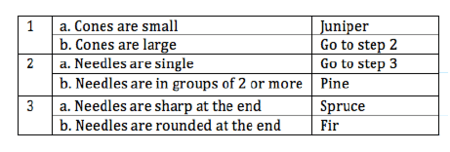
A dichotomous key for trees is provided. Hikers found a tree that has large brown cones and single sharp needles. What species of tree have the hikers found?
a)
Juniper
b)
Pine
c)
Spruce
d)
Fir
4.
The 8 levels of classification, most broad to most specific.
a)
Domain, Genus, Family, Order, Class, Phylum, Kingdom, Species
b)
Domain, Species, Kingdom, Genus, Phylum, Family, Class, Order
c)
Domain, Kingdom, Phylum, Class, Order, Family, Genus, Species
d)
Order, Kingdom, Species, Domain, Phylum, Family, Class, Genus
5.
The first part of a scientific name is an organism's _______________ and the second part is its ________________.
a)
species, genus
b)
phylum, order
c)
class, spices
d)
genus, species
6.

Which level of taxonomy shows the closest relationship between 2 organisms?

a)

kingdom

b)

class

c)

domain

d)

species

7.

There are many different species of big cats around the world. Why is having a scientific name for each species of an organism important?

a)

to prevent existing named organisms from having their name changed as they become extinct

b)

to keep the classification system from being altered as new organisms are discovered

c)

to allow organisms to be placed in many classification levels at the same time

d)

to standardize the naming and organization of organism to avoid confusion between scientist across the world

8.

I am unicellular

I am prokaryotic

I am found in extreme environments

What kingdom do I belong to?

a)

The Eubacteria

b)

Kingdom Plantae

c)

Kingdom Animalia

d)

Kingdom Archaebacteria

9.

I can be either a heterotroph or an autotroph-

I am mostly unicellular

I am the "Junk Drawer" kingdom

The only thing for sure about me is that I have a nucleus in my cells...

I am Kingdom ____________ .

a)

Plantae

b)

Protista

c)

Animalia

d)

Fungi

10.

All living things are divided into three groups called 'domains'. They include, Domain Bacteria, Domain Archaea, and ____________.

a)

Domain Animalia

b)

Domain Eukarya

c)

Domain Prokaryotic

d)

Domain Protista

11.
An illustration and a dichotomous key are given. What is the correct classification for this organism?
a)
Class Insecta
b)
Order Amblygygi
c)
Order Araneae
d)
Order Scorpiones
12.

Using a light microscope, a student identified the following characteristics of 4 organisms found in a sample of pond water. (look at the picture) Based on the table, which organisms most likely belong to the taxonomic group for bacteria?

a)

organisms 1 and 2

b)

organisms 2 and 3

c)

organisms 1 and 4

d)

organisms 3 and 4

13.

A classification table is shown in the picture. According to the picture, which group does a bluebonnet belong to?

a)

group 1

b)

group 2

c)

group 3

d)

group 4

14.
What is the importance of a standardized taxonomic system to the scientific
community?
a)
To have many different common names for one species.
b)
To organize species cells, tissues, organs, and organ systems.
c)
To have a universal scientific naming system.
d)
To analyze species genetic information.
15.
I sometimes get confused by others to be a plant. I'm heterotrophic and digest decaying material. What kingdom to I belong to?
a)
Archaebacteria
b)
Animalia
c)
Fungi
d)
Protista
16.
In what kingdom would you find trees and flowers?
a)
Plantae
b)
Fungi
c)
Eubacteria
d)
Animalia
17.
Bacteria, plants, and fungi--
a)
have cell walls.
b)
belong to the same kingdom.
c)
are all heterotrophic.
d)
can do photosynthesis.
18.
Which of the following kingdoms contain prokaryotic organisms?
a)
Archaebacteria and Fungi
b)
Eubacteria and Protista
c)
Fungi and Protista
d)
Archaebacteria and Eubacteria
19.
Which of the following compounds is found in the cell walls of Eubacteria?
a)
Peptidoglycan
b)
A unique lipid
c)
Chitin
d)
Silica
20.
Which of the following compounds is found in the cell walls of Fungi?
a)
Peptidoglycan
b)
A unique lipid
c)
Chitin
d)
Silica
21.
Into which kingdom should a unicellular, photosynthetic aquatic eukaryote be classified?
a)
Archaebacteria
b)
Eubacteria
c)
Protista
d)
Fungi
22.
Into which kingdom should a prokaryote that lives in an extremely acidic sulfur spring be classified?
a)
Archaebacteria
b)
Eubacteria
c)
Protista
d)
Fungi
23.
Into which kingdom should a multicellular eukaryotic heterotrophic decomposer such as a mushroom be classified?
a)
Archaebacteria
b)
Eubacteria
c)
Protista
d)
Fungi
24.
Into which kingdom should prokaryotic pathogens be classified?
a)
Archaebacteria
b)
Eubacteria
c)
Protista
d)
Fungi
25.
Which of the following characteristics do Archaebacteria and Eubacteria have in common?
a)
They both live in extreme environments.
b)
They both reproduce asexually.
c)
They are both eukaryotic.
d)
They are both multicellular.
26.
What characteristic do Archaebacteria, Eubacteria, and Fungi share?
a)
They are all eukaryotic.
b)
They are all multicellular.
c)
They all have a cell wall.
d)
They are all photosynthetic.
27.
What characteristics make protozoans (animal-like protists) similar to animals?
a)
They are heterotrophs lacking cell walls. 
b)
They are heterotrophs that have cell walls.
c)
They are autotrophs lacking cell walls. 
d)
They are autotrophs that have cell walls.
28.
What characteristics do algae (plant-like protists) share with plants?
a)
They are heterotrophic decomposers without cell walls.
b)
They are photosynthetic autotrophs without cell walls.
c)
They are heterotrophic decomposers with cell walls.
d)
They are photosynthetic autotrophs with cell walls. 
29.
Which of the following structures is a whip-like tail used by unicellular organisms for movement?
a)
Cilia
b)
Pili
c)
Pseudopod
d)
Flagellum
30.
Which of the following structures is an extension of the cytoplasm that helps protists feed and move?
a)
Cilia
b)
Pili
c)
Pseudopod
d)
Flagellum
31.
Who established the present-day system of naming and classifying organisms?
a)
Darwin
b)
Lamarck
c)
Linnaeus
d)
Mendel
32.
Which 2 organisms have the fewest characteristics in common?
a)
2 organisms in the same kingdom
b)
2 organisms in the same genus
c)
2 organisms in the same species
d)
2 organisms in the same family
33.
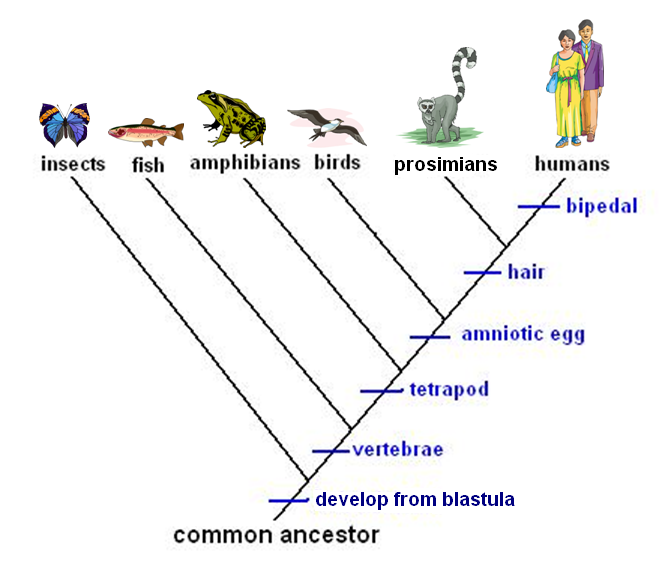
Which organisms pictured on the cladogram have hair?
a)
prosimians only
b)
prosimians and humans
c)
humans only
d)
prosimians and birds
34.
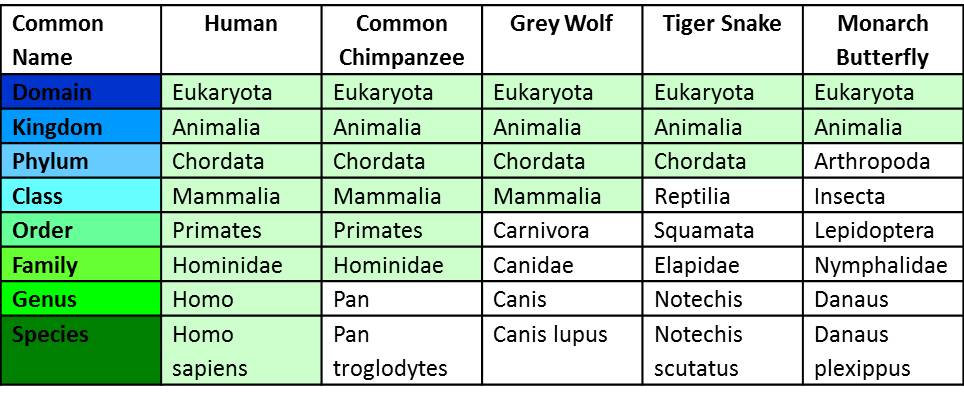
Which organism in the table is least closely related to the chimpanzee?
a)
human
b)
grey wolf
c)
tiger snake
d)
monarch butterfly
35.
An illustration and a dichotomous key are given. What is the correct classification for this organism?
a)
Class Insecta
b)
Order Amblygygi
c)
Order Araneae
d)
Order Scorpiones
36.
I am prokaryotic and am found everywhere. What kingdom do I belong to?
a)
Eubacteria
b)
Archaebacteria
c)
Fungi
d)
Protista
37.

Five general characteristics of organisms in kingdoms Plantae or Fungi are listed in the box.

a)
b)
c)
d)
38.
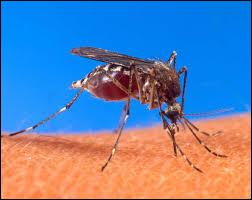
Mosquito  belongs to what kingdom?
a)
Animal Kingdom
b)
Plant Kingdom
c)
Fungi Kingdom
d)
Protista Kingdom
39.
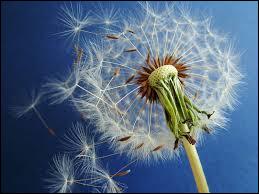
Dandelion, What kingdom does it belongs to?
a)
Plant Kingdom
b)
Animal Kingdom
c)
Fungi Kingdom
d)
Protista Kingdom
40.

An example of an unicellular organism would be:

a)

monkey

b)

bacteria

c)

spider

d)

human

41.

Which 2 organisms would be able to reproduce and produce fertile offspring?

a)

2 organisms in the same class

b)

2 organisms in the same family

c)

2 organisms in the same genus

d)

2 organisms in the same species

42.

Which of the following scientific names is written correctly? Assume all are in italics!

a)

Homo Sapien

b)

Homo sapien

c)

homo sapien

d)

Homosapien

43.

What does "KPCOFGS" mean?

a)

The 4 common characteristics of living things

b)

The 7 levels of taxonomy

c)

The 5 kingdoms

44.
Scientists use the __ __ of organisms because it is always the same
a)
Common name
b)
Scientific name
c)
First name
d)
Nick name
45.
Which organisms are most closely related?
a)
Equus caballas (Horse) & Equus burchellii (Zebra)
b)
Cyanea artica (Jellyfish) &
Ctenodiscus crispatus (Mud Starfish)
c)
Naja naja (cobra) & Glycine max (soya bean)
d)
Ophiocomina nigra (black brittle star) & Brassica nigra (black mustard)
46.
An organism made up of more than one cell would be called:
a)
multicellular
b)
unicellular
c)
heterotroph
d)
autotroph
47.
Which organism in the table shown is most closely related to the common dolphin?
a)
human
b)
killer whale
c)
giant kelp
d)
bat star
48.

Canis lupus, the scientific name for a wolf, is in which genus?

a)

Canis

b)

lupus

c)

Animalia

d)

Mammalia

49.
Cell with a nucleus, DNA is found in the nucleus of this cell. 
a)
Prokaryotic 
b)
Eukaryotic
c)
Unicellular
d)
Multicellular 
50.
Cell with no nucleus, DNA floats freely in the cytoplasm. 
a)
Prokaryotic
b)
Eukaryotic
c)
Unicellular 
d)
Multicellular 
51.
Organism that can make its own food
a)
heterotroph
b)
autotroph
52.
Organism that cannot make its own food. Consumes other organisms. 
a)
heterotroph
b)
autotroph 
53.
Only one parent produces offspring. One set of DNA= exact copy.
a)
Asexual 
b)
Sexual
54.

An organism lays eggs in water, is cold blooded, and has cool moist skin. What class does this organism belong to?

a)

Reptile

b)

Amphibian

c)

Bird

d)

Mammal

55.

An organism has scaly skin, is cold-blooded, and lays its eggs on dry land. Which class does this organism belong to?

a)

Mammal

b)

Amphibian

c)

Reptile

d)

Insect

56.

An organism gives live birth, has body hair, is warm blooded, and produces milk with mammary glands. What class does this organism belong to?

a)

Reptile

b)

Amphibian

c)

Bird

d)

Mammal

57.

Based on this cladogram, which trait do sharks share with primates?

a)

Amniotic egg

b)

Four limbs

c)

Vertebrae

d)

Hair

58.

How can scientists determine how closely species are related based off of the taxonomic classification system?

a)

By knowing that organisms in the same kingdom are the most closely related

b)

By comparing their traits and behaviors

c)

By looking for homologous structures

d)

By comparing how many taxons they share

59.

What traits do all plants share?

a)

unicellular

b)

photosynthetic

c)

no nucleus

d)

ability to move

60.

Based on this dichotomous key, what is the identity of leaf A?

a)

Spruce

b)

White oak

c)

Magnolia

d)

Walnut