
 Worksheets
Unit 5 Population Dynamics Practice Questions
Total questions: 60
Worksheet time: 2hrs 30mins
Different populations that live together in a defined area
species
population
community
ecosystem
biosphere
A group of similar organisms that can breed and produce fertile offspring
biosphere
species
population
community
ecosystem
Group of individuals of the same species that live in the same area
biosphere
species
population
community
ecosystem
Order the following from smallest to largest
community
ecosystem
species
biosphere
population
An example of a connection between Atmosphere and Hydrosphere is:
rain
rivers
lakes
rocks

The graph shows the populations for 2 animals in the same ecosystem. Foxes are mammals that hunt for food, and rabbits are common prey of foxes. According to the data, which 2 statements are correct.
Foxes' population is almost equal to the rabbits' population.
The data shows 3 major increases for the rabbits over forty years.
The fox population reflects a smaller increase than the rabbits, the increase occurs as the rabbit population increases.
The rabbit population is dependent on the fox population.
In a predator-prey relationship, such as rabbits and foxes, how do the two species depend on one another? CHOOSE 2
The rabbit is dependent on the fox. If the foxes die, the rabbit will reproduce at a rate in which they will consume all of their food source.
Neither the fox or the rabbit are dependent on each other.
The fox is dependent on the rabbit. If rabbits die foxes must find another food source or starve.
They live in harmony with each other nibbling on grass and waiting for Aunt Edna to snap photos.

Compare matter and energy.
Matter cycles through ecosystems and recycles.
Energy transfers and flows through matter.
N, C, O cycles with biotic and abiotic factors.
All of the statements listed are correct
Terrestrial biomes are defined by their...
climate, plants & animals
climate only
animals & plants only
none of these

Which biome is represented by the rainfall amounts in letter C?
desert
prairie
deciduous forest
tropical rainforest

Which best explains why there are fewer plants on the forest floor than in the canopy of the tropical rain forest?
more precipitation
less protection from animals
more human interference
less sunlight

What can you infer about animals that live in the desert?
Most of them are quite large
Most of them are warm-blooded
Most are unable to withstand temperatures below 90 degrees Fahrenheit
Most can survive on very little water

Match the following
when a plant or animal changes physical or behavioral characteristics over many generations to better survive in their environment
adaptation
animals or birds that move depending on the season
migratory
the long-term temperature, humidity, precipitation, wind, etc in an area
climate
have similar ecosystems, climates, vegetation, and wildlife
biome

Which biome has long harsh winters, very little rainfall, and permafrost?
savanna
desert
tundra
taiga

Which biome has very few trees, strong winds, and is dominated by grasses?
rain forest
tundra
taiga
grassland

Which two biomes have the least amount of precipitation?
Tropical rain forest and Temperate grassland
Boreal forest and Temperate woodland
Tropical savanna and Tropical dry forest
Tundra and Desert

The two main abiotic factors that determine where organisms live are
temperature and latitude
altitude and precipitation
temperature and precipitation
soil type and precipitation

This biome has 4 seasons and mild temps with moderate amounts of rainfall.
Deciduous Forest
Savanna
Desert
Rain Forest
The rainforest has very high biodiversity. This means
There are many different kind of organisms
There are many different kinds of abiotic factors
There are many uses for the plants found there
There are many different people groups who live there

How does latitude affect the climate of an area?
The higher the latitude, the warmer the temperature.
The higher the latitude, the lower the temperature.
The higher the latitude, the more precipitation.
The higher the latitude the less precipitation.

What does "latitude" refer to?
the distance away from the Equator
how much rain a place gets
how high up a mountain a place is
the number of seasons a place gets

What is the temperature range?
82 degrees
79 degrees
3 degrees
2 degrees

A species that plays a critical role in the health, maintenance, growth, or definition of an ecosystem.
keystone
invasive
engineer
predator
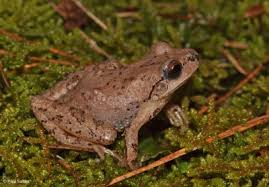

What is a native species?
A species that is found naturally within an ecosystem
A species that has come from another state or country
A species that migrates its entire life
A population of an organism will grow exponentially if:
The resources are unlimited
Conditions are favorable
The resources are limited
They do not like to compete
What is carrying capacity?
When two or more organisms compete for the same resources (ex: mates or food)
The maximum number of organisms an ecosystem can support
All the biotic and abiotic factors and the interactions among them in a given area
Something in the environment that keeps a population from steadily increasing is known as ________?
a Limiting Factor
Population Density
The Carrying Capacity
Reproduction

What type of growth is pictured in this picture?
Exponential Growth
Logistics Growth
Linear Growth
Which of the following statements is correct?
Population size of predators increases when their prey is scarce.
Disease is density-dependent because transmission occurs more easily when a population is large.
Competition for resources is density-independent when food is plentiful.
A change in average temperature is a density-dependent factor because fewer organisms can acclimate to variations in temperature.
Which of the following is a density-independent factor?
a fatal virus
severe overcrowding
an intestinal parasite
a severe drought
Which describes the effects of population increase and resource depletion?
straight-line population growth
exponential population growth
increased competition
increased emigration

An ecosystem is classified into a biome by its
climate
environment
climax community
geriatric population
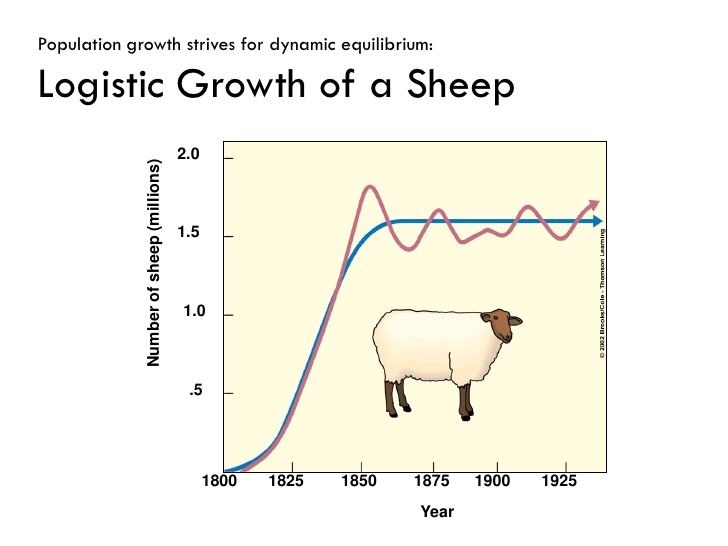
What is the carrying capacity for this sheep population?
1.8 million
1.25 million
1.6 million
1.o million
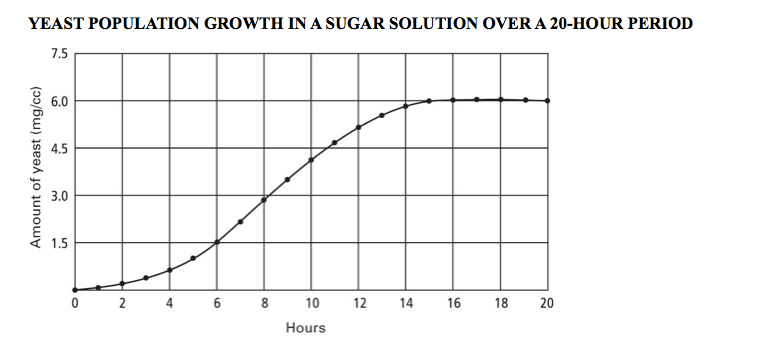

The ability to reproduce under ideal conditions, enough space, food, water, lack of predators.
Primary Consumers
Pioneer Species
Biotic Potential
Abiotic Factors
Why has the human population been able to grow so quickly in such a short period of time?
Doctors have developed easier and safer ways to have babies
People needed more help to work their farms so they had more children
Because people stayed in one place and only moved when crowded out
Because of medical care, clean water and better access to nutritious food
Primary succession occurs in an area that has:
Has Soil
Has No Soil
Has Some Soil
___ are the first organisms to colonize an area and begin the process of ecological succession.
foundational organisms
introductory organisms
primary organisms
pioneer species
What is the main difference between primary and secondary ecological succession?
Primary begins WITHOUT soil; Secondary begins WITH soil
Primary is the first state and secondary is the second stage
Primary builds plant community; secondary builds animal community.
Primary begins WITH soil; Secondary begins WITHOUT soil
Which of the following is the correct order of ecological succession?
grass - shrubs - lichens - trees
lichens - shrubs - grasses - trees
lichens - grasses - shrubs - trees
grasses - lichens - shrubs - trees
Which is faster: Primary or Secondary Succession?
Primary Succession
Secondary Succession
Both Take The Same Amount of Time
T or F: Succession increases biodiversity.
True
False
When a gene pool of a population changed, it means ...
number of organims in the population changes
organisms in the population are breeding randomly
the population is in genetic equilibrium
the population is undergoing evolution

The total collection of genes in a population at any one time.
population genetics
gene pool
gene flow
allele frequency

increases the chance that some individuals in a population will survive
low genetic variation
High genetic variation
no genetic variation
What best describes the role of mutations in evolution?
Mutations are not necessary for evolution because they are not heritable.
Mutations are useful for evolution to occur because they promote genetic uniformity within a population.
Mutations are essential for evolution to occur because they produce genetic variations within a population.
Mutations are essential for evolution to occur because they are responses to environmental changes
The northern elephant seal was almost hunted to extinction in the 1800s. By the late 1890s, approximately one hundred seals were left, reducing the gene pool of the population. What will be the consequence of this reduction?
Competition within the population will increase.
The surviving elephant seals will be better able to adapt.
Inbreeding will be less frequent among the remaining population.
The elephant seals will be more vulnerable to environmental change.
A strip mining company wants to lease some land that is currently part of a national park. They promise to reclaim the land should any minerals be mined from the area, and they are willing to pay top dollar for the rights. As an ecologist, what factors would you raise with the local government?
the threat to local biodiversity
management of the land after the company leaves
the new jobs that would be created
the increased traffic in the area
During the ice ages, the black bears of Europe increased in size.
Directional
Disruptive
Stabilizing
In a population of field mice, coat color ranges from light tan to dark brown. Medium brown mice are found in greater abundance due to their ability to blend in with their surroundings.
Directional
Disruptive
Stabilizing
In Darwin’s finches, beak size affects the mating call by changing the sound of the song. Birds with a medium sized beak attract fewer mates due to the unpopularity of their mating call.
Directional
Disruptive
Stabilizing

Individuals with intermediate traits are more likely to survive and reproduce
stabilizing selection
directional selection
disruptive selection

the selection pressure favors the extreme phenotypes, dividing the population into 2 distinct groups
directional selection
stabilizing selection
disruptive selection

individuals with alleles for an extreme type are more likely to survive and reproduce
stabilizing selection
directional selection
disruptive selection

