
 Worksheets
Sus World Party Quiz
Total questions: 46
Worksheet time: 26mins
Unbalanced forces ALWAYS result in which of the following?
acceleration
constant velocity
constant speed & direction
inertia
Which of the following is NOT an example of balanced forces?
a roller coaster moving forward at a constant speed of 10 m/s
a roller coaster sitting motionless while passengers get on
a roller coaster going around a loop at a constant speed

Which of the following describes the motion of the door?
increasing speed to the left
constant speed to the left
increasing speed to the right
constant speed to the right

If this cylinder has a mass of 20 kilograms, what is its rate of acceleration? (hint: ___ N = 20 kg x a)
0 m/s2
65 m/s2
1 m/s2
20 m/s2

The white car hit the gray car, yet both cars were damaged. Why is that?
An object at rest will remain at rest unless acted on by an unbalanced force.
If you apply more force to an object, it will accelerate more.
For every action, there is an equal and opposite reaction.

Given the FBD, which of the following must be true?
The frictional force must be accelerating the system to the left.
The box must be accelerating to the right.
The box must be moving to the right.
The FBD is incorrectly drawn. This situation isn't possible

Which of the following statements is true about the image above?
The accelerations of the blocks will vary according to their mass
The net force acting on each block is the same
The blocks will experience the same acceleration
The 3m box will eat the 2m and the m boxes
A 100 kg skydiver is free falling at a constant velocity of 20 m/s. What is the net (total) force acting on them?
2,000 N
0 N
980 N
Not enough information to answer


Which letter is pointing to the maximum strength a component can withstand before plastic deformation?
A
B
C
D
Which letter points to the section that shows elastic deformation?
A
B
C
D
Which letter points to the section indicating the shape change of a material that cannot be reversed?
A
B
C
D
Which letter is pointing to where the material will break?
A
B
C
D
Which section reversible ?
A
B
C
D
A roller coaster that is in motion is an example of
Kinetic energy
Potential energy
A pencil balanced on the edge of a desk, that could fall at any moment is an example of
Kinetic energy
Potential energy

Total Momentum
otal speed
total velocity
Energy


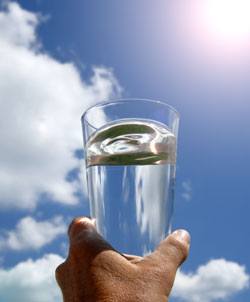
To obtain the absolute pressure from the gauge pressure:
subtract atmospheric pressure
add atmospheric pressure
subtract 273
add 273

According to Archimedes' principle, if a body is immersed partially or fully in a fluid then the buoyancy force is _______ the weight of fluid displaced by the body.
equal to
less than
more than
unpredictable
If the weight of an object is < the Buoyant Force, the object will ......................
Sink
Rise
Remain at the same level
According to Bernoulli's theorem in a flowing liquid
velocity is inversely proportional to pressure
velocity is directly proportional to pressure
velocity is directly proportional to volume
Efficiency is calculated by useful energy output divided by total energy input, expressed as a percentage
False
True

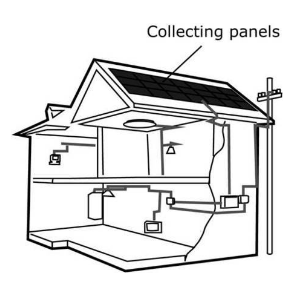
Which alternative energy source does this house use?

A set of steps engineers follow to complete the design of an object or idea is called the
The Scientific Method
The Engineering Design Process
Before you create your prototype their are important steps to take in the Engineering Design Process. What are they?
Redesigning
Test and evaluate your solution
Communicate your results
Identify your need or problem
Why is feedback important when designing a product?
It helps the engineer learn the glitches of the product
It lets the engineer know what works and what the consumer likes about the product
It helps the engineer to improve the product.
It lets the engineer know how the community would react to the product, if they like it or not
The process by which group members freely suggest any creative solutions to a problem is called...
brainstorming
troubleshooting
patent
constraints
A _________________ is any factor that limits or restricts a design.
A trade-off
A criteria
A constriant
A prototype
Once an engineer has tested their product, what MIGHT they have to do to get it ready to be sold and used by the public?
Test it for the first time
Research how to design it for the first time
Identify the need for the product
Redesign it

