wayground logo

Free Printable Worksheets

Font size

S
M
L
XL
Worksheets

Balancing Nuclear Equations

Total questions: 61

Worksheet time: 31mins

Name
Class
Date
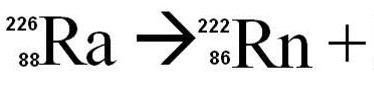
1.
What particle completes this reaction?
a)
alpha particle
b)
beta particle
c)
gamma particle
d)
neutron
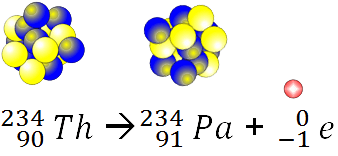
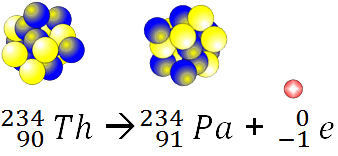
2.
Complete the nuclear equation and determine the type of decay that is occurring in this reaction. 
a)
alpha
b)
beta
c)
gamma
d)
none
3.
Solve this equation for alpha decay.
20985At = ___ + 42He
a)
20583Bi
b)
20986Rn
c)
20781Tl
d)
20885At
4.
Solve this equation for alpha decay.
22688Ra = ___ + 42He
a)
22286Rn
b)
22689Ac
c)
22484Po
d)
22588Ra
5.
Solve this equation for beta decay.
6027Co = ___ + 0-1e
a)
5625Mn
b)
6028Ni
c)
5823V
d)
5927Co
6.
Solve this equation for beta decay.
146C = ___ + 0-1e
a)
104Be
b)
147N
c)
102He
d)
136C
7.
The following is an example of what type of reaction?
24395Am  →  23993Np + 42He 
a)
alpha decay
b)
beta decay
c)
gamma decay
8.
If we start off with element 5024X after an alpha decay we get another element Y that looks like
a)
5022Y
b)
4622Y
c)
4820Y
d)
5426Y
9.
What is the missing isotope that will balance the following nuclear equation?
94Be  +  11H →  _____  +  42He
a)
105B
b)
105Ne
c)
63Li
d)
63C
10.

 Balance the following nuclear equation:

            1327Al + 01n  1124Na  +   ?\ \ \ \ \ \ \ \ \ \ \ _{13}^{27}Al\ +\ _0^1n\ \longrightarrow\ _{11}^{24}Na\ \ +\ \ \ ?  


a)

    24He\ \ \ _2^4He  

b)

    25H\ \ \ _2^5H  

c)

    1342 Al\ \ \ _{13}^{42\ }Al  

d)

    1425Si\ \ \ _{14}^{25}Si  

11.

 Balance the following nuclear equation:

            92238U + 01n  1   0B  +   ?\ \ \ \ \ \ \ \ \ \ \ _{92}^{238}U\ +\ _0^1n\ \longrightarrow\ _{-1}^{\ \ \ 0}B\ \ +\ \ \ ?  


a)

    93239Np\ \ \ _{93}^{239}Np  

b)

    94239Pu\ \ \ _{94}^{239}Pu  

c)

    93238 Np\ \ \ _{93}^{238\ }Np  

d)

    94238Am\ \ \ _{94}^{238}Am  

12.

 Balance the following nuclear equation:

            94239Pu + 24He  ? +  01n\ \ \ \ \ \ \ \ \ \ \ _{94}^{239}Pu\ +\ _2^4He\ \longrightarrow\ ?\ +\ \ _0^1n  


a)

    96242Cm\ \ \ _{96}^{242}Cm  

b)

    94242P\ \ \ _{94}^{242}P  

c)

    93238 Pu\ \ \ _{93}^{238\ }Pu  

d)

    96240C\ \ \ _{96}^{240}C  

13.

 Balance the following nuclear equation:

            ? + 24He       817O  +   11H\ \ \ \ \ \ \ \ \ \ \ ?\ +\ _2^4He\ \ \ \ \longrightarrow\ \ \ _8^{17}O\ \ +\ \ \ _1^1H  


a)

    714N \ \ \ _7^{14}N\   

b)

    917P\ \ \ _9^{17}P  

c)

    914 F\ \ \ _9^{14\ }F  

d)

    814O\ \ \ _8^{14}O  

14.

 Balance the following nuclear equation:

            82208Pb +  ?       112277Cn  +   01n\ \ \ \ \ \ \ \ \ \ \ _{82}^{208}Pb\ +\ \ ?\ \ \ \ \longrightarrow\ \ \ _{112}^{277}Cn\ \ +\ \ \ _0^1n  


a)

    3070Zn \ \ \ _{30}^{70}Zn\   

b)

    11217P\ \ \ _{112}^{17}P  

c)

    4070 Zr\ \ \ _{40}^{70\ }Zr  

d)

    814O\ \ \ _8^{14}O  

15.

 Balance the following nuclear equation:

            2656Fe +  24He       1   0 e  +  ?\ \ \ \ \ \ \ \ \ \ \ _{26}^{56}Fe\ +\ \ _2^4He\ \ \ \ \longrightarrow\ \ \ _{-1}^{\ \ \ 0}\ e\ \ +\ \ ?  


a)

    2960Cu \ \ \ _{29}^{60}Cu\   

b)

    3960C\ \ \ _{39}^{60}C  

c)

    2940 Si\ \ \ _{29}^{40\ }Si  

d)

    814O\ \ \ _8^{14}O  

16.

Balance the following nuclear equation:

            ? +  24He          14   30 Si +  11H\ \ \ \ \ \ \ \ \ \ \ ?\ +\ \ _2^4He\ \ \ \ \longrightarrow\ \ \ _{\ \ \ 14}^{\ \ \ 30}\ Si\ +\ \ _1^1H 


a)

    1327Al\ \ \ _{13}^{27}Al 

b)

    1527Ar\ \ \ _{15}^{27}Ar 

c)

    1440 Si\ \ \ _{14}^{40\ }Si 

d)

814O\ \ \ _8^{14}O

17.

What are Isotopes?

a)

atoms of different elements with the same masses.

b)

atoms of different elements with different charges.

c)

atoms of the same element with different charges.

d)

atoms of the same element with different masses.

18.

 Balance the following nuclear equation:

           1327Al + 01n  1124Na  +   ?\ \ \ \ \ \ \ \ \ \ \ _{13}^{27}Al\ +\ _0^1n\ \longrightarrow\ _{11}^{24}Na\ \ +\ \ \ ?  


a)

   24He\ \ \ _2^4He  

b)

   25H\ \ \ _2^5H  

c)

   1342 Al\ \ \ _{13}^{42\ }Al  

d)

   1425Si\ \ \ _{14}^{25}Si  

19.

Describe the structure of an alpha particle.

a)

a fast-moving electron

b)

2 protons and 2 neutrons

c)

a slow-moving neutron

d)

a hydrogen nucleus

20.

What is the relative charge of an alpha particle?

a)

-1

b)

0

c)

1

d)

2

21.

In alpha decay, the mass number...

a)

increases by 2

b)

decreases by 2

c)

increases by 4

d)

decreases by 4

22.

In alpha decay, the atomic number...

a)

increases by 2

b)

decreases by 2

c)

increases by 4

d)

decreases by 4

23.

The mass number of Neptunium (Np) is (a)   .

24.

The atomic number of Neptunium (Np) is (a)   .

25.

What type of nuclear decay radiation is this (alpha, beta, or gamma)?

0-1e

(a)  

26.

What type of radiation (alpha, beta, or gamma)?

42 He

(a)  

27.

What type of radiation is this (alpha, beta, or gamma)?

00 y

(a)  

28.

Has a charge and mass like an electron: (alpha, beta, gamma)

(a)  

29.

Nuclear decay with no mass and no charge: (alpha, beta, gamma)

(a)  

30.

LEAST penetrating nuclear decay radiation: (alpha, beta, gamma)

(a)  

31.

MOST damaging nuclear decay to the human body: (alpha, beta, gamma)

(a)  

32.

Nuclear decay that can be stopped by skin or paper: (alpha, beta, gamma)

(a)  

33.

Nuclear decay that can be stopped by aluminum: (alpha, beta, gamma)

(a)  

34.
What makes something radioactive?
a)
elements with an atomic number above 81
b)
an unstable nucleus
c)
contaminated sewage
d)
It decays over time
35.
When does radioactive decay occur?
a)
When the nucleus of an isotope is unstable
b)
When the nucleus of an isotope is stable
c)
When the electrons of an isotope are spinning
d)
When the electrons of an isotope are shared with another isotope
36.

An alpha particle is sometimes written as

a)

42He

b)

0-1e

c)

0+1 e

d)

10n

37.
What is the product of the alpha decay of Gold-175?
a)
Ir-171
b)
Tl-179
c)
Au179
d)
Au171
38.
Which type of nuclear radiation is being emitted here?
a)
Alpha
b)
beta
c)
gamma 
d)
none
39.
Which type of nuclear radiation is being emitted here?
a)
alpha
b)
beta
c)
gamma
d)
none
40.

Why does alpha decay occur?

a)

The nucleus is too large to be stable

b)

The proton to neutron ratio is unstable

c)

The nucleus is in an excited state. This usually follows other types of decay.

41.

Why does beta decay occur?

a)

The nucleus is too large to be stable

b)

The proton to neutron ratio is unstable

c)

The nucleus is in an excited state. This usually follows other types of decay.

42.

Why does gamma decay occur?

a)

The nucleus is too large to be stable

b)

The proton to neutron ratio is unstable

c)

The nucleus is in an excited state. This usually follows other types of decay.

43.

When nuclei decay, massive amounts of __________ is released.

a)

energy

b)

electrons

c)

protons

d)

neutrons

44.

What type of decay is shown here

23892U ---> 23490Th + 42He.

a)

alpha

b)

beta

c)

gamma

45.
When a nucleus undergoes nuclear decay by gamma rays, the atomic number of the element....
a)
remains the same
b)
  decreases by one.
c)
increases by one.
d)
increases by two.
46.
The type of radioactive particle that can be stopped by a sheet of paper is the ____.
a)
alpha particle
b)
beta particle
c)
gamma ray
d)
uranium
47.

Finish this equation

20983Bi--> _______ + 20581Tl

a)

42He

b)

0-1e

c)

y

48.
The most dangerous type of radiation is the ____. 
a)
alpha particle
b)
gamma ray
c)
beta particle
d)
uranium
49.
In the symbol 20682Pb what does 206 stand for?
a)
Mass number
b)
Atomic number
c)
Atomic mass
d)
Number of protons
50.
The three types of nuclear radiation in increasing order of penetrating power are ____.  
a)
  alpha, beta, gamma 
b)
X ray, beta, gamma
c)
alpha, gamma, beta 
d)
X ray, gamma, beta 
51.

The nucleus is held together by the ___________________________force.

a)

The Strong Nuclear Force

b)

The Weak Nuclear Force

c)

Electromagnetism

d)

Gravity

52.

What does the graph show is needed to keep the nucleus stable?

a)

As protons increases, more neutrons are needed.

b)

As protons increases, less neutrons are needed.

c)

As neutrons increase, less protons are needed.

53.

What is likely to happen to unstable nuclei with too many, or too few, neutrons?

a)

They will decay by emitting radiation.

b)

They will loose all their electrons.

c)

They will bond with other atoms.

54.

What will happen if the nucleus has too many neutrons?

a)

A neutron will turn into a proton and emit a fast-moving electron.

b)

A proton will turn into a neutron and emit a fast-moving electron.

c)

A neutron will break into two and emit a fast-moving alpha particle.

55.

What type of radiation is the most penetrating?

a)

Alpha

b)

Beta

c)

Gamma

56.
Which type of nuclear radiation is being emitted here?
a)
Alpha
b)
beta
c)
gamma 
d)
none
57.
What decay product is also a helium nucleus?
a)
alpha
b)
beta
c)
gamma
d)
none of them
58.

What decay product is an electron?

a)

alpha

b)

beta

c)

gamma

d)

none of them

59.

What decay product is a high energy electromagnetic wave?

a)

alpha

b)

beta

c)

gamma

d)

none of them

60.

What decay prodcut(s) can be stopped by aluminum?

a)

alpha

b)

beta

c)

alpha and beta

d)

gamma

e)

all of them

61.
What decay product(s) can be stopped by paper?
a)
alpha
b)
beta
c)
alpha and beta
d)
gamma
e)
all of them