wayground logo

Free Printable Worksheets

Font size

S
M
L
XL
Worksheets

Revision of LO3.1 Cells Review

Total questions: 79

Worksheet time: 1hrs 15mins

Name
Class
Date
1.

The nucleus is surrounded by a membrance known as __________.

a)

cell membrane

b)

cell bilayer membrane

c)

nuclear envelope

d)

phospholipid membrane

2.
______________  allows outward and inward movement of molecules across it.
a)
lysosomes
b)
Cell membrane
c)
endoplasimic reticulum
d)
nucleus
3.
_______are small spherical organelles containing enzymes used to breakdown chemicals and non-functional parts of cells.
a)
ribosomes
b)
nucleolus
c)
Lysosomes
d)
centrosmes
4.
Some of the ribosomes are attached to the ___________.
a)
rough Endoplasmic Reticulum
b)
smooth Endoplasmic Reticulum
c)
Golgi Apparatus
d)
Nucleaus
5.
True or False: Prokaryotes do not have a nucleus
a)
True
b)
False
6.
True or False: All living things are made of cells
a)
True
b)
False
7.
Which of the following is NOT a part of cell theory?
a)
All cells come from preexisting cells
b)
All organisms are made of one or more cell
c)
All cells have the same structure
d)
Cells are the basic structure and function of life
8.
An organelle that eukaryotes have but prokaryotes do not have is a:
a)
Cell Membrane
b)
Nucleus
c)
Cytoplasm
d)
Ribosome
9.
Which structure allows animals to create energy to live?
a)
#1
b)
#4
c)
#6
d)
#7
10.
Which structure contains the cell's genetic information?
a)
#1
b)
#3
c)
#7
d)
#8
11.
Which organelle holds the other organelles in place and is a jelly-like material?
a)
#2
b)
#4
c)
#6
d)
#8
12.
The excretory system rids the body of waste. Which cell organelle provides similar function?
a)
Lysosome
b)
Nucleus and mitochondria
c)
Chromosome and chloroplast
d)
Mitochondria and cytoplasm
13.
_____________ controls the movement of materials in and out of the cell.
a)
Cell Wall
b)
Cell Membrane
c)
Cytoplasm
d)
Chloroplast
14.
Which type of transport requires an input of energy?
a)
Passive Transport
b)
Osmosis
c)
Simple Diffusion
d)
Active Transport
15.
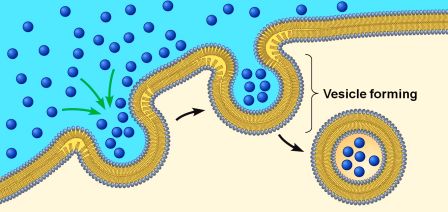
Which form of active transport is being shown?
a)
Facilitated Diffusion
b)
Exocytosis
c)
Endocytosis
d)
Protein Pumps
16.
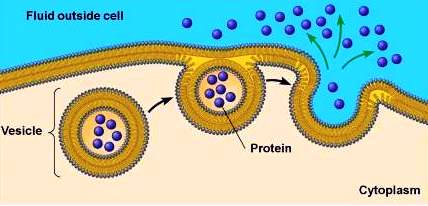
Which form of active transport is being shown?
a)
Pinocytosis
b)
Endocytosis
c)
Exocytosis
d)
Osmosis
17.
Which does NOT require energy to occur?
a)
Passive Transport
b)
Active Transport
c)
Endocytosis
d)
Exocytosis
18.
What is the difference between active and passive transport?
a)
Active does not need energy and passive uses ATP (energy)
b)
Active uses ATP (energy) and passive does not need energy
c)
Active stores transport proteins and passive releases 
d)
Active uses hormones and passive does not 
19.
The picture is an example of...
a)
active tranport
b)
passive transport
c)
diffusion
d)
osmosis
20.
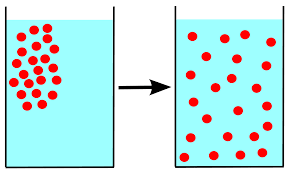
The picture below is an example of _________________.
a)
osmosis
b)
isotonic
c)
diffusion
d)
active transport
21.
Osmosis is the movement of _____ across a membrane.
a)
food
b)
energy
c)
oxygen
d)
water
22.
What type of transport is this?
a)
Endocytosis
b)
Diffusion
c)
Exocytosis
d)
Osmosis
23.

Active transport is movement of particles through the cell membrane from a region of ...1... to a region of ...2... using energy in the form of ...3...

a)

1: lower concentration, 2: higher concentration, 3: NADPH

b)

1: higher concentration, 2: lower concentration, 3: NADPH

c)

1: higher concentration, 2: lower concentration, 3: ATP

d)

1: lower concentration, 2: higher concentration, 3: ATP

24.

During osmosis

a)

water moves from high to low concentration

b)

large or oddly shaped molecules move across a cell membrane

c)

water moves when energy is used

d)

proteins are built

25.
Endocytosis is defined as
a)
the movement of large molecules from the inside of the cell to the outisde of the cell using channel proteins. 
b)
the movement of large molecules from the inside of the cell to the outisde of the cell membrane vesciles. 
c)
 the movement of large molecules from the outside of the cell to the inside of the cell using membrane vesciles.
d)
the movement of large molecules from the outside of the cell to the inside of the cell using channel proteins. 
26.
Exocytosis is the movement of
a)
any type of substance from outside the cell to the inside of the cell. 
b)
very large substances from outside the cell to the inside of the cell. 
c)
any type of substance from inside the cell to the outside.
d)
very large substances from inside the cell to the outside.
27.
In this image, the cell is using which type of molecular transport?
a)
Osmosis
b)
Diffusion 
c)
Endocytosis
d)
Exocytosis 
28.

________________ is the process of capturing a substance or particle from outside the cell by engulfing it with the cell membrane.

a)

Endocytosis

b)

Exocytosis

c)

Isocytosis

d)

Kinicytosis

29.

Following are a few definitions of osmosis:Read carefully and select the correct definition.

a)

Movement of water molecules from a region of higher concentration to a region of lower concentration through a semi-permeable membrane.

b)

Movement of solvent molecules from its higher concentration to lower concentration.

c)

Movement of solvent molecules from higher concentration to lower concentration of solution through a permeable membrane.

d)

Movement of solute molecules from lower concentration to higher concentration of solution through a semi permeable membrane.

30.

The process of …………… helps in movement of carbon dioxide or oxygen across the cell membrane.

a)

osmosis

b)

plasmolysis

c)

diffusion

d)

endocytosis

31.

__________is the random movement of particles from an area of higher concentration to a lower concentration

a)

Exocytosis

b)

Osmosis

c)

Diffusion

d)

Endoyctosis

32.
Most of the cell membrane is made of...
a)

Phospho lipids

b)

Carbolipids

c)

Proteins

d)

Nucleic acids

33.
What is embedded in the phospholipid bilayer?
a)
proteins
b)
salt
c)
water
d)
trapped animals
34.
How many layers is the lipid bilayer?
a)
1
b)
2
c)
3
d)
4
35.

Which statement was NOT included in cell theory?

a)

All living things are composed of cells.

b)

Living cells come only from other living cells.

c)

Each cell contains a cell membrane, cytoplasm, nucleus, mitochondria, and endoplasmic reticulum.

d)

Cells are the smallest structure of living things that can perform the functions necessary for life.
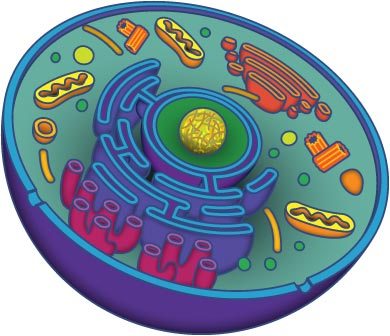
36.
All living things are made up of...
a)
cells
b)
cell tissues
c)
organ
d)
organ systems
37.
All cells come from___________ cells.
a)
pregnant
b)
pre-existing
c)
paternal
d)
pin size
38.
what is a cell classified as?
a)
a basic unit of structure and function of all living organisms
b)
a unit based on only plants and animals that are living
39.
All organisms are made of:
a)
organelles
b)
cytoplasm
c)
DNA
d)
cells
40.

What is the basic structural and functional unit of all living things?

a)

atom

b)

cell

c)

bacteria

d)

animalcules

41.

how many types of ER are there?

a)

1

b)

2

c)

3

d)

4

42.

Proteins synthesis and transportation occurs in...

a)

Rough ER

b)

Smooth ER

c)

Lysosome

d)

Plasma membrane

43.
Organelle that makes proteins.  They may be found floating in the cytoplasm or attached to the rough ER.
a)
ribosomes
b)
lysosomes
c)
Golgi comples
d)
nucleosome
44.
Site of protein synthesis
a)
Ribosome
b)
Mitochondria
c)
Chloroplast
d)
Nucleolus
45.

True or False: The Golgi apparatus is made up of cisternae.

a)

True

b)

False

46.

Which organelle breaks and degrades things?

a)

Lysosome

b)

Mitochondria

c)

Vacuole

d)

Vesicle

47.

Which of these modifies and packages protein or lipid products that are made by the cell?

a)

Golgi Body

b)

Vesicle

c)

Rough Endoplasmic Reticulum (ER)

d)

Smooth Endoplasmic Reticulum (ER)

48.

Which organelle is this?

a)

Golgi Apparatus

b)

Smooth ER

c)

Rough ER

d)

Lysosome

49.

......is important in the creation/making and storage of lipids .

a)

Smooth ER

b)

Rough ER

c)

Lysosome

d)

Mitochondria

50.

Which organelle contains digestive enzymes

a)

Mitochondria

b)

Lysosome

c)

Centriole

51.

What is the function of centriole

a)

cell division

b)

break down subtances

52.
The structure labeled A is a(n)
a)
chromatid
b)
centriole
c)
centromere
d)
chromophere
53.
The structures labeled B are
a)
centrioles
b)
chromatids
c)
centromeres
d)
chromopheres
54.

Each chromosome contains two identical _____.

a)

chromotids

b)

chromosomes

c)

first

d)

meiosis

e)

second

55.

Which organelle is this?

a)

mitochondria

b)

nucleus

c)

ribosome

d)

Golgi apparatus

56.

Which organelle is this?

a)

mitochondria

b)

nucleus

c)

ribosome

d)

Golgi apparatus

57.

Which organelle is this?

a)

mitochondria

b)

nucleus

c)

ribosome

d)

Golgi apparatus

58.

Which organelle is this?

a)

mitochondria

b)

nucleus

c)

ribosome

d)

Golgi apparatus

59.

Which organelle is this?

a)

centrioles

b)

endoplasmic reticulum

c)

lysosome

d)

cytoskeleton

60.

Which organelle is this?

a)

centrioles

b)

endoplasmic reticulum

c)

lysosome

d)

cytoskeleton

61.

Which part of an animal cell is this?

a)

centriole

b)

cytoplasm

c)

cytoskeleton

d)

cell membrane

62.

Which part of an animal cell is this?

a)

centriole

b)

cytoplasm

c)

cytoskeleton

d)

cell membrane

63.

Which part of an animal cell is this?

a)

centriole

b)

cytoplasm

c)

cytoskeleton

d)

cell membrane

64.

Which of the following is NOT a component of the cytoskeleton of a eukaryotic cell?

a)

Microfilaments

b)

Mitochondria

c)

Microtubules

65.

Which part of the cell is made up of a network of filaments that maintains the cell shape?

a)

Cytoplasm

b)

Endoplasmic reticulum

c)

Cytoskeleton

d)

Vacuoles

66.

Microtubules are

a)

rope like

b)

mesh like

c)

hollow tubes

d)

interlocking chains and ropes

67.
This is the control center of the cell.
a)
Nucleus
b)
Nuclear Membrane
c)
Chloroplasts
d)
Golgi Aparatus
68.

The _____________ holds the DNA, and controls the functions of eukaryotic cells.

a)

Nucleus

b)

Nuclear Membrane

c)

Mitochondria

d)

Chloroplast

69.

The _____________ is a gel-like fluid that fills plant and animal cells. It holds the organelles in place and gives each cell its shape.

a)

Cytoplasm

b)

Cell Membrane

c)

Cell Wall

d)

Chloroplast

70.
The powerhouse of the cell is the...
a)
Mitochondrion
b)
Golgi body
c)
Nucleus
d)
Ribosomes
71.
What makes the endoplasmic reticulum rough?
a)
Vessicles
b)
Vacuoles
c)
Ribosomes
d)
Chromosomes
72.

Helps in making ribosomes, which are combinations made of protein and RNA (ribonucleic acid )

a)

nucleoplasm

b)

nuclear membrane

c)

nucleolus

d)

nuclear pores

73.

Where are the ribosomes made?

a)

Chromatin

b)

Nuclear pores

c)

Nuclear membrane

d)

Nucleolus

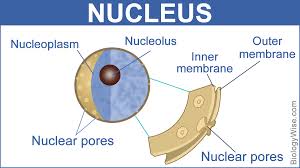
74.

Tiny holes in the nuclear membrane allow mRNAs and proteins to come in and go out of the nucleus.

a)

nucleus

b)

nucleoplasm

c)

nucleolus

d)

nuclear pores

75.

What do you see?

a)

a white blood cell

b)

an eukaryotic cell

c)

DNA

d)

a prokaryotic cell

76.
Prokaryotic cells include bacteria.
a)
True
b)
False
77.

Which type of cell does not have a nucleus?

a)

Prokaryotic cells

b)

Prokaryotic and Eukaryotic cells

c)

Eukaryotic cells

d)

Plant cells

78.

Humans, animals & fungi have_______.

a)

Prokaryotic cells

b)

Prokaryotic and Eukaryotic cells

c)

Eukaryotic cells

d)

Archaea

79.

Which of the following is an example of a prokaryotic cell?

a)

Plant

b)

Animal

c)

Bacteria

d)

Fungi