
 Worksheets
World War 2 Review
Total questions: 79
Worksheet time: 45mins
Fascism is a way of organizing a society in which a government ruled by a ______ controls the lives of the people and in which people are not allowed to disagree with the government, puts country above everything else.
dictator
citizen
committee
monarch

Who was the leader of the Fascist Party in Italy?
Adolf Hitler
Benito Mussolini
Joseph Stalin
Winston Churchill
In what year did the Nazi Party (German Worker’s Party) form?
1918
1921
1933
1945
Who became Chancellor of Germany in 1933 after growing in power?
Hitler
Stalin
Churchill
Mussolini
The Nazi Party was driven by the vision of which master race?
Aryan master race
Slavic master race
Semitic master race
Roman master race
What type of state did Hitler establish, where the leader suppresses all opposition and controls every aspect of people’s lives?
Democratic
Federal
Totalitarian
Monarchical
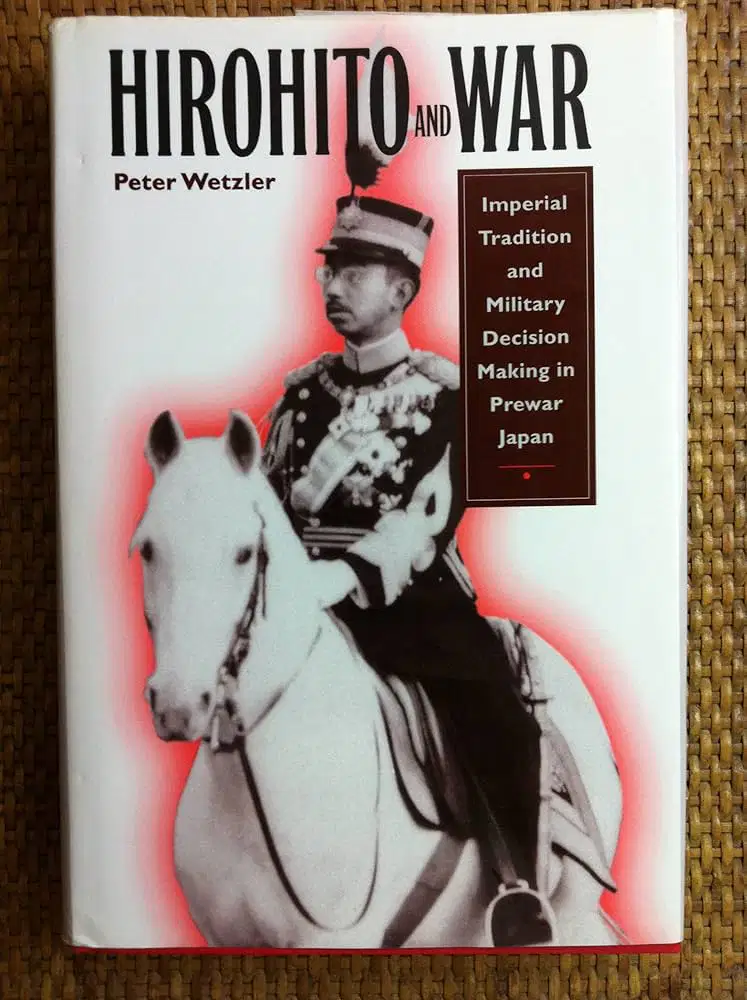
What was one reason Japan became frustrated in the early 20th century?
Success in government
Economic prosperity
Government and economic problems
Peaceful relations with neighbors
Japan became ________ when military leaders gained control of the government.
militaristic
democratic
isolationist
industrialized
In 1931, Japan attacked which region in China?
Beijing
Manchuria
Shanghai
Hong Kong
Japan invaded northern China in 1937.
True
False

Japan signed a pact with which two countries to form the 'Axis'?
France and Britain
Italy and Germany
China and Russia
United States and Canada
Who was the British Prime Minister who believed he had reached peace at the Munich Conference?
Winston Churchill
Neville Chamberlain
Adolf Hitler
Benito Mussolini
Winston Churchill disagreed with the outcome of the Munich Conference.
True
False
What event marked the start of World War II in September 1939?
Germany invades Poland after signing a non-aggression pact with the Soviet Union
France invades Germany
Britain invades Norway
The United States joins the war
What does the term Blitzkrieg mean?
Slow retreat
Lightning war
Naval blockade
Peace treaty
France and Great Britain declared war on Germany after Germany invaded which country?
Poland
France
Belgium
Austria
In 1940, Germany invaded Norway, Denmark, Netherlands, Belgium, and _______.
France
Italy
Spain
Sweden
The evacuation at Dunkirk occurred during the German invasion of which country?
France
Belgium
Poland
Norway
The German invasions in 1940 gave Germany control of which part of France?
Southern France
Northern France
Eastern France
Western France
In what year did the German bombing of London, known as the Battle of Britain, take place?
1939
1940
1941
1942
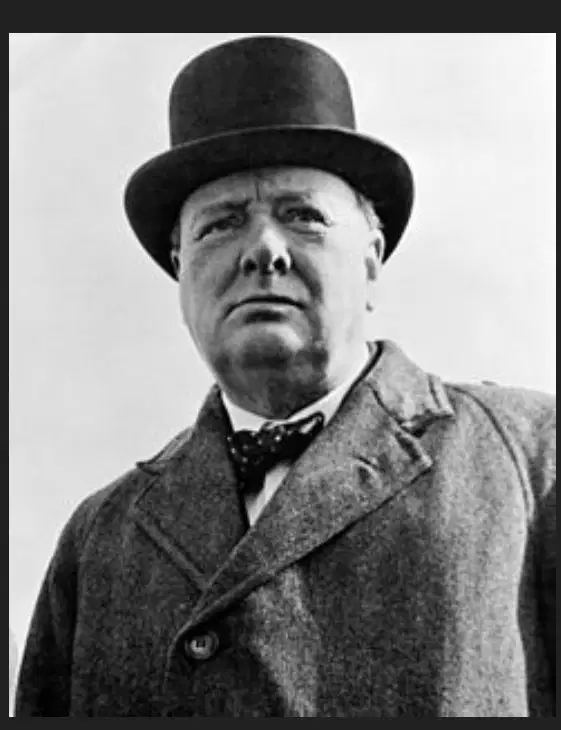
Who was the British Prime Minister who vowed not to surrender during the Battle of Britain?
Neville Chamberlain
Winston Churchill
Franklin D. Roosevelt
Joseph Stalin
Which military force mounted great counter-attacks during the Battle of Britain?
German Luftwaffe
British Royal Air Force
United States Air Force
Soviet Air Force
In what year did German forces attack the Soviet Union in Operation Barbarossa?
1939
1940
1941
1942
What was one of Hitler’s largest defeats during World War II?
Battle of Britain
Battle of Stalingrad
Battle of the Bulge
Battle of Moscow
Fill in the blank: The Battle of Stalingrad took place in _____
1942
1939
1945
1918
Soviet troops were able to hold off the capture of a major city during the Battle of Stalingrad.
True
False
Who is the Soviet leader shown in the image on the right?
Joseph Stalin
Vladimir Lenin
Nikita Khrushchev
Leonid Brezhnev
What was the main idea of the Isolationist Policy during FDR's presidency?
The US would interfere with international affairs
The US would not interfere with international affairs
The US would declare war on all enemies
The US would join the League of Nations
According to President Roosevelt, the US would remain ______ during the early years of World War II.
neutral
aggressive
allied
hostile
Under what act would the US supply Allies under certain conditions?
Neutrality Act
Lend-Lease Act
Marshall Plan
Truman Doctrine
In what year did FDR win his third term as President?
1940
1936
1944
1932
FDR said, "Your boys are not going to be sent into any foreign wars."
True
False
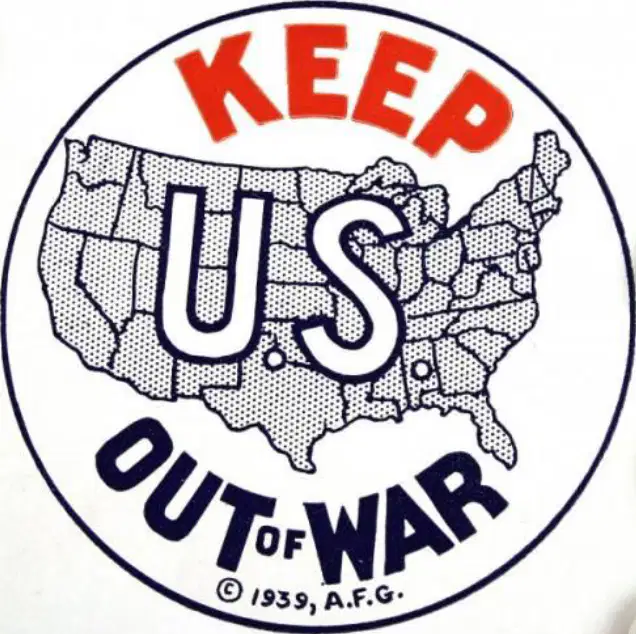
What message is conveyed by the poster that says 'KEEP U.S. OUT OF WAR' with a map of the United States?
The United States should join the war.
The United States should remain neutral and avoid involvement in the war.
The United States should support one side in the war.
The United States should increase military spending.
Who introduced the Lend-Lease Program in 1941?
President Harry S. Truman
President Franklin D. Roosevelt
President Woodrow Wilson
President Dwight D. Eisenhower
The Lend-Lease Program allowed the U.S. to provide military aid to Allied nations without directly entering the war.
True
False
Fill in the blank: The Lend-Lease Program included food, oil, weapons, ships, and ________.
aircraft
tanks
submarines
radar
Which countries primarily benefited from the Lend-Lease Program?
Germany, Italy, Japan
Great Britain, Soviet Union, China
France, Spain, Portugal
Canada, Mexico, Brazil
The Lend-Lease Program helped keep Allied forces supplied without violating U.S. neutrality laws.
True
False
The Lend-Lease Program might have influenced the outcome of World War II by:
Providing vital supplies and support to Allied nations
Encouraging Axis powers to surrender early
Limiting the involvement of the United States in the war
Preventing the use of new military technologies
What resources did Japan get from the US according to 'The Japanese Threat'?
Food and water
Steel and oil
Weapons and ammunition
Gold and silver
In August 1941, what action did the US take against Japan according to 'The Japanese Threat'?
Declared war
Enforced embargo
Signed a peace treaty
Sent more resources
Fill in the blank: In August 1941, the US ceased sending ______ to Japan as part of the embargo.
oil
food
weapons
textiles
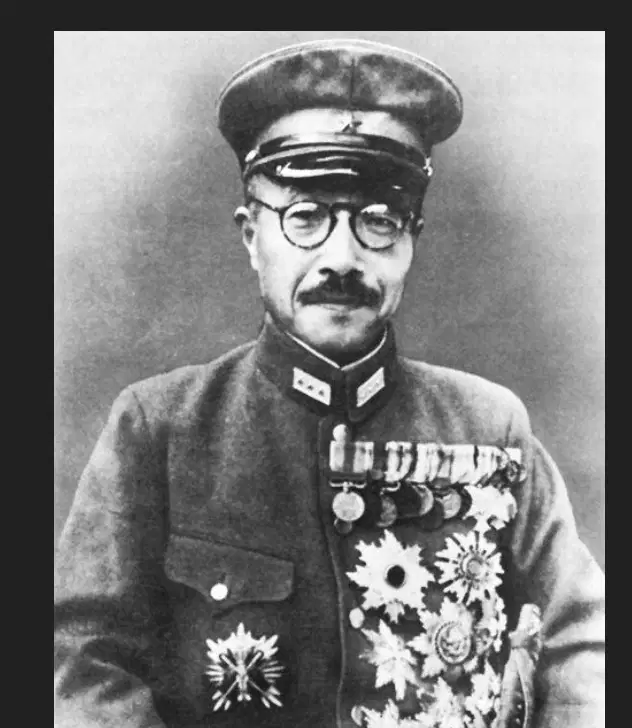
Who did not want to hold talks with the US and began planning an attack, according to 'The Japanese Threat'?
General Hideki Tojo
Emperor Hirohito
Admiral Isoroku Yamamoto
Prime Minister Fumimaro Konoe
Why did the US enforce an embargo against Japan in August 1941, according to 'The Japanese Threat'?
Because Japan attacked Pearl Harbor
Because Japan invaded Southeast Asia
Because Japan refused to trade with the US
Because Japan signed a treaty with Germany
On what date did Japanese warplanes attack Pearl Harbor, Hawaii?
December 7, 1941
July 4, 1942
November 11, 1941
June 6, 1944
The attack on Pearl Harbor was a surprise attack on which fleet?
British Atlantic fleet
American Pacific fleet
German U-boat fleet
Soviet Baltic fleet
Fill in the blank: The attack on Pearl Harbor damaged battleships and _____
planes
submarines
tanks
factories
How many people were killed in the attack on Pearl Harbor?
Who declared war on the Axis Powers the day after the Pearl Harbor attack?
Roosevelt
Churchill
Stalin
Hitler
Who said the following quote after the attack on Pearl Harbor?
President Roosevelt
General MacArthur
Winston Churchill
Admiral Yamamoto
Where did most Japanese Americans live before World War II?
East Coast
West Coast and Hawaii
Midwest
Southern States
After the attack on Pearl Harbor, the loyalty of Japanese Americans to America was ________.
questioned
celebrated
ignored
rewarded
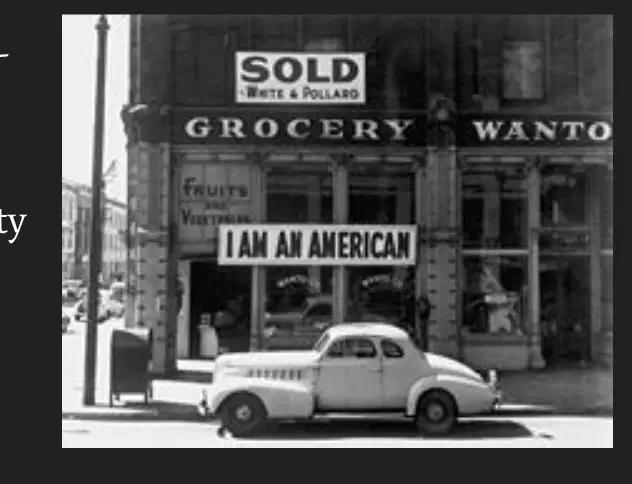
What action did the American government take against many Japanese Americans during World War II?
They granted them citizenship
They interned them in camps
They sent them to fight in Europe
They provided them with land
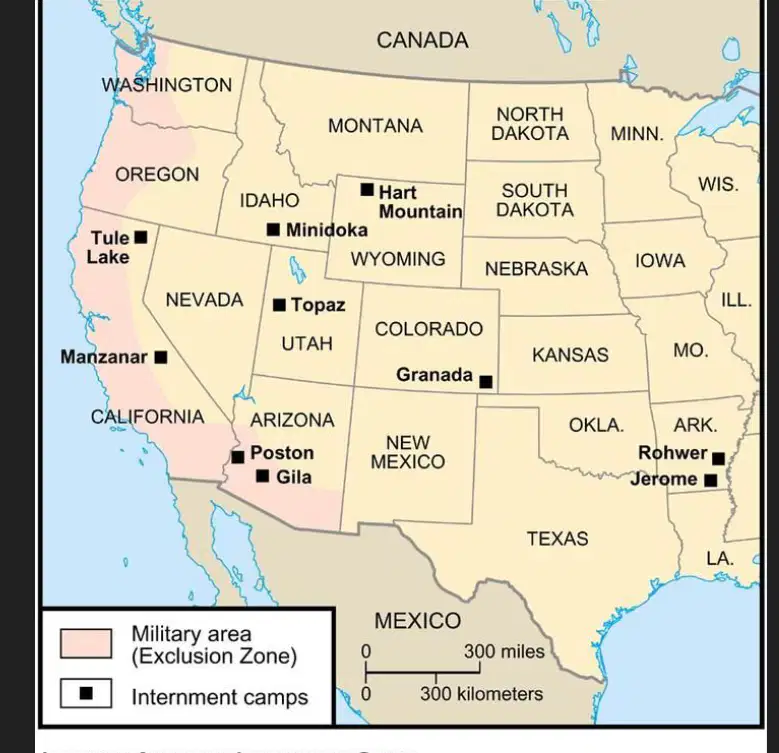
How many internment camps were spread around Western states during World War II?
10
5
15
20
How many Japanese Americans were sent to internment camps during World War II?
120,000
50,000
250,000
10,000
Almost what percentage of Japanese Americans sent to internment camps were American citizens?
65%
30%
80%
50%
Japanese Americans in internment camps lived in crowded barracks surrounded by barbed wire.
True
False
Whole families were sent to internment camps for almost 2 years.
True
False
How many US men and women served in the military during the period described on 'The Home Front'?
More than 5 million
More than 10 million
More than 15 million
More than 20 million
What was the main purpose of the War Production Board according to 'The Home Front'?
To increase consumer goods
To help factories shift from making consumer goods to making weapons, ships, and aircrafts
To reduce military spending
To close factories
In 1942, American workers produced more than ______ planes and shipped more than 8 million tons of goods. (Fill in the blank)
60,000
10,000
100,000
25,000
What did car producers start making during the war, according to 'The Home Front'?
Bicycles
Tanks and trucks
Trains
Boats
What does the term 'ration' mean as used in 'The Home Front'?
To increase production
To limit the amount of goods Americans could buy
To export goods
To create new jobs
What system was used to manage the limited goods Americans could buy during the war? (Fill in the blank)
A coupon system
A lottery system
A voting system
A subscription system
Factories led to millions of ______ opening up during 'The Home Front'.
jobs
schools
parks
hospitals
Jobs for Women: How many women entered the workforce during this period?
More than 2 million
More than 4 million
More than 6 million
More than 10 million
Jobs for Women: Why were women able to win better pay in industry during this period?
Because they were highly educated
Because they were so badly needed in industry
Because they protested
Because of government laws
Jobs for Women: Who was Rosie the Riveter?
A) A famous actress
B) An American icon for women
C) A politician
D) A scientist
Fill in the blank: Rosie the Riveter promoted women taking ______ in the workforce.
jobs
vacations
breaks
holidays
Jobs for Women: By 1944, the number of working American women increased from 12 million to ______ million.
20
15
25
30
Who refused to end segregation in the military during World War II?
Harry Truman
Franklin D. Roosevelt (FDR)
Dwight Eisenhower
John F. Kennedy
Nearly how many African Americans enlisted in the military during World War II?
African Americans served in all-black units with ______ officers during World War II.
white
black
female
foreign
Who were the Tuskegee Airmen?
A) African American fighter pilots
B) Navy officers
C) Infantry soldiers
D) Medics
By the end of the war, the Tuskegee Airmen had destroyed over ______ enemy aircrafts.
400
100
50
700
What did the 'Double V' Campaign stand for?
Victory in Europe and Asia
Victory abroad and victory at home
Victory in sports and academics
Victory in politics and business
African Americans were extremely heroic during the war despite discrimination.
True
False
What was the code name for the Allied invasion of Europe during World War II?
Operation Barbarossa
Operation Torch
Operation Overlord
Operation Market Garden
Who was appointed Commander of Allied Forces in Europe during Operation Overlord?
General George Patton
General Bernard Montgomery
General Dwight D. Eisenhower
General Omar Bradley

