wayground logo

Free Printable Worksheets

Font size

S
M
L
XL
Worksheets

AP Final Revu Quizizz

Total questions: 214

Worksheet time: 4hrs 47mins

Name
Class
Date
1.
Which of the following is a general characteristic of a nonmetal?
a)
Low Density
b)
Nonconductor of heat
c)
Brittle
d)
All of the above
2.
Which one of the following elements has the greatest ionization energy?
a)
Al
b)
Cl
c)
Br
d)
S
3.
Which of the following is true of an element in an excited state?
a)
It has emitted a photon and its energy has decreased
b)
It has emitted a photon and its energy has increased
c)
It has absorbed a photon and its energy has increased
d)
It has absorbed a neutron and its energy has increased
4.
How many electrons can occupy the n=4 shell (energy level)?
a)
8
b)
10
c)
18
d)
32
5.
How many electrons occupy the 5f subshell?
a)
2
b)
6
c)
10
d)
14
6.
63Cu is 69% of the naturally occurring isotope of Cu.  If only one other isotope is present for natural copper, what is it?
a)
59Cu
b)
65Cu
c)
61Cu
d)
62Cu
7.
Which one of the following atoms is the largest?
a)
Rb
b)
Na
c)
Ca
d)
Te
8.
Which principle states that only two electrons can occupy an orbital?
a)
Pauli Exclusion Principle
b)
Hund's Rule
c)
Heisenberg's Uncertainty Principle
d)
Newton's Principle
9.
Which one of these molecules has a trigonal pyramidal molecular geometry?
a)
SO3
b)
NF3
c)
IF3
d)
BF3
10.
A single covalent bond is formed by how many electrons?
a)
1
b)
2
c)
3
d)
4
11.
Which of the following electron domain geometries has an sp2 hybridized central atom?
a)
Trigonal Pyramidal
b)
Tetrahedral
c)
Trigonal Bipyramidal
d)
Trigonal Planar
12.
Which molecular geometry tends to be nonpolar?
a)
Bent
b)
Trigonal Pyramidal
c)
Trigonal Bipyramidal
d)
Square Pyramidal
13.
What is the name for the force holding two atoms together in a chemical bond?
a)
Gravitational force
b)
Strong nuclear force
c)
Weak nuclear force
d)
Electrostatic force
14.
Which of the following molecules is polar?
a)
SO3
b)
SO2
c)
CO2
d)
CH4
15.
An alkaline earth metal is expected to have a _____ ionization energy and a _____ electron affinity.
a)
small; large
b)
small; small
c)
large; small
d)
large; large
16.
The bond energy of a carbon-carbon double bond, when compared to the energy of a carbon-carbon single bond, is
a)
twice the bond energy of a single bond
b)
greater in bond energy than a single bond but less than twice the bond energy
c)
less than the bond energy of a single bond
d)
equal in bond energy to a single bond
17.
A water spider is able to walk on the surface of water because
a)
hydrophilic bonds hold H2O molecules together
b)
H2O has strong covalent bonds within its molecules
c)
surface tension from the adhesive properties of H2O
d)
surface tension from the cohesive properties of H2O
18.
What is the molecular geometry of Cl2CO?
a)
Tetrahedral
b)
Trigonal Planar
c)
Trigonal Pyramidal
d)
Linear
19.
Which of the following compounds will have the lowest boiling point?
a)
CH4
b)
CHCl3
c)
CH3CH2OH
d)
NH3
20.
Which of the following compounds has the highest boiling point?
a)
CH3CH2CH3
b)
CH3CH2CH2CH3
c)
CH3CH3
d)
CH4
21.
190 torr is equal to how many atmospheres?
a)
0.19 atm
b)
0.25 atm
c)
0.30 atm
d)
1.9 atm
22.
Under which conditions does a real gas behave most nearly like an ideal gas?
a)
High Temperature and High Pressure
b)
High Temperature and Low Pressure
c)
Low Temperature and Low Pressure
d)
Low temperature and High Pressure
23.
At the molecular level, ideal gases:
a)
do not occupy space
b)
occupy space
c)
do not exhibit intramolecular forces
d)
exhibit intramolecular forces
24.
A 2.50 L sample of He gas has a pressure of 0.925 atm.  What is the pressure of the gas if the volume is reduced to 0.350 L?
a)
6.61 atm
b)
0.661 atm
c)
0.130 atm
d)
0.946 atm
25.
A sample of air at 7.50 atm is heated from -53 oC to 167 oC, while the volume remains constant.  What is the final pressure?
a)
30.0 atm
b)
6.15 atm
c)
15.3 atm
d)
3.75 atm
26.
Which of the following compounds does NOT exhibit hydrogen bonding?
a)
CH4
b)
HF
c)
NH3
d)
H2O
27.
If both the pressure and temperature of a gas are halved, the volume is
a)
halved
b)
doubled
c)
quadrupled
d)
the same
28.
According to the kinetic theory of gases, the average kinetic energy of the gas particles is directly proportional to
a)
Temperature
b)
Molar Mass
c)
Volume
d)
Pressure
29.
Which gas has the greatest density at STP?
a)
CO2
b)
O2
c)
N2
d)
NO
30.
Which of the following solid compounds is insoluble in water?
a)
barium sulfate
b)
barium hydroxide
c)
barium chloride
d)
barium chlorate
31.
Which of the following elements will form a covalent network solid?
a)
C
b)
O
c)
Mg
d)
S
32.
Coca-Cola is carbonated by injection with carbon dioxide gas.  Under what conditions is carbon dioxide gas most soluble?
a)
high temperature, high pressure
b)
high temperature, low pressure
c)
low temperature, low pressure
d)
low temperature, high pressure
33.
Which substance listed below is the strongest oxidizing agent given the following spontaneous redox reaction?
Mg + Sn+2 --> Mg+2 + Sn
a)
Mg+2
b)
Sn
c)
Mg
d)
Sn+2
34.
What is the oxidation number of Br in NaBrO3?
a)
-1
b)
+1
c)
+3
d)
+5
35.
Which of the following would be a weak electrolyte in a solution?
a)
HBr
b)
KCl
c)
KOH
d)
HC2H3O2
36.
When a substance loses electrons, it is _____.  This substance is known as the _____ agent.
a)
reduced; reducing
b)
oxidized; reducing
c)
reduced; oxidizing
d)
oxidized; oxidizing
37.
Under acidic conditions, what is the coefficient in front of the Fe+2 once the reaction below is balanced?
          Fe+2 + Cr2O7-2 --> Fe+3 + Cr+3
a)
1
b)
2
c)
3
d)
6
38.
How would you detect the presence of C2H3O2-1 ions in solution?
a)
add sodium chloride
b)
add OH-
c)
add H+
d)
add silver nitrate
39.
What is the color of the lithium flame test?
a)
Pinkish red
b)
Green
c)
Blue
d)
Yellow
40.
Which ion has an orange flame test color?
a)
Copper (II)
b)
Potassium
c)
Lithium
d)
Calcium
41.
Which one of the following compounds is orange-red?
a)
iron (III) oxide
b)
calcium chloride
c)
potassium nitrate
d)
cobalt (III) oxide
42.
Type of reaction?
a)
Sythesis
b)
Decomposition
c)
Combustion
d)
Single Replacement
43.
Type of reaction?
a)
Decomposition
b)
Single replacement
c)
Double replacement
d)
Combustion
44.
Type of reaction?
a)
Sythesis
b)
Double replacement
c)
Single replacement
d)
Combustion
45.
Type of reaction?
a)
Sythesis
b)
Decomposition
c)
Single replacement
d)
Double replacement
46.

In a double replacement, ____________________

a)

The reactants are usually a metal and a nonmetal

b)

One of the reactants is often water

c)

The reactants are generally 2 ionic compounds in aqueous solutions

d)

Energy in the form of light or heat is often produced

47.

Chemical equations must be balanced to satisfy ____.

a)

The law of definite proportions

b)

The law of multiple proportions

c)

The law of conservation of mass

d)

Avogadro's principle

48.

How many moles of aluminum are needed to react completely with 1.2 mol of FeO?

2Al(s) + 3FeO(s) → 3Fe(s) + Al2O3(s)

a)

1.2 mol

b)

0.8 mol

c)

1.6 mol

d)

2.4 mol

49.

A sample of gas occupies 52.0 mL at 20℃ and 1.00 atm. What volume will it occupy at 40℃ and 1.00 atm?

a)

62.4 mL

b)

44.8 mL

c)

55.5 mL

d)

48.7 mL

50.

What is the name of H2SO4?

a)

hyposulfuric acid

b)

hydrosulfuric acid

c)

sulfuric acid

d)

sulfurous acid

51.

Which of the following shows both the correct formula and correct name of an acid?

a)

HClO2, chloric acid

b)

HNO2, hydronitrous acid

c)

H3PO4, phosphoric acid

d)

HI, iodic acid

52.

When an equation is used to calculate the amount of product that could form during a reaction, then the value obtained is called the ____.

a)

Actual yield

b)

Percent yield

c)

Minimum yield

d)

Theoretical yield

53.

A process that absorbs heat is a(n) _________.

a)

Exothermic process

b)

Polythermic process

c)

Endothermic process

d)

Ectothermic process

54.

The specific heat of ethanol is 2.44J/g˚C. How many kilojoules of energy are required to heat 50.0g of ethanol from -20.0˚C to 68.0˚C?

a)

10.7 kJ

b)

8.30 kJ

c)

2.44 kJ

d)

1.22 kJ

55.

Which is an exothermic process?

a)

Ice melting

b)

Water boiling

c)

Water evaporating

d)

Water vapor condensing

56.

Which is an exothermic process?

a)

Ice melting

b)

Water boiling

c)

Water evaporating

d)

Water vapor condensing

57.

The reaction shown is an ________________ reaction because it has a _____________ enthalpy.

a)

Exothermic; negative

b)

Exothermic; positive

c)

Endothermic; negative

d)

Endothermic; positive

58.
What is the precipitate formed when you mix silver nitrate with copper chloride?
a)
copper nitrate
b)
copper chloride
c)
silver chloride
d)
silver nitrate
59.
What is the molarity of a solution made from 325.4g of AlCl3 with enough water to make 500.0 mL?
a)
4.88 M
b)
4.880 M
c)
2.440 M
d)
2.44 M
60.
What is the name of the precipitate formed in the reaction of calcium sulfide and aluminum nitrate
a)
calcium nitrate
b)
aluminum sulfide
c)
no ppt is formed
d)
aluminum nitrate
61.
Find the molarity of 186.55 g of sugar (C12H22O11) in 250. mL of water.
a)
2.18 M
b)
2.17 M
c)
1.18 M
d)
.00218 M
62.
Which of the letters (A-D) represents the potential energy of the reactants?
a)
A
b)
B
c)
C
d)
D
63.
What kind of reaction is this?
a)
endothermic
b)
exothermic
64.
A sample of iron receives 50J of heat energy that raises the temperature of the iron 25.0°C. If iron has a specific heat of 0.10 J/g°C, what is the mass of the iron sample?
a)
25g
b)
30g
c)
20g
d)
50g
65.
žDetermine the energy (in J) required to raise the temperature of 100.0 g of water from 20.0 C to 85.0 C? The specific heat of water is 4.184 J/g°C
a)
500 J
b)
4,182 J
c)
27,196 J
d)
27200 J
66.
Which of the following is not a strong acid?
a)
HCl
b)
HF
c)
HBr
d)
HNO3
67.
Which of the following would be a weak electrolyte in a solution?
a)
HBr
b)
KCl
c)
KOH
d)
HC2H3O2
68.
When a substance loses electrons, it is _____.  This substance is known as the _____ agent.
a)
reduced; reducing
b)
oxidized; reducing
c)
reduced; oxidizing
d)
oxidized; oxidizing
69.
Find the percentage composition of  Mg in Mg3(PO4)2.
   

a)
27.75% Mg
b)
23.57% Mg
c)
48.68% Mg
d)
13.45% Mg
70.

List the strongest to weakest IMFs.

a)

Hydrogen Bond, London Dispersion, Dipole-dipole

b)

London Dispersion, Dipole-dipole,

Hydrogen Bond

c)

Hydrogen Bond, Dipole-dipole, London Dispersion

d)

Dipole-dipole, Hydrogen Bond, London Dispersion

71.

A strong IMF increases

a)

boiling point

b)

solubility

c)

flammability

d)

malleability

72.

Type of intermolecular force present in I2, Br2, and Cl2.

a)

dipole dipole

b)

H-bond

c)

London dispersion

d)

metallic

73.
Does HF have hydrogen bonding?
a)
yes
b)
no
74.

Which type of IMF is responsible for the attraction pictured above?

a)

Dipole-Dipole Interaction

b)

Ion-Dipole Interaction

c)

Hydrogen Bonds

d)

Covalent Bond

e)

Ionic Bond

75.

According to the KMT, increasing the temperature of particles will

a)

give off energy

b)

increase motion

c)

decrease volume

d)

increase pressure

76.

According the KMT, the particles are in

a)

different states

b)

organized patterns

c)

constant motion

d)

various containers

77.
a)
Gas particles are elastic and do not attract each other.
b)
The kinetic energy of gas is dependent on temperature 
c)
Energy is not lost when gas particles collide with each other or with the walls of the container.
d)
All of the above
78.

Which of the following measures the amount of particle collisions against the walls of the container?

a)

pressure

b)

temperature

c)

volume

d)

density

79.

Which of the following is an assumption of the kinetic-molecular theory of gases?

a)

Collisions between gas particles are inelastic.

b)

Gases consist of closely spaced particles.

c)

Gas particles move around in an orderly manner.

d)

The temperature of a gas depends on the average kinetic energy of the gas particles.

80.
A measure of the average amount of kinetic energy of the particles in the object.
a)
energy
b)
expansion
c)
temperature
d)
heat
81.

Convert

100oC100^oC  to Kelvin

a)

373 K373\ K  

b)

273 K273\ K  

c)

212 K212\ K  

d)

0 K0\ K  

82.

What is the boiling point of water on the Kelvin scale?

a)

0K0^{ }K

b)

373K373^{ }K

c)

100K100^{ }K

d)

212K212^{ }K

83.

Absolute zero is

a)

0 K

b)

where there is no molecular movement

c)

the coldest temperature possible

d)

all of these

84.
How are pressure and volume related?
a)
Directly
b)
Indirectly
c)
They aren't related
85.

What does "like dissolves like" mean?

a)

polar solvents dissolve in polar solutes

b)

polar solutes dissolve in polar solvents

c)

non-polar solvents dissolve in polar solutes

d)

non-polar solutes dissolve in polar solvents

86.
Oil molecules are nonpolar. What kind of solvent is required to remove an oil stain?
a)
saturated
b)
unsaturated
c)
polar
d)
nonpolar
87.

The following properties are all characteristics of ionic compounds EXCEPT

a)

high melting and boiling points

b)

soft

c)

crystal lattice structure

d)

conduct electricity when molten (melted) and dissolved in water

88.

What property of an ionic solid is being shown here?

a)

electrical conductivity

b)

solubility

c)

brittleness

d)

malleability

89.

According to the kinetic theory of matter, all matter is composed of

a)

waves

b)

particles

c)

solid material

d)

plasma

90.

Chromatography separates solutions on the basis of _____ while distillation separates solutions on the basis of ______.

a)

IMFs; solubility

b)

solubility; conductivity

c)

IMFs; boiling point

d)

boiling point; solubility

91.
Which salt is LEAST soluble at 0 ºC?
a)
K2Cr2O7
b)
KNO3
c)
 KClO3
d)
Ce2(SO4)3
92.
What is a solvent?
a)
The substance that does the dissolving in a solution.
b)
The substance that is being dissolved in a solution.
c)
The mixing of different substances.
d)
The process in which neutral molecules lose or gain electrons
93.

The dotted line is a representation of a hydrogen bond.

a)

True

b)

False

94.

Distillation separates mixtures based on differences in what property?

a)

Solubility

b)

Boiling Point

c)

Particle Size

d)

State of Matter

95.
What is the basis of a metallic bond?
a)
the attraction of neutral metal atoms.
b)
the attraction between protons and neutrons.
c)
the attraction between positive metal ions and interlocking electrons.
d)
the attraction between positive metal ions and free floating electrons.
96.
What pressure, in atm, is exerted by 2.50 L of gas containing 1.35 mol at 320 K?
PV=nRT
a)
14.19 atm
b)
16.53 atm
c)
18.42 atm
d)
22.54 atm
97.
PV=nRT
a)
Charles Law
b)
Boyle's Law
c)
Combined Gas Law
d)
Ideal Gas Law
98.

What does the variable "R" represent in the ideal gas law?

a)

pressure

b)

volume

c)

moles

d)

the gas constant

e)

temperature

99.

Which type of IMF is responsible for the attraction pictured above?

a)

Dipole-Dipole Interaction

b)

Ion-Dipole Interaction

c)

Hydrogen Bonds

d)

Covalent Bond

e)

Ionic Bond

100.

Subatomic particles with a negative charge

a)

Electrons

b)

Neutrons

c)

Protons

d)

Quarks

101.
a)

CH4CH_4  

b)

CH3FCH_3F  

c)

HFHF  

d)

PH3PH_3  

102.
a)

CH3OHCH_3OH  

b)

CH3OCH3CH_3OCH_3  

c)

HFHF  

103.
a)

A

b)

B

c)

C

d)

D

104.

Draw the complete Lewis electron dot diagram for HCOOH

105.

Draw an HCOOH molecule and a water molecule in the correct orientation that allows a hydrogen bond to form between them

106.

Which IMFs are present in acetic acid?

a)

LDFs

b)

Dipoe-Dipole

c)

Hydrogen bonding

107.

Which IMFs are present in methyl acetate?

a)

LDFs

b)

Dipoe-Dipole

c)

Hydrogen bonding

108.

Which is the best justification for the boiling point of acetic acid being 118 C while methyl acetate is 57 C?

a)

A

b)

B

c)

C

d)

D

109.

Including the types and relative strengths of the intermoecular forces present in each molecule, explain why the boiling point of CS2 is higher than that of COS.

4 lines
110.

Which of the following listed the substances in order of increasing viscosity?

a)

A

b)

B

c)

C

d)

D

111.
Flammable materials, like alcohol, should never be dispensed or used near
a)
an open door
b)
an open flame
c)
another student
d)
 a sink
112.
If a laboratory fire erupts, immediately
a)
notify your instructor
b)
 run for the fire extinguisher
c)
throw water on the fire
d)
 open the windows
113.
Approved eye protection devices (such as goggles) are worn in the laboratory
a)
 to avoid eye strain
b)
to improve your vision
c)
only if you don’t have corrective glasses
d)
 any time chemicals, heat or glassware are used
114.
If you wear contact lenses in the school laboratory
a)
take them out before starting the lab
b)
you do not have to wear protective goggles
c)
 advise your science instructor that you wear contact lenses
d)
 keep the information to yourself
115.
 If you do not understand a direction or part of a lab procedure, you should 
a)
skip it and go on to the next part.
b)
ask the instructor before proceeding
c)
try several methods until something works
d)
figure it out as you do the lab
116.
 After completing an experiment, all chemical wastes should be
a)
taken home
b)
dumped in the sink
c)
disposed of according to your instructor’s directions
d)
left at your lab station for the next class
117.
 If a lab experiment is not completed, you should 
a)
make up some results
b)
come in during lunch and finish while eating lunch
c)
sneak in after school and work alone
d)
discuss the issue with your instructor
118.
You are heating a substance in a test tube. Always point the open end of the tube 
a)
away from all people
b)
toward another classmate
c)
toward your lab partner
d)
toward yourself
119.
You are heating a piece of glass and now want to pick it up. You should 
a)
pour cold water on it
b)
use tongs
c)
pick up the end that looks cooler
d)
use a rag or paper towels
120.
You have been injured in the laboratory (cut, burn, etc.). First you should
a)
apply first aid yourself
b)
tell the science instructor at once
c)
see a doctor after school
d)
visit the school nurse after class
121.
When gathering glassware and equipment for an experiment, you should
a)
 All of the choices
b)
clean any glassware that appears dirty
c)
examine all glassware to check for chips or cracks
d)
read all directions carefully to know what equipment is necessary
122.
You want to place a piece of glass tubing into a rubber stopper after the tubing has been fire polished and cooled. This is best done by 
a)
all of the choices
b)
 twisting the tubing and stopper carefully
c)
using a towel or cotton gloves for protection
d)
lubricating the tubing with water or glycerin
123.
Long hair in the laboratory must be 
a)
tied back or kept entirely out of the way with a hair band, hairpins, or other confining device
b)
always neatly groomed
c)
held away from the experiment with one hand
d)
cut short
124.

Personal eyeglasses provide as much protection as

a)

a face shield

b)

safety glasses

c)

splashproof chemical goggles

d)

none of the above

125.
In a laboratory, the following should not be worn. 
a)
all of the answers
b)
dangling jewelry
c)
sandals
d)
loose clothing
126.
 The following footwear is best in the laboratory. 
a)
shoes appropriate for the weather
b)
open-toed shoes
c)
closed-toed shoes
d)
sandals
127.
 Horseplay or practical jokes in the laboratory are 
a)
okay if you are working alone
b)
not dangerous
c)
okay
d)
always against the rules
128.
If a piece of equipment is not working properly, stop, turn it off, and tell 
a)
the science instructor
b)
your best friend in the class
c)
the custodian
d)
your lab partner
129.
If an acid is splashed on your skin, wash at once with 
a)
weak base
b)
soap
c)
plenty of water
d)
oil
130.
When you finish working with chemicals, biological specimens, and other lab substances, always 
a)
wipe your hands on your clothes
b)
wipe your hands on a towel
c)
wash your hands thoroughly with soap and water
d)
treat your hands with skin lotion
131.
Flammable materials, like alcohol, should never be dispensed or used near
a)
an open door
b)
an open flame
c)
another student
d)
 a sink
132.
If a laboratory fire erupts, immediately
a)
notify your instructor
b)
 run for the fire extinguisher
c)
throw water on the fire
d)
 open the windows
133.
Approved eye protection devices (such as goggles) are worn in the laboratory
a)
 to avoid eye strain
b)
to improve your vision
c)
only if you don’t have corrective glasses
d)
 any time chemicals, heat or glassware are used
134.
If you wear contact lenses in the school laboratory
a)
take them out before starting the lab
b)
you do not have to wear protective goggles
c)
 advise your science instructor that you wear contact lenses
d)
 keep the information to yourself
135.
 If you do not understand a direction or part of a lab procedure, you should 
a)
skip it and go on to the next part.
b)
ask the instructor before proceeding
c)
try several methods until something works
d)
figure it out as you do the lab
136.
 After completing an experiment, all chemical wastes should be
a)
taken home
b)
dumped in the sink
c)
disposed of according to your instructor’s directions
d)
left at your lab station for the next class
137.
 If a lab experiment is not completed, you should 
a)
make up some results
b)
come in during lunch and finish while eating lunch
c)
sneak in after school and work alone
d)
discuss the issue with your instructor
138.
You are heating a substance in a test tube. Always point the open end of the tube 
a)
away from all people
b)
toward another classmate
c)
toward your lab partner
d)
toward yourself
139.
You are heating a piece of glass and now want to pick it up. You should 
a)
pour cold water on it
b)
use tongs
c)
pick up the end that looks cooler
d)
use a rag or paper towels
140.
You have been injured in the laboratory (cut, burn, etc.). First you should
a)
apply first aid yourself
b)
tell the science instructor at once
c)
see a doctor after school
d)
visit the school nurse after class
141.
When gathering glassware and equipment for an experiment, you should
a)
 All of the choices
b)
clean any glassware that appears dirty
c)
examine all glassware to check for chips or cracks
d)
read all directions carefully to know what equipment is necessary
142.
You want to place a piece of glass tubing into a rubber stopper after the tubing has been fire polished and cooled. This is best done by 
a)
all of the choices
b)
 twisting the tubing and stopper carefully
c)
using a towel or cotton gloves for protection
d)
lubricating the tubing with water or glycerin
143.
Long hair in the laboratory must be 
a)
tied back or kept entirely out of the way with a hair band, hairpins, or other confining device
b)
always neatly groomed
c)
held away from the experiment with one hand
d)
cut short
144.

Personal eyeglasses provide as much protection as

a)

a face shield

b)

safety glasses

c)

splashproof chemical goggles

d)

none of the above

145.
In a laboratory, the following should not be worn. 
a)
all of the answers
b)
dangling jewelry
c)
sandals
d)
loose clothing
146.
 The following footwear is best in the laboratory. 
a)
shoes appropriate for the weather
b)
open-toed shoes
c)
closed-toed shoes
d)
sandals
147.
 Horseplay or practical jokes in the laboratory are 
a)
okay if you are working alone
b)
not dangerous
c)
okay
d)
always against the rules
148.
If a piece of equipment is not working properly, stop, turn it off, and tell 
a)
the science instructor
b)
your best friend in the class
c)
the custodian
d)
your lab partner
149.
If an acid is splashed on your skin, wash at once with 
a)
weak base
b)
soap
c)
plenty of water
d)
oil
150.
When you finish working with chemicals, biological specimens, and other lab substances, always 
a)
wipe your hands on your clothes
b)
wipe your hands on a towel
c)
wash your hands thoroughly with soap and water
d)
treat your hands with skin lotion
151.
What do the peaks on the mass spectrum represent?
a)
anions
b)
different isotopes
c)
atoms with differing numbers of electrons
d)
numbers of electrons
152.
What do the heights of the peaks represent in the mass spectrum?
a)
number of isotopes
b)
relative abundance of each isotope
c)
average atomic mass
d)
charge:mass ratio
153.
How many isotopes are shown in this mass spectrum?
a)
1
b)
84
c)
86
d)
4
154.
What is the average atomic mass for this element?
a)
10 amu
b)
10.8 amu
c)
19.9 amu
d)
11 amu
155.
The average atomic mass rhenium, Re, is 186.21 amu. If 37.1% of rhenium has mass# = 185, what is the other stable isotope?
a)
Rhenium-183
b)
Rhenium-181
c)
Rhenium-187
d)
Rhenium-189
156.

Which is the first stage of mass spec?

a)

Acceleration

b)

Ion drift

c)

Ionisation

d)

Detection

157.

A mixture of 35Cl and 37Cl are analysed, which travels faster?

a)

35Cl

b)

37Cl

158.
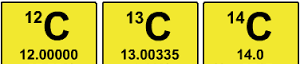
What do these isotopes of carbon all have in common?
a)
neutrons & mass number
b)
atomic number and neutrons
c)
atomic number and electrons
d)
protons, atomic number, and mass number
159.
Four isotopes of lead include lead-204, lead-206, lead-207, and lead-208.  The average atomic mass of lead is 207.2.  Which isotope of lead is likely to be the most abundant.
a)
204
b)
206
c)
207
d)
208
160.
Two isotopes of carbon are carbon-12 and carbon-14.  These isotopes differ from one another by two protons.
a)
true
b)
false
161.
Atomic Radius is...
4 lines
162.
As you move down the periodic table atoms get bigger.  This is because ____________.
a)
The atoms have more mass.
b)
The atoms have more protons.
c)
The atoms have more energy levels
d)
The atoms have more nuetrons
163.
The atom with the largest atomic radius in Group 18 is - 
a)
Ar
b)
He
c)
Kr
d)
Rn
164.
Which periodic group has the smallest atomic radius?
a)
Alkali metals
b)
Halogens
c)
Noble Gases
d)
Transition metals
165.
Ionization energy is...
4 lines
166.
Which of the following will have a lower ionization energy than Scandium (Sc)?
a)
Helium (He)
b)
Titanium (Ti)
c)
Calcium (Ca)
d)
Magnesium (Mg)
167.
Which of the following will have a higher ionization energy than arsenic (As)?
a)
Gallium (Ga)
b)
Neon (Ne)
c)
Antimony (Sb)
d)
Germanium (Ge)
168.
Electronegativity is...
4 lines
169.
Which of the following will have a higher electronegativity than arsenic (As)?
a)
Carbon (C)
b)
Neon (Ne)
c)
Antimony (Sb)
d)
Germanium (Ge)
170.
What term is used to describe "an atom's tendency to attract electrons to itself when is is chemically combined with another element"
a)
electronation
b)
electron affinity
c)
electronegativity
d)
electrolysis
171.
What term is used to describe "The energy required to remove an electron from gaseous atoms"
a)
excitation energy
b)
ionization energy
c)
polarization energy
d)
electrolytic energy 
172.
What term is used to describe "A measure of the size of an atom"
a)
chemical reactivity
b)
atomic radius
c)
energy levels
d)
orbit
173.

What is the electron configuration for this PES graph?

a)

1s22s22p63s23p2

b)

1s22s22p63s23p1

c)

1s22s22p63s23p3

d)

1s22s22p63s2

174.

Which element is represented by this PES graph?

a)

aluminum

b)

phosphorus

c)

sulfur

d)

silicon

175.

What is the electron configuration for the oxygen atom?

a)

1s22s22p4

b)

1s22s22p2

c)

1s22s22p43s2

d)

1s22s22p6

176.

What is the name of group number 1?

(a)  

177.

What is the name of group number 2?

a)

transition metals

b)

halogens

c)

metaloids

d)

alkaline earth metals

178.

where are the metalloids found

a)

far left, vertical

b)

stair step/diagonal

c)

far right horizontal

d)

at the bottom

179.

Periodic law states that the elements are arranged according to their atomic ________ so that elements with similar chemical properties are in the same ________ and properties repeat periodically.

a)

numbers, rows

b)

masses, rows

c)

masses, column

d)

numbers, column

180.

A row on the Periodic Table of Elements

a)

family

b)

period

c)

row

d)

isotope

181.

___________ is a metal that is a liquid at room temperature.

a)

Platinum

b)

Water

c)

Tin

d)

Mercury

182.

Which element has similar chemical properties as sodium but has 7 energy levels?

a)

Francium (Fr)

b)

Cesium (Cs)

c)

Rubidium (Rb)

d)

Potassium (K)

183.

Elements that have the same number of energy levels are said to be in the same ______.

a)

group

b)

period

c)

family

d)

classification

184.
Who arranged the first periodic table.
a)
Mosely
b)
Einstein
c)
Mendeleev
d)
Bohr
185.
What property did Menedleev use to organize his first periodic table?
a)
atomic number
b)
atomic mass
c)
alphabetical order
d)
chemical properties
186.

is a method of studying and measuring a specific spectrum. Often these techniques can be destructive to our samples after analysis.

(a)  

187.
What do the peaks on the mass spectrum represent?
a)
anions
b)
different isotopes
c)
atoms with differing numbers of electrons
d)
numbers of electrons
188.
Which element does this mass spectrum most likely represent?
a)
neon
b)
scandium
c)
boron
d)
sodium
189.
Which electron configuration belongs to Chlorine (Cl)?
a)
1s2s2p3s3p5
b)
1s2s2p3s3p6
c)
1s2s2p3s3p7
190.
Electrons occupy orbitals of lowest energy first is part of what electron configuration rule?
a)
Hund’s Rule
b)
Aufbau Principle
c)
Pauli Exclusion Principle
191.

There are 4 different types of subshells(orbitals). What are they?

(a)  

192.
The periodic table is organized by the number of ______ in each element's nucleus
a)
neutrons
b)
protons
c)
electrons
d)
atoms
193.

He was the British scientist who came up with th modern periodic table of elements that is based on ATOMIC NUMBER.

a)

Henry G.J Mosely

b)

J.J Thomson

c)

Erwin Schrodinger

d)

John Dalton

194.

Which electron configuration belongs to a Sodium ion (Na+)?

a)

1s2 2s2 2p6 3s2

b)

1s2 2s2 2p6

c)

1s2 2s2 2p6 3s1

d)

1s2 2s2 2p5

195.
This orbital diagram represents:  
a)
C
b)
B
c)
N
d)
O
196.

What is pH ?

a)

Concentration of Hydrogen ions

b)

Concentration of ions

197.

pH is measured on a scale from

a)

0-7

b)

5-10

c)

0-14

d)

7-14

198.

pH of 7 is _____.

a)

more alkaline

b)

more acidity

c)

neutral

199.

An acidic solution has a

a)

higher concentration of hydrogen ions than hydroxide ions

b)

higher concentration of hydroxide ions than hydrogen ions

c)

equal concentration of hydrogen ions and hydroxide ions

200.

A basic ( alkaline ) solution has a

a)

higher concentration of hydrogen ions than hydroxide ions

b)

equal concentration of hydroxide ions and hydrogen ions

c)

higher concentration of hydroxide ions than hydrogen ions

201.
Which of these colours would suggest the most acidic solution?
a)
Yellow
b)
Red
c)
Green
d)
Blue
202.

Which of these colours would suggest the most basic (alkaline) solution?

a)

Yellow

b)

Red

c)

Green

d)

Blue

203.
Is this substance acidic, basic, or neutral?
a)
Acidic
b)
Basic
c)
Neutral
204.
Is this substance acidic, basic, or neutral?
a)
Acidic
b)
Basic
c)
Neutral
205.
The pH scale 8-14 are...
a)
acids
b)
bases
c)
neutral
206.

Which food is the most acidic?

a)

bananas

b)

lemon juice

c)

orange juice

207.

Is this substance acidic, basic, or neutral?

a)

Acidic

b)

Basic

c)

Neutral

208.

An acid can be described has a substance that releases

a)

H+ ions in water

b)

OH- ions in water

c)

both answers are correct

d)

none of the above

209.
Neutralization happens when acids and base combine
a)
True
b)
false
210.

One way to define bases - they are substances that ...

a)

accept hydrogen atoms

b)

reject hydrogen atoms

211.

Litmus paper is an indicator of acids and bases, it turns red for bases.

a)

True

b)

false

212.

You test a substance with red litmus paper, and it stays red, you can you conclude?

a)

It is a base

b)

It is an acid

c)

It is a neutral substance

d)

You should test further

213.

Which of the following is a characteristic of a base?

a)

bitter

b)

sour

c)

corrosive

d)

releases hydrogen ions in water

214.

Which of the following is a characteristic of an acid?

a)

bitter

b)

slippery

c)

sour

d)

releases hydroxide ions in water