wayground logo

Free Printable Worksheets

Font size

S
M
L
XL
Worksheets

Biology Midterm Review Day 1

Total questions: 48

Worksheet time: 48mins
Name
Class
Date
1.
Which of the following statements is not part of the cell theory?
a)
Cells are the basic unit of structure and function in all living things.
b)
All cells are produced from other cells.
c)
Only animal cells are composed of cells.
d)
All living things are composed of cells.
2.
Cells are often called "the ____ of life."
a)
bread
b)
road map
c)
building blocks
d)
meaning
3.
Microscopic single-cells that do not have a nucleus or other membrane-bound organelles. 
a)
DNA
b)
RNA
c)
Eukaryotes
d)
Prokaryotes
4.

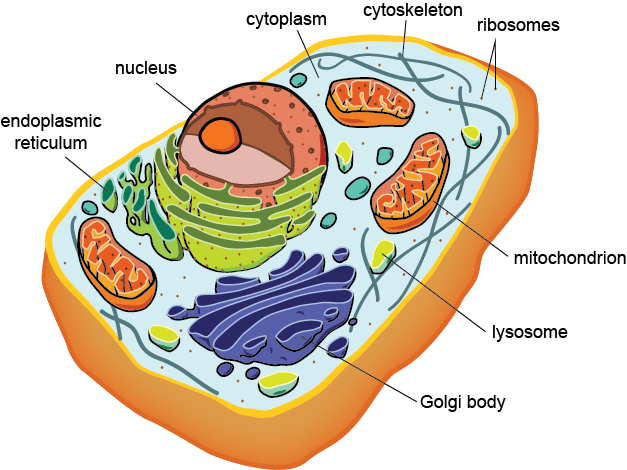
Which organelle contains DNA and controls the cell?

a)

Cell membrane

b)

nucleus

c)

nucleolus

d)

lysosme

5.

Which organelle controls what goes in and out of the cell?

a)

nucleus

b)

nucleolus

c)

cell membrane

d)

nuclear membrane

6.

This pigment is found in chloroplasts.

a)

rhodopsin

b)

chlorophyll

c)

thylakoid

d)

stroma

7.

Proteins are produced at this organelle.

a)

golgi body

b)

ribosome

c)

cytoskeleton

d)

cilia

8.

this organelle makes ATP.

a)

chloroplast

b)

mitochondria

c)

ribosome

d)

nucleolus

9.
The ____________ packages and processes material before it exports out of the cell.
a)
Vacuoles
b)
mitochondria
c)
Golgi apparatus 
d)
nucleus 
10.
Which of the following is an enzyme filled organelle that breaks down waste in the cell?
a)
lysosomes
b)
chloroplast
c)
mitochondria 
d)
Golgi apparatus 
11.
Which of the following is found inside a prokaryote?
a)
cytoplasm
b)
DNA
c)
ribosomes
d)
all of these
12.

Both Eukaryotic and Prokaryotic cells have __________.

a)

ribosomes

b)

nucleus

c)

ribosomes and a nucleus.

13.
What organisms have a cell wall? 
a)
Only Plants
b)
Only Animals
c)
Plants & Animals
d)
Animals & Bacteria
14.
Why are organelles important? 
a)
Each have a specific function
b)
Each give the cell energy
c)
Each protect the cell
d)
Each uses the sunlight
15.
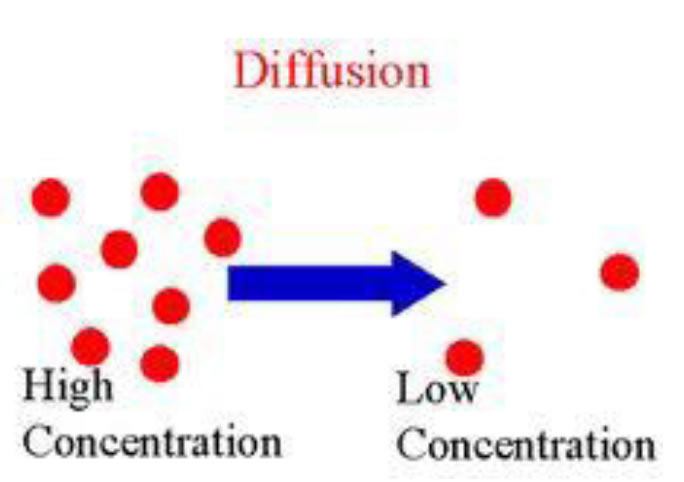
Movement of particles from high to low concentration. 
a)
Passive Transport
b)
Active Transport
16.
Osmosis is a form of ______________. 
a)
Passive Transport
b)
Active Transport
17.
a)
Passive Transport
b)
Active Transport
18.
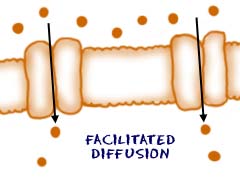
What is it called when molecules move across the cell membrane from an area of high concentration to an area of low concentration through a carrier protein?
a)
Diffusion
b)
Osmosis
c)
Active Transport
d)
Facilitated Diffusion
19.
This picture represents what type of cell transport?
a)
endocytosis
b)
exocytosis
c)
osmosis
d)
passive transport
20.
The cell below is in a _________ solution.
a)
Hypotonic
b)
Hypertonic
c)
Isotonic
21.
The cell below is in a _____________ solution.
a)
Hypertonic
b)
Hypotonic
c)
Isotonic
22.
A cell in an isotonic solution will
a)
swell
b)
shrink
c)
stay the same size
d)
impossible to tell
23.

A ______________ is a large molecule.

a)

Micromolecule

b)

Polymer

c)

Amino Acid

d)

Macromolecule

24.

Which of the following elements are found in all macromolecules? (Select all that apply).

a)
b)
c)
d)
25.

Which of the following is not one of the four major classes of macromolecules?

a)

Lipids

b)

Carbon

c)

Protein

d)

Carbohydrates

e)

Nucleic Acid

26.

Which macromolecule is used as our main source of energy?

a)

Lipids/Fats

b)

Nucleic Acids

c)

Proteins

d)

Carbohydrates

27.

Nucleic acids make up which of the two molecules listed below?

a)

FDA

b)

RNA

c)

DNA

d)

FDR

28.

This is one job proteins do not have in the body.

a)

structure for tissues and organs

b)

transport things through cell membranes

c)

speed up chemical reactions

d)

insulation

29.
Proteins are made of monomers called ___________
a)
Nucleotides
b)
Monosaccharides
c)
Amino Acids
d)
Glycerol and fatty acids
30.
Nucleotides are monomers of
a)
Carbohydrates
b)
Lipids
c)
Proteins
d)
Nucleic Acids
31.
Monosaccharides are monomers of
a)
Carbohydrates
b)
Lipids
c)
Proteins
d)
Nucleic Acids
32.
What is the ultimate ORIGINAL source of energy for living things
a)
Sugar
b)
Sun
c)
Moon
d)
Carbon Dioxide
33.
Which gas is removed from the atmosphere during photosynthesis?
a)
hydrogen
b)
oxygen
c)
nitrogen
d)
carbon dioxide
34.
What are the products of photosynthesis?
a)
water and carbon dioxide
b)
oxygen and glucose
c)
oxygen and carbon dioxide
d)
oxygen and water
35.
The stacks of disks in the chloroplast are called:
a)
Lamellae
b)
Grana
c)
Stroma
d)
Thylakoid
36.
What are the two products of the light reactions that are needed for the calvin cycle?
a)
NAD and NADPH
b)
NADP + and Glucose
c)
NADPH and ATP
d)
Oxygen and NADPH
37.
Water is split during
a)

photophosphorylation

b)

photolysis

c)
calvin cycle
d)
cell respiration
38.

Which of the following is true of the Calvin Cycle?

a)

carbon dioxide and energy (ATP and NADPH) are used to make organic compounds

b)

energy is absorbed from sunlight and converted to chemical energy stored in ATP and NADPH

c)

Occurs in the thylakoid

d)

Occurs in the cytoplasm

39.
What do the light reactions produce?
a)
ATP, NADPH, O2
b)
H2O, O2, Glucose
c)
NADP+, ADP + P, O2
d)
NADPH, H2O, ATP
40.

Where does light dependent specifically occur?

a)

thylakoid membrane of the grana

b)

Stroma of the chloroplast

c)

mitochondria

d)

nuclear membrane

41.

Where does dark reaction or light independent specifically occur?

a)

thylakoid membrane

b)

Stroma of the chloroplast

c)

Grana

d)

nuclear membrane

42.

What is important about cellular respiration?

a)

It produces energy from the sun.

b)

It forms sugar.

c)

It transforms sugar into a usable form of energy (ATP)

d)

Only plants perform this process.

43.
The splitting of the glucose molecule is called?
a)
synthesis
b)
denaturalization
c)
glycolysis
d)
dissolving
44.
Aerobic respiration is different from anaerobic respiration in that aerobic respiration needs...
a)
chlorophyll
b)
carbon dioxide
c)
glucose
d)
oxygen
45.

Which molecule isn't a high energy hydrogen carrier?

a)
FADH2
b)
NADH
c)
oxygen
46.

What are the reactants (taken into) of cellular respiration? (Mark all of them!)

a)

oxygen

b)

glucose

c)

carbon dioxide

d)

water

e)

energy

47.

Each glucose (6C) produces how many pyruvic acid (3C) molecules?

a)

5

b)

2

c)

3

d)

4

48.

What happens in the electron transport chain?

a)

NADH and FADH2 drop off hydrogens to form massive amounts of ATP

b)

pyruvic acid is formed from breaking down glucose

c)

CO2 is released and H2O and ATP

d)

glucose is broken down and ATP is formed