
 Worksheets
Quarter 2 Test
Total questions: 51
Worksheet time: 49mins
1s22s22p63s23p64s23d10
Zinc
Copper
Nickel
Germanium
[Ne]3s1
[Ne]3s23p3
[Ne]3s23p4
3
6
8
10

neon
fluorine
magnesium
argon
1s2 2s2 2p6 3s2 3p5
1s2 2s2 2p6 3s2 3p6
1s2 2s2 2p6 3s2 3p7
Hund’s Rule
Aufbau Principle
Pauli Exclusion Principle
8
10
2
4

C
B
N
O

Fluorine
Neon
Chlorine
Argon


What type of reaction is the following:
Ca + AgCl -->
Double displacement
Single displacement
Synthesis
Decomposition
Combustion
Type of reaction:
BaCl2 + Rb2PO4 ->
Single displacement
Double displacement
Synthesis
Decomposition
Combustion
Identify the type of reaction:
ZnCl2 + Mg --> Zn + MgCl2
Precipitate
Single Replacement
Double Replacement
Decomposition
Synthesis
Decomposition
Single displacement
Double displacement
Synthesis
Decomposition
Single displacement
Double displacement
N2+O2--> _NO
1
2
3
4
__Li + __Cl2 -> __LiCl
2Li + Cl2 -> 4LiCl2
2Li + Cl2 -> LiCl2
2Li + Cl2 -> 2LiCl
Synthesis
Combustion
Single Replacement
Double Replacement
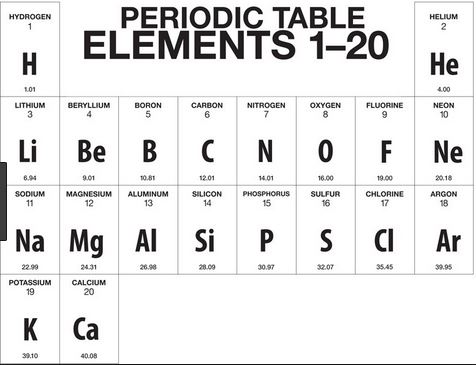
How many valence electrons does Nitrogen Have?
1 Valence electron
2 Valence electron
3 Valence electron
4 Valence electron
5 Valence electron
How many valence electrons does Aluminum Have?
1 Valence electron
2 Valence electron
3 Valence electron
4 Valence electron
5 Valence electron
Electrons occupying the outermost shell of an atom
Ions
Cation
Valence Electrons
Anion
The following elements belong to Group 1 EXCEPT.
lithium
calcium
potassium
rubidium
The elements of Group 7A are known as the ____________.
alkaline earth metals
transition elements
noble gasses
halogen
Nitrogen and phosphorus are
Non metals
Metals
Metalloids
None of the above
Which block of elements are known as transition elements?
p-block
s-block
d-block
f-block
Shiny (luster) and good conductors of electricity:
Nonmetal
Lightning
Metal
Semi-metal

Protons and neutrons are found in the center of the atom called the:
nucleus
neutron
shell
cell
Sulphur has the electronic configuration of 1s2 2s2 2p6 3s2 3p4. Choose the correct position of sulphur in periodic table.
Group 6
Period 3
p-block
Group 16
Period 3
s-block
Group 16
Period 3
p-block
Is potassium a cation or an anion?
cation
anion
Identify the compound if hydrogen and chlorine are chemically combined.
HCl
HCl7
H1Cl1
H1Cl7
The name for the ionic compound NaF is
Sodium fluoride
Nappium fluoride
Sodium fluorine
Fluorine sodiumide

A cation is where
There are more electrons than protons
Protons and electrons are equal
The number of electrons are less than the number of protons
The name for the ion O2- is
Oxygen anion
Oxide anion
Oxygen
Oxide cation

achieved octet
incomplete octet
expended octet
odd number of electrons
According to the Octet Rule, atoms of elements react with each other in order to attain ____ electrons in their outermost energy level or shell.
2
4
6
8
10
Which of the following elements GAINS 2 electrons in order to attain an octet?
cesium
magnesium
phosphorus
sulfur
iodine

The chemical bond between a metal and a non-metal will be a _____ bond.
metal
ionic
covalent
polar
KO.
K2O.
K2O2.
KO2.
NSr3
SrN
Sr2N3
Sr3N2

This is a correct Lewis dot structure for oxygen (O)
true
false

This could be the Lewis dot structure of
Mg
Cl
C
O
Which of the following is a correct Lewis dot structure?



