wayground logo

Free Printable Worksheets

NEW

Font size

S
M
L
XL
Worksheets

Chemistry Sem 1 Final

Total questions: 40

Worksheet time: 30mins

Name
Class
Date
1.

What is a positive ion called?

a)

anion

b)

cation

c)

isotope

d)

covalent

2.

What is a negative ion called?

a)

anion

b)

cation

c)

covalent

d)

isotope

3.

Which types of elements form cations?

a)

metals

b)

nonmetals

c)

metalloids

d)

noble gases

4.

Which types of elements form anions?

a)

metals

b)

nonmetals

c)

metalloids

d)

noble gases

5.

Why do elements form bonds?

a)

to get a charge

b)

so they can make friends

c)

to become stable by getting a full valence shell

d)

to become stable by increasing their mass

6.

How many electrons would a Nitrogen ion gain/lose?

a)

lose 5

b)

gain 5

c)

lose 3

d)

gain 3

7.

How many electrons would a Calcium ion gain/lose?

a)

lose 1

b)

gain 1

c)

lose 2

d)

gain 2

8.

What is the ion formed from Sulfur?

a)

S+2

b)

S-2

c)

S+6

d)

S-6

9.

A Bromine ion gains 1 electron, which of the following is the correct symbol for a Bromine ion?

a)

Br-1

b)

Br+1

c)

Br+7

d)

Br-7

10.
Which of the following is nitrate?
a)
NO-
b)
NO2-
c)
NO3-
d)
NO4-
11.

Which type of element becomes a cation?

a)

Metals

b)

Noble Gas

c)

Nonmetals

d)

Tetrel

12.

Which type of element becomes an anion?

a)

Metal

b)

Transition Metal

c)

Noble Gas

d)

Non-metal

13.
Atoms are made up of three basic parts, which are -
a)
Protons, neutrons, electrons
b)
neutrinos, protons, neutrons
c)
quarks, protons, electrons
d)
electrons, neutrons, and quarks
14.
Protons have this charge -
a)
positive
b)
negative
c)
neutral
d)
no charge
15.
Electrons have this charge - 
a)
positive
b)
negative
c)
neutral
d)
no charge
16.
What scientist is best known for his "Plum Pudding" model of the atom?
a)
J.J. Tomson
b)
Ernest Rutherford
c)
John Dalton
d)
Democritus
17.
J.J. Thomson provided evidence that an atom...
a)
is the smallest particle of matter
b)
contains negatively charged particles
c)
has an overall negative charge
d)
has an overall positive charge
18.
Rutherford's gold foil experiment provided evidence that...
a)
negative and positive charges are spread evenly throughout the atom.
b)
alpha particles have a positive charge.
c)
gold is not a dense as previously thought.
d)
there is a dense positively charged nucleus at the center of an atom.
19.

Elements in the same group or family have _____________.

a)

the same number of valence electrons and different properties.

b)

the same number of valence electrons and similar properties

c)

different number of valence electrons and similar properties.

d)

different number of valence electrons and different properties.

20.

Which class of elements are malleable, ductile, shiny when clean and polished, good conductors of heat and electricity, and reacts with acids to form hydrogen gas?

a)

metals

b)

nonmetals

c)

metalloids

d)

ions

21.

What is the name of Group 1 elements?

a)

Alkali Metals

b)

Alkaline Earth Metals

c)

Transition Metals

d)

Halogens

22.

What is the name of the elements that are unreactive and have a full octet?

a)

Halogens

b)

Noble Gases

c)

Alkali Metals

d)

Transition Metals

23.

The Halogen group has an oxidation number of -1. Why?

a)

The Halogen group will gain one electron, therefore have an oxidation number of -1.

b)

The Halogen group will lose one electron, therefore have an oxidation number of -1.

c)

The Halogen group will lose seven electrons, therefore have an oxidation number of -1.

24.

Where are metalloids located on the Periodic Table?

a)

In the s block.

b)

In the f block.

c)

In the d block.

d)

The elements that touch the staircase except aluminum.

25.

Which element has the smallest atomic radius?

a)

magnesium

b)

chlorine

c)

bromine

d)

argon

26.
Sodium (Na) and potassium (K) are in the same group on the periodic table. Based on their locations, which statement about sodium and potassium is true?
a)
Sodium is less electronegative than potassium. 
b)
Sodium has fewer energy levels than potassium. 
c)
Sodium has a larger ionic radius than potassium. 
d)
Sodium has lower ionization energy than potassium. 
27.
There are four cups of hot cocoa. The cup sizes are shown. The temperature of the cocoa in each cup is 25 degrees celsius. Which cup has the MOST thermal energy?
a)
Large cup (Trenta)
b)
Small cup (Tall)
c)
Venti
d)
All three are the same temperature so they have same thermal energy
28.
What would be the effect on the particles if more heat is supplied to the system?
a)
They would slow down
b)
They would stop moving
c)
They would speed up
d)
There would be no effect
29.
A high specific heat means...
a)
It heats up quickly with energy added
b)
It requires more energy to change temperature
30.
Which is the hottest part of the Earth?
a)
The core
b)
The mantle
c)
The crust
d)
The Asthenosphere
31.
Which two metals are thought to be found in the core?
a)
iron and steel
b)
iron and nickel
c)
gold and silver
d)
iron and copper
32.
When the early Earth began to have molten rock, layers formed because of their
a)
shapes.
b)
densities.
c)
water.
d)
No layers formed
33.
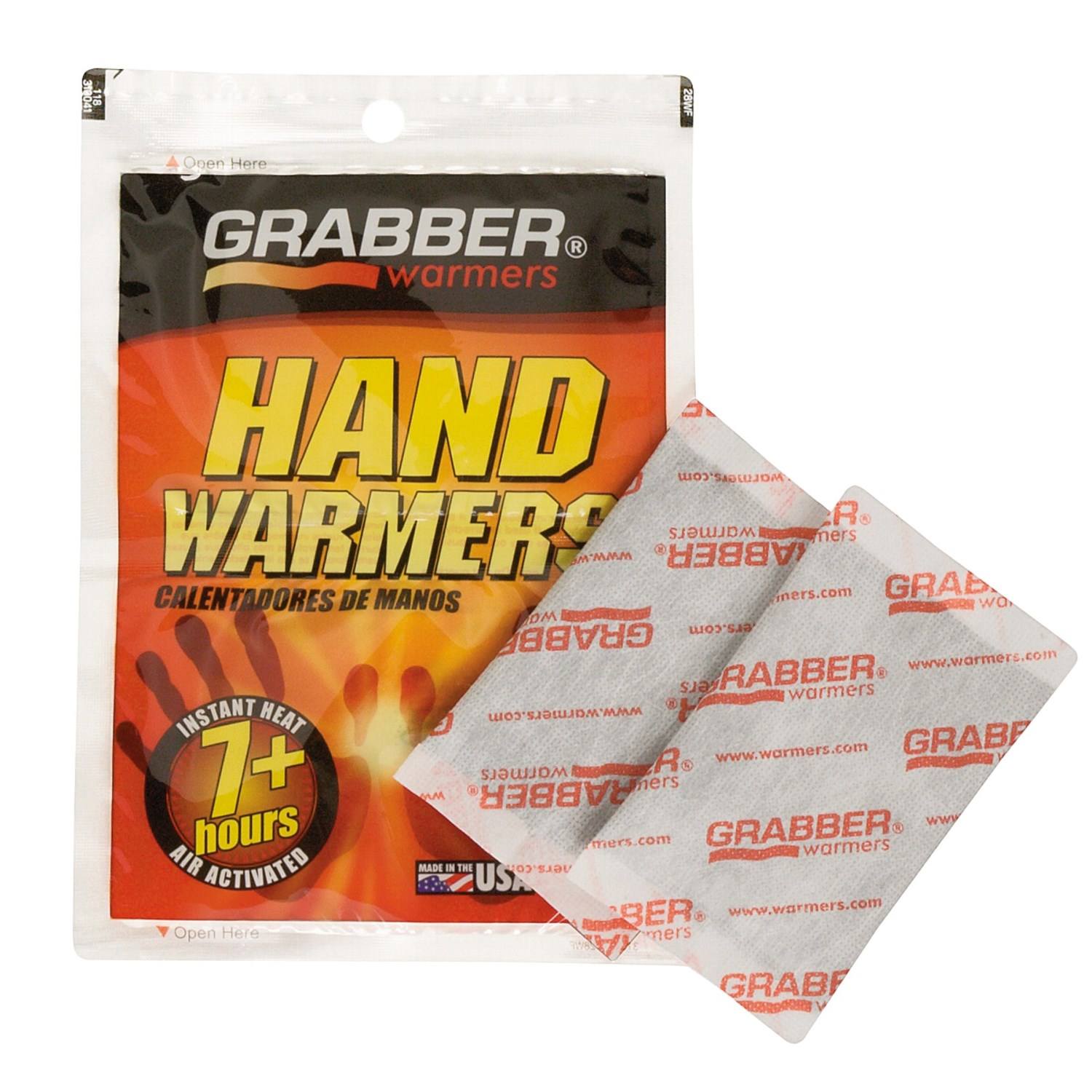
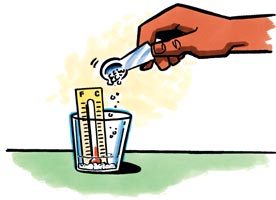
What type of reaction occurs in a hand warmer
a)
exothermic
b)
endothermic
34.
In an endothermic reaction, heat is ...
a)
taken in or absorbed
b)
given out or released 
35.

the result of burning fossil fuels

a)

carbon cycle

b)

increased atmospheric CO2

c)

phosphorus cycle

d)

atmospheric nitrogen

e)

nitrogen cycle

36.

Which of the following removes carbon from the atmosphere?

a)

Combustion

b)

Respiration

c)

Photosynthesis

37.
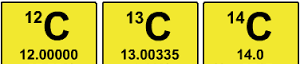
What do these isotopes of carbon all have in common?
a)
neutrons & mass number
b)
atomic number and neutrons
c)
atomic number and electrons
d)
protons, atomic number, and mass number
38.

Is table salt, sodium chloride, an element, compound, or mixture?

a)

Element

b)

Compound

c)

Mixture

39.

What type of mixture is air?

a)

Element

b)

Compound

c)

Homogeneous Mixture

d)

Heterogeneous Mixture

40.

Vegetable soup is a(n)

a)

Element

b)

Compound

c)

Homogeneous Mixture

d)

Heterogeneous Mixture