
 Worksheets
USH Unit 4 review
Total questions: 54
Worksheet time: 27mins
The President who was mostly blamed for worsening the Great Depression
Roosevelt
Wilson
Hoover
Jefferson
The name given to the programs created by FDR to address the problems across the nation was...
The Patriot Act
The Great Society
Bootstrapping
New Deal

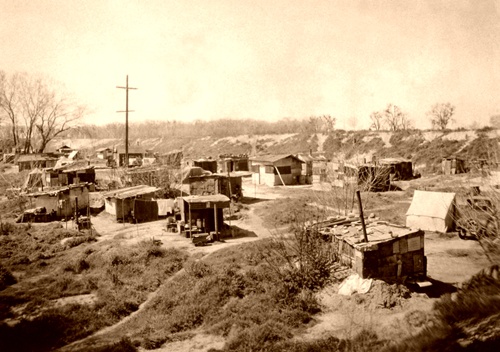
In cities across the USA people who lost their homes lived in makeshift shelters, what did people call these places?
Hoovervilles
Okies
Bonus Army Bases
Homeless Encampments
Which New Deal program makes sure that the disabled and elderly have some income?
Social Security Administration
Federal Deposit of Insurance (FDIC)
Civilian Conservation Corps (CCC)
Hooverville
Where did many farmers go because of the Depression and the Dust Bowl?
They packed up their belongings and headed west, hoping to find work and new lives in California.
Some farmers moved in with friends and neighbors after banks repossessed their farms and homes.
Farmers decided that their families would do better in a colder, wetter climate like Oregon.
Farmers didn’t move from the Plains states. They stayed on their farms and waited patiently for the drought and winds to end.
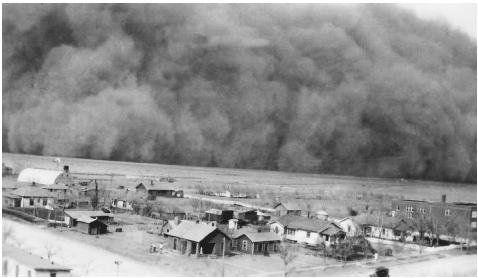
What caused the Dust Bowl?
Drought, overproduction, and strong wind storms
Swarms of insects destroying crops
Too much oil drilling in West Texas
Farmers abandoning their farms and moving to cities for jobs
Which event happened first?
The Stock Market Crash of 1929
The Great Depression
World War II begins
Prohibition
During the Great Migration, African-Americans traveled from the South to cities in the North, West, and Midwest for which of the following reasons (check all that apply):
There were better job opportunities in the North.
There was racist violence in the South.
Insects destroyed many Southern cotton crops.
Southern white supremacists paid them to leave
They heard the pizza was better in New York.
Young, trendy women of the 1920s were called...
Boppers
Flappers
Fly Girls
Grannies
As a group, the race riots that spread throughout the country following World War were called...
The Red Summer
The Big Flip-out
The Long Winter
The Blood Bath
Harlem Renaissance
was the movement of African-Americans out of the South to the North, Midwest and West
Period when alcohol was illegal
Time of creativity among African-American artists, writers, and musicians
Prohibition
was the movement of African-Americans out of the South to the North, Midwest and West
Period when alcohol was illegal
Time of creativity among African-American artists, writers, and musicians
The establishment of speakeasies in the 1920s and the rise of organized crime were unintended consequences of which federal government action?
The taxation of imported luxury goods
The deportation of suspected communist sympathizers
The prohibition of the sale of alcoholic beverages
The implementation of immigration restrictions
What was a major influence on the popularity of the flapper during the 1920s?
A decline in the number of women working in urban factories
A shift away from the traditional roles of women
An increase in the use of credit and installment plans
A decrease in crime associated with prohibition
What was one way the role of women in society changed during the 1920s?
They were granted the right to attend public schools.
They were allowed to own property
They were allowed increased participation in the political process
They were granted the right to serve in military combat units

What was the "New Negro?"
A new view on how society treated black people
A popular new style of music
A new sense of identity and dignity among African Americans
A jazz musician at the Cotton Club

The photograph above was an example of —
Reconstruction
Freeman's Bureau legislation
Jim Crow Laws
Which of the following was an effect that WWI had on the U.S.?
US would remain neutral in future wars
US was now a major world power
US took control of Germany
The US economy collapsed
What caused the economic downturn of the US economy immediately after WWI?
The war time demand for US products declined
The enforcement of Jim Crow Laws in the South
The soldiers returning from the war couldn't find jobs
The collapse of the US stock market
Another name for the Influenza of 1918 was that killed thousands of cities, forced some borders and port cities to close, and resulted in mask and quarantine mandates in some cities.
The European Virus
The Flu of World War 1
The Spanish Flu
The American Flu
How did civil liberties suffer during post-WWI in America?
Immigrants were being targeted as potential communist spies
People were being denied their freedom of religion
Strict Jim Crow laws were being implemented in the North
Alcohol was now illegal
True or False - The "loosing" of American morals led to the rise of the Fundamentalist Movement which led to a sort of "culture clash".
True
False
Which of the following people groups were faced with the possibility of living in tenements and Hoovervilles?
Migrant workers
Dust Bowl farmers
Mexican Americans
City workers
Which of the following agencies was created as part of the New Deal that helped regulate the stock market?
Federal Deposit Insurance Corporation
Social Security Act
Security and Exchange Commission
Tennessee Valley Authority
What era is characterized by economic prosperity, new cultural values, flappers, automobiles, the Red Scare, Prohibition, & nativism?
Roaring 20's
Gilded Age
Progressive Era
Imperialism
What is the name of the attitude that caused many Americans to dislike and fear communists, immigrants, and non-Anglos? They are anti-immigration!
Nativism
Racism
Communism
Isolationism

The movement of African Americans from the rural south to the industrialized cities to seek economic opportunities is called the -
Great Migration
Harlem Renaissance
Civil Right Movement
Gold Rush
What was the name of the 1920s movement that caused Americans to fear foreigners/immigrants for fear they were communists?
Anti-Communism
Red Scare
Vietnamization
Isolationizm
What is another name for prohibition?
Temperance
Abolitionist
Suffragette
Muckraker
A place where alcoholic drinks were sold and consumed illegally during Prohibition
Speakeasy
Flapper
Tavern
Saloon
Conducted by the U.S. Department of Justice in an attempt to arrest foreign anarchists, communists, and radical leftists, many of whom were subsequently deported
Cold War
Palmer Raids
McCarthyism
2nd Red Scare
Sensational 1925 court case that exemplified the traditional vs. modernism debate and focused on teaching evolution vs. creationism in schools
Sacco and Vanzetti Trial
Scopes Trial
Schenck vs. U.S.
Plessy v. Ferguson
The banning of the manufacture, sale, and possession of alcoholic beverages
Prohibition
Speculation
Speakeasy
21st Amendment

Insured bank deposits of up to 5,000. This helped to bring confidence back into the banks.
FDIC
SEC
AAA
TVA

Safer stock investments
FDIC
SEC
AAA
TVA

Financial Aid to farmers who were encouraged to burn crops and slaughter livestock to reduce supply and increase demand.
Agricultural Advancement Act
Tennessee Valley Authority
Agricultural Adjustment Act
Agricultural Authority Act

Built a series of dams in the TN River Valley to control flooding and generate power
Agriculture Adjustment Act
Lexington Electric
Hoover Dam
Tennessee Valley Authority

Jobs for 2 million young men. Replanted forests and built trials
Civilian Conservation Corps
Citizen Control Corporation
National Recover Administration
Federal Emergency Relief Act
Built dams, bridges, power plants, hospitals, schools, and roads.
Civilian Conservation Corps
National Recovery Administration
Public Works Administration
Federal Emergency Relief Act

Which of these governed industries setting a minimum wage and minimum prices for goods?
Public Works Administration
Tennessee Valley Authority
National Goods and Services Administration
National Recovery Administration

Which of these started during the New Deal?
minimum wage
free school lunch
a ban on child labor
all of the above

Which New Deal program gives money to old people after they retire?
CCC
FDIC
Social Security

Rugged Individualism meant that...
people should solve their own problems without any help from the government
government should take more responsibility for making the economy fair and stable

