
 Worksheets
Pre-AP World History 1st Semester EXAM REVISION
Total questions: 50
Worksheet time: 28mins

The image depicts a significant historical figure. Based on the attire and symbols in the portrait, identify who this person might be and their role in history.
Napoleon Bonaparte, leader of the French Revolution
Peter the Great, Tsar of Russia and modernizer of the Russian Empire
Louis XIV, King of France during the Age of Absolutism
Frederick the Great, King of Prussia and military strategist
Which of the following best describes the '3G's' that motivated European explorations during the early modern period.
Goals, Governance, and Geography
God, Gold, and Glory
Growth, Generosity, and Grit
Goods, Gardens, and Guilds
___________________ was a Portuguese explorer who led the first expedition to circumnavigate the globe.
Henry II
Harry the Navigator
Ferdinand Magellan
Christopher Columbus
What is the Silk Road?
Asia Overland trade route from Europe to Asia
Sea route
Road made of silk stretching from Europe to
A route circumnavigating the globe
What wiped out 90% of Native Americans between 1492-1600?
Cold weather
War
Disease
Work

This is a political map of __________________ ?
Iberian Peninsula
China
France
The Americas
In the Triangular Trade what traveled out of Europe:
Manufactured goods
New materials
Cash crops
Enslaved peoples
An economic practice of European powers that used colonies for the benefit of the mother country is known as:
Middle Passage
Mercantilism
Cash Crops
Triangular Trade
Who sponsored Columbus' voyages?
The King and Queen of Spain
The King and Queen of France
The King and Queen of Portugal
The King and Queen of England
The Line of Demarcation split the world in two for:
Portugal and the Dutch
China and Spain
Spain and Portugal
The Dutch and China
The section of the Triangular Trade that brought enslaved people to the Americas:
Middle Passage
Medium Passage
Last Passage
First Passage
Westernization allows indigenous people to keep their culture.
True
False
Which countries make up the Iberian Peninsula?
Spain and Portugal
Brazil and Colombia
China and Japan
Germany and England
The Ottomans elite guard comprised of children enslaved from the local Christian population:
Sultan
Successor
Janissaries
Indigenous
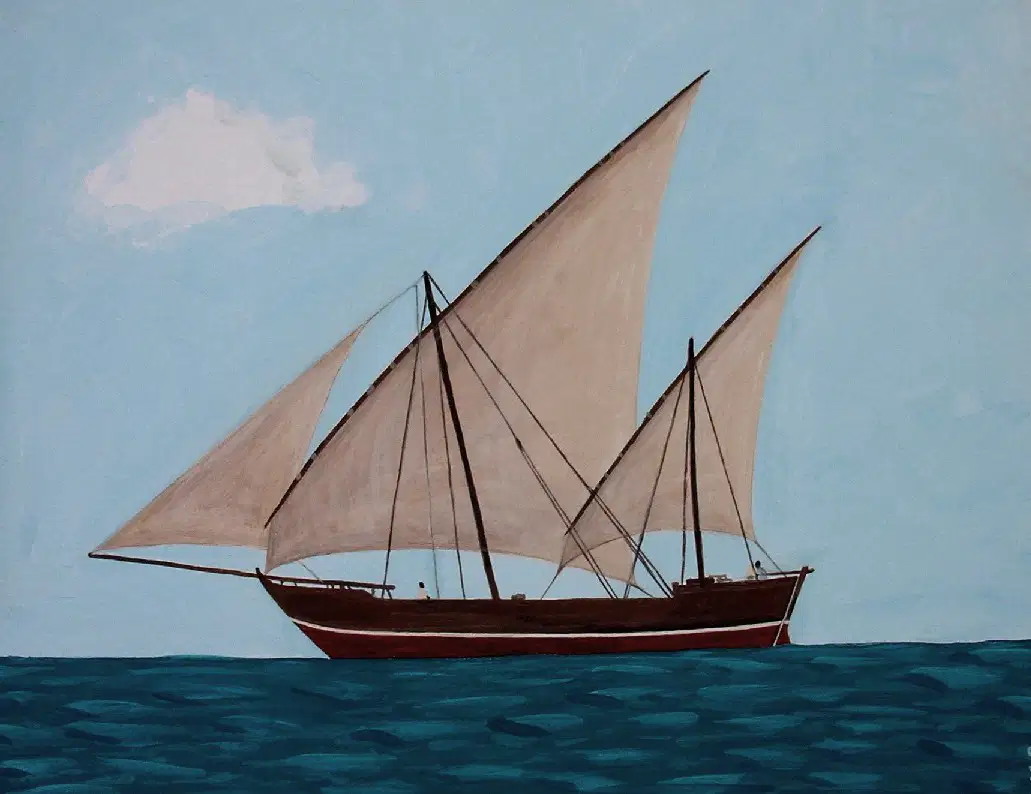
What is a defining feature of Lateen sails depicted in the image?
Rectangular shape and vertical position
Triangular shape and slanted design
Circular shape and tethered to the mast
Flat shape and used only for fishing boats
Who established the formal government of the Ottoman Turks?
Orhan
Shah Osman I
Suleman
Seljuk
Which significant achievement is associated with Suleiman the Magnificent's reign?
The invention of the printing press
The codification of secular legal systems
The discovery of new continent
The development of steam power
Which of the following regions was NOT part of the Ottoman Empire at its height?
Egypt
Greece
India
Hungary
What was the name of the legal system codified by Suleiman the Magnificent?
Sharia
Kanun
Feudalism
Democracy
Which event marked the official end of the Ottoman Empire?
The establishment of the Republic of China
The outbreak of World War I
The Battle of Vienna
The signing of a contract
Shah Osman I ruled the Ottoman Empire:
1299-1324
1334 -1356
1446-1497
1450-1498
During whose reign did the Ottoman Empire experience its most glorious period?
Shah Osman I
Suleiman the Magnificent
Mehmed II
Selim III
What was one of the notable achievements of the Ottoman Empire?
Advances in medical instruments
Development of nuclear technology
Invention of the steam engine
Exploration of the Americas
Which emperor sponsored Zheng He's voyages?
Chong Le
Yung Le
Shong Le
Han Le
What is the main effect of Zheng He's voyages?
Establishment of trade networks
Establishment of an Empire
Establishment of a Dynasty
Establishment of Silk Road
What is the main cause of Ming Dynasty's decline?
Loss of territory
Overpopulation leading to famine
Loss of interest
Loss of land reforms
The Qing Dynasty was actually a maritime power, focusing on naval expansion.
True
False
Choose the correct hierarchical social structure of the Qing Dynasty:
Han Chinese at the top, followed by other ethnic groups
Ethnic Chinese groups at the top
Manchus at the top, followed by other ethnic Chinese groups, with Han at the bottom
Only Manchus and Han
When was the Qing Dynasty established:
1644
1645
1744
1746
Which territories were incorporated into China during the Qing Dynasty's rule?
Tibet and Mongolia
Mongolia only
Tibet, Xinjiang, and Mongolia
Tibet only
What was Peter the Great's age when he became he emperor?
8
9
10
11
What was one of Catherine the Great's most significant achievements during her reign as Empress of Russia?
The modernization of the Russian military and navy
Expanding Russian territory and promoting Enlightenment ideals
Building the St. Basil's Cathedral as a symbol of her reign
Leading Russia through the Napoleonic War
The image depicts a Qing emperor in traditional attire. What feature of this painting best reflects the identity of the Qing dynasty?
The detailed natural landscape emphasizing harmony with nature.
The Mongolian-inspired attire, reflecting the multicultural influence of the Qing court.
The focus on the rabbit symbolizing fertility and prosperity.
All of the above.
Who established the Safavid Empire?
A. Shar Shah Suri
B. Shah Ismael I
C. The Ottomans
D. The Persians
What title did Ismael assume as the ruler of the Safavid Empire?
A. Sultan
B. Khalif
C. Shah
D. Emperor
The Safavid Empire is primarily associated with which branch of Islam?
A. Sunni Islam
B. Shia Islam
C. Sufi Islam
D. Ismaili Islam
What is the main difference between Sunni and Shia Muslims?
A. The language they speak
B. Their belief about the rightful leader's lineage
C. The number of daily prayers
D. Their holy scriptures
Which city became the capital of the Safavid Empire under Shah Abbas?
A. Israel
B. Isfahan
C. Baghdad
D. Tehran
What was a significant economic product of the Safavid Empire?
A. Spices
B. Persian carpets
C. Gold
D. Wheat
The Safavid empire's rival was:
A. The Russian Empire
B. The Ottoman Empire
C. The Roman Empire
D. The Byzantine Empire
What was one of the main challenges faced by the Safavid Empire?
A. Lack of economic resources
B. Religious tensions
C. Active volcanoes
D. Natural disasters
What was the name of the Czarina who ruled over the Russian Dynasty for 34 years and brough prosperity to the land?
A. Catherine II
B. Carmina II
C. Carla II
D. Carlos II
When did the 34 years of prosperity start in the Russian Dynasty?
A. 1762
B. 1872
C. 1562
D. 1229
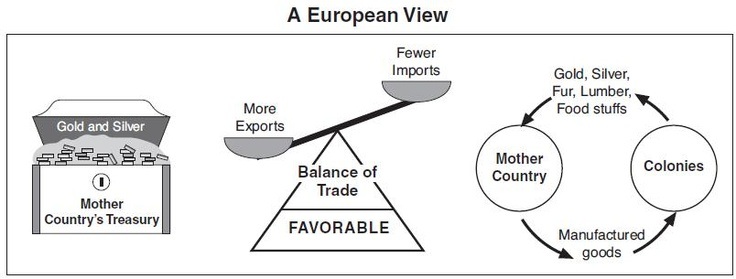
What is mercantilism?
A system where a mother countries gains money and power from natural resources that come from its colonies.
where colonies trade gold and silver with each other.
Wars that start over money.
Plantation colonies trading slaves for money.

Which term means a good to sold another country?
Import
Export

The impact of mercantilism was that
The rate of slavery in the Americas went down
Trade was limited in the Atlantic
The Colony grew wealthy
The Mother Country grew wealthy

Wood, water, corn - are all from the earth. These are called: ____________.


Mercantilism is when
Raw materials were bought cheaply by the colony and sold as refined materials to the 'Mother Country'
Raw materials were bought cheaply by the 'Mother Country' and sold as refined materials to the colony
When merchants sold their goods for high prices to working class citizens
When working class citizens were forced to sell their products to make profits
What did the British IMPORT from the colonies?
Raw materials
Finished Goods
Gold
Slaves

