
 Worksheets
7th Grade Unit 4 Colonies Review
Total questions: 98
Worksheet time: 53mins

1. The Quakers of Pennsylvania believed in religious toleration. This meant that they
Allowed others to practice their own relgion
refused to join either side in a war
supported government control of religion
required children to attend religious school

Agricultural good grown in order to be sold for money as an export of the colonies.
Improt
Staple Crop
Cash Crop
Indentured Worker

1. First permanent English settlement in North America to succeed.
Plymoth, Massachusetts
Roanoke, Virginia
James Town, Virginia
Salem, Massachusetts
What was the major reason the original settlers of Plymouth Colony, Maryland, and Pennsylvania came to America?
to convert Native American Indians to Christianity
to search for gold and silver
to secure freedom from religious persecution
to bring spices to the New World

1. Mayflower Compact, and the Virginia House of Burgesses, Fundamental Orders of Connecticut were colonial efforts to
practice representative government
form a union of all the colonies
raise colonial militias
encourage colonial trade

Workers who sold their labor for a period of time, in exchange for passage to the colonies in America.
Blue Collar Worker
Quaker
Indentured Servant
Slave

During the first half of the 1800s, geographic factors influenced the economy of the New England Colonies by
increasing the region’s reliance on slave labor
supporting rice and indigo farming
promoting the growth of trade and expansion of shipping industry
encouraging the establishment of large plantations

The original settlements in the Thirteen British Colonies were all located
East of the Appalachian Mountains
Along the Gulf Coast
On the Great Plains
West of the MIssissippi River
Why did most colonial farmers settle near oceans or coastal waterways?
Fewer Native American Indians lived there.
Transportation of exports and imports was easier.
Local representative governments paid farmers to do so.
There were fewer problems with removal of trees and rocks.
Which religious group is correctly paired with the colony its members helped establish?
Puritans → Texas
Catholics → California
Pilgrims → North Dakota
Quakers → Pennsylvania

Merchants in England supported the setting up of colonies because they hoped colonies would
Remove some of the population from England
Provide competition for goods made in England.
Weaken the power of the king.
Send raw materials to England and buy finished goods from England.

Which of the following is an effect/impact of the enduring issue of scarcity?
Scarcity causes the price of products to decrease
Scarcity causes the price of products to increase
Scarcity allows people to have unlimited resources
Scarcity allows people to have most things they want
In the thirteen British colonies, voting rights were limited to
White Men and Women
All Men
White Property Owning Men
White Men
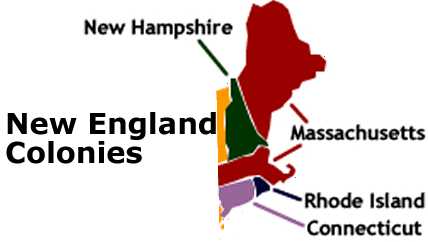
Massachusetts (Plymouth & Mass. Bay Colony), Connecticut, Rhode Island, New Hampshire
New England Colonies
Middle Colonies
Southern Colonies
Virginia, Maryland, North Carolina, South Carolina, Georgia
New England Colonies
Middle Colonies
Southern Colonies
A paper giving certain rights to a person or group.
Parliament
Charter
Joint-Stock
Mercantilism
Document created and signed by the Pilgrims and other colonists aboard the Mayflower used to make laws for the benefit of the whole colony.
Charter
Joint Stock Company
Mayflower Compact
Which of these items is not usually considered a primary source?
diaries
encyclopedias
official documents
eyewitness account
These early colonial settlements were similar in that each was located
Jamestown, founded in 1607
Plymouth colony, founded in 1620
New Amsterdam, founded in 1625
Base of a Mountain
On the Great Plains
In Coast Areas
European exploration of the Americas resulted in all of the following EXCEPT the
spread of European diseases to the Native Americans
development of unified resistance movements among the Native Americans
introduction of new products to the Americas
introduction of new products to Europe
French, Spanish, and British colonies in North America were most similar in that they all
provided a haven for victims of religious persecution
permitted representative legislative assemblies
were founded and developed by private charters
subjected to mercantilist policies
Primary sources of information about the colonial era would include a
recent newspaper article commemorating the birth of Patrick Henry
textbook passage about the settlement of Pennsylvania
journal entry by a settler in the Massachusetts Bay colony
television program about the Declaration of Independence
Which of the following statements about indentured servitude is true?
Indentured servitude was a system that exchanged voyage to the New World for a fixed number of years of service to a master or owner
Indentured servitude never attracted too many people because its terms were too harsh
Indentured servitude was the means by which most Africans came to the New World
Indenture was one system used to distinguish between house slaves & field slaves
One way in which the Aztecs, Incas and Mayas were similar is that they
Traveled to the Western Hemisphere from Africa
Had developed advanced civilizations before the arrival of Columbus
Settled in the desert of the southwestern United States
Left no evidence to help us understand their cultures
Which phrase most accurately defines the term culture?
The artifacts left by ancient peoples
The interaction of plants and animals within a natural environment
A way of life shared by member of a society
A firsthand account of an event


Why did the colonists settled in the New World?
Political
Economic
Religious
All the above
Maryland was considered a middle region colony?
True
False
New England Colonists were?
Puritans
Quakers
Patriots
Enslaved Africans
Finish the sentence. The 13 Colonies were _________
smaller pieces of land under the control of another country
A state
A community of plants and animals living close together

Which color reflect the Middle Colonies?
Green
Purple
Tan
Red
Identify the Southern colonies
Rhode Island and Connecticut
Pennsylvania & New York
New Jersey & Delaware
Maryland & Virginia

Where is Massachusetts?
A
B
C
D

Where is Georgia?
A
T
R
Z

Where is New Jersey?
F
G
T
M

Where are the Carolinas?
A
R and M
H and K
K and M

Where is New York?
C
A
F
M

Where is Virginia?
C
K
F
H

Where is Pennsylvania?
R
F
Z
T

Where is Maryland?
G
T
E
Z

Where is Rhode Island?
A
T
D
G

Where is Delaware?
T
Z
E
G

Where is New Hampshire?
H
B
M
K

Where is Connecticut?
A
M
E
R

Choose the colonies that were part of the New England colonies.
Rhode Island
Georgia
New Hampshire
Massachusetts
Connecticut

Choose the colonies that were part of the Southern Colonies.
Georgia
Virginia
Pennsylvania
Carolinas
Maryland

Choose the colonies that were part of the Mid-Atlantic or Middle Colonies.
Virginia
New York
Delaware
Pennsylvania
New Jersey
Choose all of the following reasons for English Colonization
Religious Freedom (God)
Exploring/Fame (Glory)
Expand English Power (Imperialism)
Money/Trade (Gold)
What is a colony?
a person who is moving to a nation
A settlement in a new area
A country's main area of people
A native nations people
1st English attempt at Colonization in the New World was known as
The Perfect Colony
The First Colony
The Last Colony
The Lost Colony
In a way to replace Indentured Servants, this institution was brought to the New World in 1619?
Capitalism
Joint-Stocks
Slavery
Socialism
Check the following sections of the 13 colonies below
Northern
New England
Southern
Middle
Fishing, Shipbuilding, and Whaling were a huge part of which of the followings economy?
Northern
Southern
New England
Middle
Industries and grain crops were a huge part of which of the followings economy?
Middle
Southern
New England
Georgian
Cash Crops on big plantations were a huge part of which of the followings economy?
Massachusetts
Southern
Middle
New England
Choose the following colonies that were part of New England
Georgia
Rhode Island
Connecticut
Massachusetts
Choose the following colonies that were part of Middle Colonies
Pennsylvania
Delaware
Virginia
New York
Choose the following colonies that were part of Southern Colonies
Virginia
South Carolina
Georgia
Rhode Island
This section of colonies was known for being rocky and hard to plant big crops
New England
Southern
Middle
Which section of colonies survived on the labor of mostly slaves?
New England
Middle
Southern
Which section of colonies was also known as the "breadbasket" colonies?
New England
Middle
Southern
ALL of the following could be cash crops EXCEPT
Cotton
Sugar
Tobacco
Fish
Roger Williams was against taking Native American land.
true
false
The land the became known as the colony of New York was first owned by what country?
(a)
Who founded the colony of Massachusetts Bay?
Pilgrims
Quakers
Puritans
Anne Hutchinson founded the colony of
Providence
Boston
Portsmouth
Much of the fighting between Native Americans and settlers was about what?
(a)
Which settlement means "brotherly love?"
Boston
Philadelphia
Portsmouth
Who founded Georgia?
James Oglethorpe
John Winthrop
William Bradford
What was the last colony founded?
Carolina
New York
Georgia
Which group of colonies was mostly started for economic reasons?
New England
Middle
Southern
Lord Baltimore founded which colony?
Rhode Island
Pennsylvania
Maryland
South Carolina
Which colony was founded as a refuge for Catholics?
North Carolina
Delaware
Maryland
Besides the English and the Dutch, what other country previously claimed land in the colonies?
Sweden
Iceland
Australia
Italy


