
 Worksheets
AP African American Studies First Semester Review
Total questions: 71
Worksheet time: 46mins
Which African Civilization was a Christian Kingdom?
Axum
Zimbabwe
Timbuktu
Ghana Mali, Songhai

Where did the Bantu Migrations migrate to?
The Bantu people migrated north and east to the Nile River and the Arabian Peninsula.
The Bantu people spread south and east from their Central African homelands.
The Bantu people moved west along the coast of Western Africa.
The Bantu people moved north into the Sahara to cash in on the salt trade.

Why is the Bantu migration so important in the study of Africa?
During the Bantu migration, the people refused to intermarry with Arabs or Muslims
The Bantu migration brought language and iron tools across Africa and allowed for better living conditions.
The migration was a force of action by the African government in the North
The migration led to the first settlements in the Sahara

1. Ghana’s ___________________ made it the center of an enormous trading empire.
grasslands
iron ore
gold
sugar

Which of the following goods were NOT exported from Africa?
Gold
Slaves
Ivory
Silk
The Muslim leader of Mali who supported education, spread Islam, and made a famous pilgrimage to Mecca was
Sundiata
Mansa Musa
Askia the Great
Sunni Ali

As a result of Mansa Musa's famous pilgrimage to Mecca, Mali's capital of ___ became a center of learning and culture, drawing in artists and architects from all over the world.
Timbuktu
Cairo
Mecca
Aksum
Western African empires gained wealth because of the trading of what resources?
Tobacco
Dyes and Sugarcane
Silver and Corn
Gold and Salt
The Swahili Coast emerged as a major civilization due to
growing cash crops
being a center of the Indian Ocean trade
being a Christian kingdom
being an Islamic empire
Which of the following is a key idea about the culture of the Swahili coast?
It has a culture centered around agriculture and the Bantu language.
It has a culture based on Christianity and Arabic.
It has a unique culture that is a mix of languages and religions from various parts of the world.
It has a culture heavily influenced by Europeans.
What religion is practiced on the Swahili coast?
Islam with its own Swahili practices
Hinduism with its own Swahili practices
A religion introduced by traders and immigrants
The first and third answers are correct

Why were there so many myths surrounding who built Great Zimbabwe?
No one could remember why they had built it
There were no books to base the knowledge on
Africans fat out refused to talk about it
Europeans did not believe Africans were capable of complex construction.
Which of the following is NOT a reason for the walls of Great Zimbabwe?
Symbol of Wealth and Power
Separation of rich and poor
Defense
Expression of art
Monument to the gods
The Kongo Kingdom had a trade agreement to supply slaves for what European nation?
Portugal
England
Spain
America
At first, the relationship between Portugal and Kongo kingdom was friendly. Why did it turn bad?
not enough people became Christians in the Kongo kingdom
Portuguese were illegally taking slaves from Kongo
Portuguese thought the Kongo people were hiding gold
the Portuguese accused the Kongo people of stealing horses and guns
How did slavery impact the Kongo kingdom? (more than one answer!)
it weakened the kingdom
it led to war
led to depopulation of the kingdom
it made the Portuguese rich

What is a griot?
pilgrimage to Mecca
group of traders that travel together
storytellers who pass down oral history
exchanging of goods without direct contact
The part of the slaves' journey aboard the ship between Africa and the Americas was known as the ...
Bermuda Triangle
Northwest Passage
Middle Passage
Triangular Route
The majority of slaves that were brought to the American colonies were brought to ...
work in mines.
work on plantations.
build ships.
work as house servants.
What were the main crops that demanded slave labor in the Americas?
cotton, wheat, corn
corn, beans, squash
sugar cane, cotton, wheat
sugar cane, cotton, tobacco
What did Europeans usually exchange for Africans?
raw goods
silver and jewels
silk and cotton
manufactured goods, gold, and guns
Which of the following contributed most to the expansion of the transatlantic slave trade during the 1700's?
a lack of skilled labor in the American colonies
demand for slaves in the American colonies that produced cash crops
demand for slaves in the industrialized American colonies
demand for house servants in teh American colonies
Why did so many people die on the Middle Passage?
Slave traders usually purchased unhealthy individuals
Disease and malnutrition
Overloaded ships often sank
Successful rebellions on board ships took many lives

How were the conditions of the slave boats during the Middle Passage?
The lodgings were clean and sanitary for the slaves
The slaves were well fed and clothed
The conditions were dirty and unsanitary for the slaves
All of the above
The Atlantic Slave Trade occurred between which centuries?
14th and 18th
15th and 19th
16th and 20th
17th and 21st
The name of a Spanish ship which landed in New York which had been taken over by slaves was called the ________________.
Captain America
the Slave Ship
Titanic
Amistad
What experiences does Olaudah Equiano’s slave narrative describe?
the loss of African cultural traditions
the fight to abolish slavery
the observations of a slave merchant
the horrors enslaved people faced during The Middle Passage
What was Equiano’s main purpose in writing his narrative The Interesting Narrative of the Life of Equiano?
to entertain readers with dramatic episodes in his life
to sway public opinion about slavery
to contrast life in Africa and life in Barbados
to provide detailed information on 18th century sea travel

How did cotton relate to slavery?
The desire to grow more cotton led to increased slavery
It did not
All enslaved people were required to grow cotton
Cotton was traded for slaves in Africa

They gave enslaved people some freedom.
They refused to take enslaved people back when they were captured.

Which of these was the most common way enslaved people resisted slavery.
by finding ways to quietly reaffirm their humanity

Why might an enslaved person choose to NOT revolt?

What is the Underground Railroad?
Secret tunnels that help enslaved people escape
Network of allies and safe houses that helped enslaved people escape
One single path that enslaved people followed
a choo choo train

This machine led to an increase in the demand for slaves, and a boom to the southern economy...
washing machine
cotton gin
light bulb
Why did Southern states pass slave codes?
to satisfy the Northern states demand of cotton
to ensure all slaves attend church regularly
to control slaves and prevent rebellion's
Slave codes allowed all slaves to attend school for education
This was a form of labor utilized by colonists in which Europeans would pay for passage to the New World through contract labor.
Indentured Servitude
Headright System
Primogeniture
Encomienda System
Which of the following statements does not accurately describe slavery in the North American colonies?
slaves in Georgia & South Carolina's coastal region primarily worked on large plantations in dangerous and brutal conditions
in Virginia, slaves made up a minority of the population and had varied jobs
in New England, slaves worked mainly in urban areas and ports
strict slave laws prevented slave revolts through the 1700s
American colonists began to use African slaves primarily because
the papacy created an edict calling for the use of African slaves in Catholic-controlled lands
the African slaves were more accustomed to agriculture than the Native Americans
the Native Americans were decimated by European disease, while the Africans developed immunity
the practice of indentured servitude was outlawed by the pope
Which of the following is the most accurate statement about the southern colonies during the late seventeenth century?
the economy was equally mixed among farming, trade, and small manufacturing
African slaves were strictly segregated from white indentured servants
the economy was dominated by skilled labor in port towns
tobacco, rice, and indigo served as major staple crops

What purposes did singing songs serve in the lives of enslaved people? Mark all that apply.
Raise spirits during work
Express their sorrow and suffering
Convey secret messages
Prove to the master that they could read
Seek comfort in God
A law enacted as part of the Compromise of 1850, designed to ensure that escaped slaves would be returned into bondage.
Black Codes
Jim Crow Laws
Fugitive Slave Act
Segregation
Slave owners justified slavery by saying......
African Americans could not take care of themselves.
African Americans would become violent if set free.
Slavery is in the bible, so it was acceptable

What did the Supreme Court rule in the Dred Scott v. Sandford case?
Dred Scott was set free since he lived in a free state.
Dred Scott was property and not a citizen.
Dred Scott's owners were guilty of holding him against his will and were arrested.
Dred Scott's owners had to pay Dred Scott for work he completed.
This African American writer and abolitionist encouraged enslaved people to rebel. He was so successful that the state of Georgia put a bounty on his life.
Douglass Adams
David Walker
Nat Turner
John Horse

Societies of self-liberated enslaved people that were formed on the periphery of other societies and organized resistance and aided other slaves in escaping were known as ___
Diaspora
Abolitionist societies
Maroon Societies
Indentured servants
Where did the Stono Rebellion happen?
North Carolina
South Carolina
Tennesee
Florida
Where were the enslaved participants in the Stono Rebellion headed to?
Spanish Florida
Mexico
French Canada
Haiti
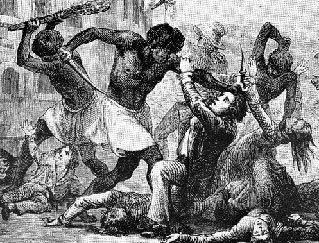
Why did the Haitian Revolution start? (Choose 2)
The revolution started because of slaves wanting social equality and freedom.
The Haitian Revolution was influenced by the French Revolution
All of the above
The Haitian Revolution was influenced by the American Revolution
Which of the following is a reason for the poverty of Haiti after the revolution?
Freed slaves after the revolution did not know how to farm
European countries refused to trade with a country run by former slaves
Most of the population of Haiti was killed in its bloody revolution
France forced Haiti to pay an enormous sum in reparations for winning independence
Why was the Haitian Revolution was significant for African Americans? (choose TWO answers)
It showed that there was no hope for them gaining their freedom
It was a source of inspiration as the first free Black republic
It exposed the inequality and oppression they faced in the US even more
It proved that justifications for slavery were correct
Which of the following are true about the Louisiana Slave Revolt of 1811? Select all that apply.
It was inspired by the Haitian Revolution
The goal was to establish an independent Black republic
It resulted in less strict slave codes in Louisiana
It involved more than 500 enslaved African people
Which of the following statements is NOT an idea from Frederick Douglass's speech "What to the Slave is the Fourth of July?"?
Throughout the world, America shows the most revolting barbarity and shameless hypocrisy for its usage of slavery.
Gross inequalities exist throughout the United States of America, and Independence Day serves to highlight them.
The Fourth of July is a day that reveals to the American slave the injustice and cruelty of their lack of freedom.
Slavery helped the United States become a powerful country, so it is justified
Which idea is BEST supported by the following excerpt from Frederick Douglass's speech "What to the Slave is the Fourth of July?"?
For it is not light that is needed, but fire; it is not the gentle shower, but thunder. We need the storm, the whirlwind, and the earthquake. The feeling of the nation must be quickened; the conscience of the nation must be roused; the propriety of the nation must be startled; the hypocrisy of the nation must be exposed; and its crimes against God and man must be denounced.
People need to be shaken out of complacency towards slavery.
People need to recognize the humanity of enslaved people.
People need to realize that slavery is still occurring in the U.S.
People need to have a reasoned debate about the problem of slavery.
Maria Stewart was known for (select all that apply)
being the first Black woman to publicly speak to both men and women
supporting women's rights and education
assisting escaped slaves on the Underground Railroad
supporting resistance against slavery
The Southern states seceded to form which of the following?
The United States of America
The Confederate States of America
The Slave States of America
The Union
What did the Emancipation Proclamation do?
Ended slavery everywhere
Ended slavery in states in rebellion against the U.S.
Created the 13th Amendment
Extended slavery into western territories
Which of the following did the Emancipation Proclamation do?
Freed all slaves in the Confederate states that were not currently under Union control.
Laid the groundwork for a future constitutional amendment to outlaw slavery.
Allowed for African American men to fight in the Union army.
All of the above
What was the purpose of the Emancipation Proclamation?
To support the abolitionist movement
To help the Union win the war
To get European allies for the Union
Northerners would want to help the slaves in the south
Lincoln just wanted to set them free
it would make their plantation economy collapse
In order to get help from France, Lincoln had to free the slaves.
After the Emancipation Proclamation, the Civil War was not only about keeping the Union together but also for ____________
Ending Southern Control in Kentucky
Ending Slavery
Ending Northern abuse towards the South
Jefferson Davis's tyranny
Juneteenth is observed on what day?
June 10th
June 9th
June 19th
June 13th
Juneteenth commemorates June 19, 1865, the day Union Maj. Gen. Gordon Granger (pictured here) informed slaves of their emancipation from slavery. In what town did this event take place?
Lafayette, Louisiana
Galveston, Texas
Brunswick, Georgia
Wakanda
Granger’s announcement actually came almost three years after the famous executive order abolishing slavery, issued by then-President Abraham Lincoln.
the Freedom Order
the Abolition
the Emancipation Proclamation
the Edict of Liberation
Juneteenth is significant for African Americans today in that it
celebrates their commitment to seeking joy and validation among themselves
celebrates the end of slavery in all of the United States
erases all of the pain and suffering their ancestors experienced in slavery
shows that racism is no longer a problem in the US

