Wayground logo

Free Printable Worksheets

Font size

S
M
L
XL
Worksheets

Chapter 3 Practice

Total questions: 65

Worksheet time: 44mins

Name
Class
Date
1.

The atomic mass is the

a)

number of protons and neutrons inside the nucleus

b)

number or electrons or protons

c)

number of protons, neutrons and electrons

2.

All matter is made of _________.

a)
energy 
b)
atoms 
c)
electrons 
d)
compounds 
3.
If an atom has 3 electrons, how many protons does it have?
a)
1
b)
2
c)
4
d)
3
4.
The horizontal row on the periodic table is called a
a)
group
b)
family
c)
period
d)
atomic number
5.
A vertical column is called...
a)
group
b)
tower
c)
period
d)
crew
6.

What did Dmitri Mendeleev invent?

a)

Chemistry

b)

Periodic Table

c)

Atoms

d)

Calculator

7.
The positively charged particles of an atom are the ________.
a)
electrons
b)
protons
c)
neutrons
d)
protons & neutrons
8.
The particles with no charge in an atom are the _______.
a)
electrons
b)
neutrons
c)
protons
d)
protons and neutrons
9.
What does the nucleus of an atom contain?
a)
Electrons and neutrons
b)
Protons and neutrons
c)
Neutrinos and positrons
d)
DNA and RN
10.
Particles in an atom that are neutral and have no charge are 
a)
negatrons 
b)
electrons 
c)
neutrons 
d)
protons 
11.
In an atom, what is the number of protons equal to?
a)
the number of electrons
b)
the number of neutrons
c)
the number of molecules
d)
the number of nuclei
12.
True or False? Neutrons have a negative charge
a)
True
b)
False
13.
Which of the following is a negatively charged subatomic particle?
a)
Electron
b)
Proton
c)
Neutron
d)
Quark
14.
Where are electrons of an atom found?
a)
Nucleus
b)
Electron Cloud
c)
Some are in the nucleus and some in the electron cloud.
d)
They are moving everywhere.
15.
Most of the mass in an atom is concentrated in the...
a)
electrons
b)
nucleus
c)
protons
d)
empty space
16.

a negatively charged subatomic particle that orbits the nucleus of an atom

a)

proton

b)

neutron

c)

electron

d)

matter

17.

the positively charged subatomic particle contained in the nucleus of an atom

a)

proton

b)

neutron

c)

electron

d)

matter

18.

What does the atomic mass tell you?

a)

Basically,the number of electrons and protons

b)

The number of neutrons

c)

Basically, the number of protons and neutrons

d)

The number of protons.

19.
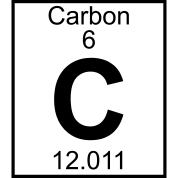
What does the 6 represent?
a)
atomic mass
b)
atomic number
c)
element name
d)
chemical symbol 
20.

Elements which are shiny, conduct electricity and heat are called

a)

metal

b)

nonmetal

c)

metalloid

d)

nonexistent

21.
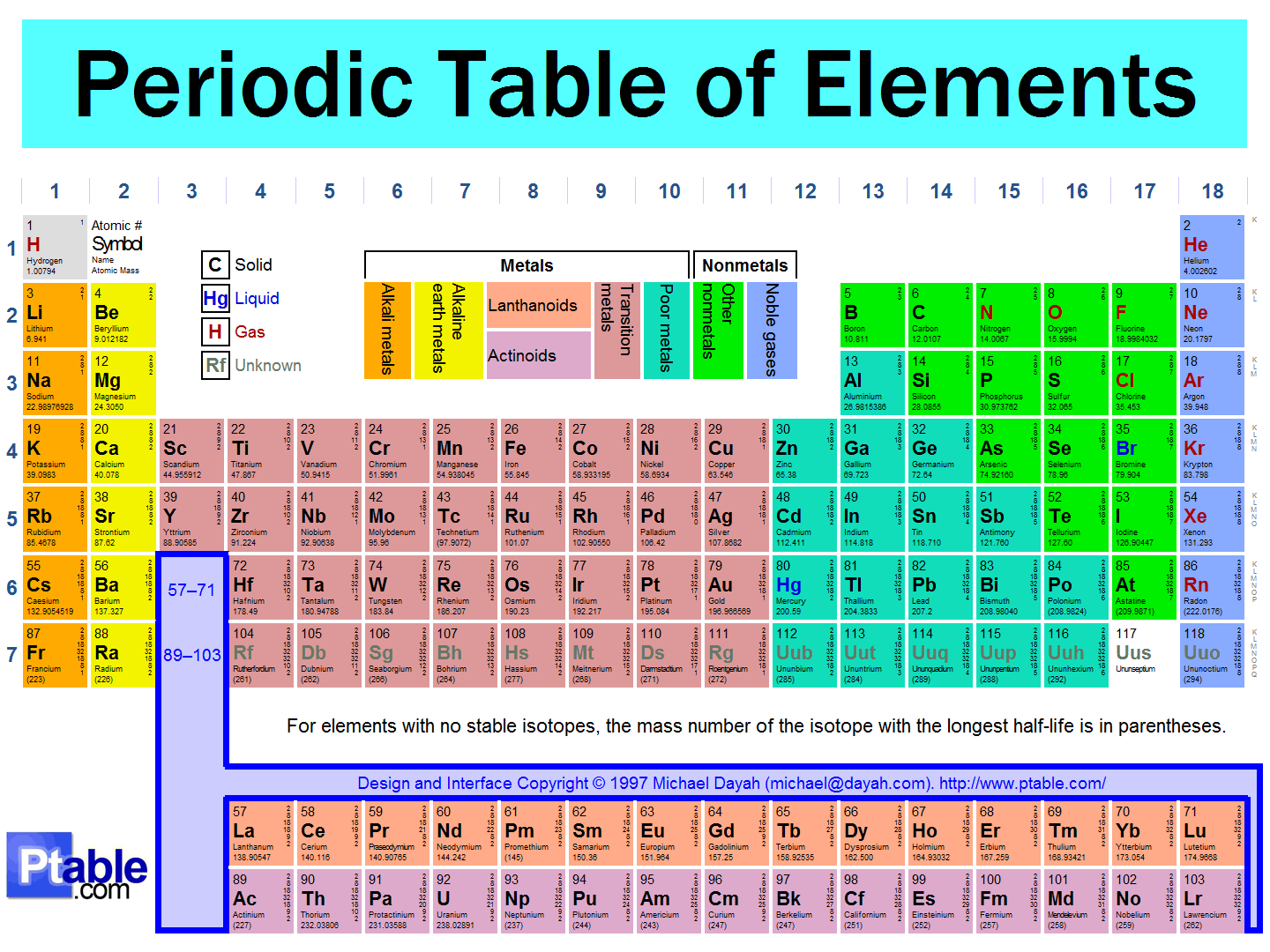
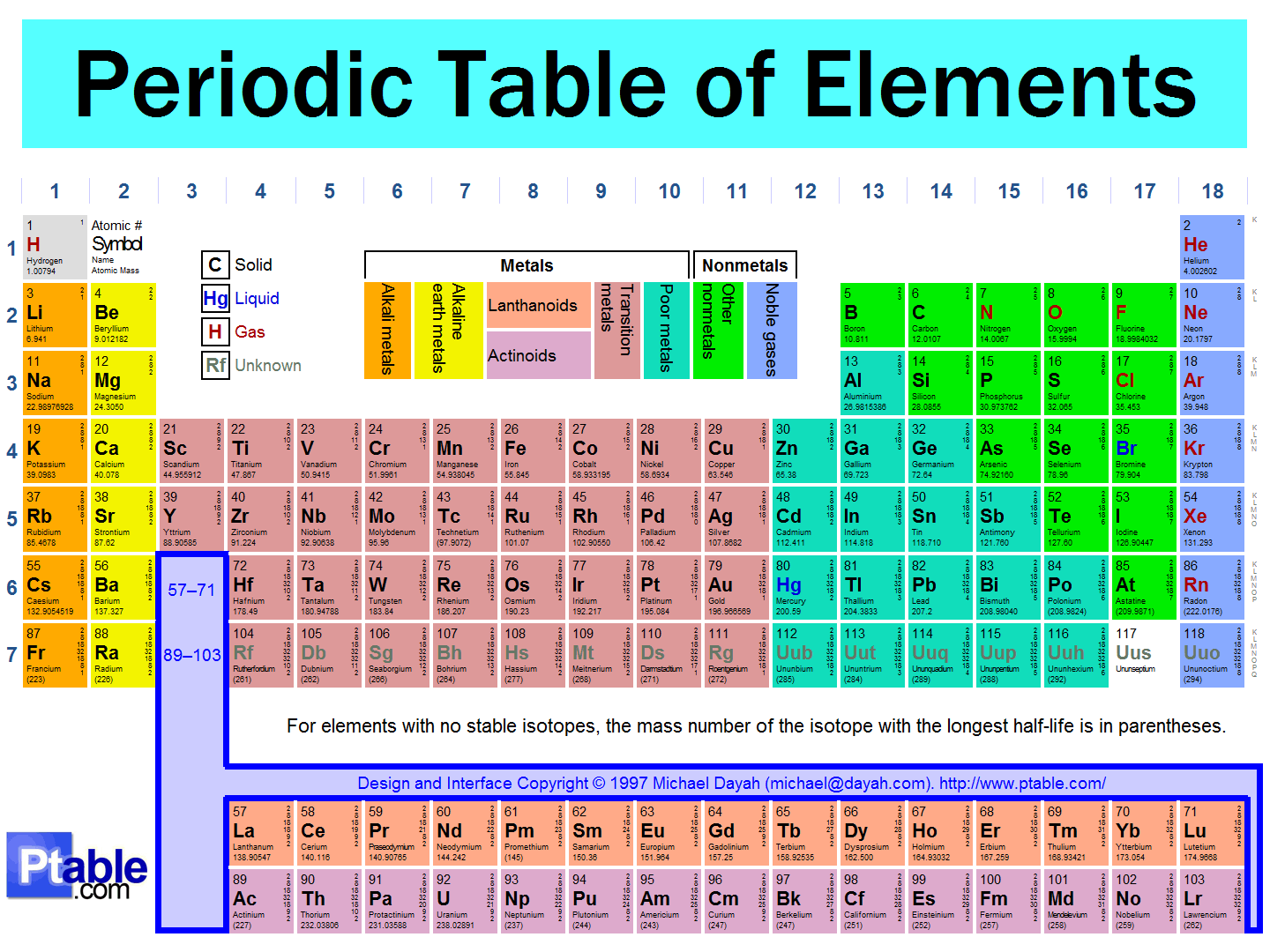
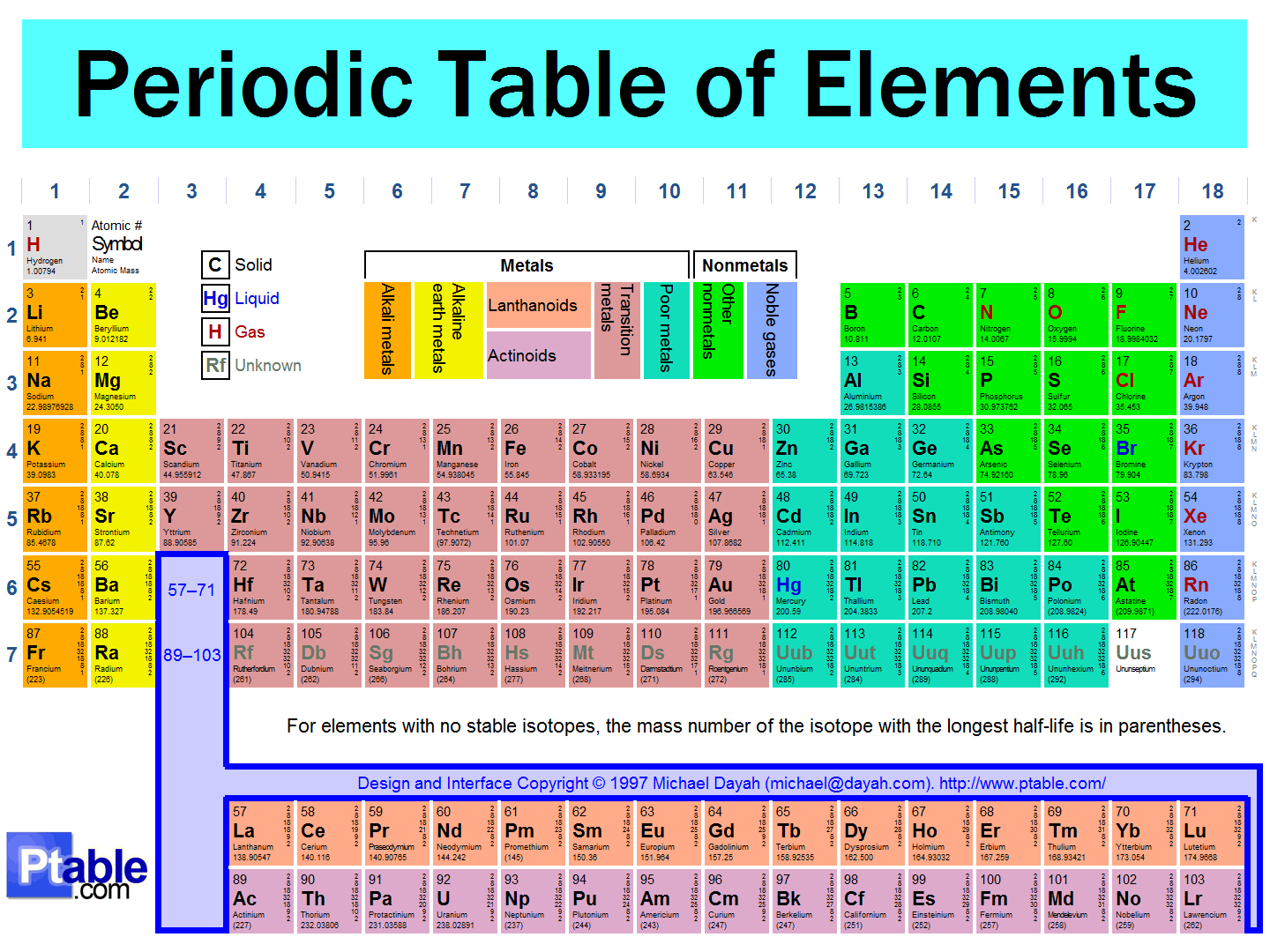
The atomic number of this pictured element is
a)
28
b)
58.6934
c)
Ni
d)
Nickel
22.

What are valence electrons?

a)

Any of an atom's electrons

b)

Electrons located on the first energy level

c)

Electrons not attached to any atom

d)

electrons located on the outer energy level

23.

Mendeleev first ordered the periodic table of elements by increasing

a)

atomic number

b)

atomic mass

c)

atomic symbol

d)

atomic weight

24.

The periodic table is mostly comprised of what type of element?

a)

Metals

b)

Nonmetals

c)

Metalloids

25.

The periodic table is mostly comprised of what type of element?

a)

Metals

b)

Nonmetals

c)

Metalloids

26.
Most of the elements on the periodic table are classified as _____.
a)
Metals
b)
Nonmetals
c)
Metalloids
d)
Periods
27.
This class of elements are sometimes called "semiconductors."
a)
Metals
b)
Nonmetals
c)
Metalloids
d)
Groups
28.

the basic structural unit of matter

a)

atom

b)

matter

c)

element

d)

nucleus

29.

a collection of atoms of one type that cannot be broken down into simpler substances by ordinary chemical or physical means

a)

element

b)

subatomic particle

c)

electron

d)

matter

30.

the positively charged subatomic particle contained in the nucleus of an atom

a)

proton

b)

neutron

c)

electron

d)

matter

31.

a subatomic particle, contained in the nucleus of an atom, having the same mass as a proton but no electrical charge

a)

proton

b)

neutron

c)

electron

d)

matter

32.

a negatively charged subatomic particle that orbits the nucleus of an atom

a)

proton

b)

neutron

c)

electron

d)

matter

33.

a unique number for each element that equals the number of protons in an atom of that element

a)

element name

b)

element symbol

c)

atomic number

d)

atomic mass

34.

the mass of an atom, calculated by adding the number of protons and neutrons in the nucleus of the atom

a)

element name

b)

element symbol

c)

atomic number

d)

atomic mass

35.

one of several forms of a single element, which contains the same number of protons, but different numbers of neutrons

a)

isotope

b)

ion

c)

orbital

d)

nucleus

36.
Found in the nucleus of the atom
a)
electrons only
b)
protons only
c)
neutrons and protons
d)
neutrons and electrons
37.
An element is defined by its number of 
a)
protons
b)
electrons
c)
neutrons
d)
protons + electrons
38.

Isotopes of an element have a different number of...

a)

Protons

b)

Neutrons

c)

Electrons

d)

Mass

39.
Isotopes are atoms of the same element that have the same number of __________ but different number of __________ . Therefore, isotopes of the same element have different masses. 
a)
protons, neutrons
b)
protons, electrons
c)
neutrons, protons
d)
electrons, protons
40.
Electrons have this type of charge?
a)
negative
b)
positive
c)
neutral
41.
How many elements are represented in the compound?
Na2CO3
a)
1
b)
2
c)
3
d)
4
42.
Which of the following is not a compound?
a)
HCl
b)
Cl
c)
NaCl
d)
CO2
43.
Can compounds be found in the periodic table?
a)
Yes
b)
No
44.
How many carbon atom/s are present in the compounds CaCO3?
a)
1
b)
2
c)
3
d)
4
45.
Is sugar (C12H22O11) an element or a compound?
a)
Element
b)
Compound
46.
Is water an element or a compound?
a)
Element
b)
Compound
47.
Is Iron (Fe) an element or a compound?
a)
Element
b)
Compound
48.
Is salt (NaCI) a compound or a element
a)
Compound
b)
element
49.
which one can be found on the periodic table
a)
Compound 
b)
Element
50.
Atoms combine to form _______. 
a)
electrons
b)
molecules
c)
nuclei
d)
neutrons
51.

Which statement is true about compounds?

a)

a pure substance where two or more elements are chemically combined

b)

a homogenous mixture of 2 or more elements

c)

a pure substance containing only one type of atom

d)

a heterogeneous mixture of 2 or more elements chemically combined

52.

What does this illustrate

a)

Elements

b)

Compunds

c)

Mixture of Elements and Compunds

d)

Mixture of Compounds

53.

What does this pic illustrate?

a)

Element

b)

Mixture of Compunds

c)

Mixture of elemets

d)

Compounds

54.

How are Mixtures made?

a)

Chemically

b)

Physically

c)

Physically and Chemically

d)

Found in Nature

55.

What is considered the simplest form of matter?

a)

Compounds

b)

Colloids

c)

Solutions

d)

Elements

56.

Another name for a homogenous mixture is?

a)

colloid

b)

suspension

c)

solution

d)

compound

57.

Two characteristics of Matter are:

a)

Has volume and is energy

b)

Has mass and is energy

c)

Has mass and volume

d)

Doesn't take up space and is not energy

58.

1 A substance made up of two or more chemically combined elements is —

a)

an element

b)

mixture

c)

compound

d)

solution

59.
NaHCO3 is an example of —
a)
an abbreviation
b)
a compound
c)
a mixture
d)
an element
60.
A substance made of only one type of atom is called —
a)
an element
b)
a mixture
c)
a compound
d)
a salt
61.

Table salt, or sodium chloride has the chemical formula NaCl. How is sodium chloride classified?

a)

as an element

b)

. as a compound

c)

as a mixture

d)

as a liquid

62.
Classify the picture with the correct label.
a)
Element
b)
Compound
c)
Mixture of Elements
d)
Mixture of Compounds
63.
Which of the following is an element?
a)
Sugar
b)
Salt
c)
Water
d)
Oxygen
64.

How many types of atoms are in K₂SO₄

a)

7

b)

3

c)

2

d)

4

65.

How many total atoms are in K₂SO₄

a)

7

b)

2

c)

4

d)

3