wayground logo

Free Printable Worksheets

Font size

S
M
L
XL
Worksheets

AP World - Unit 6

Total questions: 85

Worksheet time: 2hrs 59mins

Name
Class
Date
1.
A long, slow, uneven process for the mid-1700s to the mid-1800s in which production shifted from man power to machine power.
a)
French Revolution
b)
Industrial Revolution
c)
Conservativism
d)
Modernization
2.
Which of the following is NOT a cause of the Industrial Revolution?
a)
New Agricultural Revolution
b)
The Conclusion of the French Revolution
c)
New Technology
d)
Population Growth
3.
When people began taking peasant land and closing it off to raise sheep and grow crops, this was called..
a)
Land Plot Movement
b)
Enclosure Movement
c)
Reclamation Movement
d)
"Give Me Yer Land" Movement
4.
The new form of energy that led to the growth of the Industrial Revolution was
a)
Coal
b)
Wind
c)
Water
d)
Corn
5.
Which of the following materials allowed for the rapid growth of industry?
a)

Iron

b)

Oil

c)

Stone

d)

Tungston

6.
Where did the Industrial Revolution begin?
a)
The United States
b)
Britain
c)
Germany
d)
France
7.
Britain had a growing population of people who had money and resources to spend of industrial growth. These money and resources would be called
a)
Smelt
b)
Wealth
c)
Capital
d)
Dough
8.
The Industrial Revolution's development of coal power led to which two improvements in transportation?
a)
Locomotive and Steamboat
b)
Locomotive and Automobile
c)
Airplanes and Steamboats
d)
Hybrids and Jetpacks
9.
During the Industrial Revolution, growing demand for goods directly led to...
a)
Better Machines
b)
Lower prices
c)
More Consumers
d)
Riots
10.
____ is a person's rank in society.
a)
Bourgeoisie
b)
Social Class
c)
Proletariat
d)
Entrepreneur 
11.
___ is the poorest class of industrial wage earners who, possessing neither capital nor production means, must earn their living by selling their labor.
a)
Bourgeoisie
b)
Industry 
c)
Entrepreneur
d)
Proletariat 
12.
___ is a transformation of the traditional agricultural system that began in Britain in the 18th century. It is characterized by new machinery, better drainage, scientific methods of breeding, and experimentation with new crops and systems of crop rotation.
a)
Industrial Revolution
b)
French Revolution
c)
Agricultural Revolution
d)
American Revolution
13.
What industry was the first to industrialize? 
a)
Banking
b)
Masonry
c)
Textile
d)
Farming/Agriculture
14.
What is a textile?
a)
A multi-spindle spinning wheel
b)
An automatic machine loom 
c)
cloth or fabric
d)
goods that help create a text in type or print
15.
Capitalism is based on the _______ ownership of wealth.
a)
private
b)
public
16.
Communism is based on the _______ ownership of wealth.
a)
private
b)
public
17.
Who wrote the book The Wealth of Nations?
a)
John Hancock
b)
Adam Smith
c)
Alexander Bell
d)
John Hamilton
18.
What is Capitalism?
a)
A system where the government controls business
b)
Capitalism is an economic system where the means of production are privately owned and operated for profit! 
c)
A economic system in which the people have limited rights
d)
An economic system in which most property and resources, such as factories or farms, are publicly owned or controlled.
19.
______________get to make the economic decisions under capitalism.
a)
Individuals
b)
Government
c)
Literally no one
d)
The President 
20.
Which is NOT a characteristic of Capitalism?
a)
Market Economy
b)
Supply and Demand
c)
Freedom of Competition
d)
Classless Society
21.
Laissez-faire means...
a)
Hats off
b)
Hands around
c)
Hands off
d)
Hands on
22.

Who owned everything under socialism?

a)

Wealthy people

b)

The secret police

c)

The government

d)

The poor people

23.
What was a long term consequence of the Industrial Revolution?
a)
A cleaner natural environment
b)
Animal Preservation
c)
Worker Unions and Labor Laws
d)
A second Neolithic Revolution
24.
Prior to industrialization people lived 
a)
in tenements
b)
in suburbs
c)
on farms
d)
in cities
25.
This picture shows which problem of the factory system?
a)
unsafe working conditions
b)
urbanization
c)
unfair wages for women
d)
child labor
26.
Industrialization resulted in all of the following except
a)
the elimination of social distinctions between the middle and working class.
b)
the increased production of goods in all industries.
c)
the expansion of trade according to market demand.
d)
new methods of production.
27.
A major cause of the Industrial Revolution was the
a)
effort to eliminate child labor.
b)
racial ideas about western superiority.
c)
need for more manufactured goods for foreign trade.
d)
increase in population
28.
How did the Industrial Revolution impact the life of women? 
a)
Their domestic responsibilities increased
b)
they were given more opportunities outside the home
c)
they replaced the mens role in the fields 
d)
they accepted the new role of industrial merchants 
29.
Countries in Latin America, sub-Sahara Africa and different parts of Asia became highly dependent on one crop (ex. sugar, cotton, etc.) for exports. They were nicknamed - 
a)
"Kiwi Republics"
b)
"Melon Republics"
c)
"Berry Republics"
d)
"Banana Republics"
30.
During the Industrial Revolution, mother countries needed _____________ from colonies to produce goods/products.
a)
Capital
b)
Property
c)
Raw Materials
d)
Machines
31.
The establishment of ______________ led to increased production of manufactured goods.
a)
Warehouses
b)
Storage Units
c)
Interchangeable Parts
d)
Factories
32.

Improvements in ______ meant factories could attract workers from greater distances, import bulk raw materials more easily, and ship finished goods to a larger number of consumers.

a)

transportation systems

b)

government systems

c)

education of workers

d)

environmental safeguards

33.

Companies that operate in countries other than the one in which they are headquartered are called ___

a)

transnational companies

b)

global companies

c)

trading bloc companies

d)

EU companies

34.
Socialism is an economic system in which
a)
individuals and corporations own the factories while the government plays a minimal role in  the economy.
b)
the government controls all factories, farms, and transportation and distributes jobs.
c)
society is unequal because of the large gap between the rich and poor.
d)
the laissez-faire principle is applied to the economy.
35.

What was the goal of communism, according to Marx?

a)

the oppression of the working class

b)

a more equal and fair society

c)

making everybody rich

d)

making everybody poor

36.

What was originally the central idea of Communism?

a)

free communication for everyone

b)

communal ownership of means of production

c)

all factories and land would be destroyed

d)

oppression of the rich by the poor

37.

Which country had the largest sphere of influence in Latin America during the Age of Imperialism?

a)

United States

b)

Spain

c)

Mexico

d)

England

38.

Select ALL of the following tactics used in the Scramble for Africa.

a)

Racially segregated concentration camps

b)

European diplomacy through the Berlin Conference

c)

Militarization of European troops

d)

Equal opportunity trading alliances with local leaders

39.

The economic system that prevailed from c. 1750-1900 was

a)

Capitalism

b)

Communism

c)

Socialism

d)

Mercantilism

40.

What caused the Taiping and Boxer rebellions?

a)

Foreign economic involvement in China

b)

British selling opium to China

c)

Indians refusing to touch the gunpowder pouches

d)

Americans moving into West North America

41.

What was Japan's response to foreign interference in the nineteenth century?

a)

Adapt to Western politics and culture (Meiji Restoration)

b)

Isolate themselves further by resisting and fighting

c)

Became allies with the Chinese to become the dominant power in the region

d)

Adapt to the ideas of the islanders and tribal people to resist

42.

Which was a state regulation of immigration during the nineteenth century?

a)

Chinese Exclusion Acts

b)

Congo Free State

c)

White New Zealand Policy

d)

Jim Crow Laws

43.

Which of the following was the primary reason that immigrants created ethnic enclaves?

a)

Support and safety

b)

Refusal to assimilate

c)

Difficulty finding work

d)

Segregation by the government

44.

Which of the following descriptions is an accurate change over time in the period c. 1750-1900?

a)

Once the leader in scientific and economic development, China fell behind Europe

b)

Once the leading producer of porcelain, China fell behind India

c)

Once a country that maintained an isolationist policy, China participated in the Scramble of Africa

d)

Once a country that actively sought foreign converts to Buddhism, China became an atheist state

45.

Which of the following resulted in colonies due to the Age of Imperialism?

a)

A sense of independent nationalism

b)

Planned invasions of European powers

c)

Women's suffrage

d)

A hesitation to industrialize

46.

Why, in the time period c. 1750-1900, did European states fight to acquire overseas colonies?

a)

To acquire raw materials to fuel their industrialization

b)

To spread Enlightenment ideas

c)

To abolish slavery worldwide

d)

To stop the spread of Islam throughout the world

47.

How were people able to migrate cheaper and faster?

a)

New more affordable methods of transportation

b)

Horses became more affordable for the common people

c)

The elite paid for the lower class to migrate out of their country

d)

Free trade policies made people wealthy in the countries

48.

Which company took over other European states colonies in India?

a)

British East India Company

b)

British West India Company

c)

Dutch East India Company

d)

French East India Company

49.

What did imperial powers sometimes try to impose on the natives they controlled?

a)

European national identity

b)

Resource native to Europe

c)

Marxist ideas from Germany

d)

European social hierarchy

50.

In the time period c. 1750-1900, where did migrant workers typically seek work?

a)

Industrial cities

b)

Tropical plantations

c)

Small grain farms

d)

Uncharted territory, such as the Great Plains

51.

Why did European powers divide Africa by diplomatic agreements between each other?

a)

Fear of going to war because of fierce competition

b)

Rapid population increase in European colonies in Asia

c)

Atlantic revolutions lead Europeans states to seek new troops

d)

Creation of transnational business fostered exchange of raw materials

52.

Select all of the accurate pairings of imperialism in Southeast Asia.

a)

Netherlands: Dutch East Indies

b)

France: Indochina

c)

Great Britain: Philippines

d)

United States: Malaya

53.

Select all of the accurate migration patterns in the time period c. 1750-1900.


*Migration group: reason, destination

a)

British: prisoners, to Australia

b)

Indian: indentured servants, to the Caribbean

c)

Japanese: voluntary laborers, to South America

d)

West Africans: slaves, to North America

e)

Irish: plagued by famine, to Germany

54.

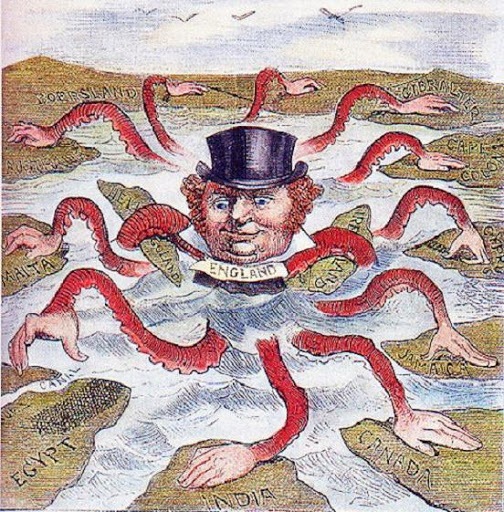
This represents

a)

the strength of Chinese trade policy

b)

the strength of British imperialism over all other nations

c)

the Opium Wars

d)

World War I

55.

This image would best be represented by the following

a)

"Take Up the White Man's Burden"

b)

"The sun never sets on the British Empire"

c)

"The Anglo Leviathan Rises"

d)

"Germany over All!"

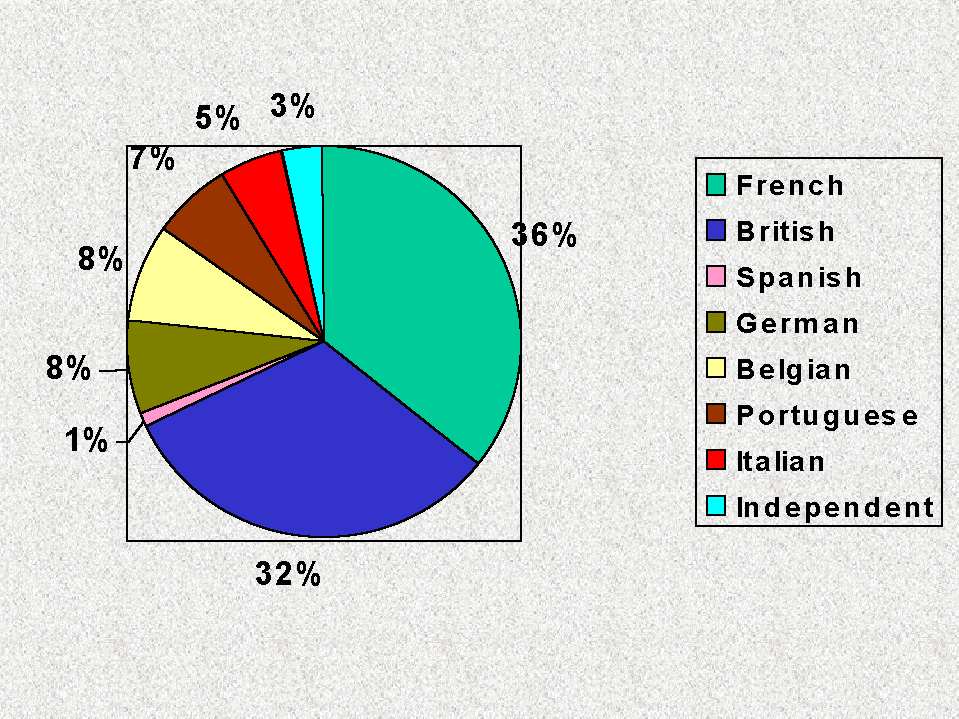
56.

This likely represents

a)

imperialism in Africa

b)

imperialism in Asia

c)

imperialism in the Americas

d)

global imperialism

57.

The Xhosa cow killing movement is a resisitance movement

a)

in Egypt

b)

in Botswana

c)

in China

d)

in South Africa

58.

Which of the following solved the Congo Question?

a)

The Congress of Vienna

b)

The Berlin Conference

c)

The Belgian Compact

d)

The Anglo-Franco Pact

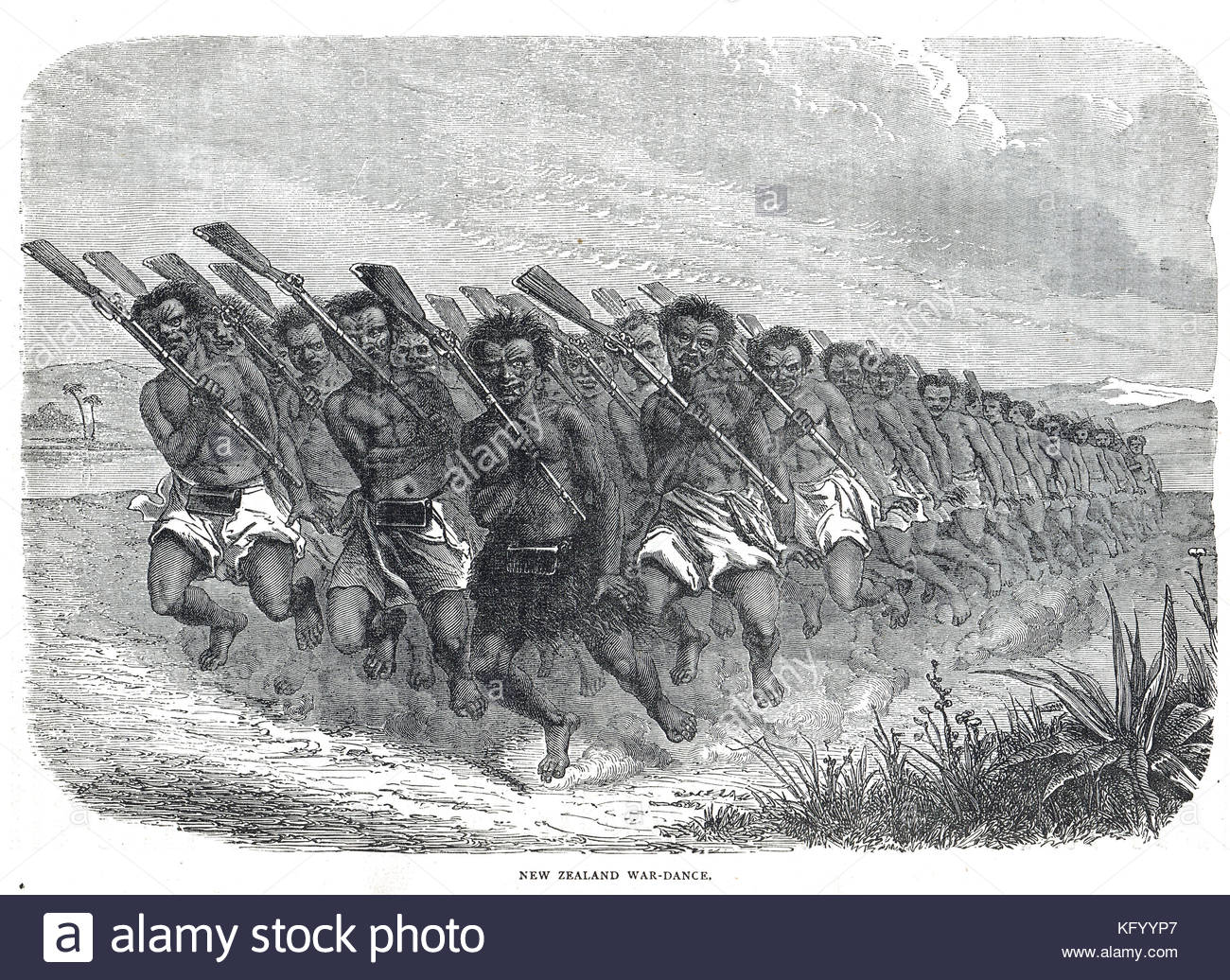
59.

These Maori are going to war in

a)

Australia

b)

Indonesia

c)

Kenya

d)

New Zealand

60.

One of the major theoretical contributors to the justification of imperialism was

a)

the Cathoic Church

b)

Darwin's "Survival of the Fittest" theory

c)

Karl Marx's theories

d)

Adam Smith's ideas

61.

The Sepoy Rebelion was caused by

a)

gun cartriages

b)

insensitivity to religion

c)

cultural misunderstanding

d)

all of the above

62.

David Livingston

a)

settled the first colony in Australia

b)

settled Wellington in New Zealand

c)

was a missionary in Africa

d)

was a resident General in Egypt

63.

France was most active in empire buiding in

a)

North Africa

b)

South Africa

c)

China

d)

The East Indies

64.

European migrants

a)

largely went to America

b)

largely went to Africa

c)

largely returned to Europe

d)

none of these

65.

The Monroe Doctrine

a)

supported US Imperial ambitions

b)

supported the British control of India

c)

solved the "Scramble for Africa" issue

d)

made the Opium Wars worse

66.

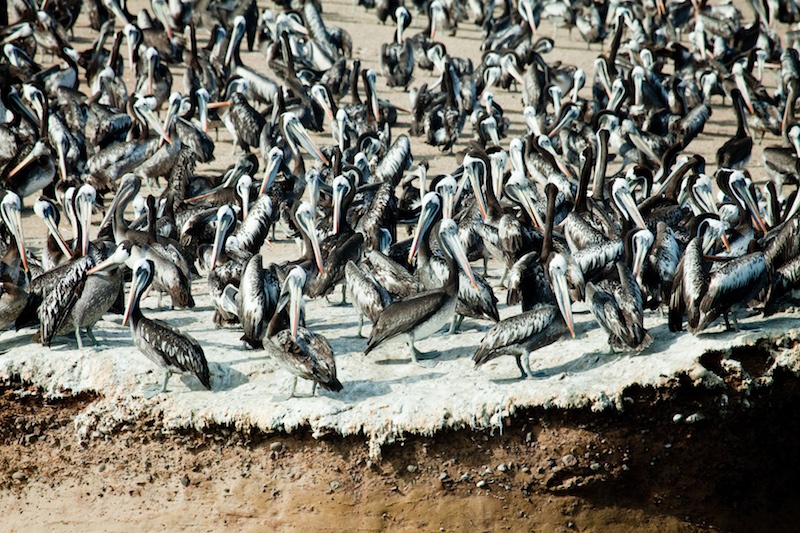
This image represents one of the most important industriesand exports in Peru in the industrial economy

a)

Whale

b)

Guano

c)

Cotton

d)

Rubber

67.
The American desire for a trade relationship with Japan in 1853 led to
a)
The overthrow of the shogun and the modernization of the country
b)
Increased tensions between China and Korea
c)
Greater Russian influence in Manchuria
d)
The colonization of Taiwan
68.
Which of the following statements best describes the significance of Social Darwinism?
a)
It was a significant breakthrough in revolutionary theory
b)
It led to an increase in urbanization throughout much of Europe
c)
It influenced the development of the factory model of production
d)
It was used as a justification for the inferior treatment of colonial people
69.
Imperialism in the late 19th and early 20th centuries was a result of all of the following except
a)
Nationalism
b)
Social Darwinism
c)
Industrialization
d)
Socialism
70.
Which of the following African regions was able to defeat European powers in the 19th century?
a)
Liberia
b)
Ethiopia
c)
Egypt
d)
Morocco
71.
The rapid industrialization of Japan was called the  
a)
Tanzimat Reforms
b)
Self Strengthening Movement
c)
Meiji Restoration
d)
Kanazawa Movement 
72.
The Ottoman process of industrialization was called 
a)
Meiji Restoration 
b)
Self Strengthening 
c)
Tanzimat Reforms
d)
Jizya enforcement 
73.
Japan revealed their modernization by 
a)
perfecting the compact car
b)
defeating China and Russia
c)
at the 1900 Worlds Fair 
d)
helping China modernize
74.
Nationalism could be used for 
a)
improving technology
b)
promoting ethnic superiority 
c)
promoting pure democracy
d)
bringing political reform 
75.
 Imperialism was brought on as a result of 
a)
Democratic Revolutions 
b)
World War I 
c)
Industrialization 
d)
The Renaissance 
76.
 What happened as a result of the Berlin Conference of 1884-1885? 
a)
France and Britain agreed to combine African colonies
b)
less fighting between African leaders and European powers
c)
African leaders voiced their suggestions
d)
Europeans divided Africa into colonies 
77.

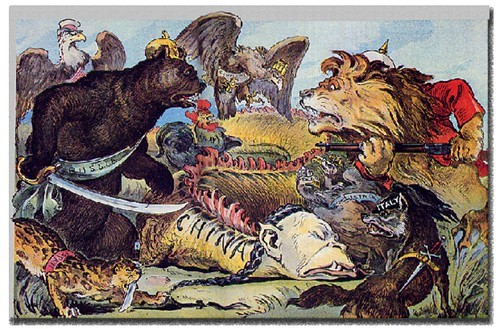
The political cartoon below depicts what event that happened to China

a)

Taiping Rebellion

b)

Breaking down the great wall

c)

Spheres of Influence

d)

Open Door Policy

78.
The beginning of the Industrial Revolution in Great Britain was most influenced by which of the following factors?
a)
The amount and location of British petroleum reserves
b)
The location and large number of British coal deposits
c)
The aggressive promotion of industrialization by George III
d)
The spread of cotton cultivation in southern England
79.
Which of the following arguments made the cause of abolition widely acceptable in the nineteenth century?
a)
Slavery was immoral
b)
 Slavery was not condoned in the Bible.
c)
Slavery benefited Portuguese slave traders too much.
d)
 Slavery was no longer necessary for a strong economy.
80.
Which of the following was NOT a way in which feminists achieved progress for women in the Atlantic world? 
a)
Professionalizing traditional female occupations such as nursing and social work
b)
Mostly peaceful protest
c)
Violent revolution
d)
Forming trans-Atlantic feminist organizations
81.

Revolt against foreign residents of China

a)

Boer War

b)

Boxer Rebellion

c)

Seven Years War

d)

Chinese War of Independence

82.

War between the British and the Dutch over Dutch independence in South Africa; resulted in British victory

a)

Seven Years War

b)

War of Independence

c)

Spanish American War

d)

Boer War

83.

he last imperial dynasty of China which was overthrown by revolutionaries; was ruled by the Manchu people: began to isolate themselves from Western culture

a)

Young turks

b)

Taiping

c)

Russo-Japanese

d)

Qing dynasty

84.

Revolt in southern China against the Qing Empire

a)

Nanking Treaty

b)

Boxer Rebellion

c)

Wahhabi Rebellion

d)

Taiping Rebellion

85.
Which of the following describes an accurate similarity between the Qing and Russian empires in the 18th and 19th centuries?
a)
Both relied heavily on maritime trade as a source of material goods.
b)
Both successfully resisted pressure from industrialized powers.
c)
Both were heavily influenced by the intellectual work of Jesuit missionaries.
d)
Both had vast territories with peoples of various ethnicities and languages.