wayground logo

Free Printable Worksheets

Font size

S
M
L
XL
Worksheets

Convection, Conduction & Radiation

Total questions: 109

Worksheet time: 5hrs 27mins

Name
Class
Date
1.

Heating a room with a fireplace

a)

Conduction

b)

Convection

c)

Radiation

2.

Which of the following is not a method for heat transfer

a)

Radiation

b)

Insulation

c)

Conduction

d)

Convection

3.

In which of the following state are the particles closest together?

a)

Fluid

b)

Gas

c)

Liquid

d)

Solid

4.

How does heat energy reach the Earth from the Sun

a)

Convection

b)

Radiation

c)

Conduction

d)

Insulation

5.

Which is the best surface for reflecting heat radiation?

a)

Shiny white

b)

Dull white

c)

Shiny black

d)

Dull black

6.

Which is the best surface for absorbing heat radiation?

a)

Shiny white

b)

Dull white

c)

Shiny black

d)

Dull black

7.

What is the definition of CONDUCTION?

a)

When heat is transferred from objects like rays of light or electromagnetically.

b)

a hot liquid or air that expands, becomes less dense, and rises or becomes more dense, and sinks.

c)

When thermal energy transfers by collisions between particles.

d)

When heat transfers through the heater or AC in your house.

8.

What is the definition of CONVECTION

a)

When heat transfers through waves.

b)

When heat transfers from objects that are touching.

c)

The transfer of thermal energy in a fluid (liquid/gas) by movement of warm / cool fluids.

d)

Heat traveling from the sun

9.
The heat from a lamp allows a lizard to remain warm. This is an example of which type of heat transfer?
a)
radiation
b)
conduction
c)
convection
d)
insulation
10.
Warm air rises and the cool air sinks demonstrates this type of heat transfer. 
a)
conduction
b)
convection
c)
radiation
d)
Insolation 
11.
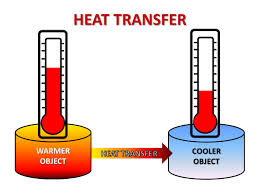
Heat transfers from an area of ____temperature to an area of ___ temperature.
a)
high to low
b)
low to high
c)
high to high
d)
It can travel high to low and low to high. 
12.
a)

Conduction

b)

Convection

c)

Radiation

13.
A hot rock is dropped into a pail of cool water. Heat energy transferred from the rock to the water by
a)
Boiling
b)
Evaporation
c)
Conduction
d)
Radiation
14.

When you pull your Totino's Pizza rolls out of the oven and the pan is so hot it burns your hand because you forgot your protective mit. The energy move to your hand from the pan to your hand through ...

a)

Conduction

b)

Radiation

c)

Convection

15.

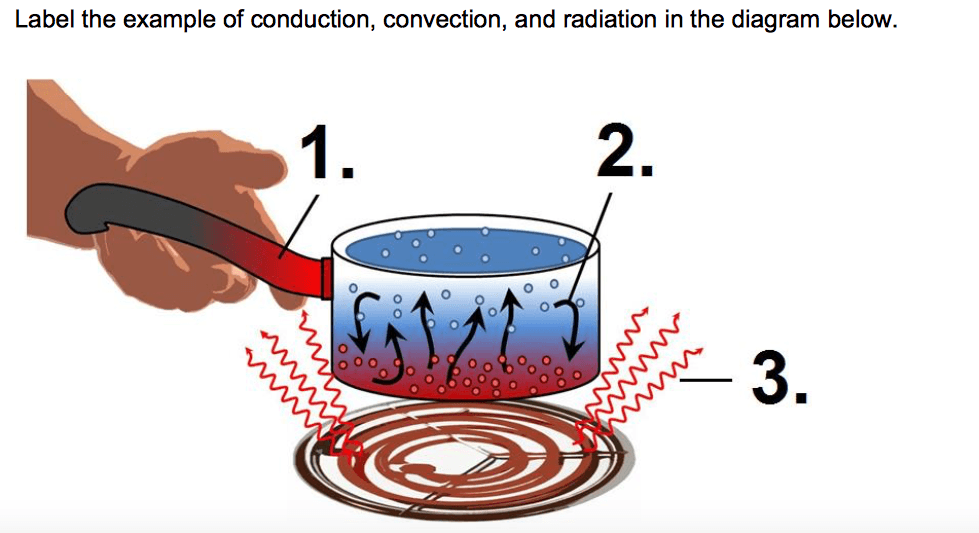
What type of thermal energy transfer is number 1 pointing to?

a)

Convection

b)

Conduction

c)

Radiation

d)

Insulation

16.
Convection currents result from temperature differences in liquids and gases.
a)
true
b)
false
17.
The heat from a lamp allows a lizard to remain warm. This is an example of which type of heat transfer?
a)
radiation
b)
conduction
c)
convection
d)
insulation
18.

On a hot summer day black pavement can reach 135 degrees. What would occur if an egg was placed on it?

a)

The pavement will conduct the heat and cook the egg.

b)

The egg will reflect the heat and make the pavement hotter underneath.

c)

The egg will absorb the heat and leave the pavement hotter underneath.

d)

The pavement will absorb the heat from the egg, and the egg will stay raw.

19.

Which of the statements below describes what can happen as a result of radiation?

a)

A piece of wood burns in a fire.

b)

A shirt is hot after having been ironed.

c)

A can of soup is heated in a pot on a stove.

d)

A car’s inside temperature rises to over 100 degrees on a sunny day.

20.
Which best describes the process of convection?
a)
Convection is the primary way  heat travels  through rays.
b)
Convection is the primary way heat travels  through metals.
c)
Convection is the primary way heat travels  through appliances.
d)
Convection is the primary way heat travels  through liquids and gasses.
21.

Warmth from the fireplace circulating through the house.

a)

Conduction

b)

Convection

c)

Radiation

22.

Newt boiling in a hot caldron of potion.

a)

Conduction

b)

Convection

c)

Radiation

23.

A certian type of decorative lamp contains colored liquids. These liquids form globs that break off and rise to the top of the liquid. The globs rise due to ...

a)

Conduction

b)

Radiation

c)

Convection

24.

One end of a copper rod is placed in a flame of a Bunsen burner. Small pieces of wax placed along the rod melt a progressively larger distance from the flame. Heat is transferred through the rod by ...

a)

Conduction

b)

Radiation

c)

Convection

25.

A certian type of decorative lamp contains colored liquids. These liquids form globs that break off and rise to the top of the liquid. The globs rise due to ...

a)

Conduction

b)

Radiation

c)

Convection

26.

A house burns down. On the house across the street, all the vinyl siding is twisted and warped by the heat. The heat was transferred across the street by ...

a)

Conduction

b)

Radiation

c)

Convection

27.

Warm air over the beach rises while cooler dense air from the ocean rushes in due to ...

a)

Conduction

b)

Radiation

c)

Convection

28.

A hot air balloon rises into the sky because of ...

a)

Conduction

b)

Radiation

c)

Convection

29.

When you pull your Totino's Pizza rolls out of the oven and the pan is so hot it burns your hand because you forgot your protective mit. The energy moves to your hand from the pan through ...

a)

Conduction

b)

Radiation

c)

Convection

30.

Which of the following is not a method for heat transfer

a)

Radiation

b)

Insulation

c)

Conduction

d)

Convection

31.
What is the definition of CONDUCTION?
a)
When heat is transferred from objects like rays of light or electromagnetically.
b)
a  hot liquid or air that  expands, becomes less dense, and rises or becomes more dense, and sinks.
c)
When heat transfers from objects that are touching.
d)
When heat transfers through the heater or AC in your house.
32.

What is the definition of CONVECTION

a)

When heat transfers through waves.

b)

When heat transfers from objects that are touching.

c)

When heat is transferred by movement of gas or liquids. It is also when gas/liquid becomes less dense and rises or becomes more dense and sinks.

d)

Heat traveling from the sun

33.
Heat transfers from an area of ____temperature to an area of ___ temperature.
a)
high to low
b)
low to high
c)
high to high
d)
It can travel high to low and low to high. 
34.
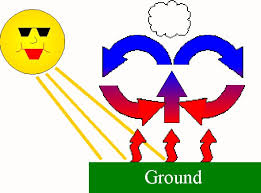
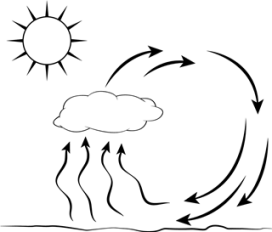
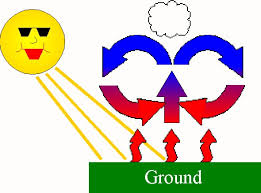
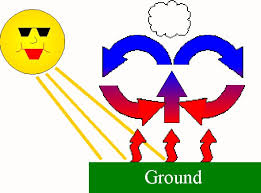
What causes the circulation of air in the atmosphere?
a)
Air in the atmosphere is heated by the sun and sinks to the ground.
b)
The ground is heated by the sun and then heats the air, causing the air to rise.
c)
Air loses heat to the ground and then rises upward to obtain more energy.
d)
The sun heats the clouds which forces the cooler air to move away and sink.
35.

What is the original source of most of the energy on the surface of the Earth?

a)

Energy that reaches Earth by radiation from the sun.

b)

Energy that reaches the earth by convection from the sun.

c)

Energy that reaches the earth by radiation from the core.

d)

Energy that reaches the earth by conduction from the core.

36.
Which statement is true?
a)
The quicker a molecule moves, the colder it is.
b)
The slower a molecule moves, the warmer it is.
c)
The quicker a molecule moves, the warmer it is
d)
The movement on molecule don�t affect its temperature
37.
The heat from a lamp allows a lizard to remain warm. This is an example of which type of heat transfer?
a)
radiation
b)
conduction
c)
convection
d)
insulation
38.
Which will most likely occur when raw egg is placed on black pavement on a hot, summer day?
a)
The pavement will conduct the heat and cook the egg.
b)
The egg will reflect the heat and make the pavement hotter underneath.
c)
The egg will absorb the heat  and leave the pavement hotter underneath.
d)
The pavement will absorb the heat from the egg, and the egg will stay raw.
39.
Which best describes the process of convection?
a)
Convection is the primary way  heat travels  through rays.
b)
Convection is the primary way heat travels  through metals.
c)
Convection is the primary way heat travels  through appliances.
d)
Convection is the primary way heat travels  through liquids and gasses.
40.

How is heat transferred in the water when boiling a pot of water on the stove?

a)

conduction

b)

convection

c)

combustion

d)

radiation

41.
Warm air rises and the cool air sinks demonstrates this type of heat transfer. 
a)
conduction
b)
convection
c)
radiation
d)
Insolation 
42.
Ironing a shirt is an example of...
a)
condensation
b)
conduction
c)
convection
d)
radiation
43.
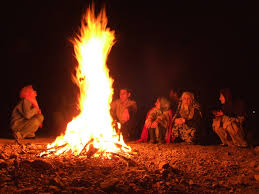
A group of friends gather around a fire to stay warm.
a)
conduction
b)
convection
c)
radiation
44.
Hot coffee is stirred with a spoon; the spoon gets hot due to
a)
conduction
b)
convection
c)
radiation
45.
In a swimming pool, water near the surface is slightly warmer. The warm water rises because of
a)
conduction
b)
convection
c)
radiation
46.
How many kinds of heat transfer are there?
a)
1
b)
2
c)
3
d)
4 or more
47.
In heat transfer, heat always flows from the _______________ substance to the _______________ substance.
a)
Hotter to colder
b)
Colder to hotter
c)
Hotter to hotter
d)
Colder to colder
48.
What is the definition of CONVECTION
a)
When heat transfers through waves.
b)
When heat transfers from objects that are touching.
c)
a  hot liquid or air that  expands, becomes less dense, and rises or becomes more dense, and sinks.
d)
Heat traveling from the sun
49.
Radiation= 
a)
physical contact
b)
warm air rising
c)
heat moving through empty space
d)
say what?
50.

Near the ceiling of a room the air is warmer. The warm air rises because of ...

a)

Conduction

b)

Radiation

c)

Convection

51.

Convert 30°C into Kelvin.

a)

252K

b)

316°C

c)

303K

d)

-163°C

52.

Convert 89°F into °C.

a)

7.2°C

b)

32°C

c)

32°F

d)

212°F

53.

Convert 100°C into °F.

a)

7.2°C

b)

32°C

c)

32°F

d)

212°F

54.

What is the best color and texture to re-radiate electromagnetic energy?

a)

dark and smooth

b)

Dark and rough

c)

Light ad smooth

d)

Light and rough

55.

Average room temperature is 20 degrees Celsius. What is this in Fahrenheit?

a)

72

b)

68

c)

65

d)

293

56.
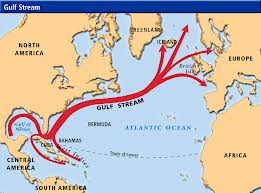
The Gulf Stream is a current that brings warm ocean water from the south to the north.
a)
conduction
b)
convection
c)
radiation
57.

How does heat move?

a)

In many directions

b)

from warm places to cooler places

c)

from cold places to warm places

d)

Both B and C

58.

If you burn your hand on the handle of a hot pot, heat was transferred to your skin by

a)

conduction

b)

convection

c)

radiation

d)

equilibrium

59.

What type of energy transfer occurs when hot water flows through cool water?

a)

insulation

b)

radiation

c)

conduction

d)

convection

60.

The transfer of energy by waves or particles is called

a)

conduction

b)

convection

c)

radiation

d)

insulation

61.

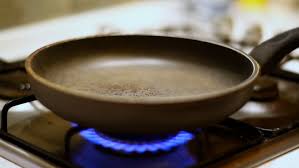
What type of heat transfer is occurring in the picture below? (the pan is touching the burner)

a)

conduction

b)

convection

c)

radiation

d)

insulation

62.

A material that reduces the flow of heat is a(n)

a)

conductor

b)

insulator

c)

metal

d)

radiator

63.

All of the following are good conductors of heat EXCEPT

a)

Copper

b)

Iron

c)

Plastic

d)

Aluminum

64.

What is the term that refers to a material being a poor conductor of heat?

a)

Insulator

b)

conductor

c)

Convector

d)

Radiator

65.

Energy from the Sun travels to Earth as

a)

Conduction

b)

Convection

c)

Insulation

d)

Radiation

66.

What causes hot and cold water to become the same temperature once they are combined?

a)

The heat moves from cooler temperature to warmer temperature.

b)

The energy of the hot water runs out.

c)

Heat (thermal) energy from the hot water is transferred to the cold water.

d)

Heat (thermal) energy causes the water to boil.

67.

What type of thermal energy transfer is number 1 pointing to?

a)

Convection

b)

Conduction

c)

Radiation

d)

Insulation

68.

What type of thermal energy transfer is number 2 pointing to?

a)

Convection

b)

Conduction

c)

Radiation

d)

Insulation

69.

What type of thermal energy transfer is number 3 pointing to?

a)

Convection

b)

Conduction

c)

Radiation

d)

Insulation

70.

All of the following are good conductors of heat EXCEPT

a)

Copper

b)

Iron

c)

Plastic

d)

Aluminum

71.

What type of thermal energy transfer is number 1 pointing to?

a)

Convection

b)

Conduction

c)

Radiation

d)

Insulation

72.

What type of thermal energy transfer is number 3 pointing to?

a)

Convection

b)

Conduction

c)

Radiation

d)

Insulation

73.

What is the definition of CONVECTION

a)

When heat transfers through waves.

b)

When heat transfers from objects that are touching.

c)

a hot liquid or air that expands, becomes less dense, and rises or becomes more dense, and sinks.

d)

Heat traveling from the sun

74.

A lava lamp contains colored liquids. These liquids form globs that break off and rise to the top of the liquid. The globs rise due to

a)

Conduction

b)

Convection

c)

Radiation

d)

Insulation

75.

A house burns down. On the house across the street, all of the vinyl siding is twisted and warped by the heat. The heat was transferred across the street by..

a)

Conduction

b)

Convection

c)

Radiation

d)

Insulation

76.

The metal skewer gets so hot you drop your marshmallow into the campfire because of....

a)

Conduction

b)

Convection

c)

Radiation

d)

Insulation

77.

Warm air over the beach rises while cooler dense air from the ocean rushes in this is due to..

a)

Conduction

b)

Convection

c)

Radiation

d)

Insulation

78.

Which type of heat transfer (if any) would be possible in the vacuum of space?

a)

Conduction

b)

Convection

c)

Radiation

d)

No form of heat transfer can happen in space

79.

Which of the following statements about convection is true?

a)

all types of currents are convection currents

b)

Convection occurs between solids only at high temperatures

c)

Convection can only occur during the process of boiling

d)

Convection always involves the circulation of liquids and gases

80.

A boy sits to the side of a campfire. He is 10 feet away but still feels warm. This is an example of ....

a)

Conduction

b)

Convection

c)

Radiation

d)

Insulation

81.

Energy from the sun is distributed around Earth by...

a)

subduction and rift zones

b)

Radiation and Convection

c)

tectonic plates

d)

solar flares

82.

Which of these represents the freezing point of water in correct SI units?

a)

0°C0\degree C

b)

0°F0\degree F

c)

32°F32\degree F

d)

273°C-273\degree C

83.

A major scientific concern over the use of nuclear energy is how to----

a)

deal with the large amounts of fossil fuels required

b)

reduce the large amounts of carbon dioxide emitted into the air

c)

prevent the depletion of the ozone layer

d)

store the waste products safely

84.

A metal spoon was placed in a dish of ice cream and became cool. Which correctly describes the heat transfer process that resulted in the cooling of the spoon?

a)

Conduction, because the spoon was in contact with the cold ice cream

b)

Convection, because the spoon was in contact with the cold ice cream

c)

Conduction, because the cold air currents affected the temperature of the spoon
d)

Convection, because the cold air currents affected the temperature of the spoon
85.
Why are metals useful for making electrical wire?
a)
Metals do not bend.
b)
Metals hold much heat.
c)
Metals are insulators.
d)
Metals are conductors.
86.
Which is NOT an insulator.
a)
Wool
b)
Plastic
c)
Copper
d)
Glass
87.
Something electricity can't move through is called a(n) ______.
a)
conductor
b)
wire
c)
shoe
d)
insulator
88.
What is a example of a conductor?
a)
wood 
b)
metal
c)
rubber
d)
rock
89.
What is a example of a insulator?
a)
metal 
b)
rubber
c)
water
90.
Water is a insulator.
a)
True
b)
False
91.
Water is a insulator.
a)
True
b)
False
92.
Rubber is a insulator.
a)
true
b)
false
93.
What are Conductors?
a)
A conductor is a material that allows electric charge to move through it as an electric current. Usually the charge is carried by electrons, and the conductor is a metal.
b)
an insulator
c)
an conductor 
d)
A material or an object that does not easily allow heat, electricity, light, or sound to pass through it. Air, cloth and rubber are good electrical insulators; feathers and wool make good thermal insulators. Compare conductor.
94.
What are insulators?  
a)
A conductor is a material that allows electric charge to move through it as an electric current. Usually the charge is carried by electrons, and the conductor is a metal.
b)
An object that is really, really, really, and I mean really truely, awesome.
c)
A material or an object that does not easily allow heat, electricity, light, or sound to pass through it. Air, cloth and rubber are good electrical insulators; feathers and wool make good thermal insulators. Compare conductor.
95.
What is the difference between a conductor and an insulator?
a)
An insulator allows electricity to flow through it easily and a conductor does not
b)
A conductor allows electricity to flow through it easily and an insulator does not.
c)
An insulator is magnetic and a conductor is not
d)
A conductor is magnetic and an insulator is not
96.
A conductor allows energy to easily pass by.  
a)
True 
b)
False
97.
A insulator does not let energy flow through easily 
a)
True 
b)
False
98.
Which one is an insulator? 
a)
Silver 
b)
Copper 
c)
Mechanical pencil
d)
plastic 
99.
Which one is a conductor? 
a)
wood 
b)
iron 
c)
plastic spoon 
d)
paper 
100.
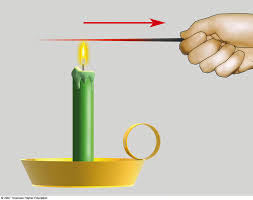
The candle will slowly heat the metal and transfer the heat directly to the mans hand.
a)
conduction
b)
convection
c)
radiation
101.
Warm air rises and the cool air sinks.
a)
conduction
b)
convection
c)
radiation
102.
The Gulf Stream is a current that brings warm ocean water from the south to the north.
a)
conduction
b)
convection
c)
radiation
103.
A group of friends gather around a fire to stay warm.
a)
conduction
b)
convection
c)
radiation
104.
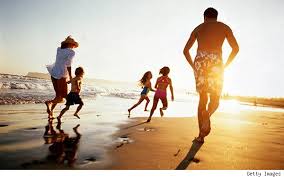
The sun shines down on this family as the play on the beach.
a)
conduction
b)
convection
c)
radiation
105.
Why do bridges have gaps so that the bridge will not buckle? 
a)
thermal insulation
b)
thermal expansion
c)
thermal energy
d)
thermal kinetics
106.
Blow drying your wet hair.
a)
conduction
b)
convection
c)
radiation
107.
In this experiment, the WARM red dye and the COLD blue dye was placed in the water at the same time. The warm red dye rose to the top while the cold blue dye sank to the bottom.
a)
conduction
b)
convection
c)
radiation
108.
Heat transfers from an area of ____temperature to an area of ___ temperature.
a)
high to low
b)
low to high
c)
high to high
109.
This is a lava lamp. When the light bulb heats the wax, the wax rises. When the wax cools, it falls. This cycle of rising/falling is an example of:
a)
Conduction.
b)
Convection.
c)
Radiation.